

- Create repeatable, version-controlled cloud infrastructure.
- Automate deployments from local workstations to CI/CD pipelines.
- Use Terraform’s HCL to express infrastructure intent clearly and reliably.
- Apply best practices for state management, modular design, and collaboration.
Prerequisites
- Basic familiarity with Azure concepts (subscriptions, resource groups, storage accounts).
- Command-line experience (bash, PowerShell, or terminal).
- Recommended: an Azure subscription for hands-on labs.
Quick start — Install Terraform (Debian/Ubuntu)
On Debian/Ubuntu-based systems use HashiCorp’s APT repository. Run:If you are using macOS, Windows, or another Linux distribution, follow the platform-specific installation instructions on the official Terraform documentation: https://developer.hashicorp.com/terraform/tutorials.
What you’ll learn — Course roadmap
Provider and a simple resource example
A minimal Azure provider and resource written in HCL:Typical Terraform workflow — plan and apply
When you run Terraform, the common interaction isterraform plan followed by terraform apply. Example console output:
Iteration, logic, and modular patterns
You’ll learn to make configurations dynamic withcount, for_each, conditionals, locals, and built-in functions. Example network security rule resource in HCL:
locals and dynamic blocks where patterns repeat to reduce duplication and improve maintainability.
Terraform state (why it matters)
State is the source of truth Terraform uses to map real-world resources to your configuration. In team environments, store state remotely (e.g., Azure Storage account with locking). Terraform state files are JSON; here’s a truncated example showing structure:Outputs and modules
Outputs expose computed values from modules or root configurations. Modules enable reuse and separation of concerns. Example output:CI/CD with Terraform and Azure DevOps
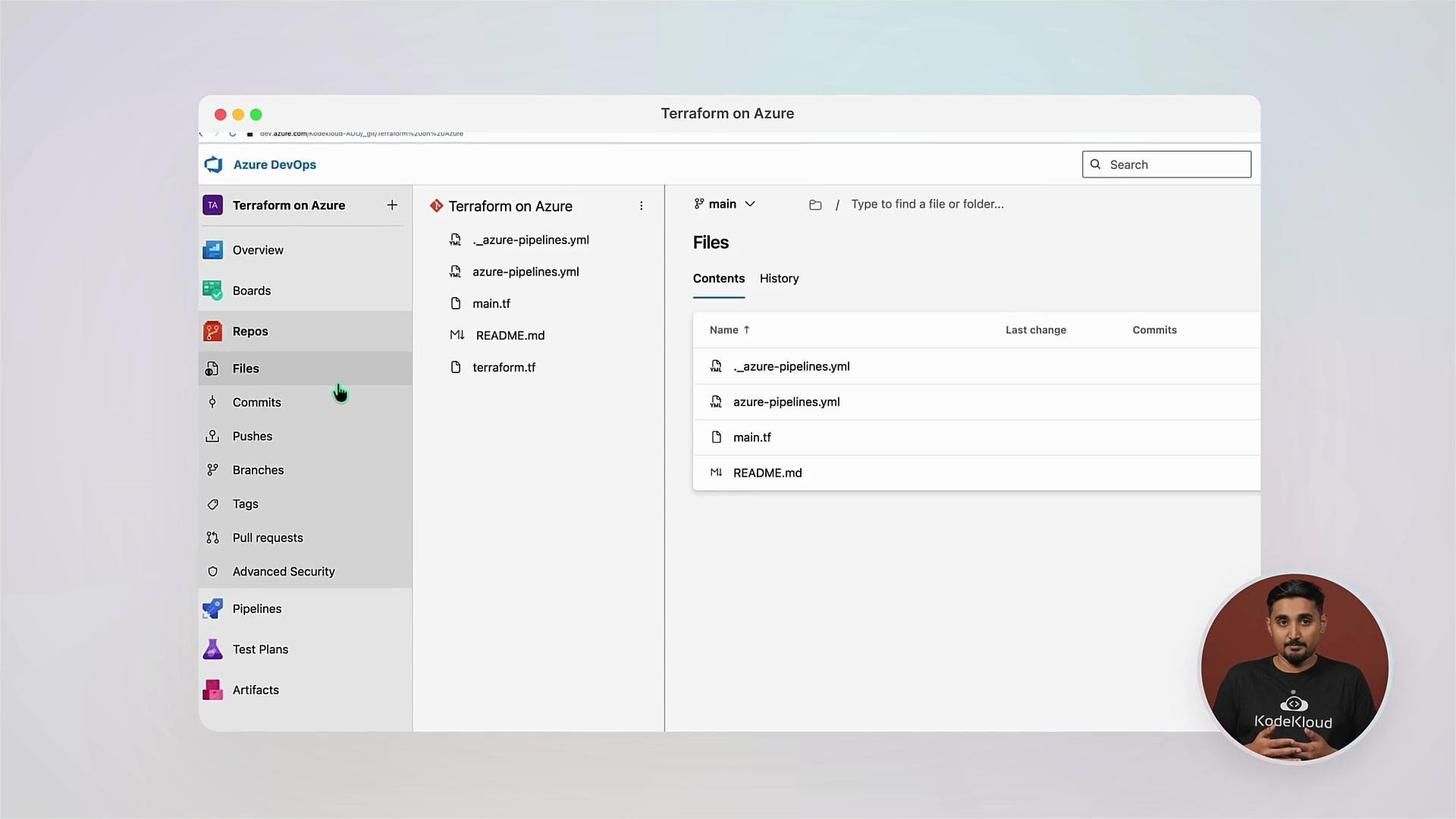
We finish the course by integrating Terraform into CI/CD pipelines (Azure DevOps, GitHub Actions, or other CI systems). You’ll learn to automate:- terraform fmt, init, validate, plan
- plan approval gates and manual checks
- controlled terraform apply in production
Community and next steps
At KodeKloud we value community learning. Join our forums to ask questions, share labs, and collaborate with peers. Build real projects, contribute modules, and iterate with feedback. Additional references- Terraform: https://www.terraform.io/
- Terraform Azure Provider (azurerm): https://registry.terraform.io/providers/hashicorp/azurerm
- Azure Documentation: https://docs.microsoft.com/azure