In this step-by-step tutorial, you’ll learn how to orchestrate a multi-service voting application using Docker Compose. By the end, you’ll have a running stack that includes Redis, PostgreSQL, a voting frontend, a worker processor, and a results dashboard.

Prerequisites

  • Docker Engine installed (version ≥ 19.03)
  • Basic familiarity with docker CLI
  • A terminal/SSH session on Linux, macOS, or Windows WSL

Step 1: Install Docker Compose

Docker Compose isn’t bundled with Docker Engine by default. Install it on Linux with:
sudo curl -L "https://github.com/docker/compose/releases/download/1.16.1/docker-compose-$(uname -s)-$(uname -m)" \
  -o /usr/local/bin/docker-compose
sudo chmod +x /usr/local/bin/docker-compose
docker-compose --version
Expected output:
docker-compose version 1.16.1, build 1719ceb
Replace 1.16.1 with the latest stable release. See the Compose releases on GitHub for details.

Step 2: Clean Up Existing Containers

Before deploying, stop any previous demo containers:
# List running containers
docker ps

# Stop containers by ID or prefix
docker stop 69 54 5b 2f 0b

# Verify all relevant containers are stopped
docker ps
Stopping containers will terminate running services. Ensure you don’t have unsaved data in those containers.

Step 3: Define Services in docker-compose.yml

Create a file named docker-compose.yml with the following content. It leverages Compose file format version 3.
version: '3'
services:
  redis:
    image: redis

  db:
    image: postgres:9.4

  vote:
    image: voting-app
    ports:
      - "5000:80"
    depends_on:
      - redis

  worker:
    image: worker-app
    depends_on:
      - db
      - redis

  result:
    image: result-app
    ports:
      - "5001:80"
    depends_on:
      - db

Service Overview

ServiceImagePortsDescription
redisredisIn-memory queue for incoming votes
dbpostgres:9.4Persistent storage for vote records
votevoting-app5000→80Frontend where users cast their vote
workerworker-appProcesses queued votes into the PostgreSQL DB
resultresult-app5001→80Displays aggregated vote results
The depends_on key ensures containers start in the correct order, but it doesn’t wait for health checks. Consider adding healthchecks for production workloads.
See the Compose file reference for advanced options.

Step 4: Deploy the Stack

From the directory containing docker-compose.yml, run:
docker-compose up -d
This command will pull images, create a default network, and start all five containers. Container names are prefixed by your folder name (e.g., root_redis_1). Verify everything is up:
docker ps
You should see containers for Redis, PostgreSQL, vote, worker, and result.

Step 5: Access the Application

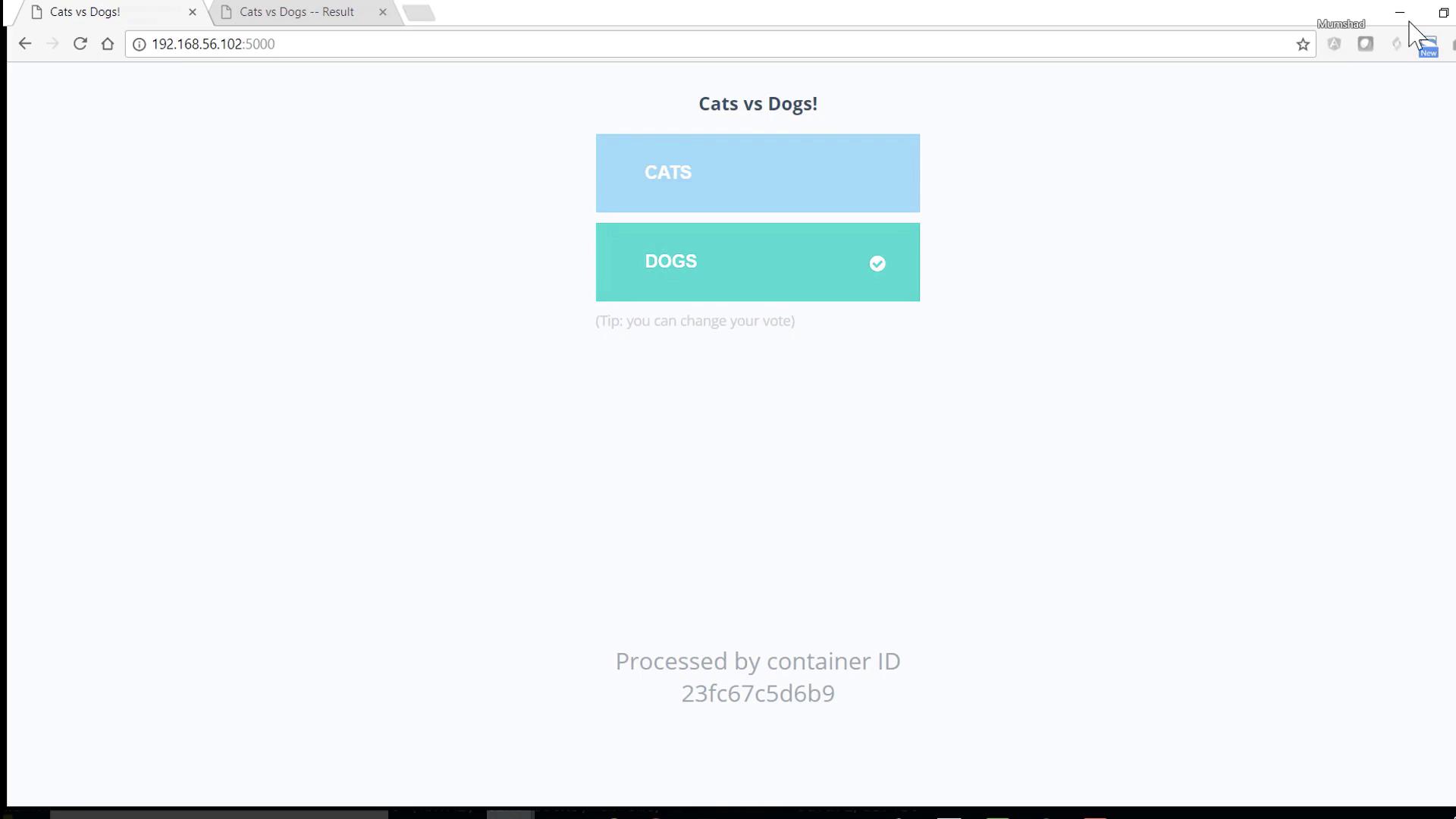
Cast a vote on the first page, then switch to the results page to see real-time counts.
The image shows a webpage titled "Cats vs Dogs!" with two buttons labeled "CATS" and "DOGS," where "DOGS" is selected. It also mentions that you can change your vote and displays a container ID at the bottom.

Clean Up

When you’re done testing, stop and remove all services with:
docker-compose down
This command stops containers and removes the network. Volumes and images remain unless you add the --volumes or --rmi all flags.

References and Further Reading