

- Promote and demote Swarm nodes
- Drain nodes for maintenance
- Remove nodes from your cluster
Promote and Demote Nodes
Only Swarm manager nodes can orchestrate the cluster. You can elevate a worker node to manager or revert a manager back to a worker. Run these commands on any current manager.Promote a Worker to Manager
Promoting a node requires you to be connected to an active manager. Check your current context with
docker info.Demote a Manager to Worker
Drain a Node for Maintenance
Before patching or upgrading, remove workloads from a node to avoid downtime. The following diagram shows a Swarm cluster with one manager and two workers running a “Web” service.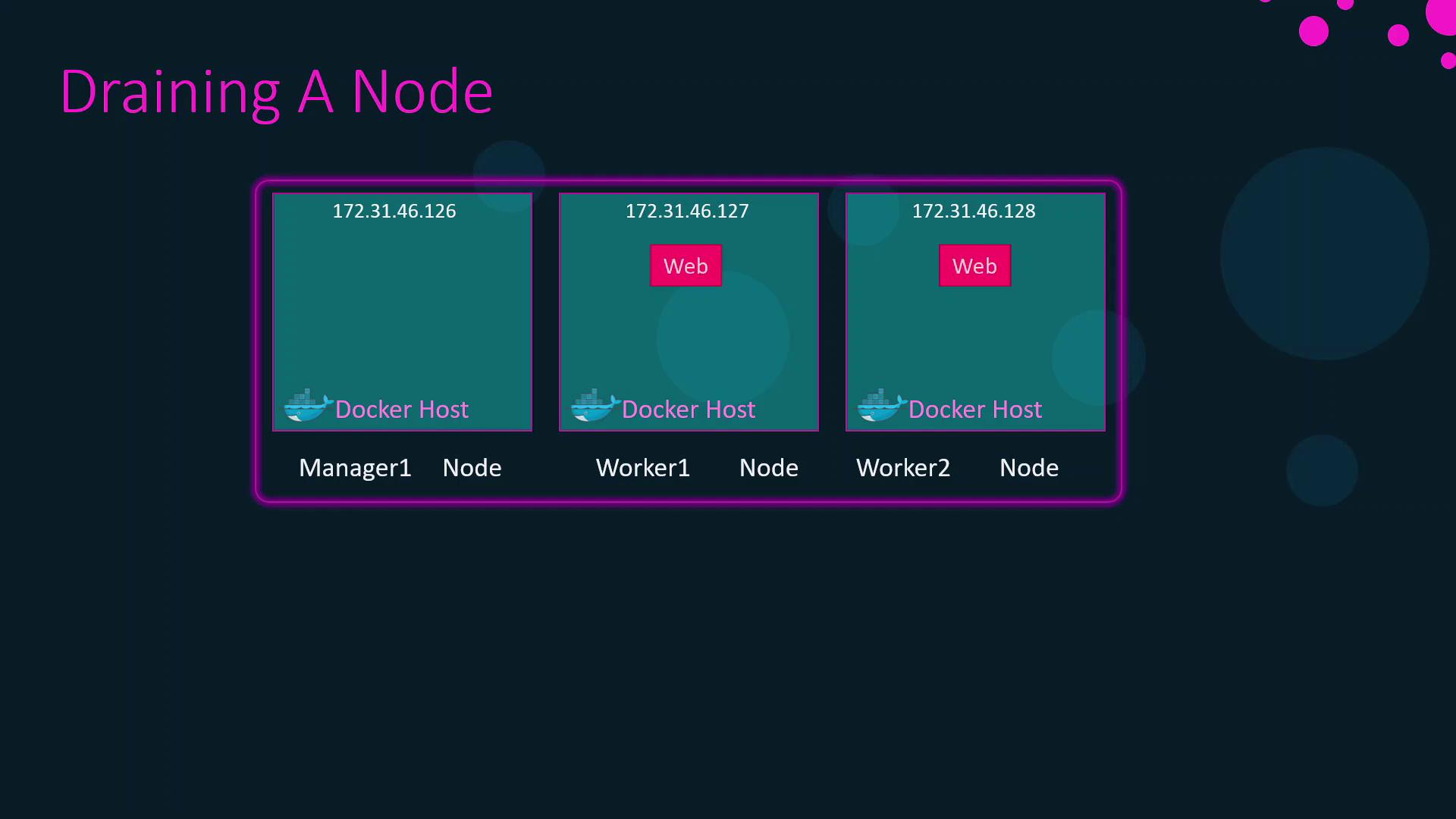
worker1 to migrate its tasks:
Draining a node stops new tasks from being scheduled and reschedules existing ones on other workers. Ensure your cluster has enough capacity before draining.
After maintenance, reactivate scheduling:
worker1 will accept new tasks:
Remove a Node from the Swarm
To permanently remove a worker node:-
Drain the node:
-
Log in to
worker2and leave the swarm:
worker2 is safely removed, and your cluster continues with the remaining nodes.