

What is an SLI (Service Level Indicator)?
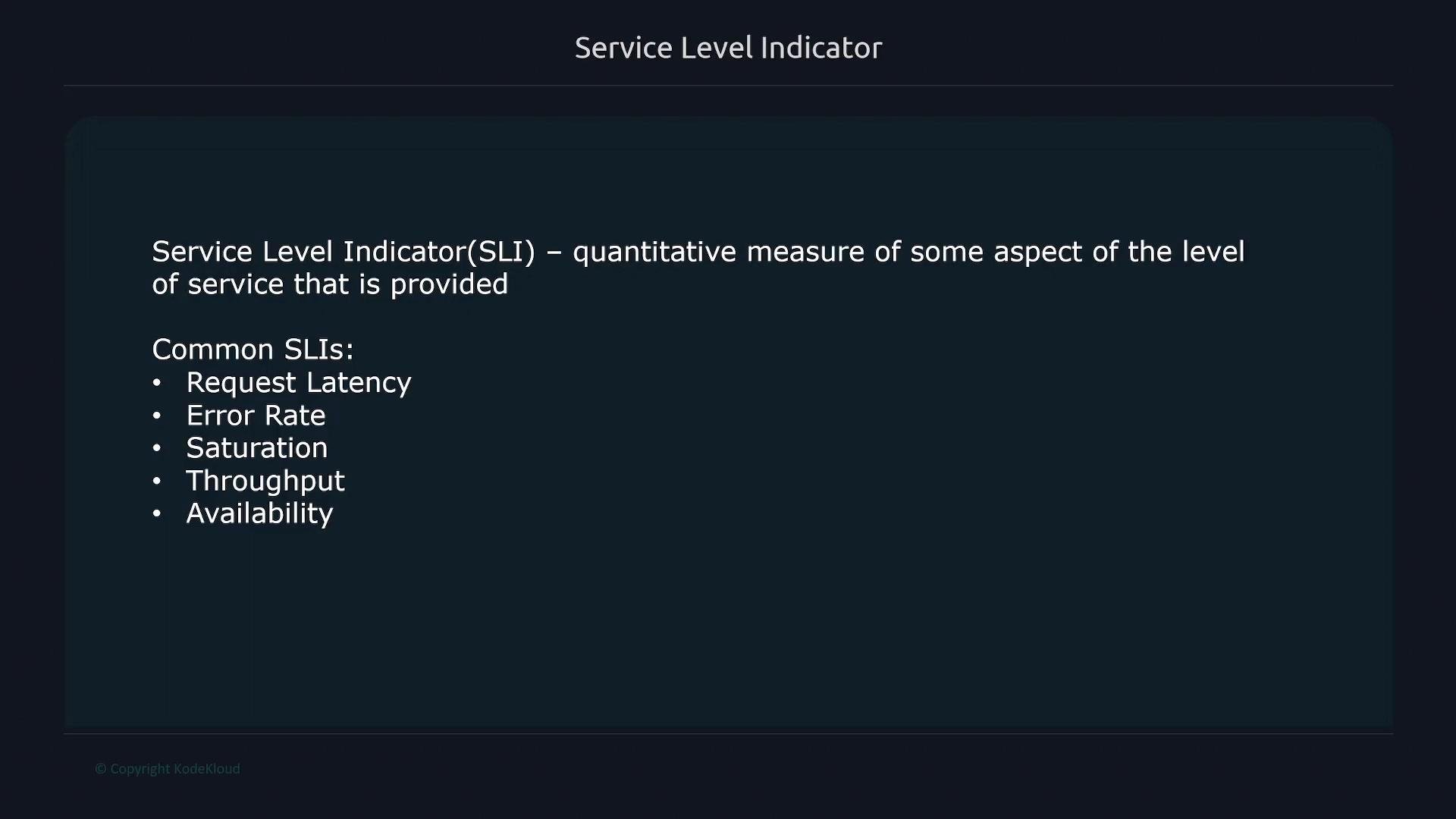
An SLI is a quantitative metric that measures a particular aspect of the level of service delivered to users. SLIs should reflect the actual user experience whenever possible so they track what matters. Common SLIs:- Request latency (e.g., p95, p99)
- Error rate (e.g., % of failed requests)
- Throughput / saturation (requests per second, queue length)
- Availability (percent uptime)
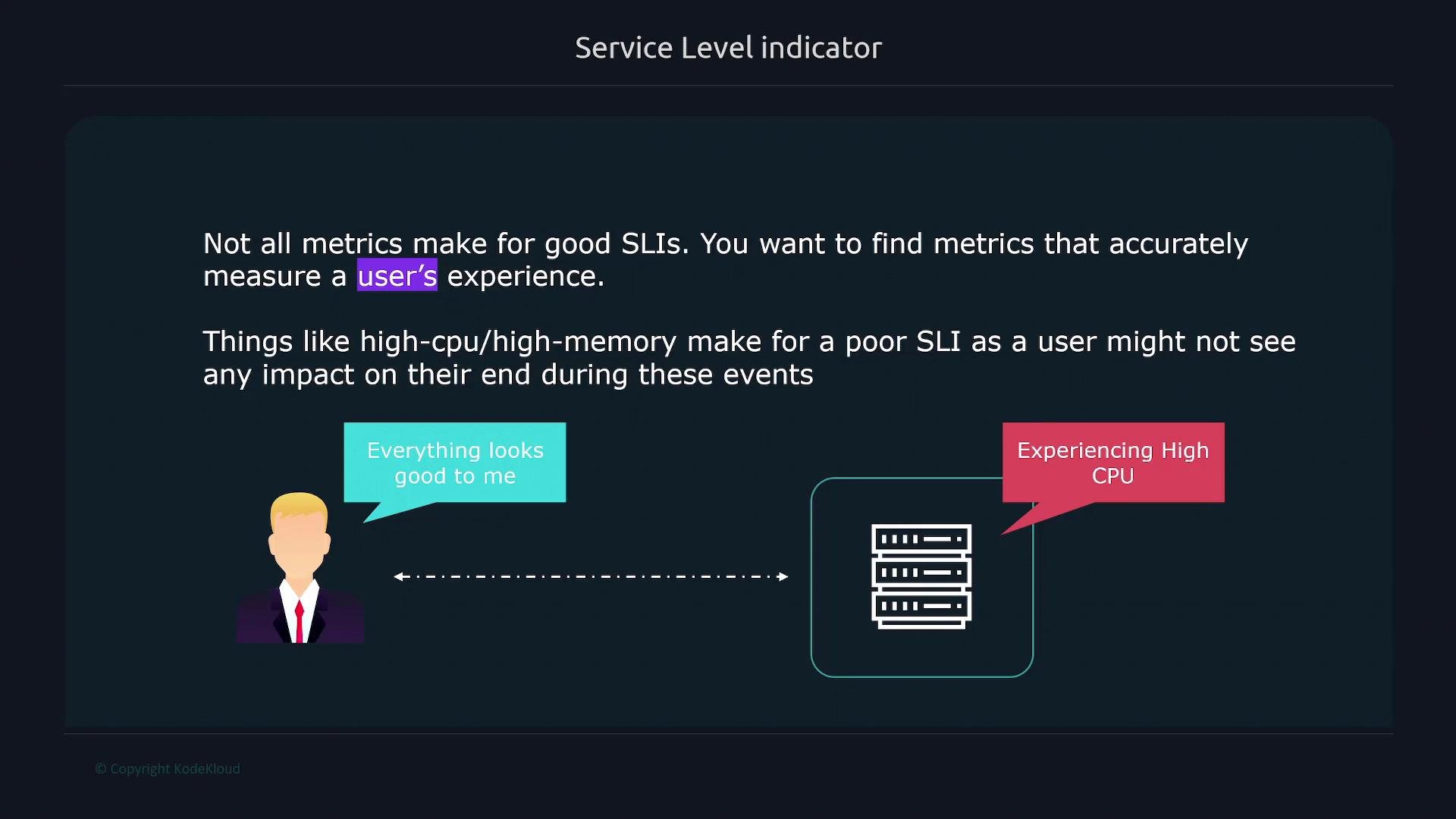
- Prefer user-centric metrics (latency and error rate) over internal resource metrics.
- Make sure SLIs are measurable, reproducible, and meaningful to stakeholders.
- Avoid SLIs that are easy to measure but don’t correlate with user impact (e.g., CPU or memory usage alone).
What is an SLO (Service Level Objective)?
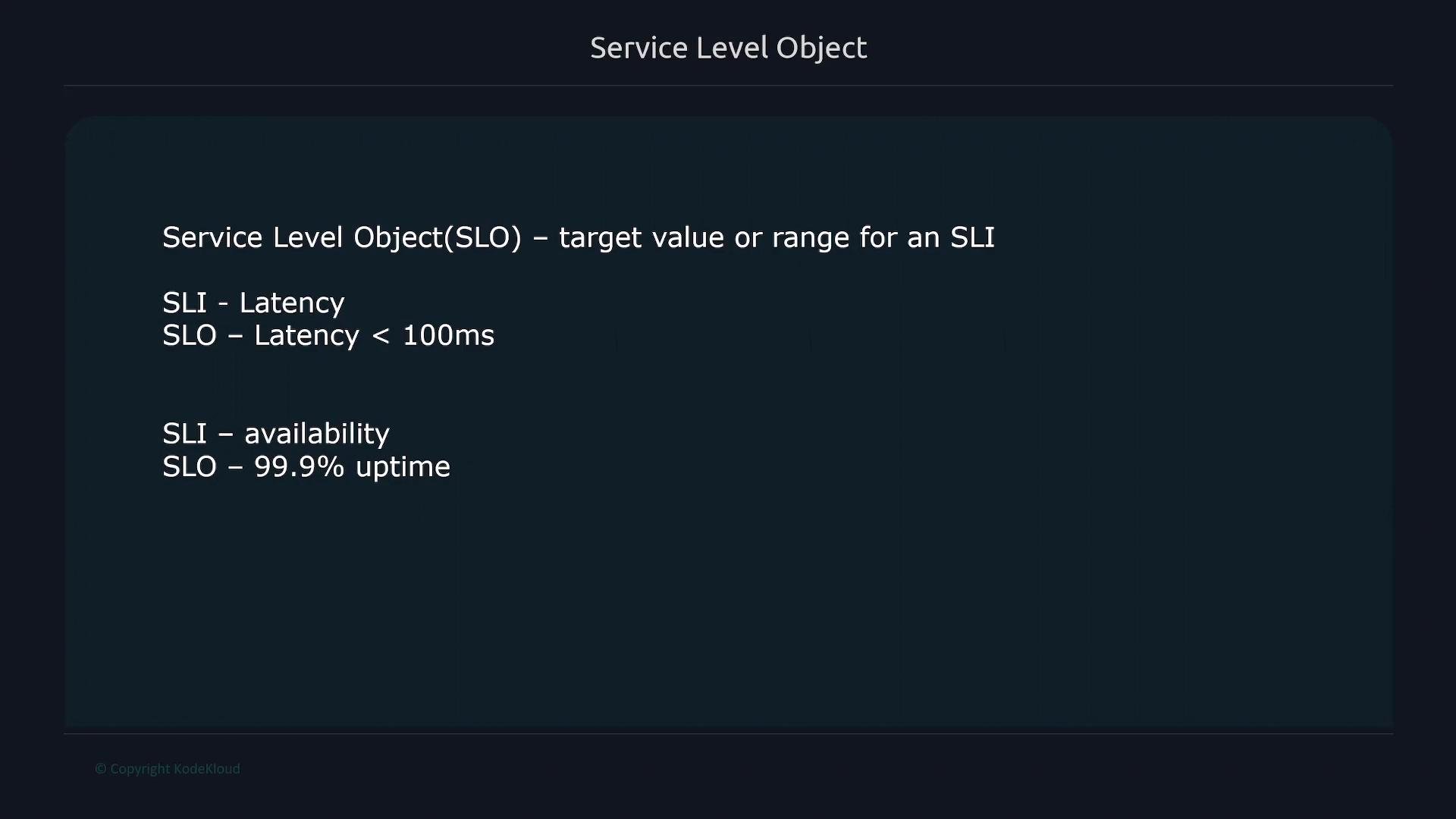
An SLO is a target or acceptable range for an SLI — a concrete reliability goal your team commits to hit. SLOs translate metrics into actionable objectives tied to user experience. Examples:- Latency SLO: p95 request latency < 100 ms.
- Availability SLO: 99.9% uptime over a rolling 30-day window.
Use an error budget to operationalize SLOs: error budget = (1 − SLO). Teams can spend the error budget on releases, feature changes, and experiments. If the budget is exhausted, shift focus to reliability work until the budget is restored.
What is an SLA (Service Level Agreement)?
An SLA is a formal contract between a provider and a customer that guarantees a specific SLO. SLAs typically include legally binding terms and define consequences for failing to meet the agreed SLOs (for example, service credits, termination rights, or other remedies). Key points about SLAs:- SLAs formalize commitments to external customers.
- They usually include measurement windows, reporting requirements, and remediation steps.
- Violating an SLA can trigger contractual penalties.
Quick comparison
Practical recommendations
- Start with user-facing SLIs (latency, error rate, availability).
- Define SLOs that balance customer expectations with sustainable engineering effort.
- Use an error budget to make data-driven trade-offs between feature releases and reliability work.
- Only export SLAs to customers after you understand the real cost and operational burden of meeting those targets.
- SLI = measurable metric reflecting service quality.
- SLO = target for an SLI that defines acceptable reliability.
- SLA = contract that formalizes SLOs and associated consequences.
Links and references
- Google SRE book — Service Level Objectives
- Prometheus documentation — Recording rules & alerts
- Site Reliability Engineering (SRE) concepts