

Cluster Architecture
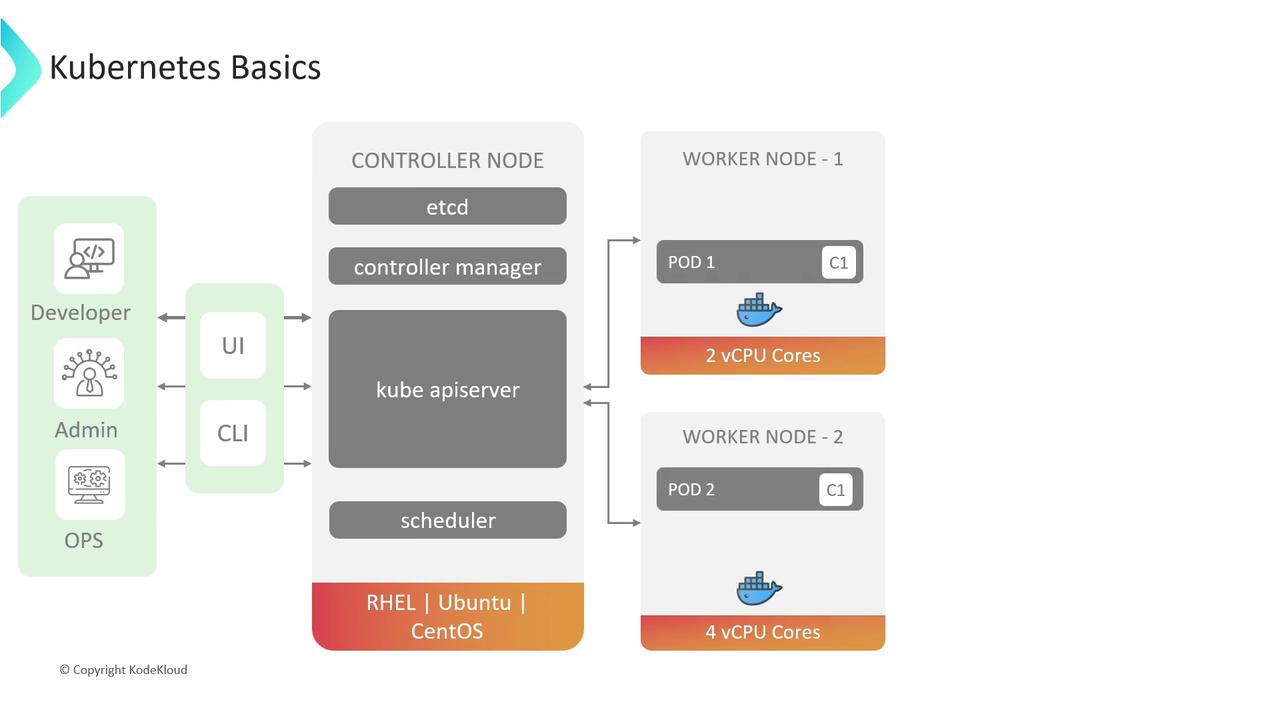
A Kubernetes cluster is composed of multiple machines—physical or virtual—called nodes. Nodes are grouped into:- Controller (Master) Nodes: Maintain the cluster state and scheduling.
- Worker Nodes: Run your containerized workloads.
Controller Node Components
Pods: The Smallest Deployable Unit
A Pod is the atomic unit in Kubernetes. It can host one or more containers that:- Share the same network namespace (IP & ports).
- Mount the same storage volumes.
- Communicate via
localhost.
For resilience and zero-downtime updates, wrap Pods in Deployments or ReplicaSets. These controllers ensure the desired replica count and support rolling updates and rollbacks.
Deployments
A Deployment provides a declarative approach to managing Pods and ReplicaSets:- Define the desired state (e.g., number of replicas, container image version).
- Kubernetes performs rolling updates or automatic rollbacks.
- Simplifies application versioning and scaling.
Services
Kubernetes Services provide a stable network endpoint (virtual IP and DNS name) for a set of Pods. Services decouple application components, enabling you to scale or replace Pods without updating clients.Service Types
Using a LoadBalancer Service may incur additional costs with your cloud provider (e.g., AWS ELB, GCP Load Balancer). Ensure you understand your infrastructure’s billing model before provisioning.
Ingress
An Ingress resource manages external HTTP/HTTPS access, consolidating multiple Services under a single IP or hostname. Ingress allows advanced routing based on hostnames, paths, or headers, reducing the need for multiple load balancers. An external Ingress controller (e.g., NGINX, Traefik) implements these rules.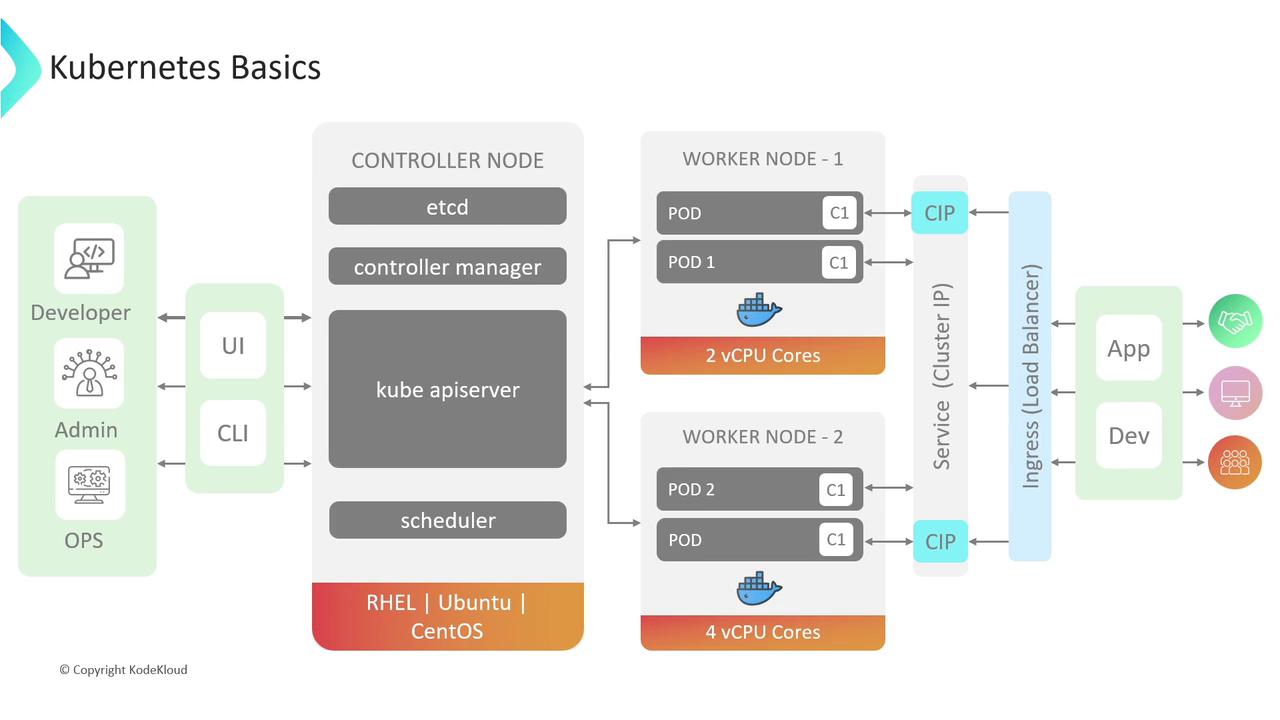
References
- Kubernetes Documentation
- Cloud Native Computing Foundation (CNCF)
- AWS Elastic Load Balancing
- GCP Load Balancing