

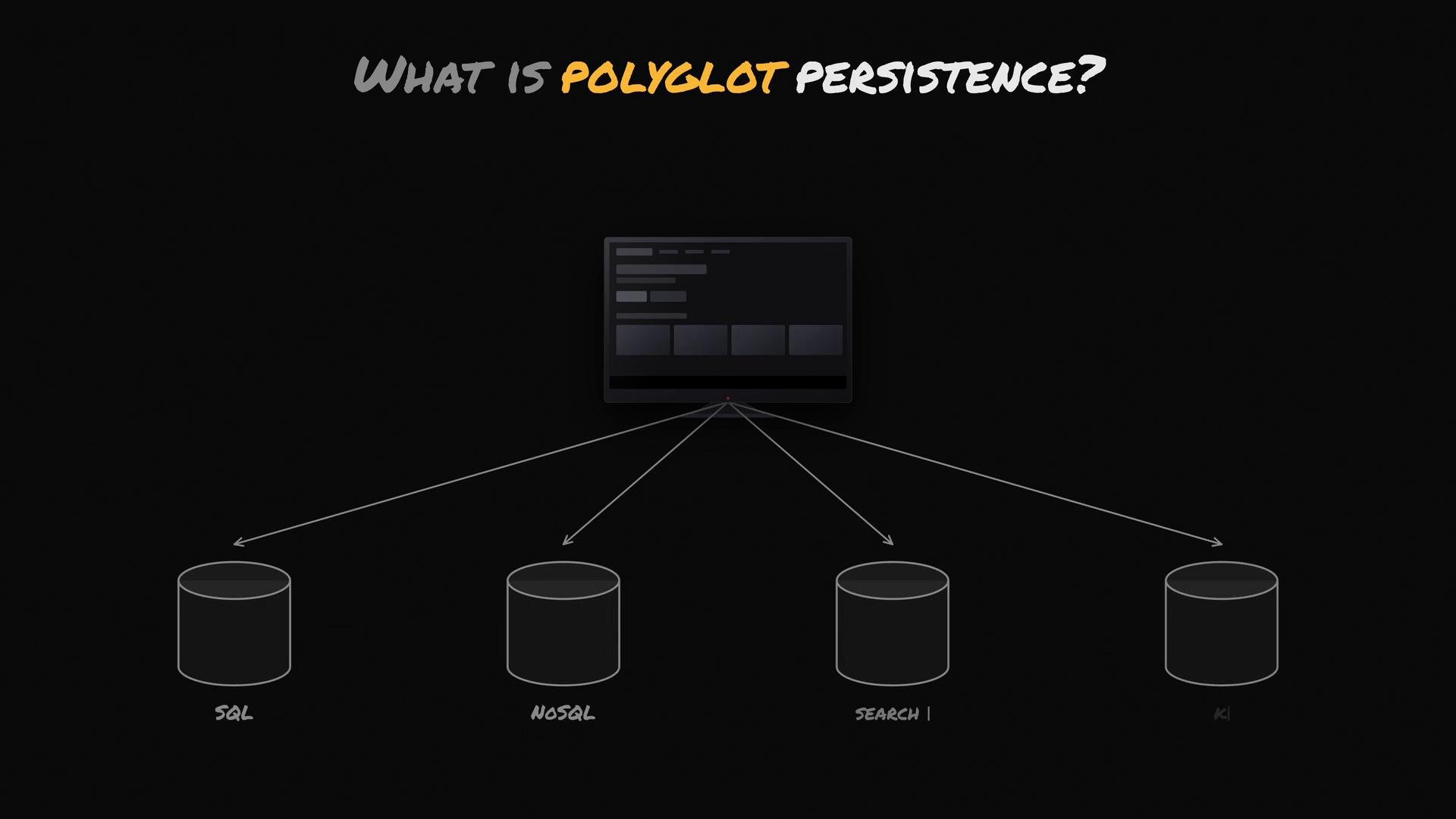
- Each product feature has different requirements (consistency, latency, throughput, query patterns).
- Using specialized stores lets teams optimize cost and performance for each workload instead of compromising with a single system.
- At large scale, the operational complexity is often justified by the gains in scalability and user experience.
- Billing and payments: MySQL — relational, ACID, strong consistency for financial correctness.
- Viewing history and high-frequency events: Cassandra — wide-column NoSQL designed for massive concurrent writes and horizontal scalability.
- Search: Elasticsearch — optimized for fast, flexible search queries and full-text lookup.
- Homepage / user experience: EVCache — distributed cache to serve pages with very low latency.
Polyglot persistence lets you use the best database for each workload (for example, ACID databases for transactions, NoSQL for heavy writes, search engines for queries, caches for low latency), but those benefits come with trade-offs you must manage.
-
Data duplication and synchronization
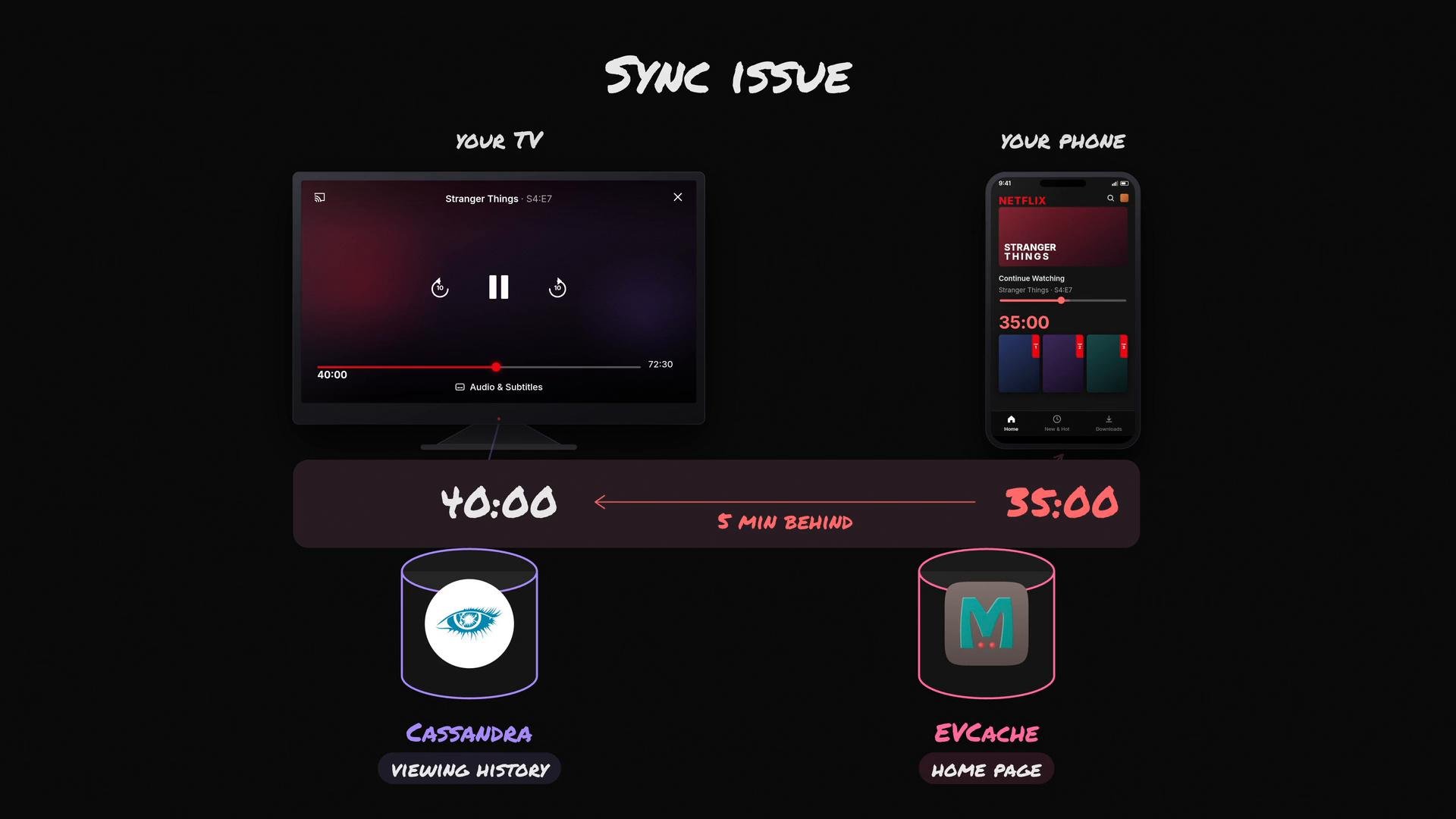
- The same logical data often lives in multiple systems. For example, a user’s playback position might be stored durably in Cassandra and cached in EVCache for fast display.
- Duplicate copies can temporarily diverge; caches may be stale until synchronization completes.
-
Consistency models
- Many scalable stores (Cassandra, some distributed caches) favor eventual consistency over immediate strong consistency.
- Eventual consistency means replicas converge over time; a read immediately after a write might not reflect the latest value everywhere.
- Real-world symptom: you pause a show on your TV at 40:00 but open the app on your phone and see 35:00 — a transient divergence while backend systems sync.
- Network and operational overhead
- A single page load or API request can trigger calls to multiple datastores and caches.
- Each datastore requires separate backup, monitoring, alerting, scaling, and operational runbooks.
- More tooling and cross-team coordination are typically needed to operate a polyglot stack reliably.
Be prepared for increased complexity: more inter-service network calls, multiple backup and monitoring strategies, and larger operations teams. Polyglot persistence reduces single-system compromises but raises integration, consistency, and operational costs.
When to use polyglot persistence
- Use it when a single datastore cannot meet the diverse requirements of scale, latency, and correctness across your product features.
- Favor it for large-scale systems with distinct workloads (e.g., billing vs. event ingestion vs. search).
- Avoid it for small or simple applications where one well-chosen datastore satisfies all requirements — the added operational cost is often not worth it.
- Apache Cassandra — wide-column NoSQL database focused on write throughput and availability.
- Elasticsearch — distributed search and analytics engine.
- MySQL — popular relational DBMS with ACID guarantees.