Now that the problem is clear, let’s examine the solution and why the GitHub Enterprise Administrator is one of the most strategically important technical roles in a modern software company.
This is not a help-desk position. A GitHub Enterprise Administrator does far more than reset passwords or triage Slack messages.
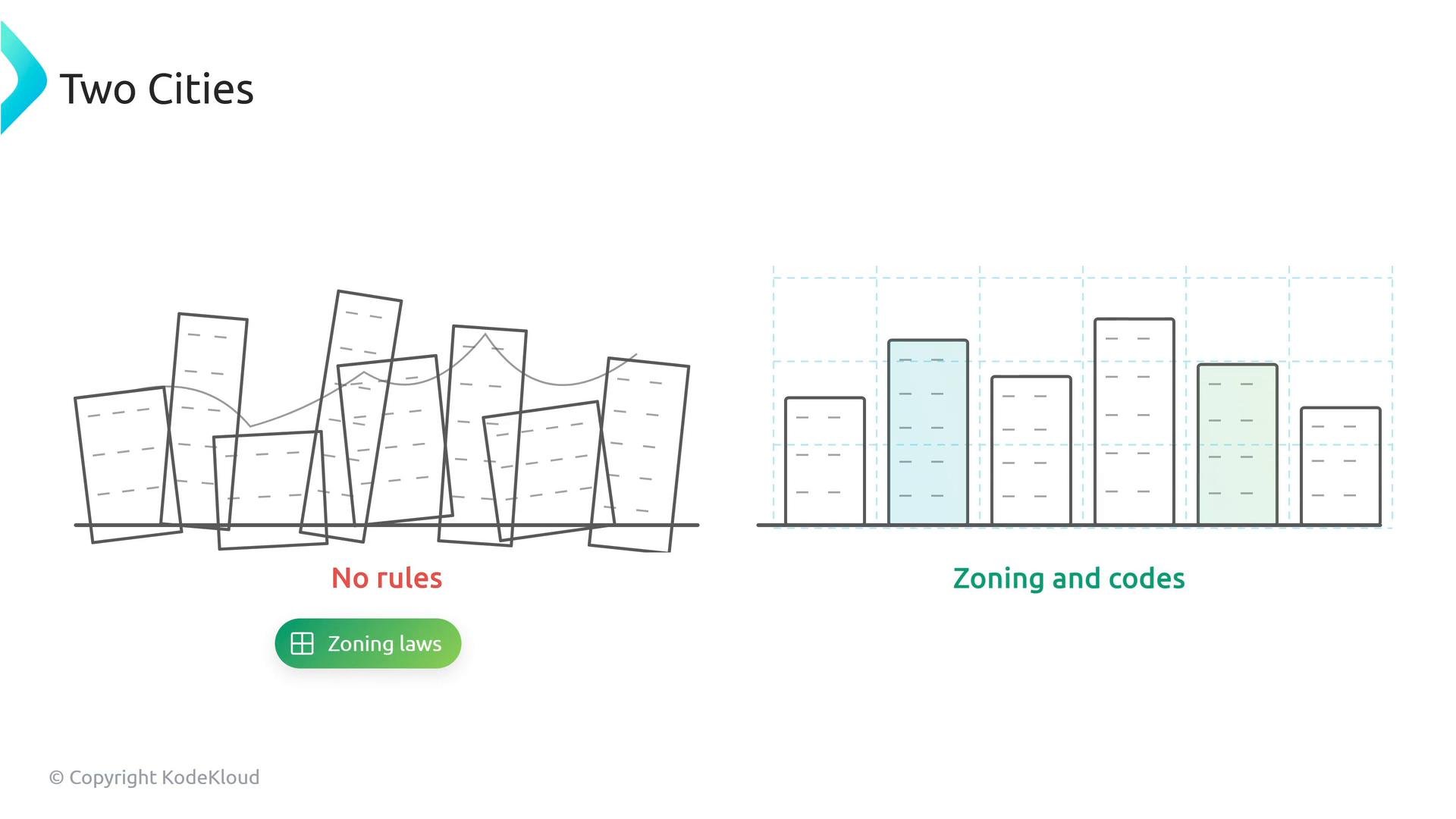
The role is a hybrid: part architect, part operator. A great administrator designs governance and enterprise policies, implements security controls, automates compliance evidence, and continuously monitors the platform to ensure reliability, security, and developer productivity. Think of the difference between a city that lets anyone build anywhere versus a city with zoning laws, building codes, electrical inspections, and a fire marshal.
A split illustration comparing two cityscapes: the left shows crooked, overlapping buildings labeled "No rules," and the right shows neatly aligned, grid-bounded buildings labeled "Zoning and codes." A small green button labeled "Zoning laws" appears below.
The GitHub administrator is effectively the city government for your engineering platform:
  • They set zoning laws via enterprise policies.
  • They write building codes with rulesets and branch protection rules.
  • They run electrical inspections through automated security scanning.
  • They act as the fire marshal by managing audit logs and producing compliance evidence.
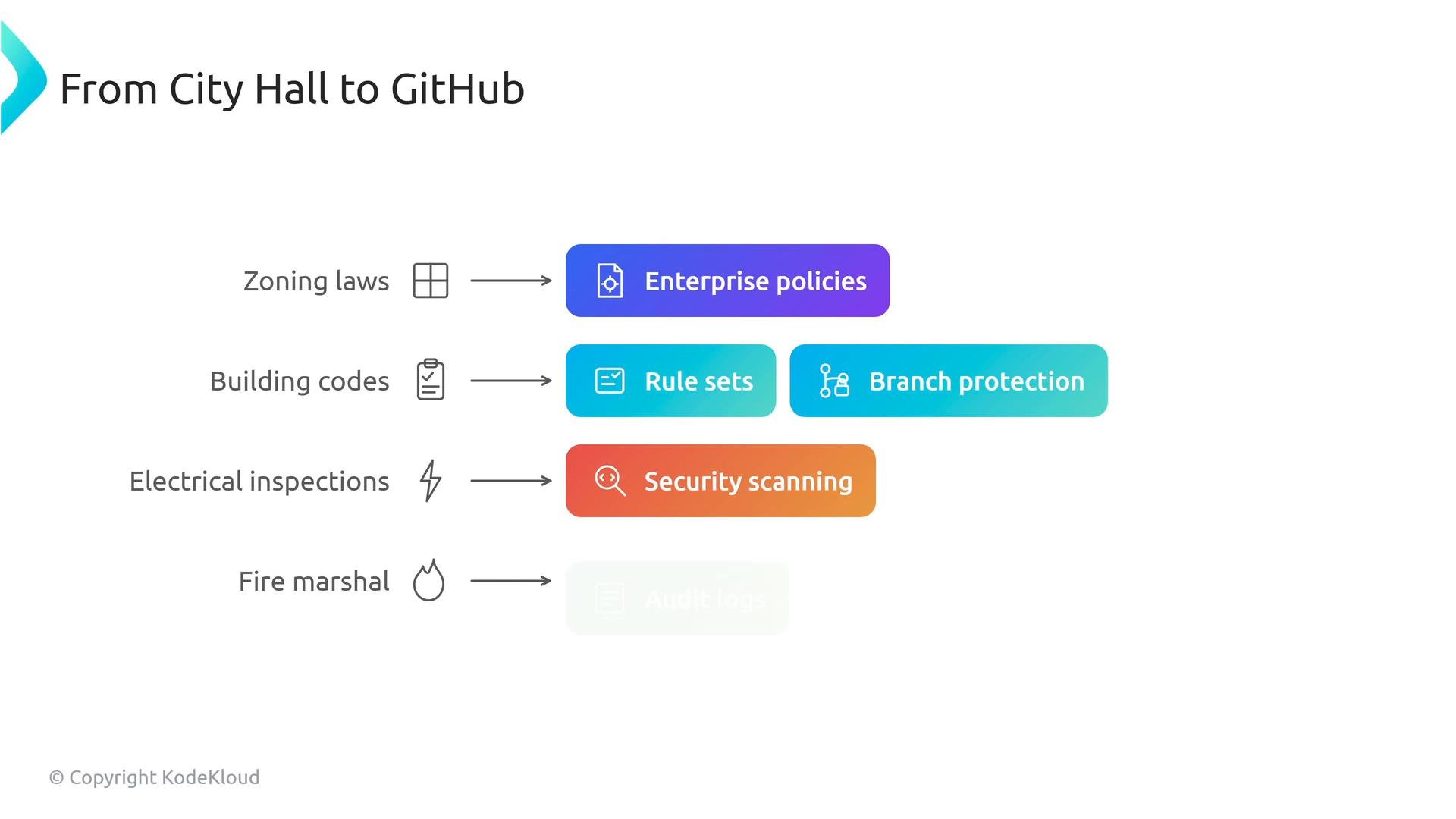
A slide titled "From City Hall to GitHub" that maps city roles and rules (zoning laws, building codes, electrical inspections, fire marshal) to GitHub controls. Examples shown include Enterprise policies, Rule sets, Branch protection, and Security scanning.
This certification verifies that you can execute every part of this job. The exam is scenario-based: instead of memorization, you’ll be placed in administrator scenarios and asked to choose the best operational or architectural decision.
The exam focuses on real-world scenarios—policy design, incident response, security remediation, and operational trade-offs—so practical experience and decision-making matter more than rote facts.
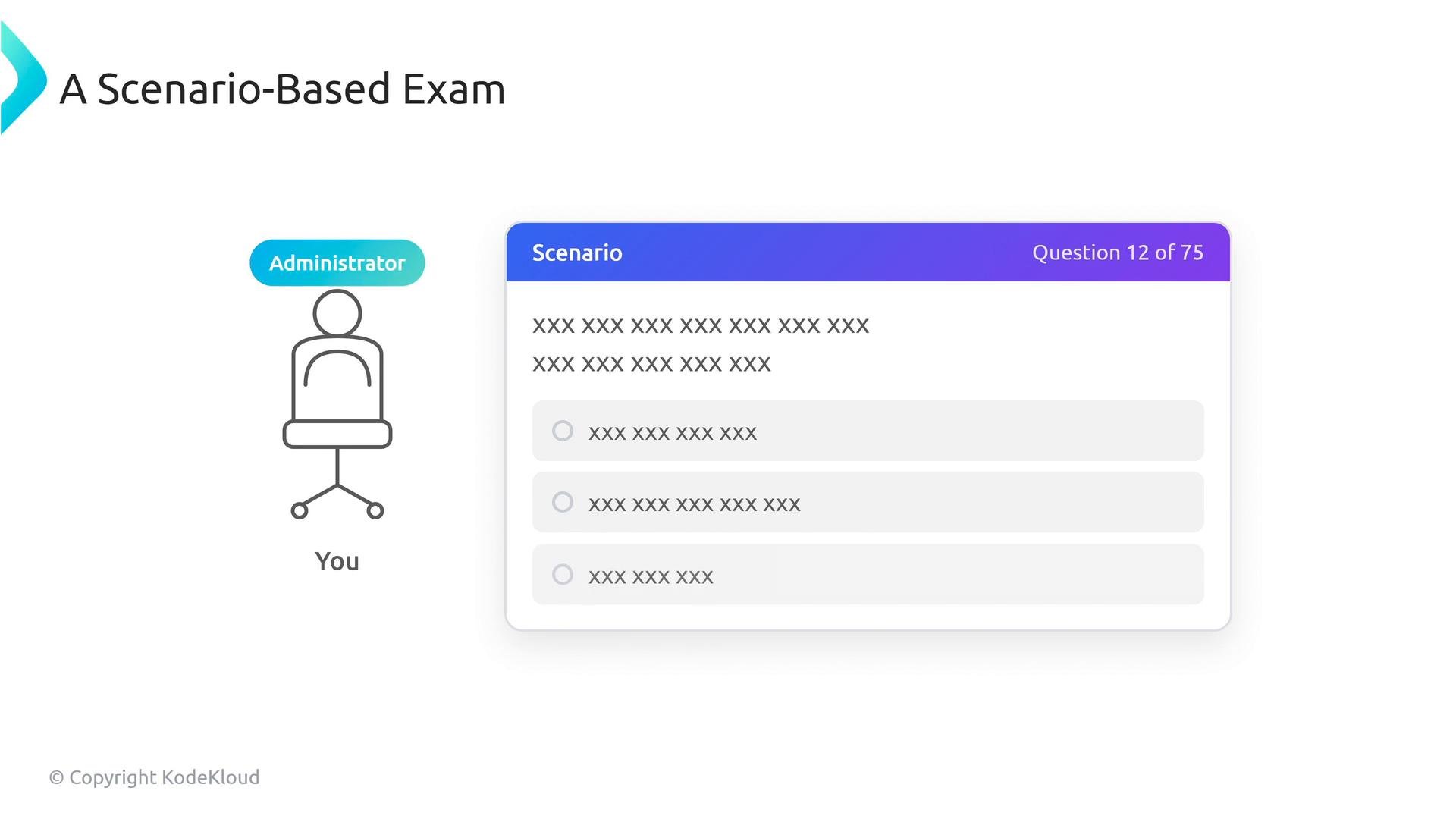
A slide titled "A Scenario-Based Exam" showing a simple administrator/you icon on the left and a multiple-choice scenario question card (Question 12 of 75) with placeholder text and radio buttons on the right. It appears to be a mockup of an online exam interface.
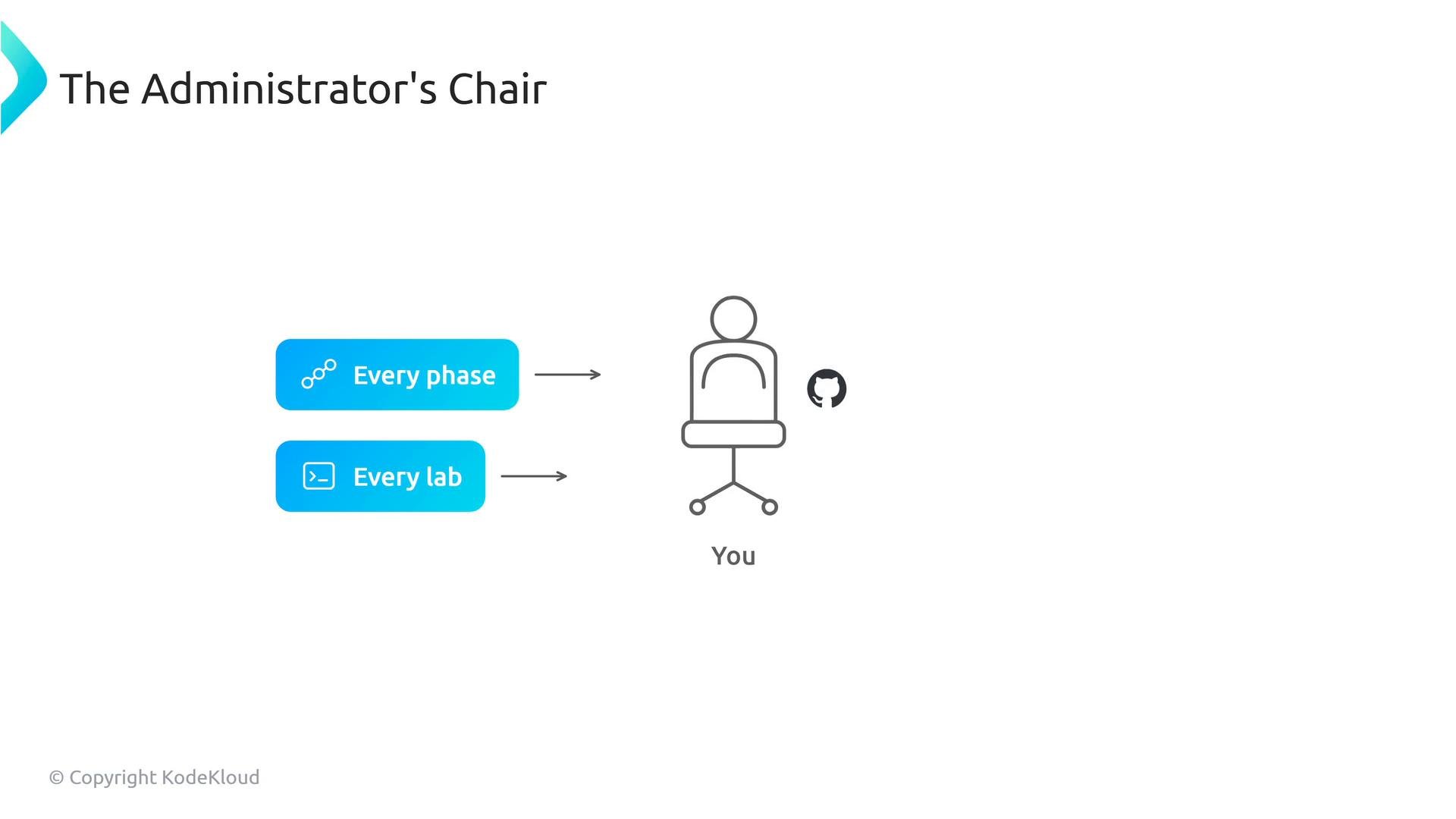
This course mirrors that approach: every phase and lab places you in the administrator’s chair to make practical decisions and apply operational practices.
A slide titled "The Administrator's Chair" showing two blue labels—"Every phase" and "Every lab"—with arrows pointing to an office chair icon labeled "You" and a small GitHub logo. It implies the administrator oversees every phase and every lab.
Course structure — seven phases that follow the natural lifecycle of standing up and managing a GitHub Enterprise: Every phase maps directly to common administrator objectives and exam domains. Completing the course prepares you for the certification and equips you with the practical skills needed to run a secure, compliant, and developer-friendly GitHub Enterprise.
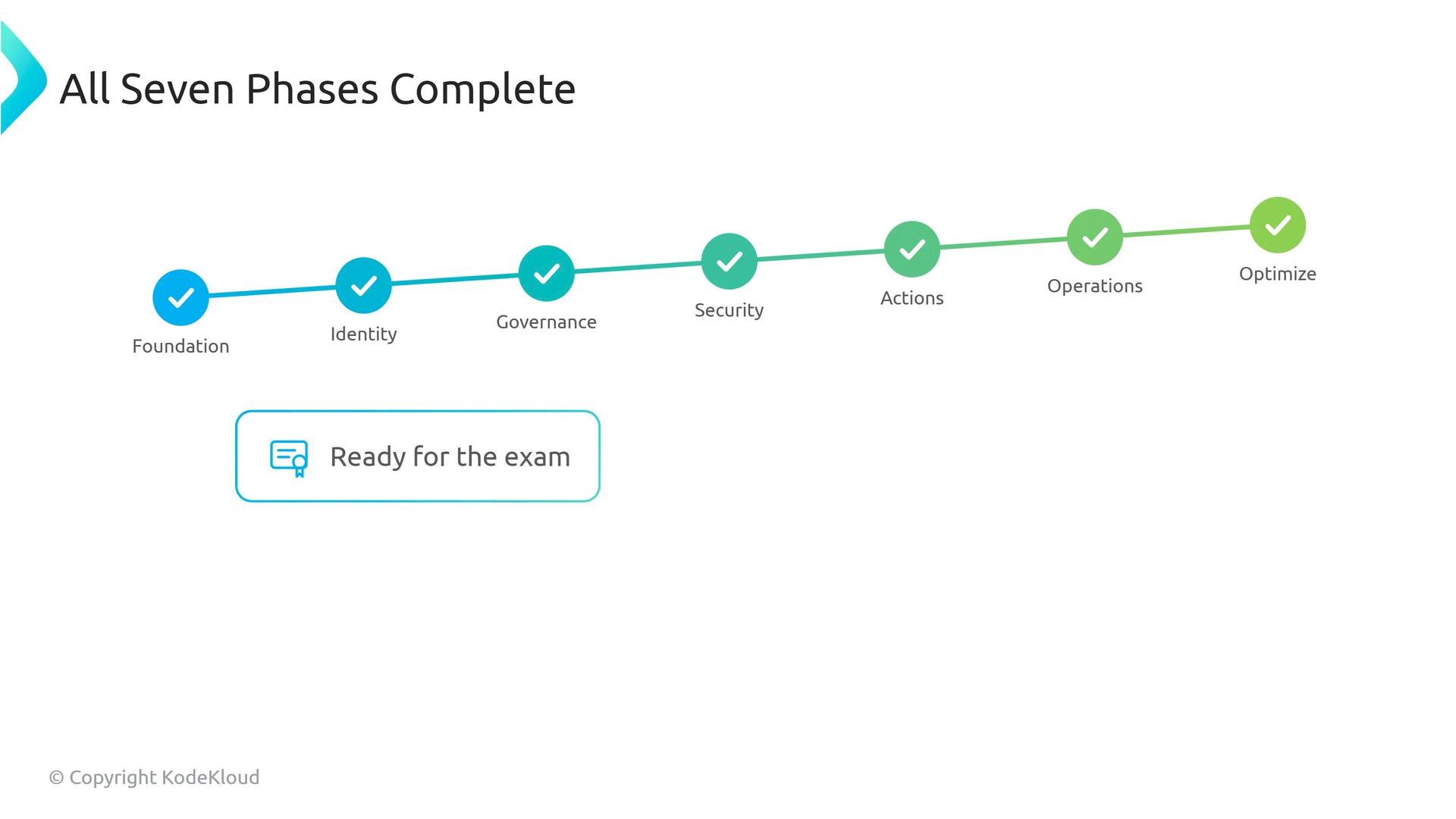
A progress diagram titled "All Seven Phases Complete" showing seven checked stages—Foundation, Identity, Governance, Security, Actions, Operations, and Optimize—with a "Ready for the exam" badge.
Links and references

Watch Video