

CODEOWNERS, and SECURITY.md — and how these files let a platform team enforce consistency across many repositories automatically.
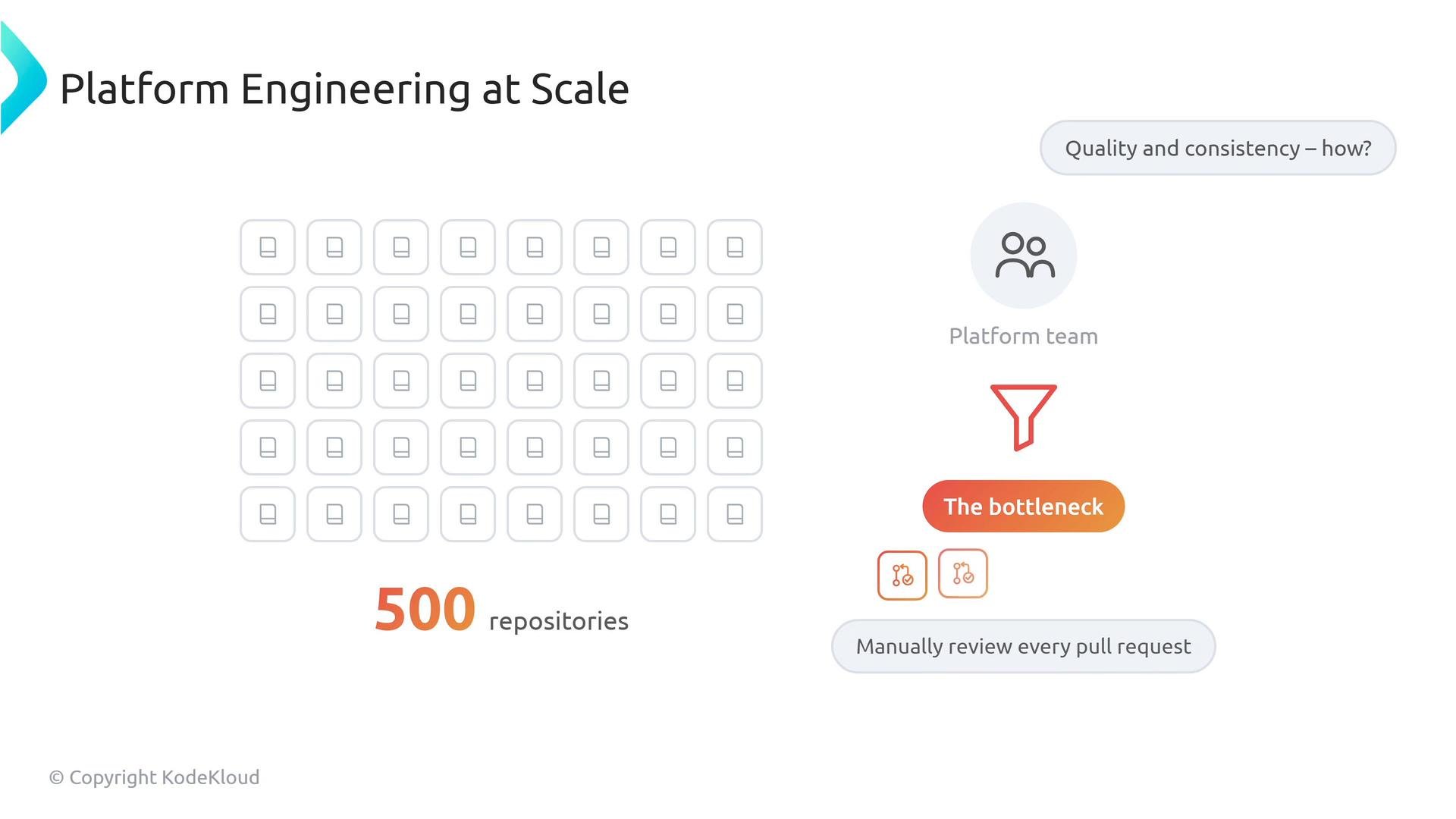
Why this matters: How do you maintain code quality and consistency across 500 repositories without your platform team manually reviewing every pull request?
- Codespaces gives every developer the same cloud IDE and tooling.
CODEOWNERSautomatically routes reviewers based on changed files.SECURITY.mddefines how external researchers responsibly disclose issues.
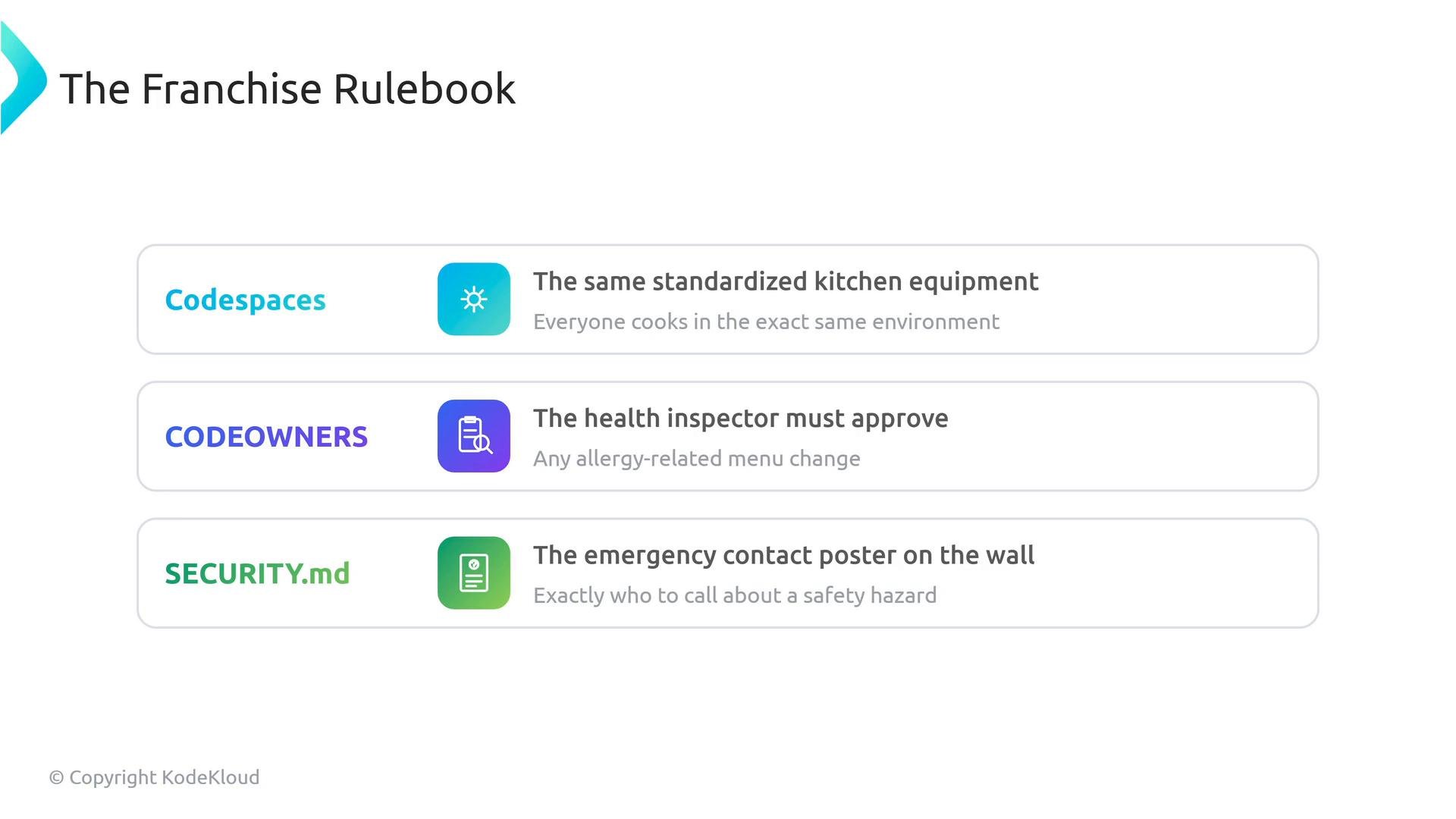
- Standardize the developer environment with GitHub Codespaces
- Place a Codespaces configuration in
.devcontainer/devcontainer.json. - That configuration guarantees the same editor extensions, runtime image, and initialization commands for every developer who opens a codespace.
.devcontainer/devcontainer.json:
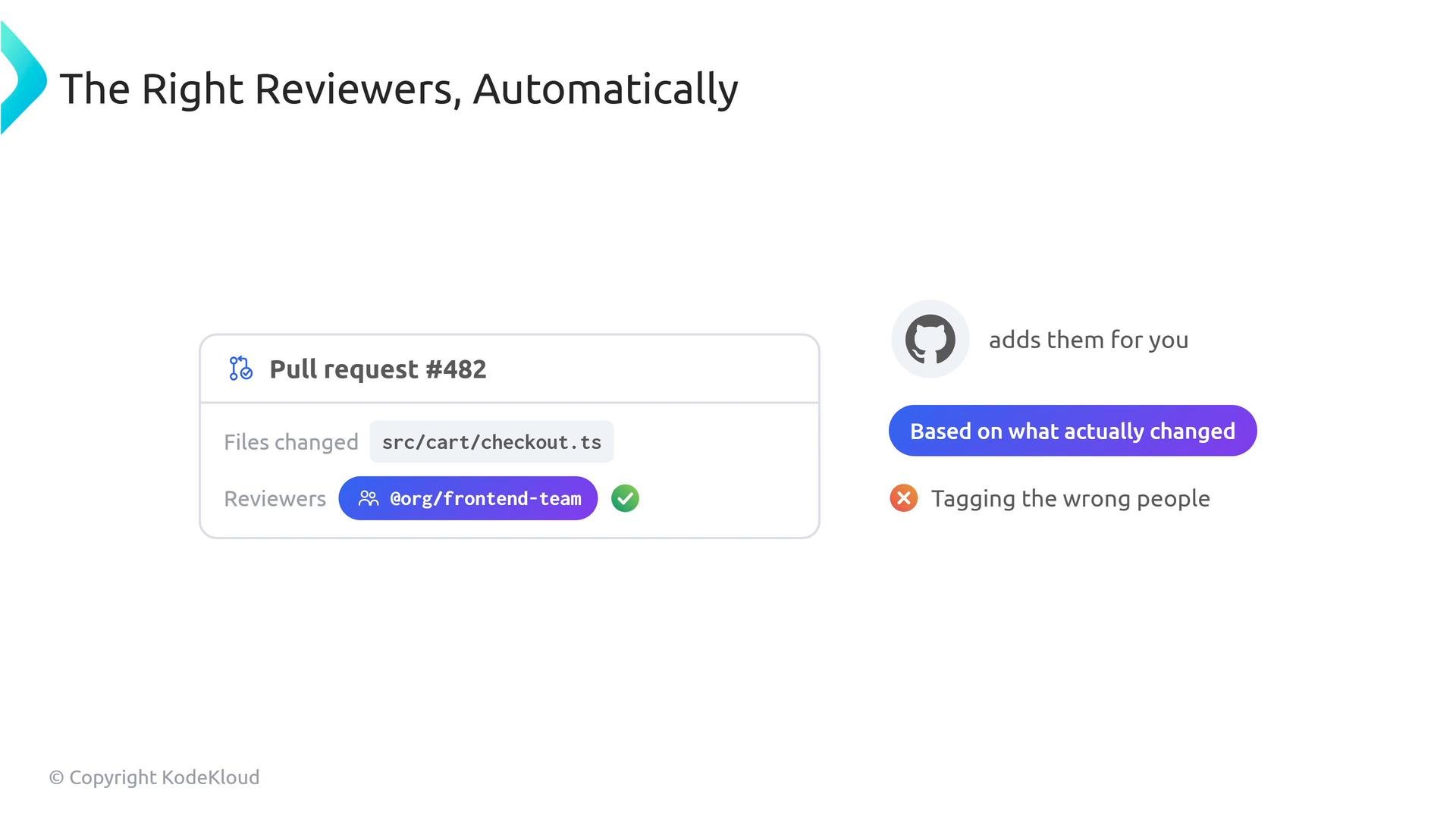
- Automate reviewer assignment with CODEOWNERS
- Add a
CODEOWNERSfile in.github/CODEOWNERSor at the repository root. - Define patterns that map files and directories to teams or users so GitHub requests the right reviewers automatically.
CODEOWNERS example:
- Provide a secure, private disclosure channel with SECURITY.md
- Place
SECURITY.mdin the repository root or in.github/SECURITY.md. - GitHub surfaces this file in the repository Security tab so external researchers and contributors know the responsible-disclosure process and the correct contact details.
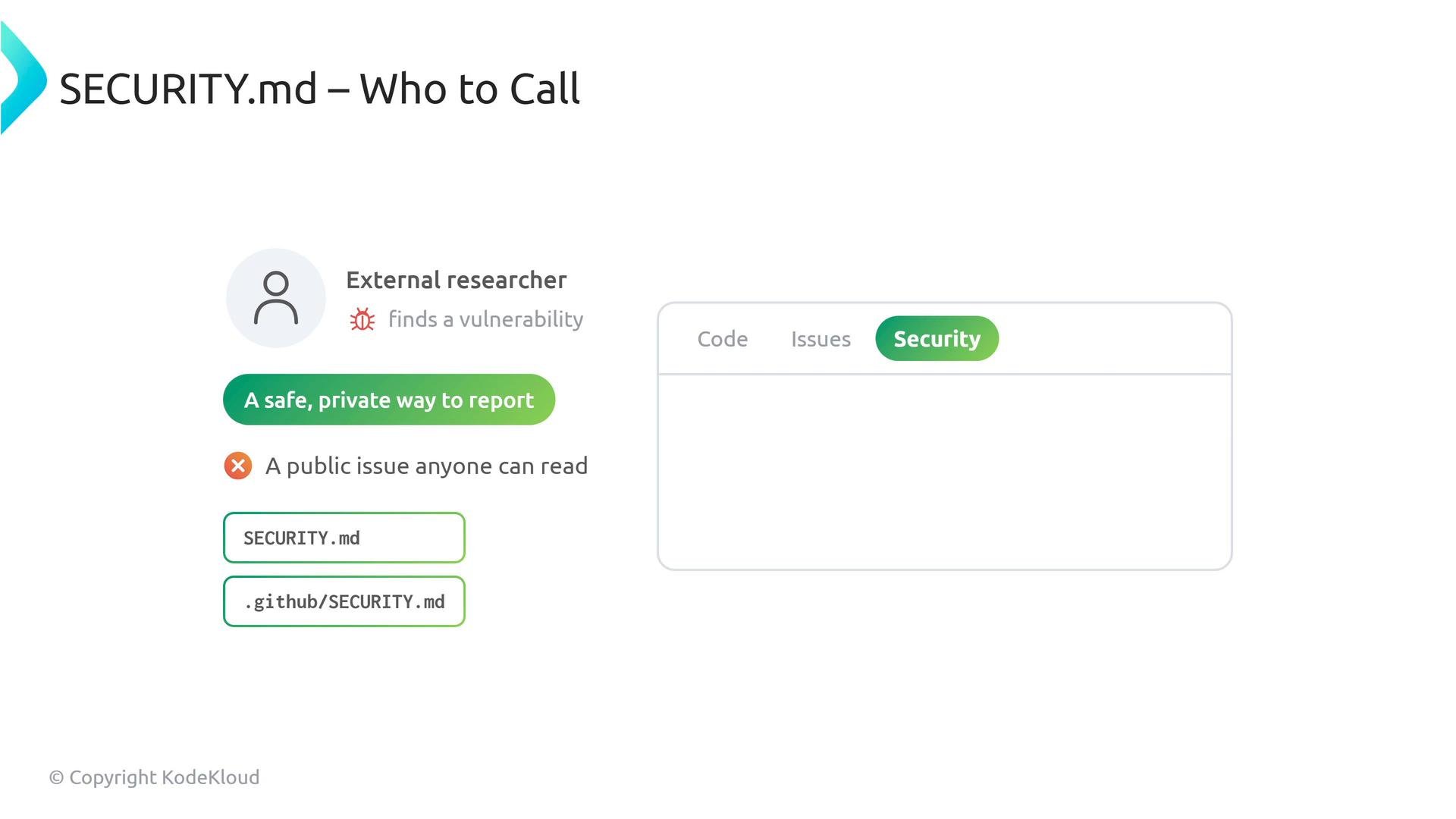
Common repository locations (GitHub will pick these up automatically):
Place these files in the correct paths. Mistplacing them (e.g., in a nested folder) can prevent GitHub from recognizing your Codespaces configuration, auto-requesting reviewers, or displaying your security policy.
- Use these files as part of your platform team’s repo templates or an organization-wide repository strategy to ensure every new repo adopts the same standards automatically.
- Consider combining these with repository templates, GitHub Actions, or a central onboarding repo to provision and audit compliance across many repositories.
- GitHub Codespaces docs: https://docs.github.com/en/codespaces
- CODEOWNERS documentation: https://docs.github.com/en/repositories/managing-your-repositorys-settings-and-features/customizing-your-repository/about-code-owners
- SECURITY.md guidance: https://docs.github.com/en/code-security/security-policy