

Goal: Make instrumentation easy, consistent, and universal
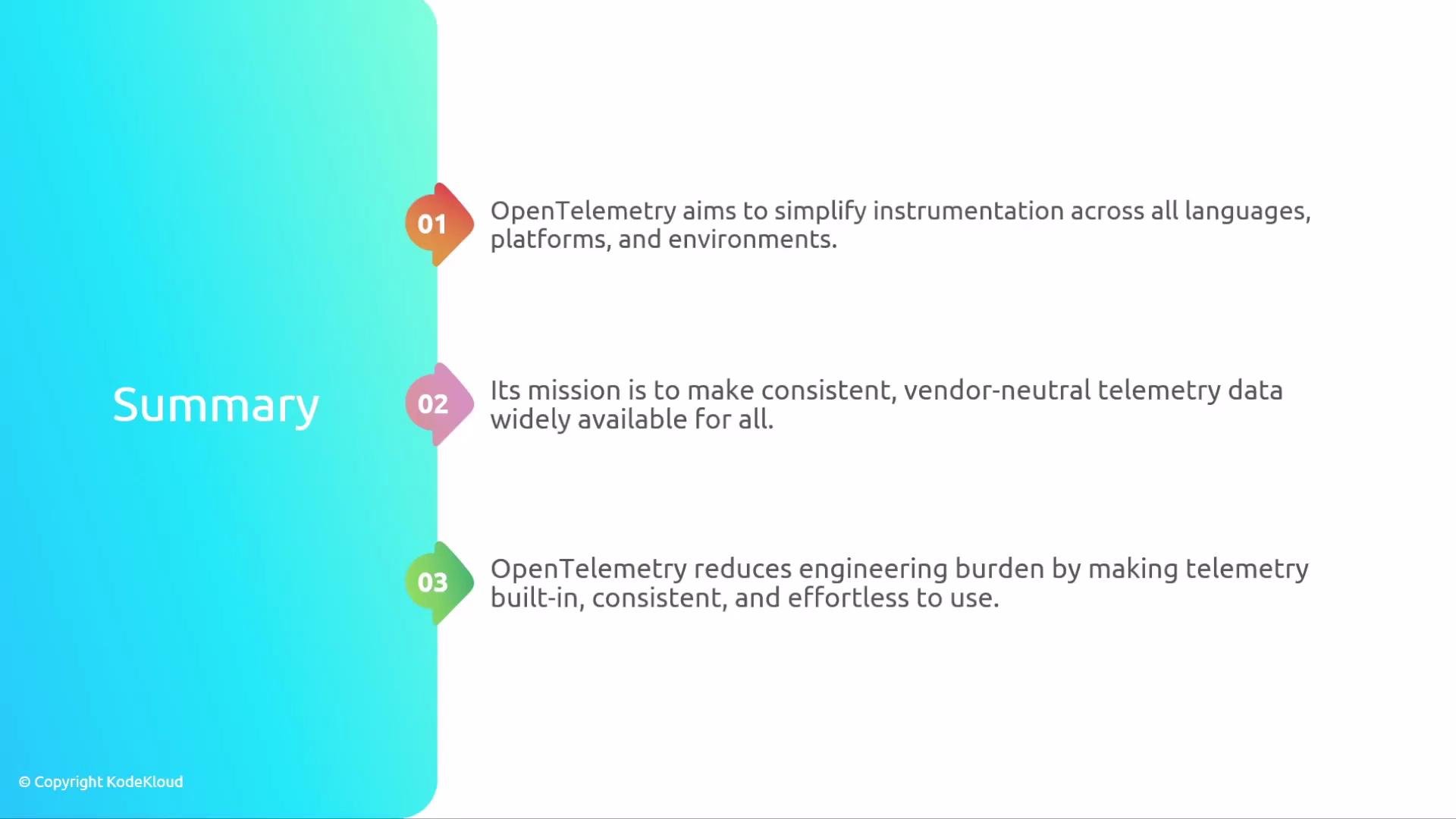
OpenTelemetry’s primary goal is to simplify application instrumentation across languages and environments (Java, Python, Node.js, containers, serverless, etc.). The project provides APIs, SDKs, and auto-instrumentation libraries so developers don’t have to build bespoke instrumentation for each platform.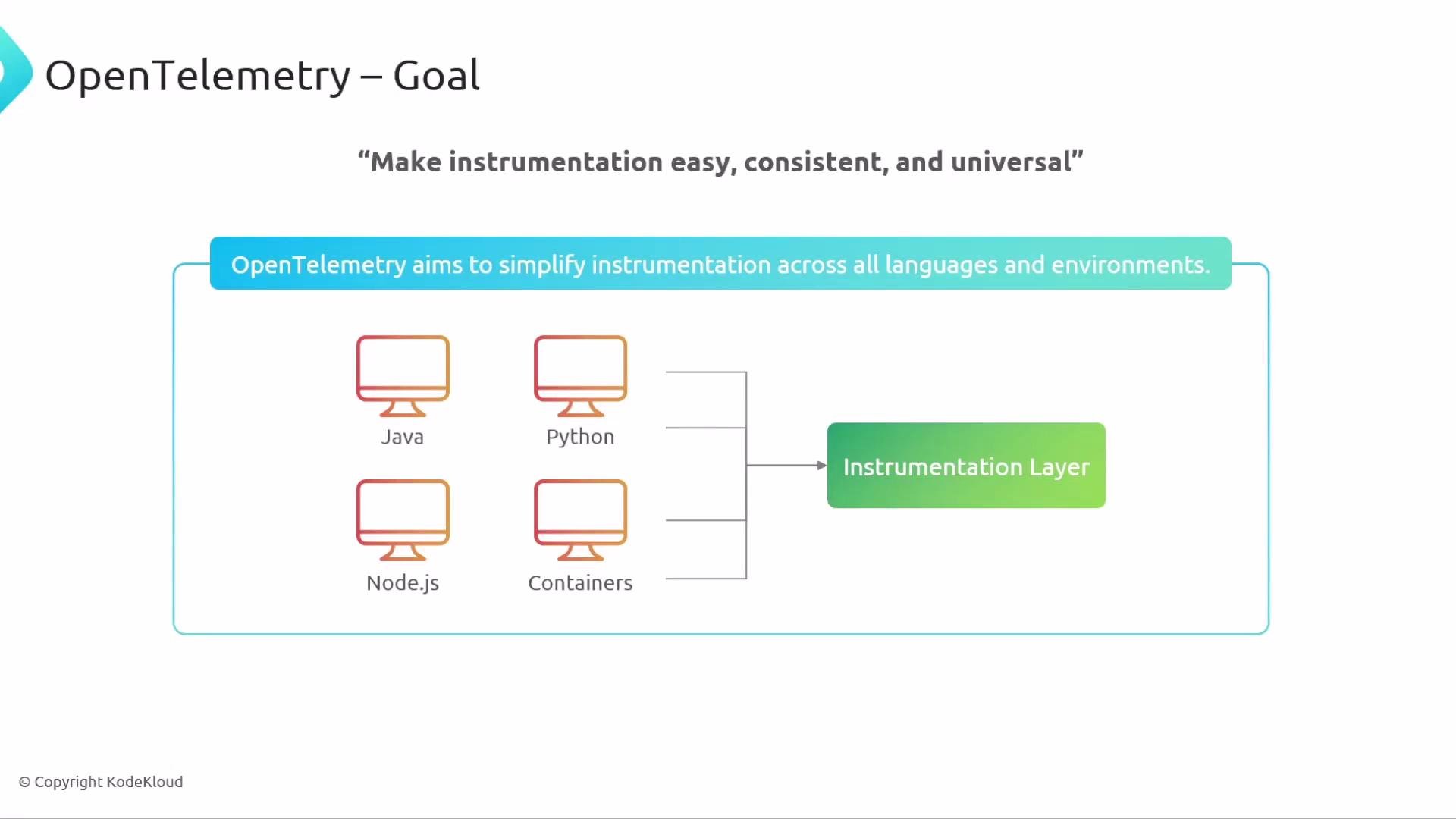
OpenTelemetry provides APIs, SDKs, auto-instrumentation libraries, and the Collector for generating and exporting telemetry. Storage and visualizations are handled by your chosen observability backend.
Mission: Enable effective observability with high-quality, portable telemetry
The mission is to make high-quality, portable telemetry ubiquitous so teams can achieve effective observability. Portable telemetry means data is consistent and usable across tools and vendors—so you can change backends without losing signal fidelity.
- Consistent semantic conventions and signal formats.
- Portable instrumentation that works across languages and platforms.
- High signal quality so telemetry is actionable for debugging, SLOs, and capacity planning.
Vision: How telemetry should work in practice
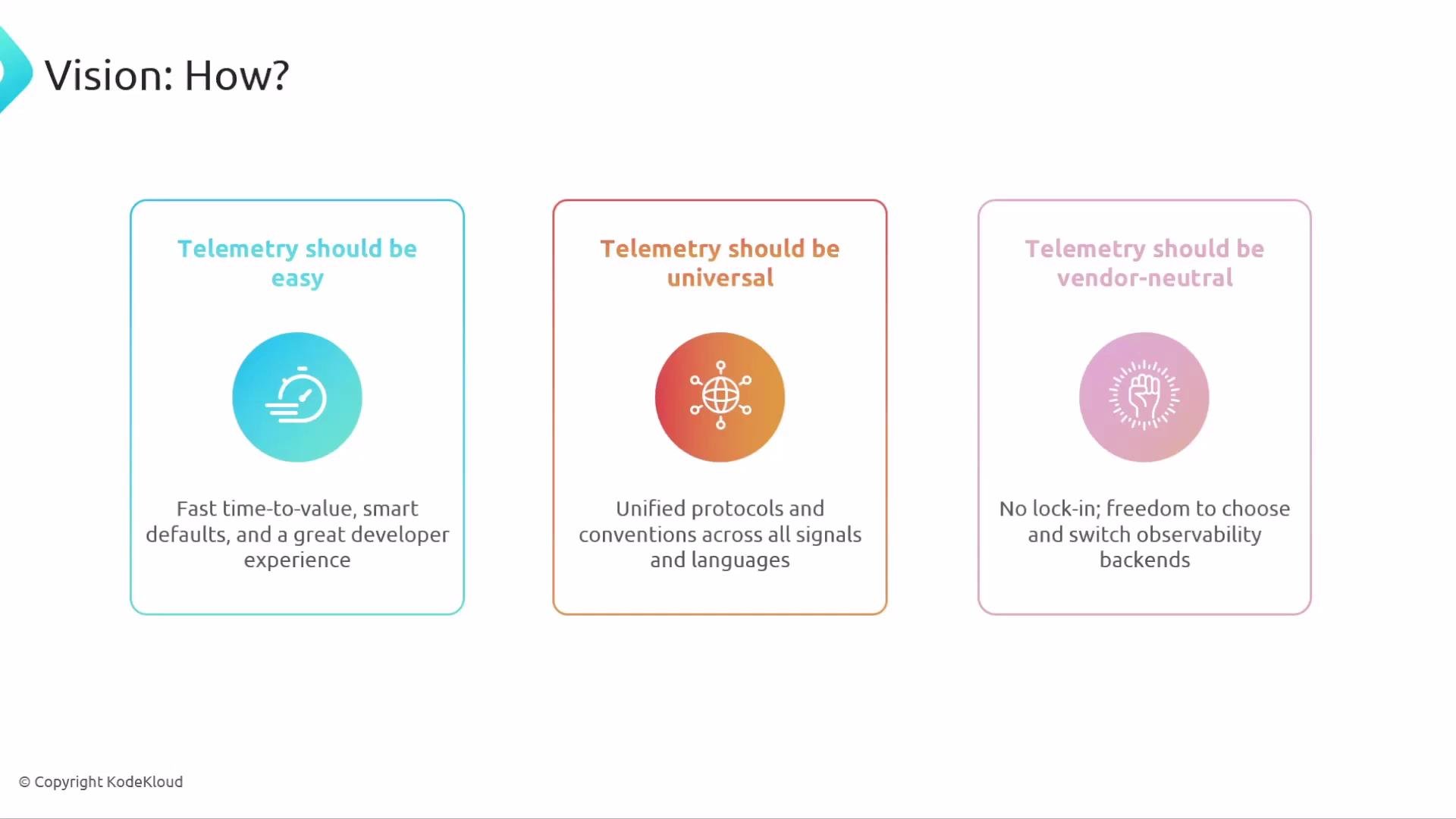
OpenTelemetry’s vision is about the practical experience for developers and operators:- Easy to adopt with fast time to value and sensible defaults.
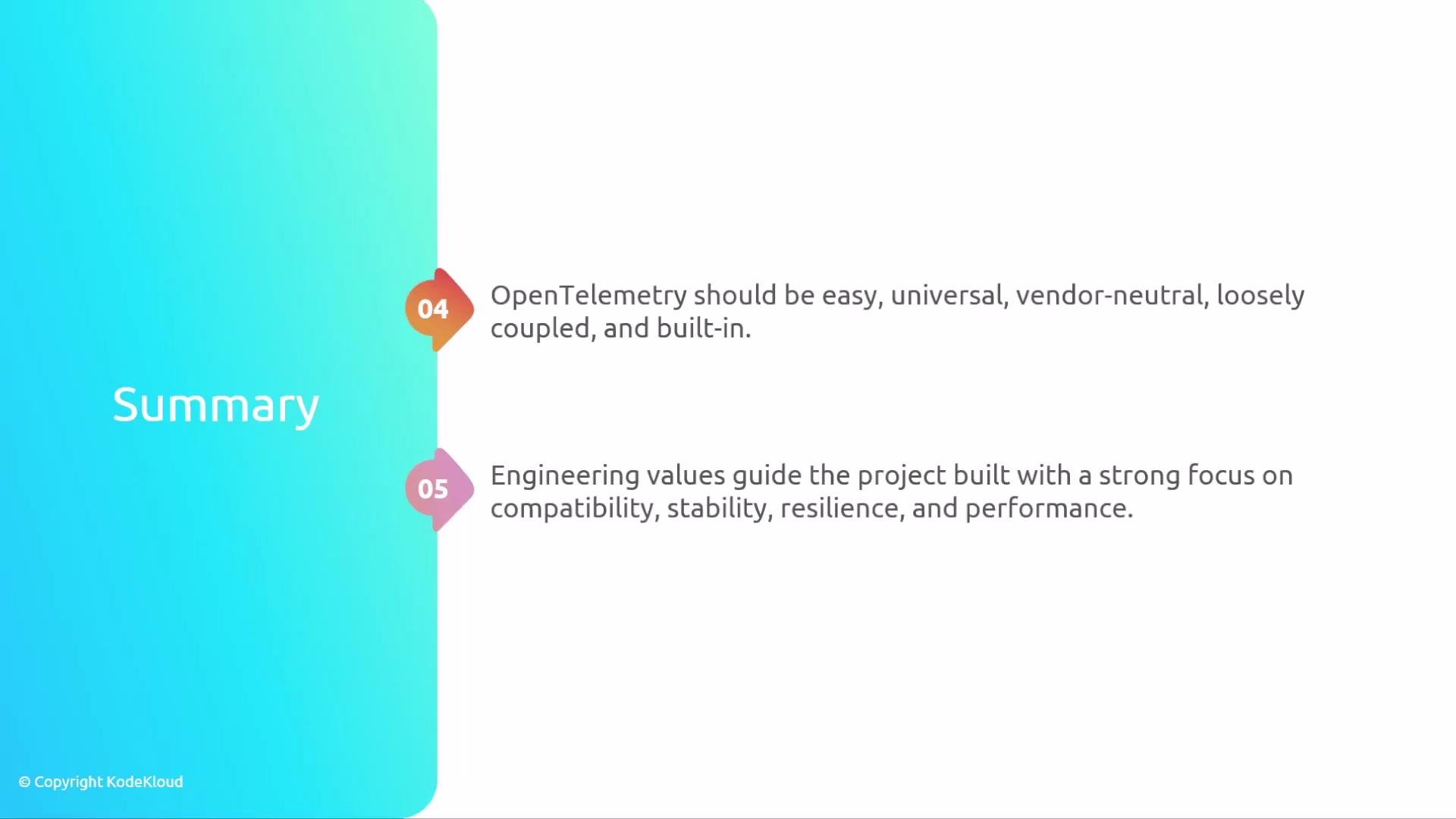
- Universal: unified protocols and conventions across signals and languages.
- Vendor-neutral: freedom to choose or switch observability backends.
- Composable: use only the components you need—the in-app SDKs, auto-instrumentation, and/or the Collector.
Why built-in telemetry matters
Telemetry should be a first-class engineering concern: available early, native to the application lifecycle, and consistent across services. Treating telemetry as a foundational part of development reduces fragmentation, accelerates troubleshooting, and prevents costly rework.
- Faster incident detection and root-cause analysis
- Consistent metrics and trace context across services
- Easier onboarding for new teams and tools
Engineering values that guide OpenTelemetry
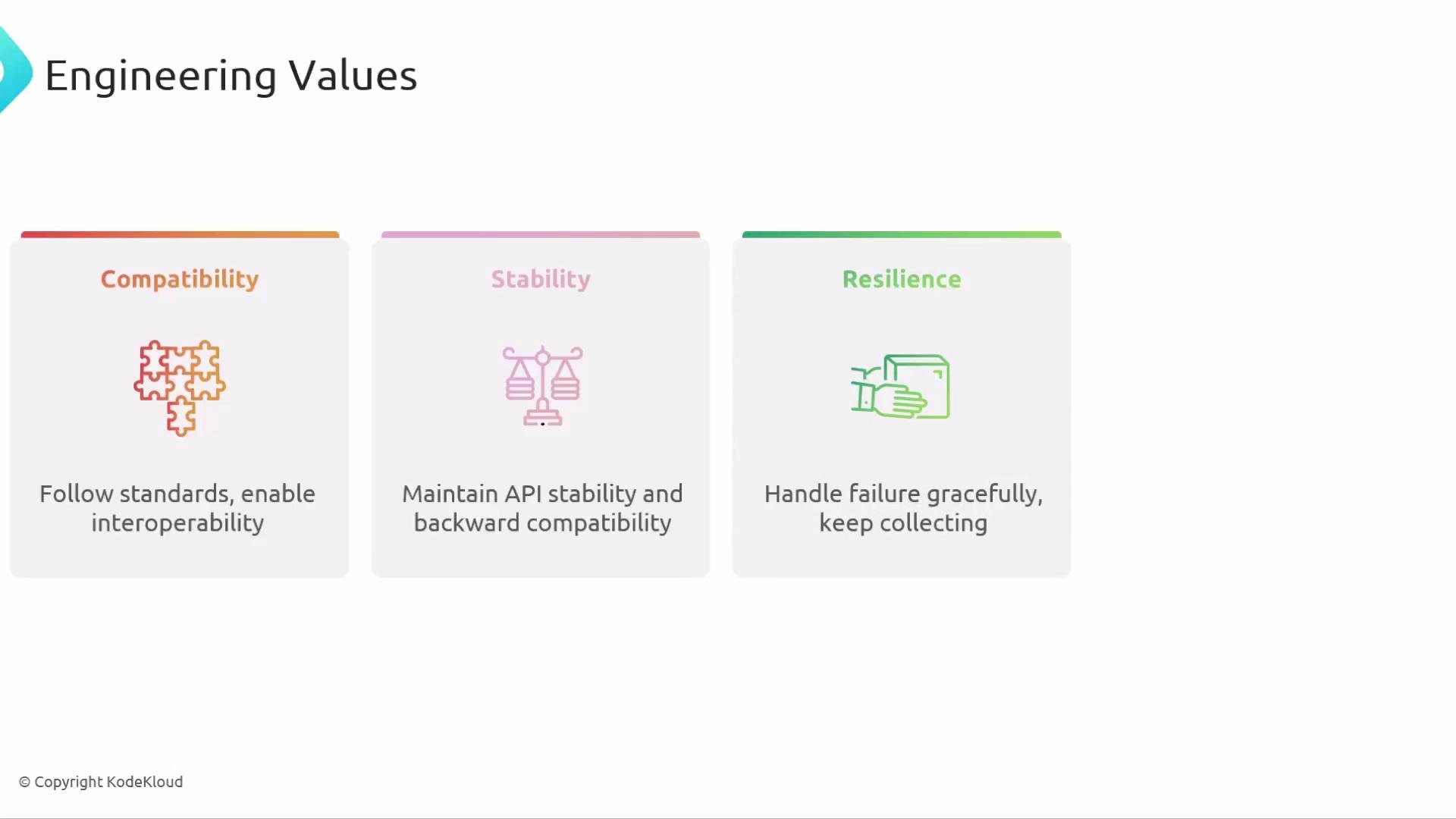
OpenTelemetry is guided by several engineering principles that shape design and implementation choices:- Compatibility: follow open standards and ensure interoperability with multiple backends and protocols.
- Stability: maintain stable APIs and backward compatibility to protect integrations.
- Resilience: minimize data loss and ensure instrumentation does not cause application failures.
- Performance: keep telemetry overhead very low so instrumentation does not degrade application performance.
When adding telemetry to production systems, prioritize safe defaults and low overhead. Instrumentation must not cause application instability or unacceptable performance regressions.
Recap: Goals, Mission, Vision, and Values (Quick Reference)
Links and References
- OpenTelemetry official site: https://opentelemetry.io/
- OpenTelemetry GitHub: https://github.com/open-telemetry
- OpenTelemetry Collector: https://opentelemetry.io/docs/collector/
- Instrumentation libraries and language guides: https://opentelemetry.io/docs/instrumentation/