

OpenTelemetry component lifecycle
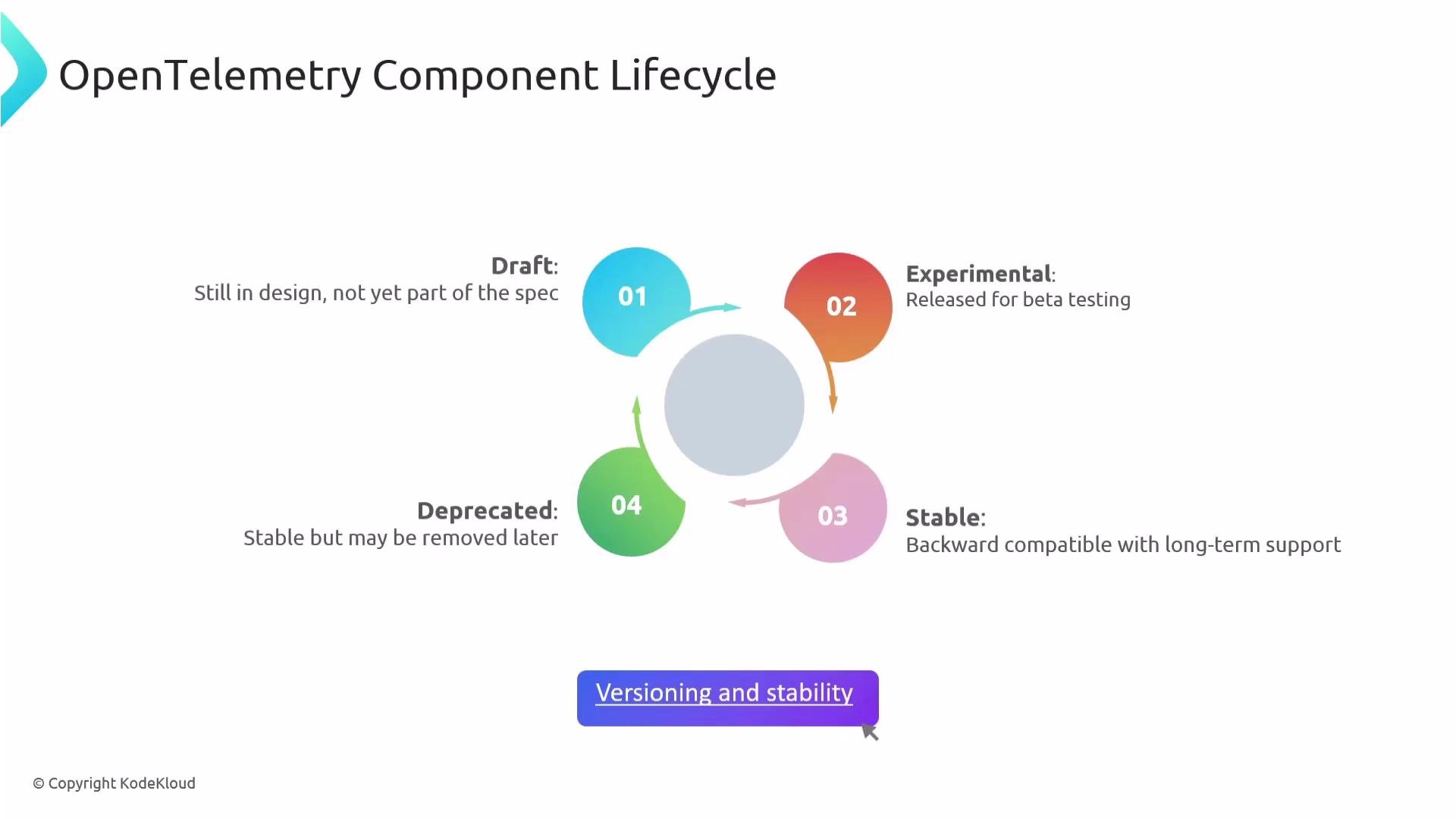
The specification status pages evolve over time. Check the official OpenTelemetry specs/status pages (OpenTelemetry specification repository) for the latest maturity indicators before making production decisions.
Official status summary (signals and components)
The OpenTelemetry specification provides a status summary table for each signal across these components: API, SDK, OTLP protocol, and Collector. The table below condenses the current maturity snapshot for common signals. This helps teams decide which parts are safe to rely on in production and which are still maturing.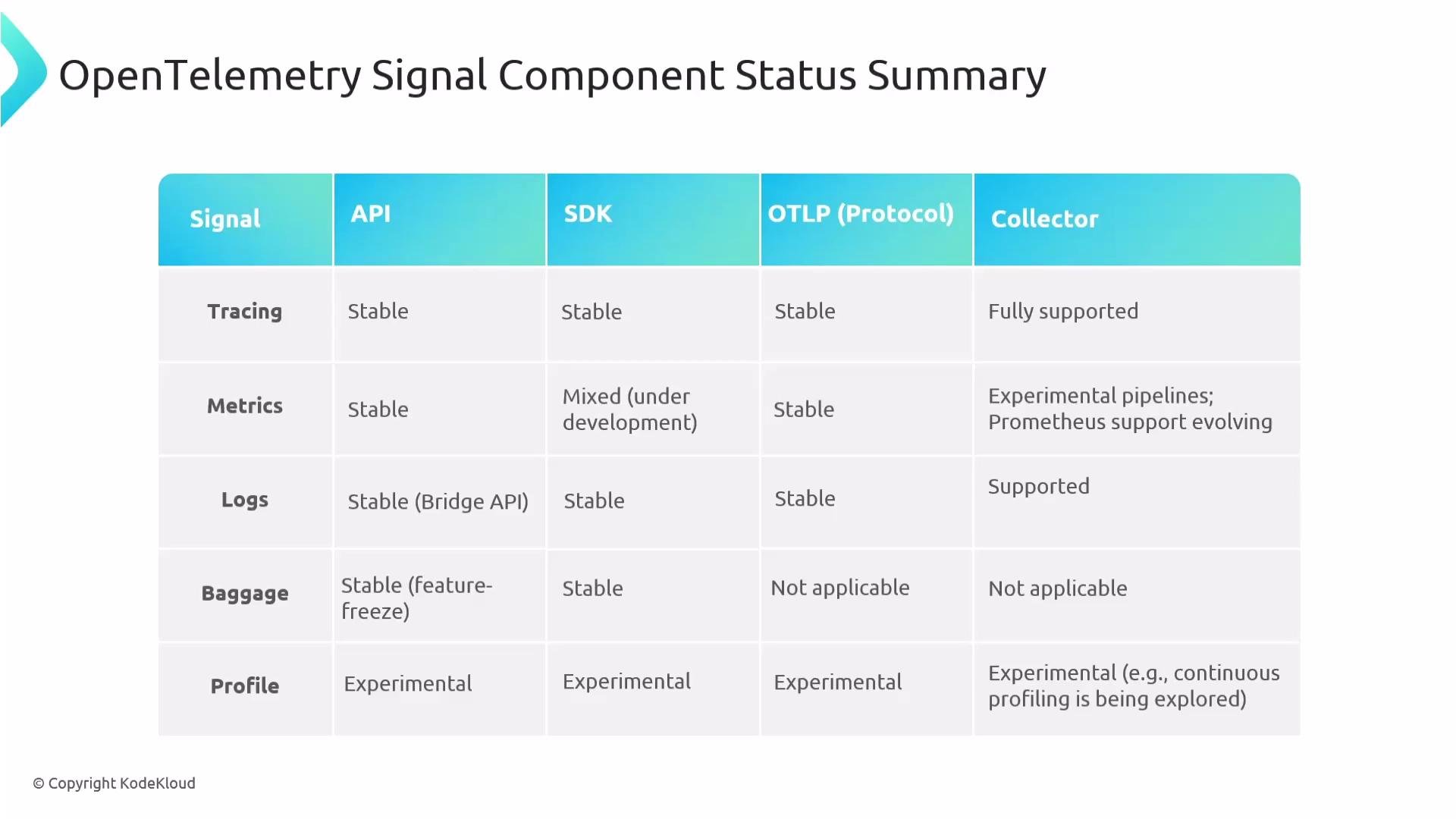
How to use this information
- Prefer Stable components for production workloads (e.g., tracing).
- Use Experimental components with caution and for testing or evaluation purposes.
- Track deprecation notices and migration guidance for components marked Deprecated.
- Consult the canonical status table in the specification repository before adopting or upgrading components.
- OpenTelemetry specification repository — status & maturity
- OpenTelemetry documentation
- OpenTelemetry Collector