

- It serves as a domain registrar. You can purchase domain names directly—similar to platforms like GoDaddy or Namecheap. For instance, if you want to register a domain such as kodekloud.com, you can do so through Route 53.
- It provides comprehensive DNS record management through a user-friendly console.
- It is a global service, ensuring your DNS management is not constrained by any specific AWS region.
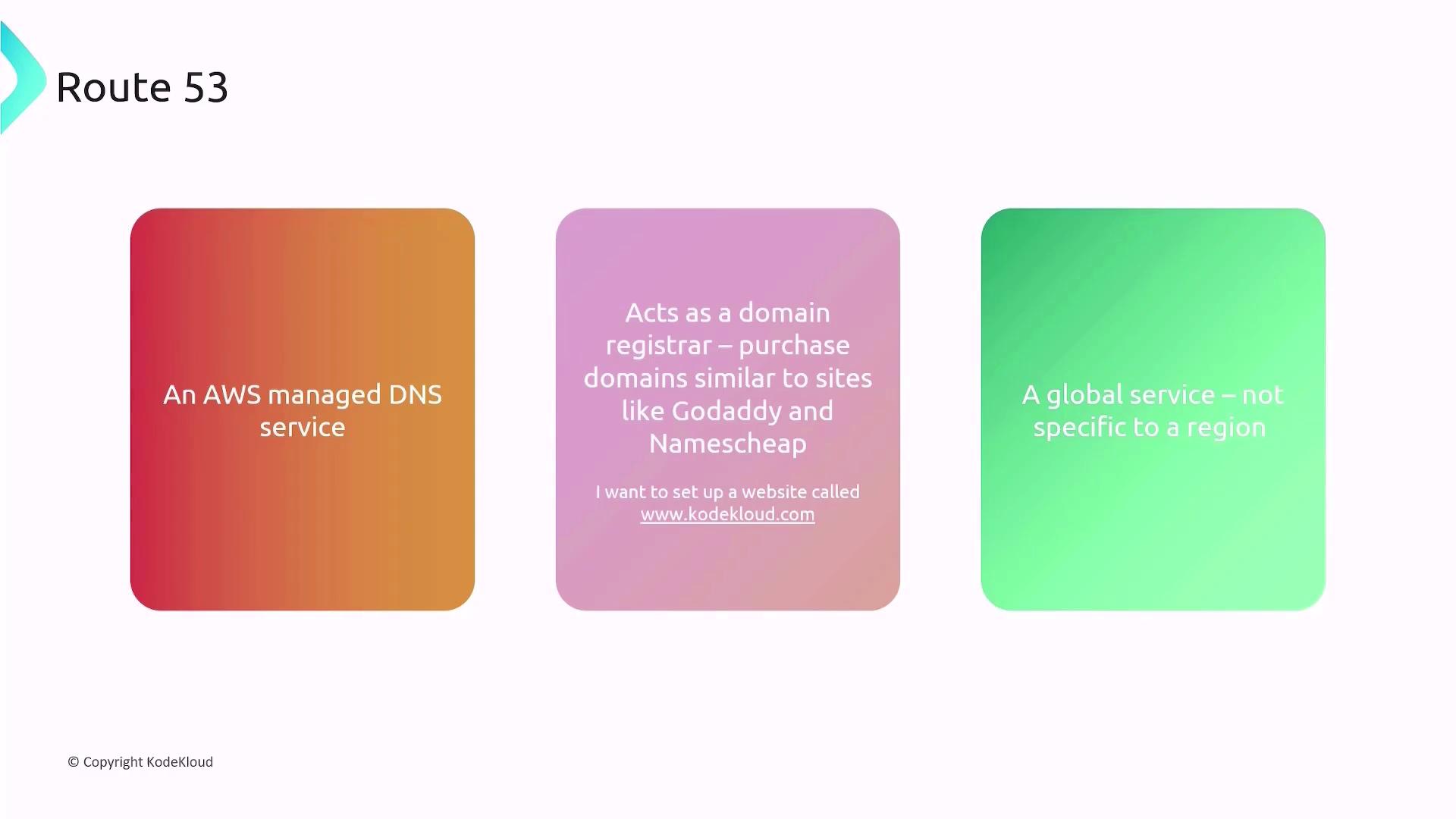
Route 53 integrates domain registration and DNS management, streamlining the process for developers and IT professionals.
Hosted Zones and Domain Management
A fundamental concept in Route 53 is the hosted zone. When you want Route 53 to manage the DNS for your domain—say, kodekloud.com—you create a hosted zone. Think of a hosted zone as a container that stores all the DNS records and rules associated with a particular domain. Each time you create a hosted zone, AWS automatically assigns four dedicated name servers to that zone. This process is repeated for every domain you manage. For example, if you register another domain such as fastcars.com, a unique hosted zone is created with its own set of four name servers to handle DNS record management.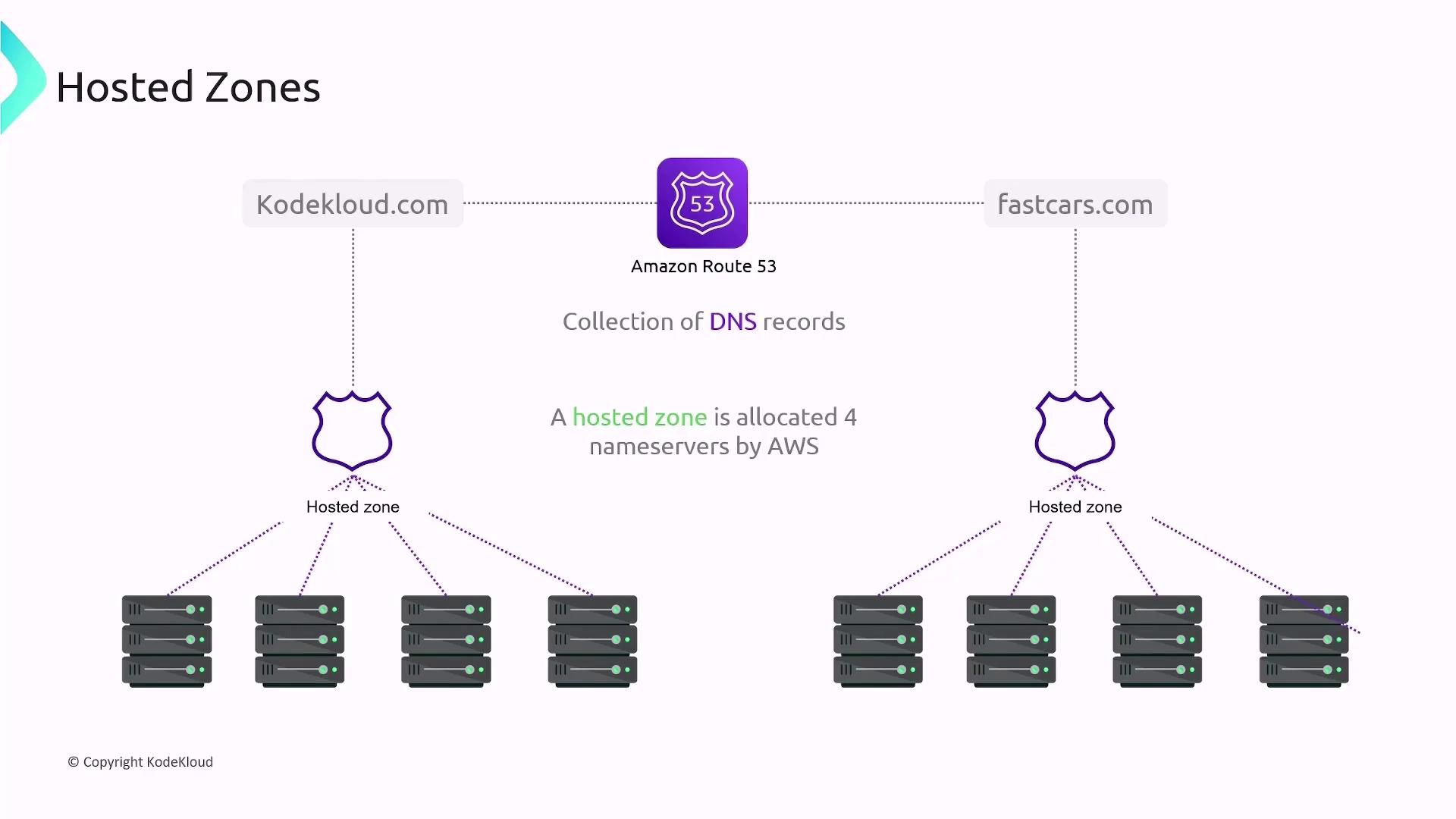
Each hosted zone is independent, ensuring that the DNS management for one domain does not affect another.