

Benefits of Reusing the Execution Context
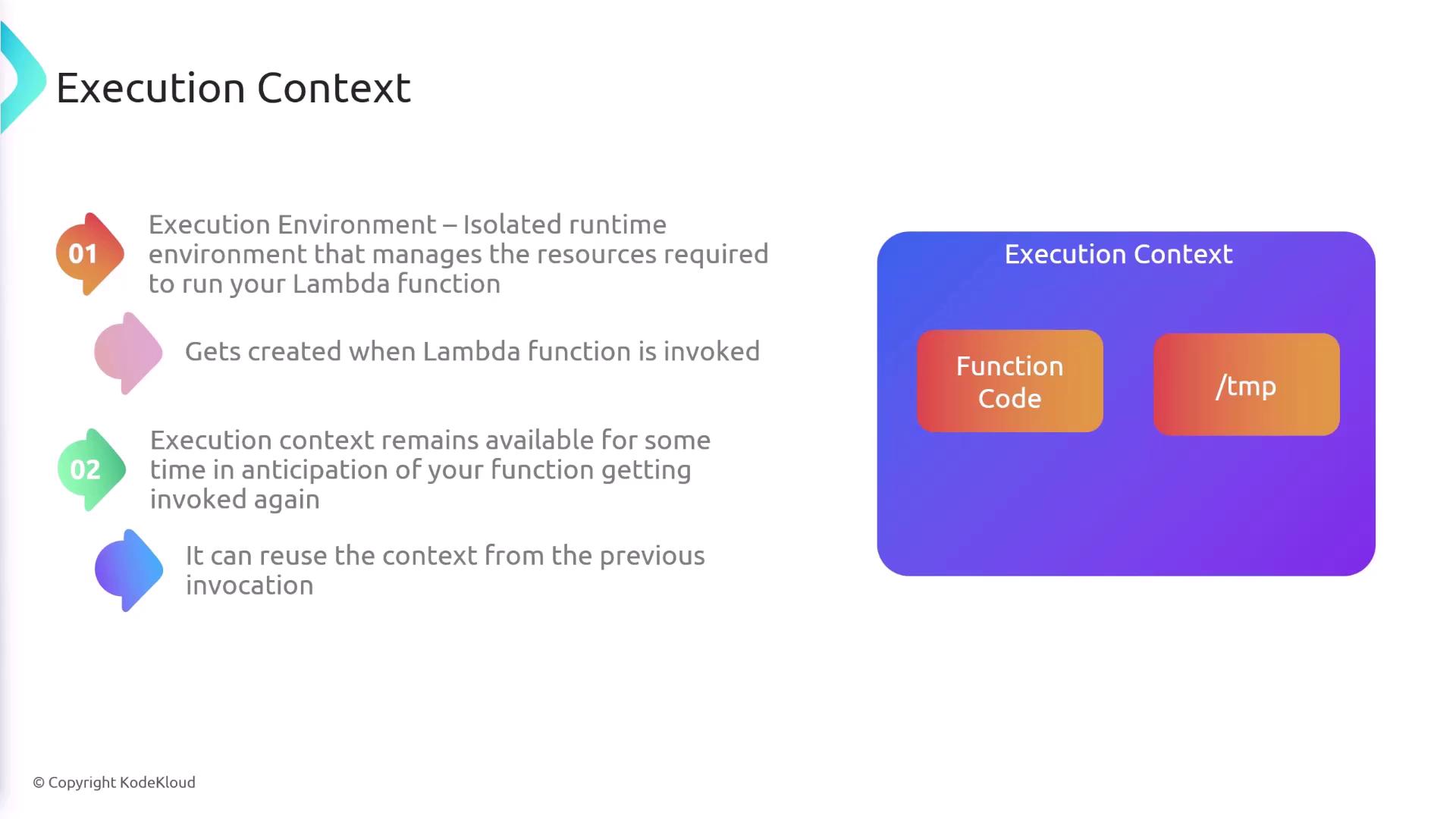
When a Lambda function is invoked for the first time, AWS sets up a fresh execution context. This context includes resources such as function code, libraries, and temporary storage. Because the context stays alive for a period after the function completes, it can be utilized for future invocations. This reuse is particularly beneficial when initializing resource-intensive components like database connections, Software Development Kits (SDKs), or HTTP clients.By defining expensive resources outside the main handler function, you can significantly reduce the latency that comes with repeated initialization, leading to improved performance.
Initializing Inside the Handler
In this example, the MongoDB client is created within the handler. While functional, this approach establishes a new database connection on every invocation, which can cause performance bottlenecks.Initializing Outside the Handler
A more efficient method involves initializing the MongoDB client outside the Lambda handler. This way, the client is created only once and reused across invocations, reducing connection overhead and enhancing performance.Utilizing the /tmp Directory
In addition to the execution context, AWS Lambda provides access to the /tmp directory. This temporary storage area is available for the entire lifetime of the execution context and can be used to perform tasks such as downloading or processing large files. You can configure the /tmp directory to store up to 10 gigabytes of data, making it an invaluable resource for operations that require temporary file storage between invocations.When dealing with file-based operations, leverage the /tmp directory to minimize the need for external storage solutions and ensure high-speed access to temporary files during execution.