

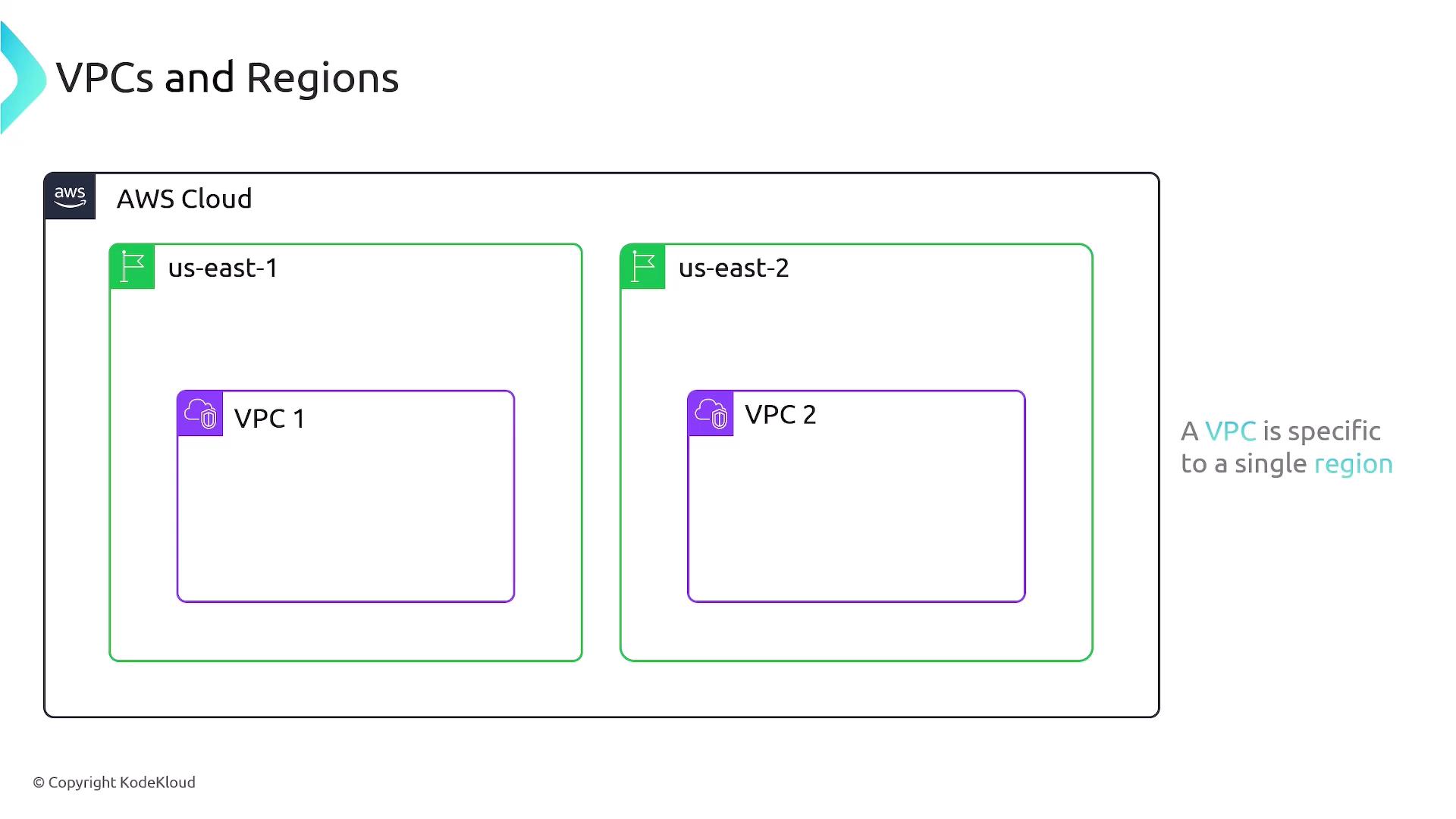
An important aspect for the AWS Solutions Architect exam is that VPCs are specific to a single region. When you create a VPC, you must assign it to a region. For instance, if you create VPC One in the US East 1 region and VPC Two in the US East 2 region, these VPCs are bound to their respective regions and cannot extend across multiple regions.
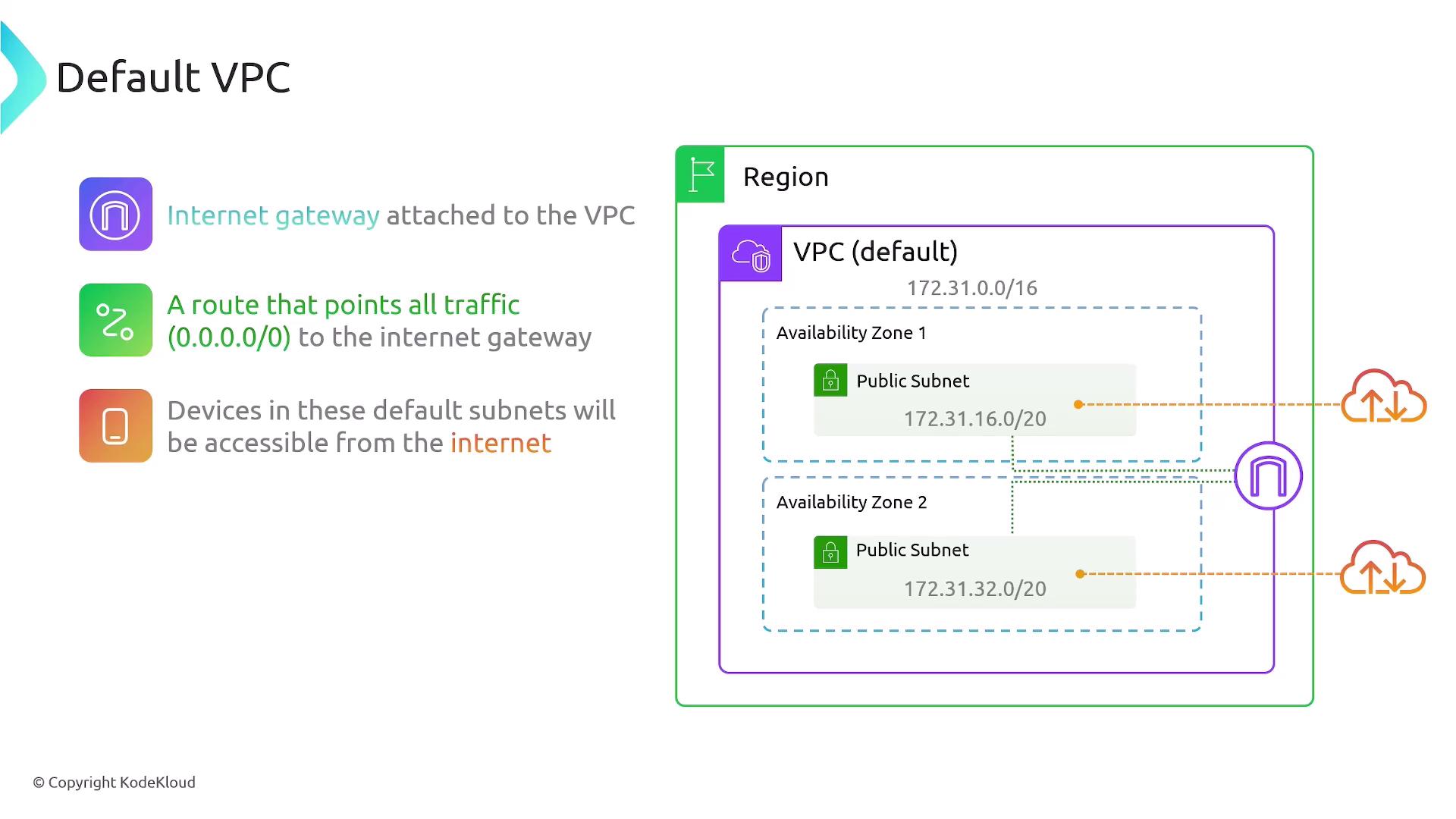
- A default VPC is automatically created by AWS for every region when you set up a new account. This configuration provides immediate internet connectivity for your resources, making it simple to launch servers without additional configuration.
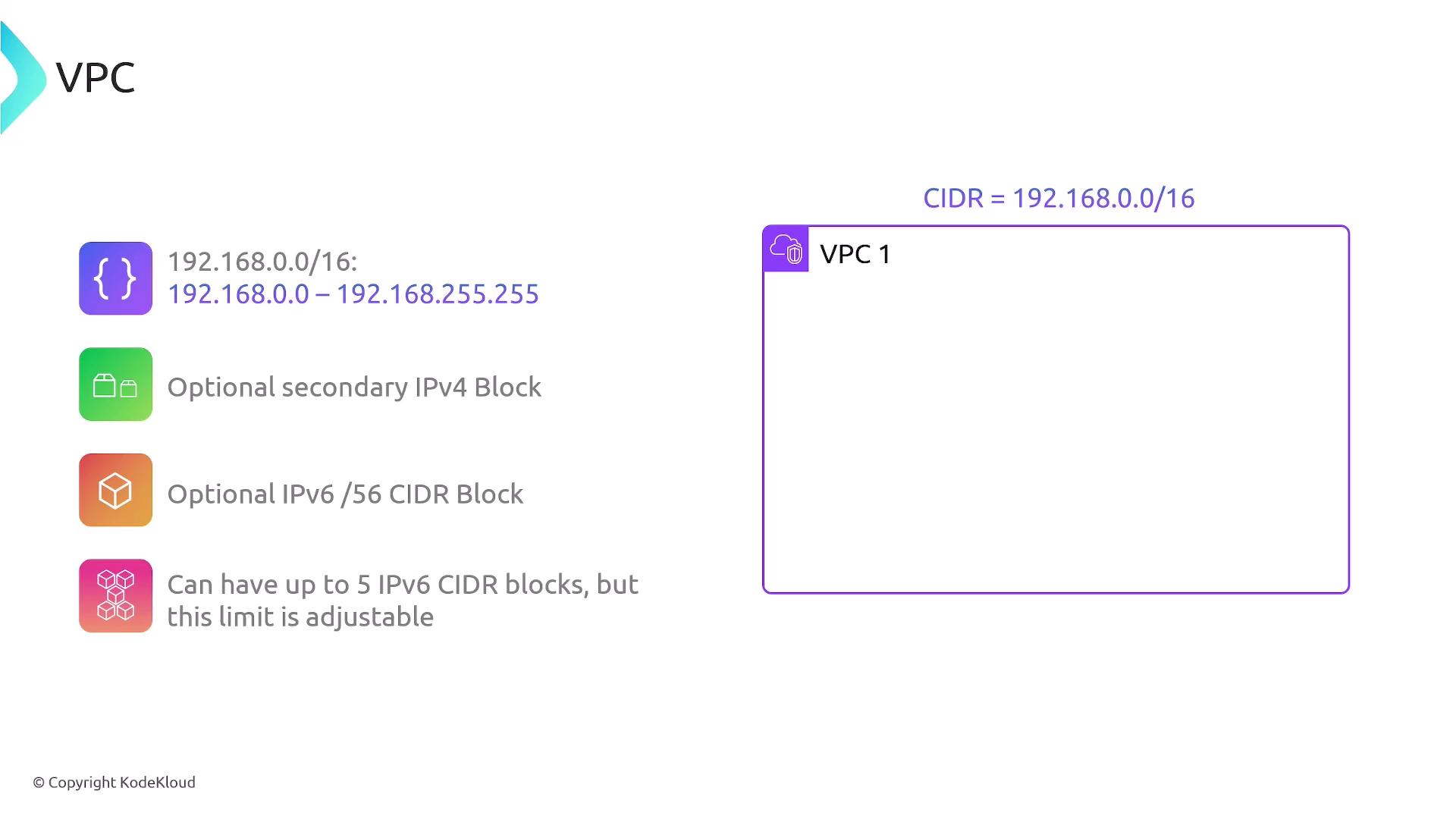
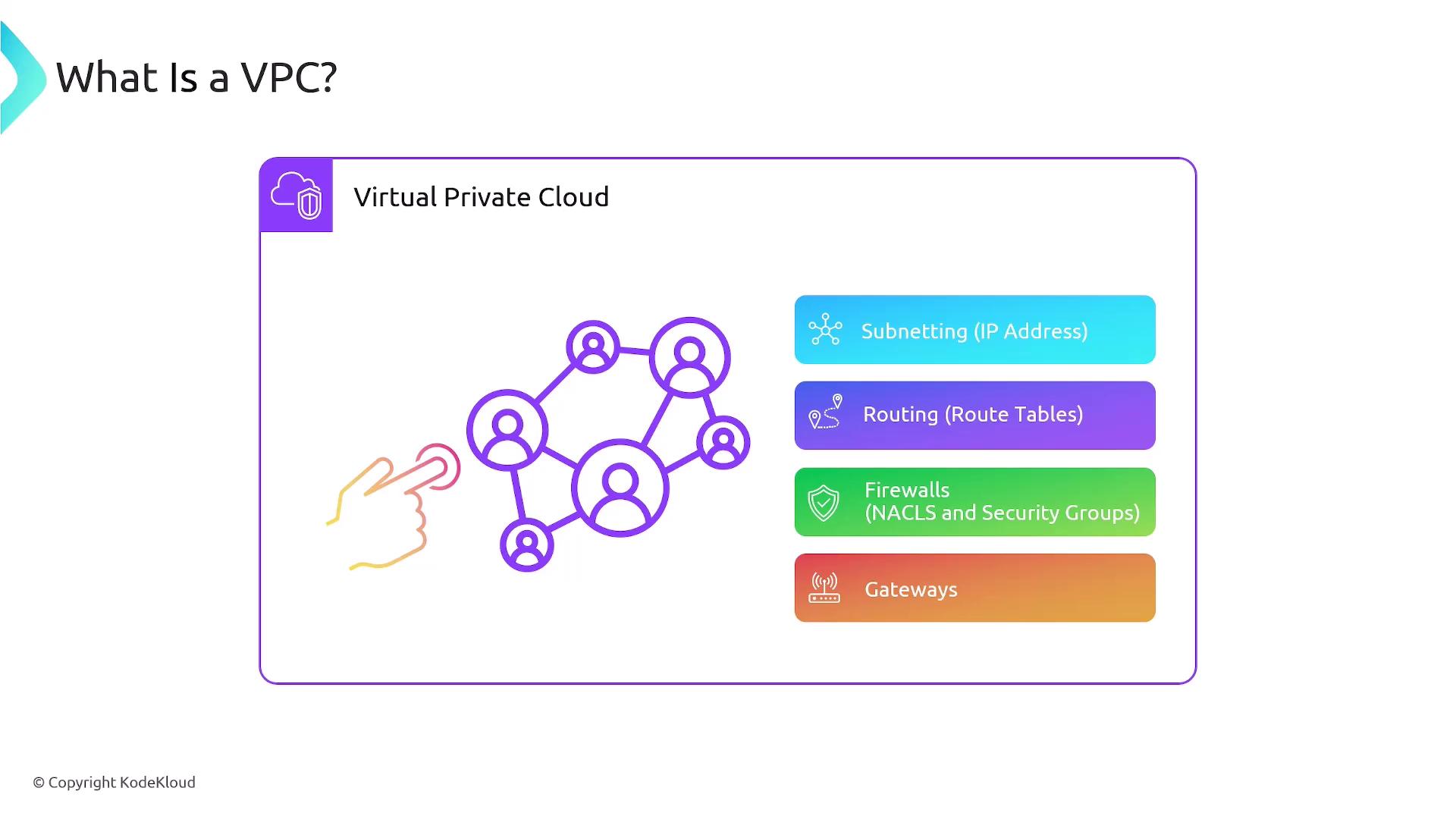
- A custom VPC is one that you create and configure. With a custom VPC, you define all the settings—including the CIDR block, subnets, routing, and security controls—allowing for a tailored network environment that meets your specific requirements.
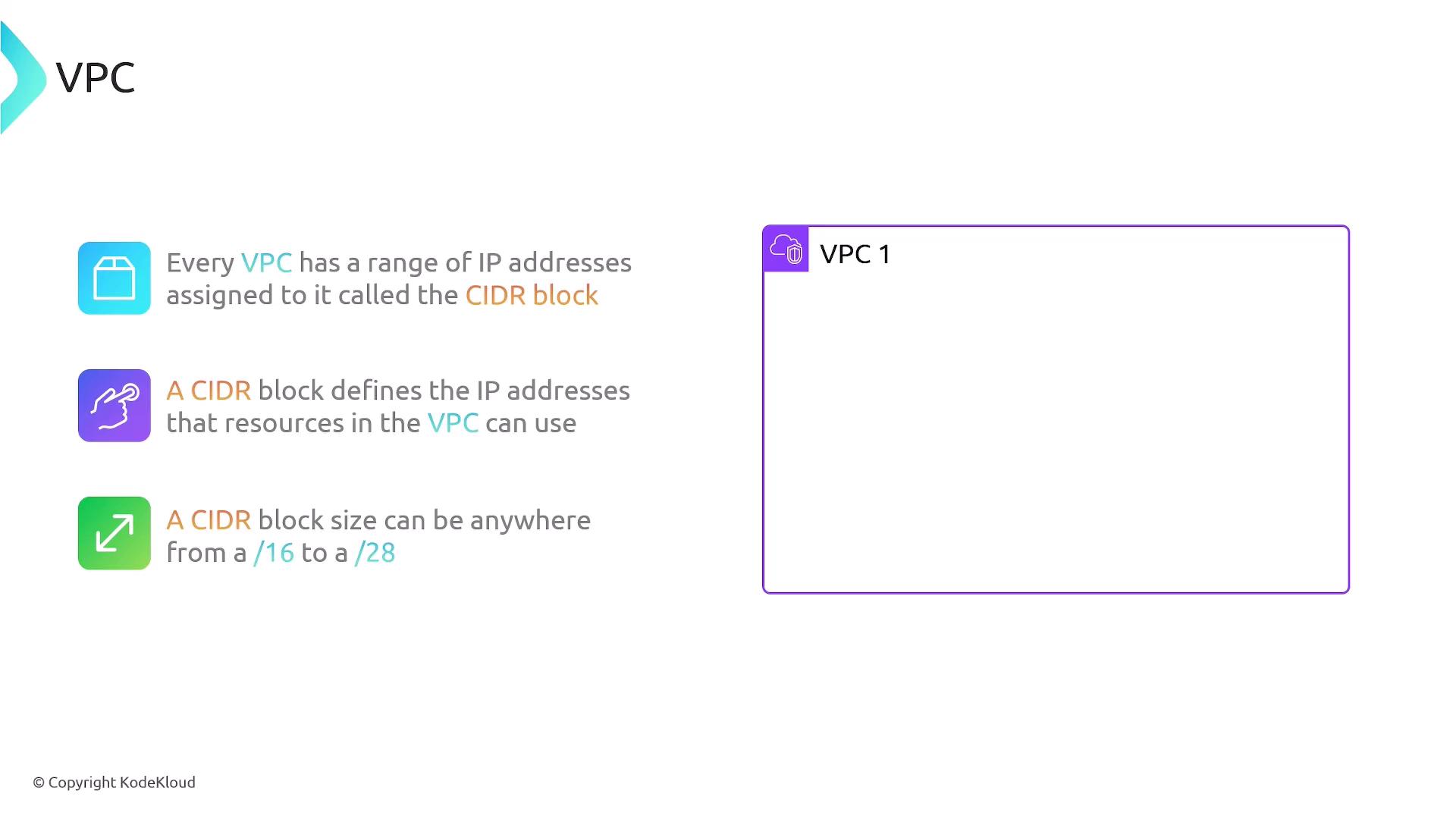
- You receive one default VPC per region, each configured with a /16 IPv4 CIDR block (specifically, 172.31.0.0/16), which provides 65,536 IP addresses.
- In every Availability Zone within that region, a default subnet is created with a /20 CIDR block. For example, one Availability Zone might have the subnet 172.31.16.0/20 and another might have 172.31.32.0/20.
- An internet gateway is attached to the default VPC, and a default route (0.0.0.0/0) directs all outbound traffic to this gateway, ensuring seamless internet connectivity.
- Default security groups and NACLs are set up: the default security group typically allows outbound traffic, while the default NACL permits both inbound and outbound traffic.
Summary
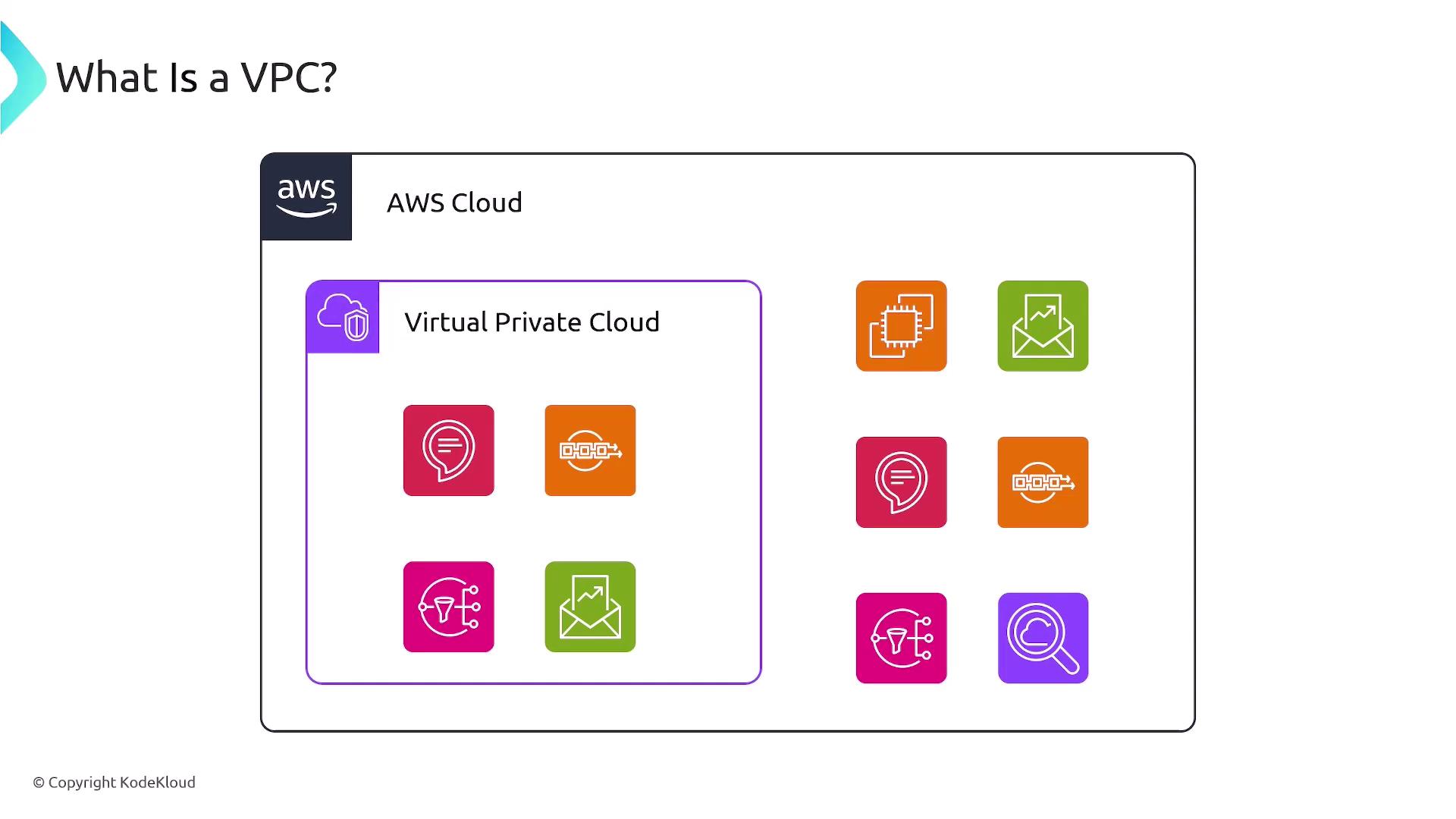
- A VPC isolates computing resources within the cloud and is tied to a specific region.
- The CIDR block assigned to a VPC defines the IP addresses available for its resources.
- You can configure optional secondary IPv4 and IPv6 CIDR blocks.
- Each AWS region includes a default VPC complete with default subnets, an internet gateway, default routing, and essential security controls.
- Default VPC security groups allow outbound traffic, and default NACLs are open for both inbound and outbound traffic.