Amazon RDS Proxy is a managed database proxy that optimizes connection pooling and enhances application performance by reducing connection overhead.
In today’s cloud-centric environments, efficient database connection management is essential. Amazon RDS Proxy is a fully managed, highly available database proxy that optimizes connection pooling and enhances application performance by reducing the overhead of establishing new connections.Imagine multiple instances of your application communicating with an Amazon RDS instance. Without a proxy, each instance independently opening and closing database connections can significantly increase CPU utilization, as the database must constantly manage these connection requests. This problem is even more pronounced with AWS Lambda functions, which can scale rapidly and overwhelm the database with simultaneous connection attempts.
RDS Proxy maintains a pool of pre-established database connections. When an application instance requires a connection, it borrows one from the pool and returns it for reuse after completing its transaction. This pooling mechanism minimizes the need for opening and closing new connections, which reduces CPU and memory usage on the database.
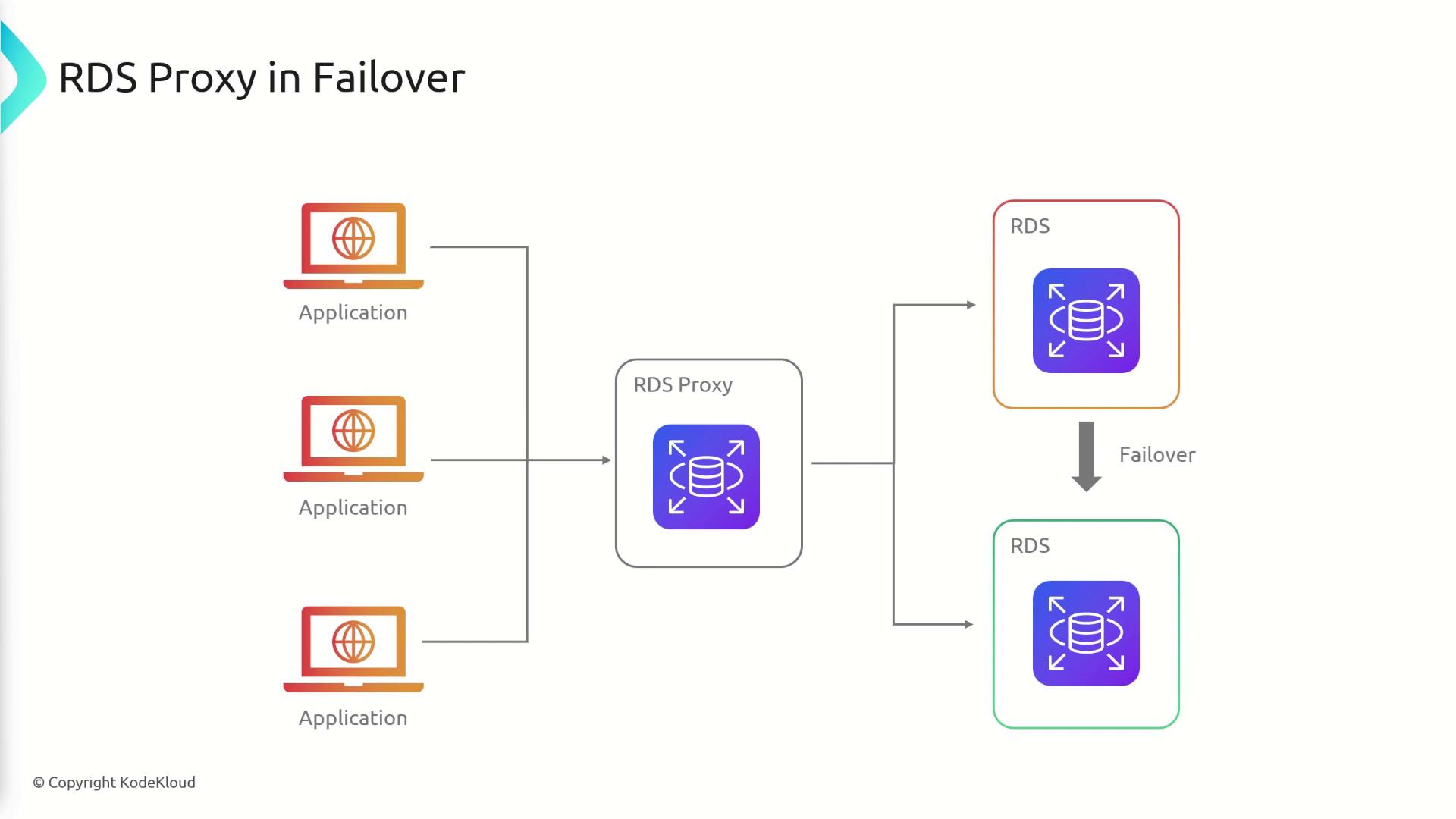
An additional advantage of using RDS Proxy is its robust failover capability. If your primary database instance fails and a failover occurs, RDS Proxy automatically reroutes traffic to the new primary instance. This proactive rerouting helps reduce application errors and ensures a seamless user experience during unexpected database outages.
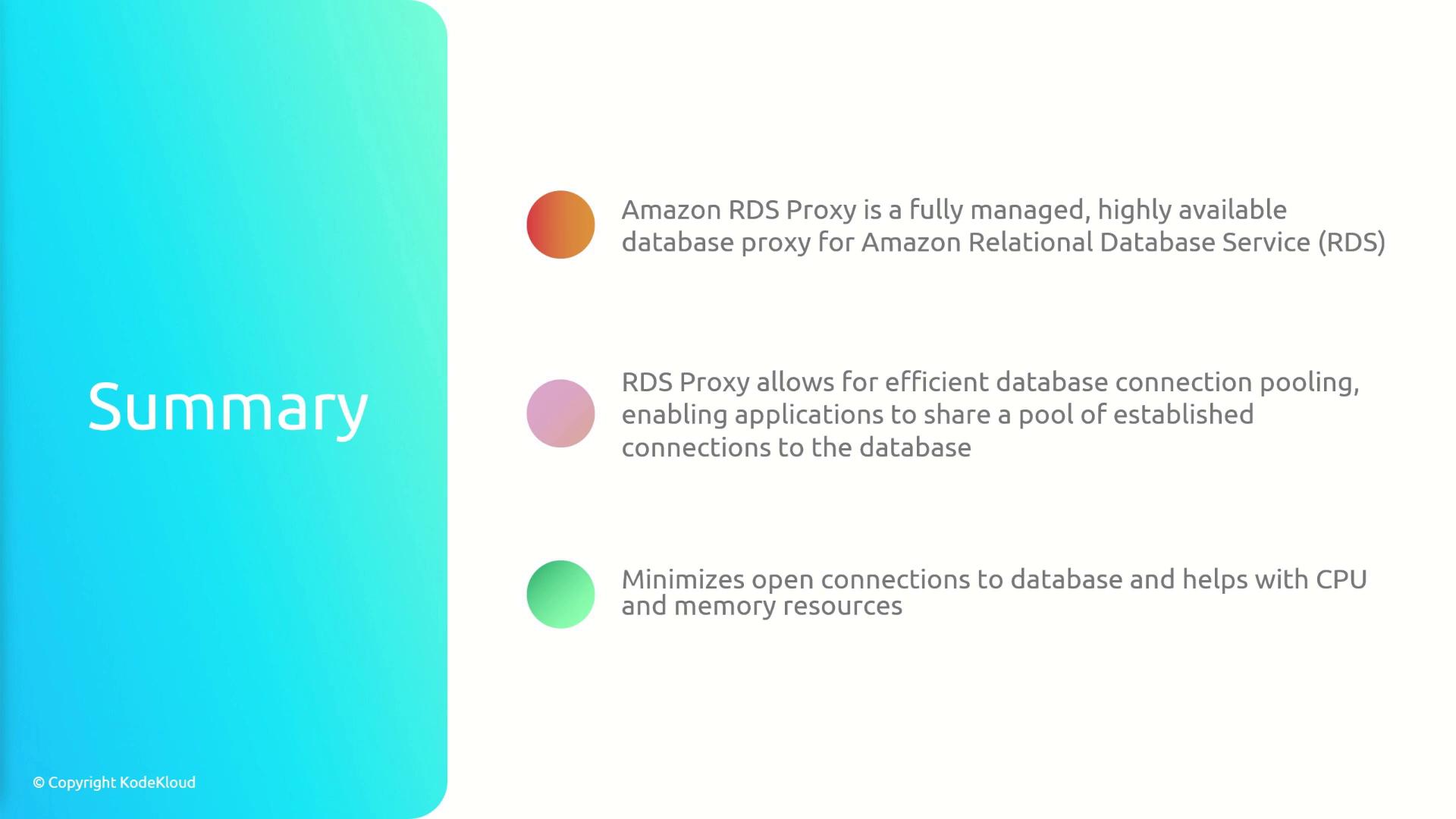
To summarize, Amazon RDS Proxy offers several key benefits:
Efficient Connection Pooling: Reuses pre-established connections, significantly cutting down on connection overhead.
Reduced Resource Consumption: Lowers CPU and memory usage on your RDS instance by limiting frequent connection operations.
Enhanced Failover Management: Automatically reroutes traffic during a primary instance failure to maintain application availability.
For exam preparation, keep in mind that when an RDS instance suffers from high CPU utilization due to numerous connection attempts, implementing RDS Proxy is the recommended solution. This approach not only stabilizes database performance but also ensures reliable and efficient connection management.
When reviewing for AWS exams, remember that Amazon RDS Proxy is designed to minimize the number of concurrent open database connections, leading to improved performance and overall system resilience.