

Traditional Configuration Management
A common method for managing configurations is to rely on environment variables. For example, a simple configuration file might look like this:Centralized Configuration with AppConfig
AppConfig addresses these challenges by allowing you to centrally store all your configuration settings. Your application instances can periodically poll AppConfig for updates, ensuring that any change made is automatically reflected across all servers. Consider the updated configuration below:Key Benefits of AppConfig
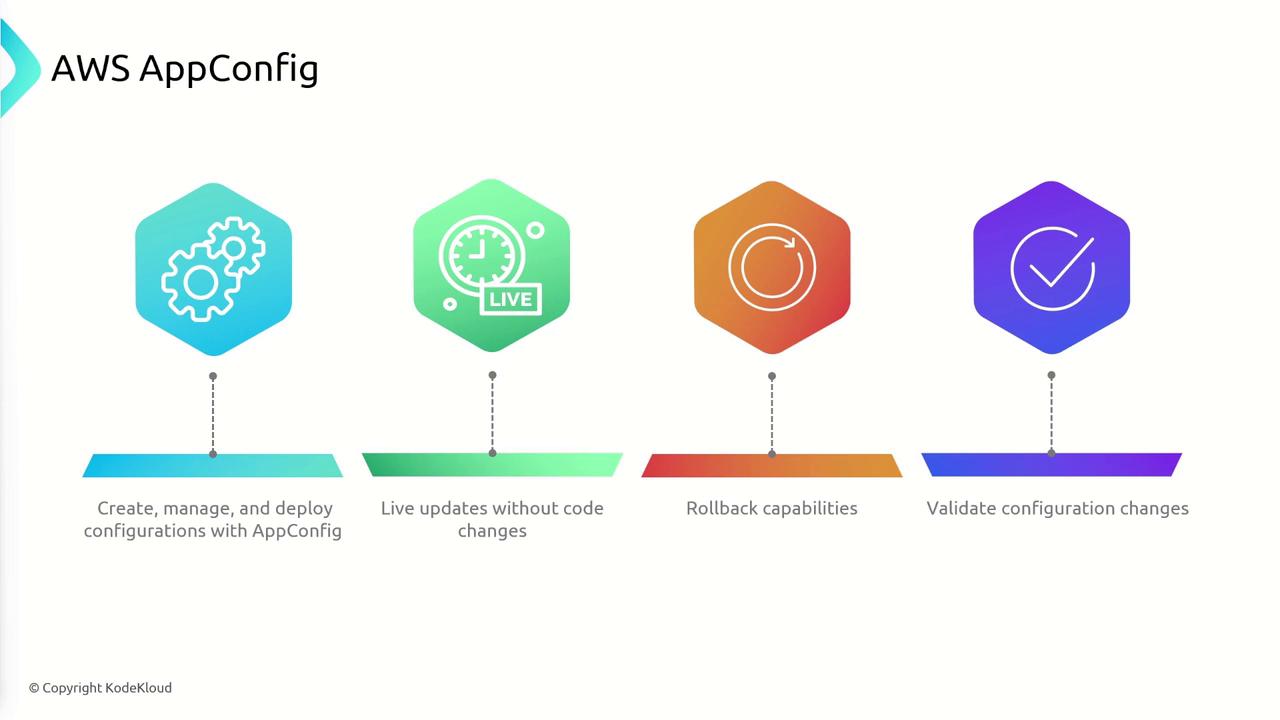
AppConfig provides a robust solution for configuration management with several advantages:- Live Updates: Modify configuration settings dynamically without any code changes.
- Rollback Capabilities: Seamlessly revert to a previous configuration version if a change introduces issues.
- Validation: Validate configuration changes before deployment to ensure they don’t negatively impact your application.
Using AppConfig is particularly beneficial in dynamic environments where rapid configuration changes are necessary.
Use Cases for AppConfig
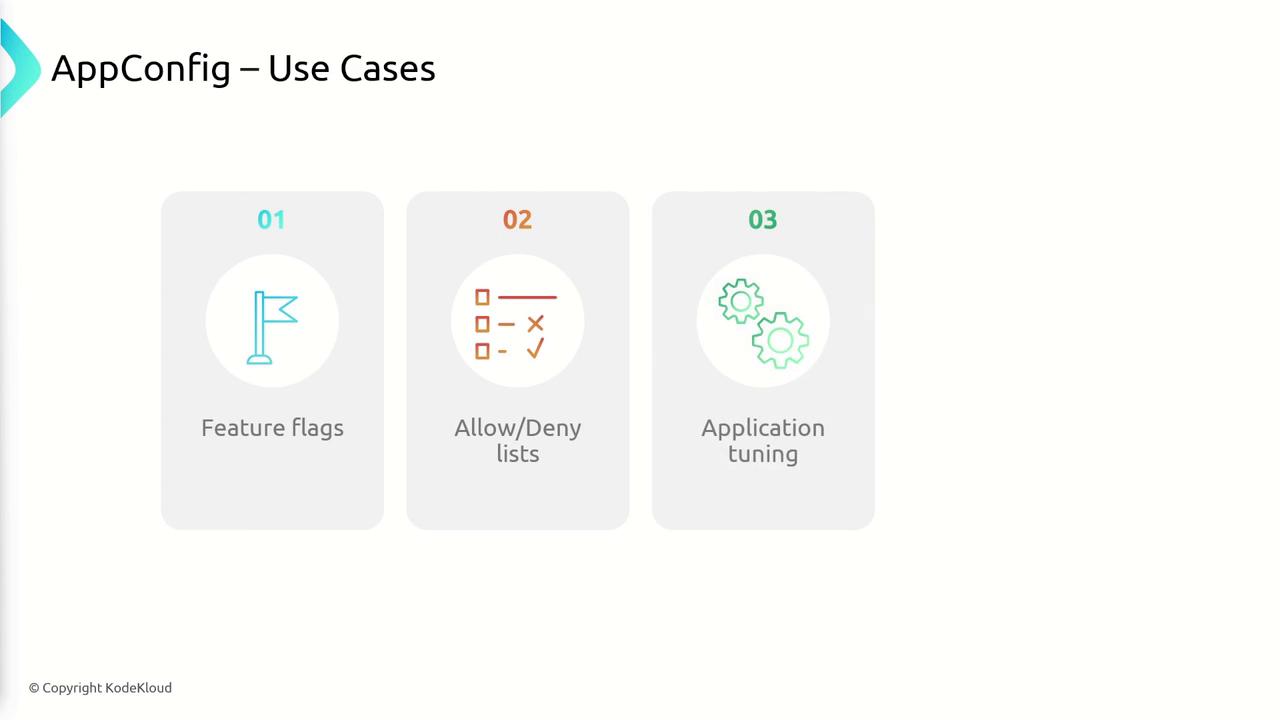
AppConfig is ideal for various scenarios, including:- Feature Flags: Manage feature toggling without the need to redeploy your application.
- Allow/Deny Lists: Simplify the process of updating security and access configurations.
- Application Tuning: Adjust performance parameters centrally for optimal application performance.
How AppConfig Works
The process for implementing AppConfig in your environment involves several key steps:-
Upload and Validate Configurations:
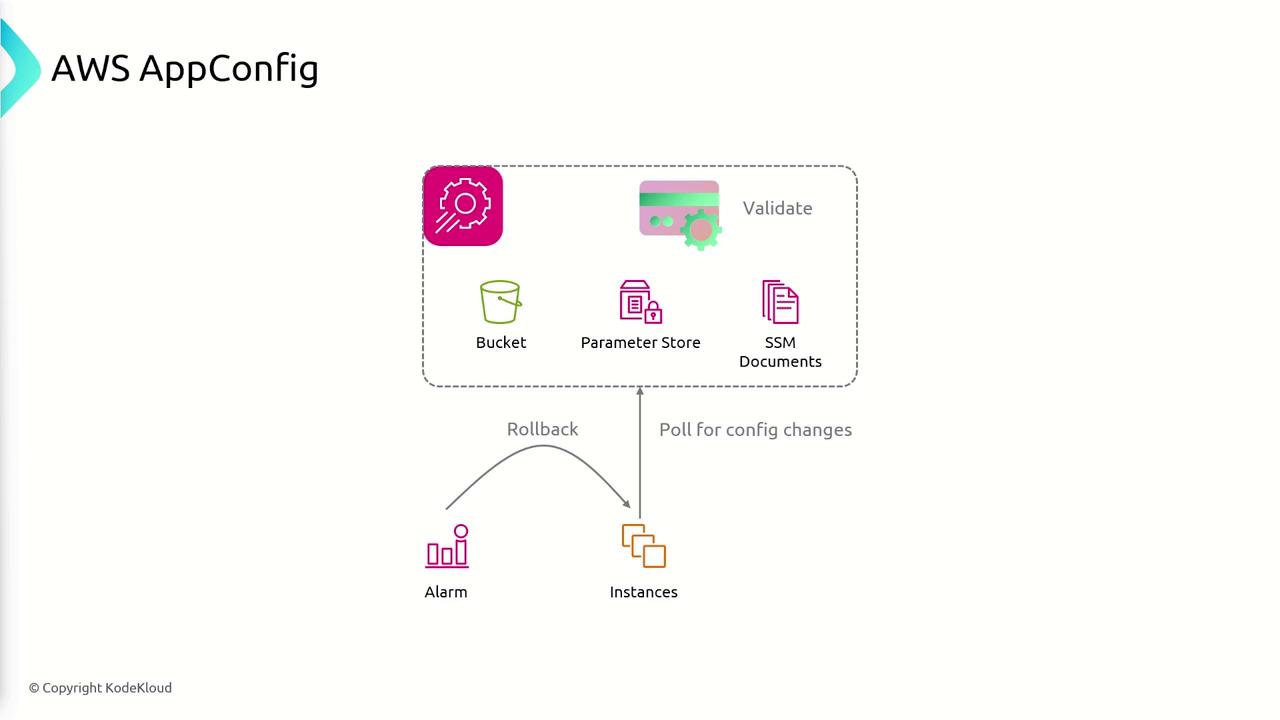
Upload your configuration file to AppConfig. The service supports validation through a JSON schema or by using a custom AWS Lambda function to ensure configuration integrity. -
Store Configurations in a Central Repository:
Your configuration can be stored in an S3 bucket, AWS Systems Manager Parameter Store, or SSM Documents. -
Deploy and Monitor:
Configure your application instances to poll AppConfig for changes. Integrate CloudWatch alarms to monitor configuration changes and trigger rollbacks if any issues are detected.
AppConfig not only simplifies configuration management but also enhances overall application reliability through its built-in monitoring and rollback mechanisms.