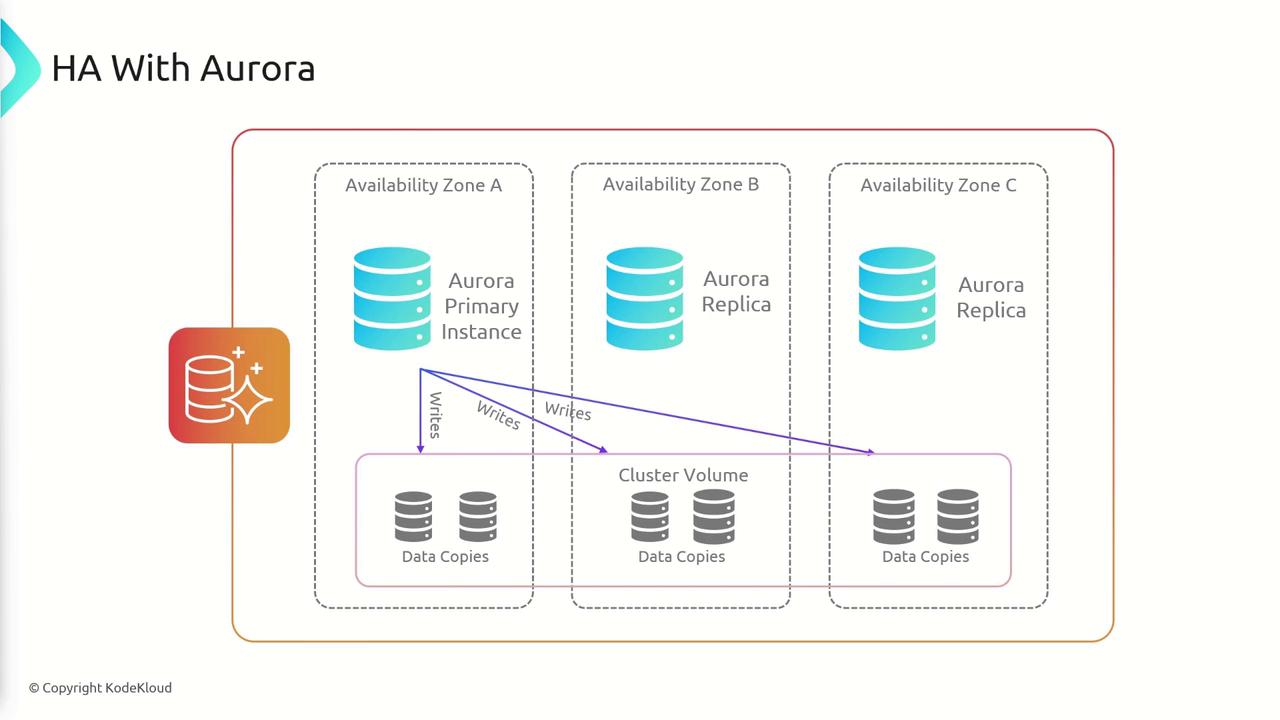
In an Aurora database cluster, there are two types of instances:
- Primary Instance: Handles both read and write operations and manages all modifications to the cluster volume.
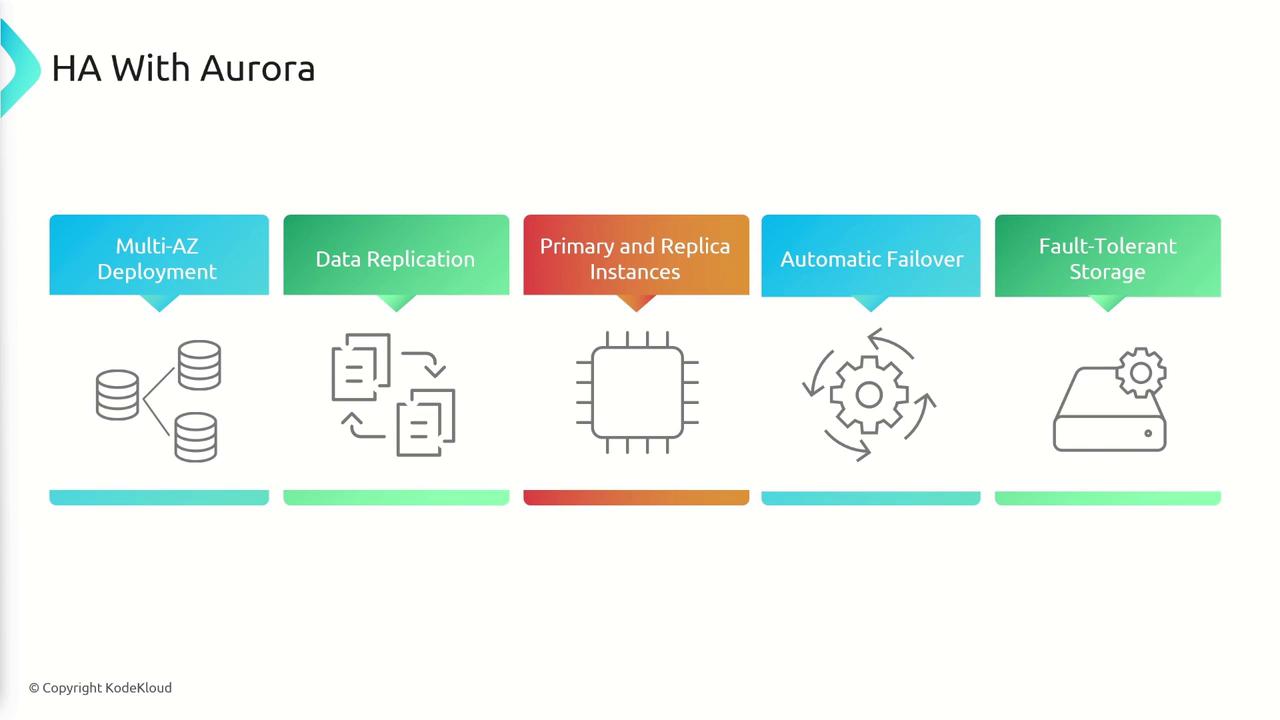
- Replica Instances: Up to 15 replicas are available to serve read operations only. These replicas, typically distributed across multiple AZs, can be promoted to primary status in under 100 milliseconds in the event of a primary instance failure.
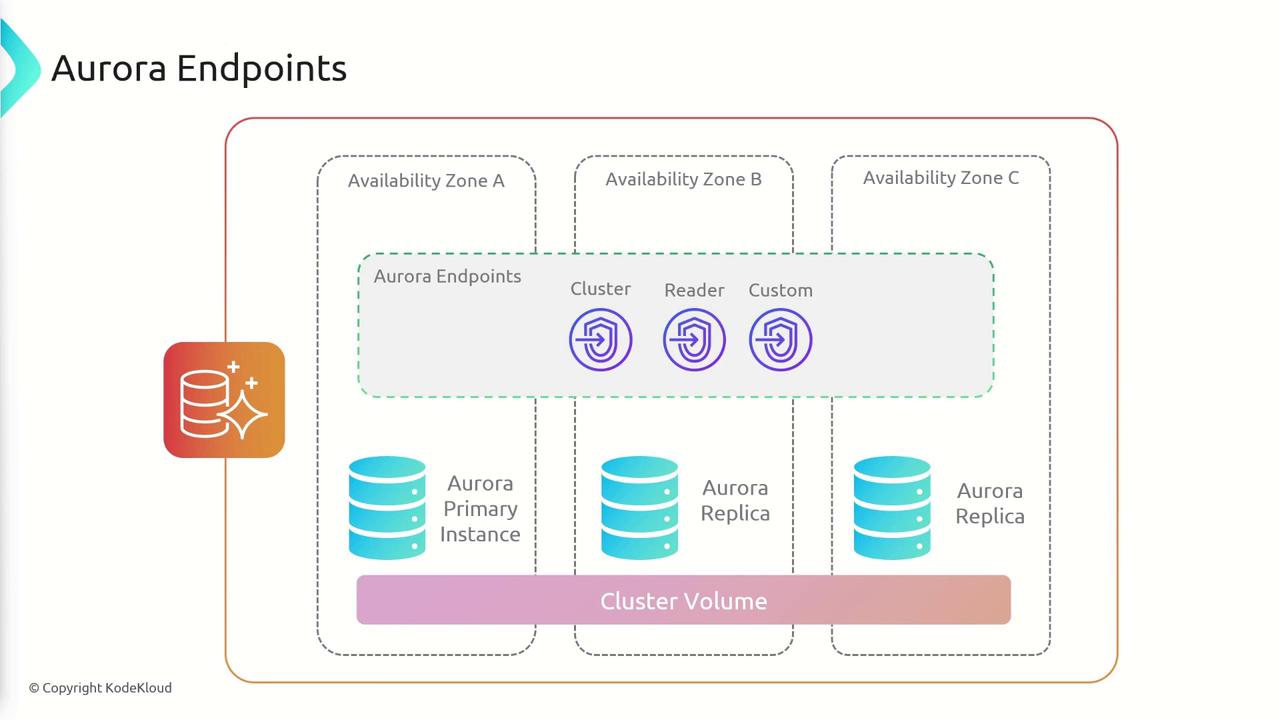
- Cluster/Writer Endpoint: Handles all write operations.
- Reader Endpoint: Distributes read operations across all available replicas.
- Custom Endpoints: Allow you to group instances with unique performance characteristics, such as those optimized for memory-intensive read operations.
Key Features of Amazon Aurora
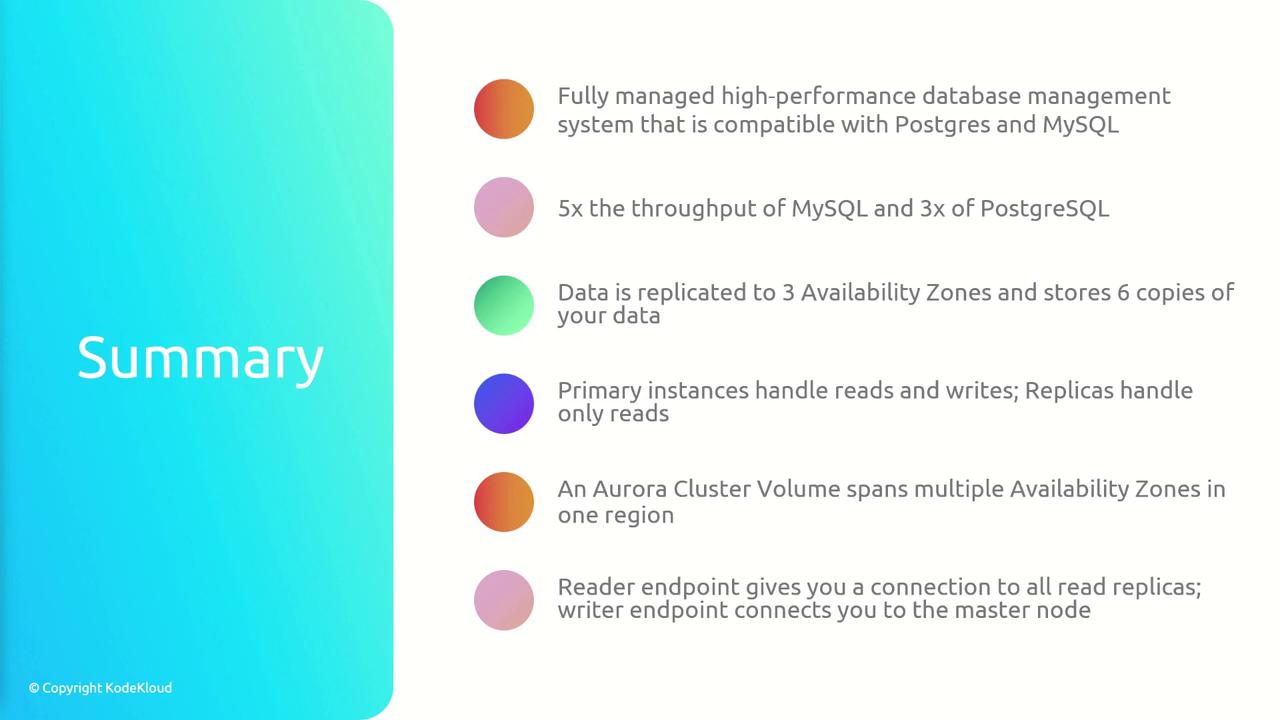
- Up to five times the throughput of MySQL and three times that of PostgreSQL.
- Data is replicated across three availability zones with six copies maintained.
- A single primary instance manages all writes, complemented by up to 15 read-only replicas.
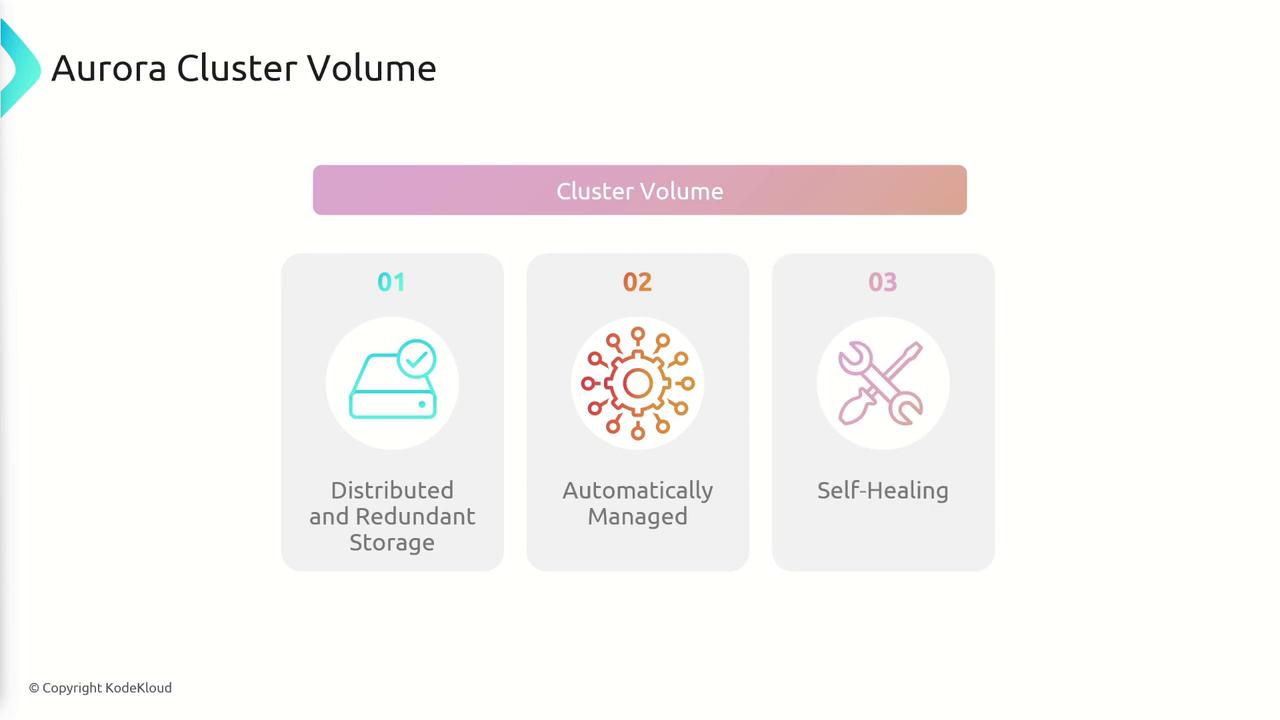
- A distributed, self-healing cluster volume that scales dynamically up to 128 terabytes.
- Multiple DNS endpoints to optimize read and write operations.