

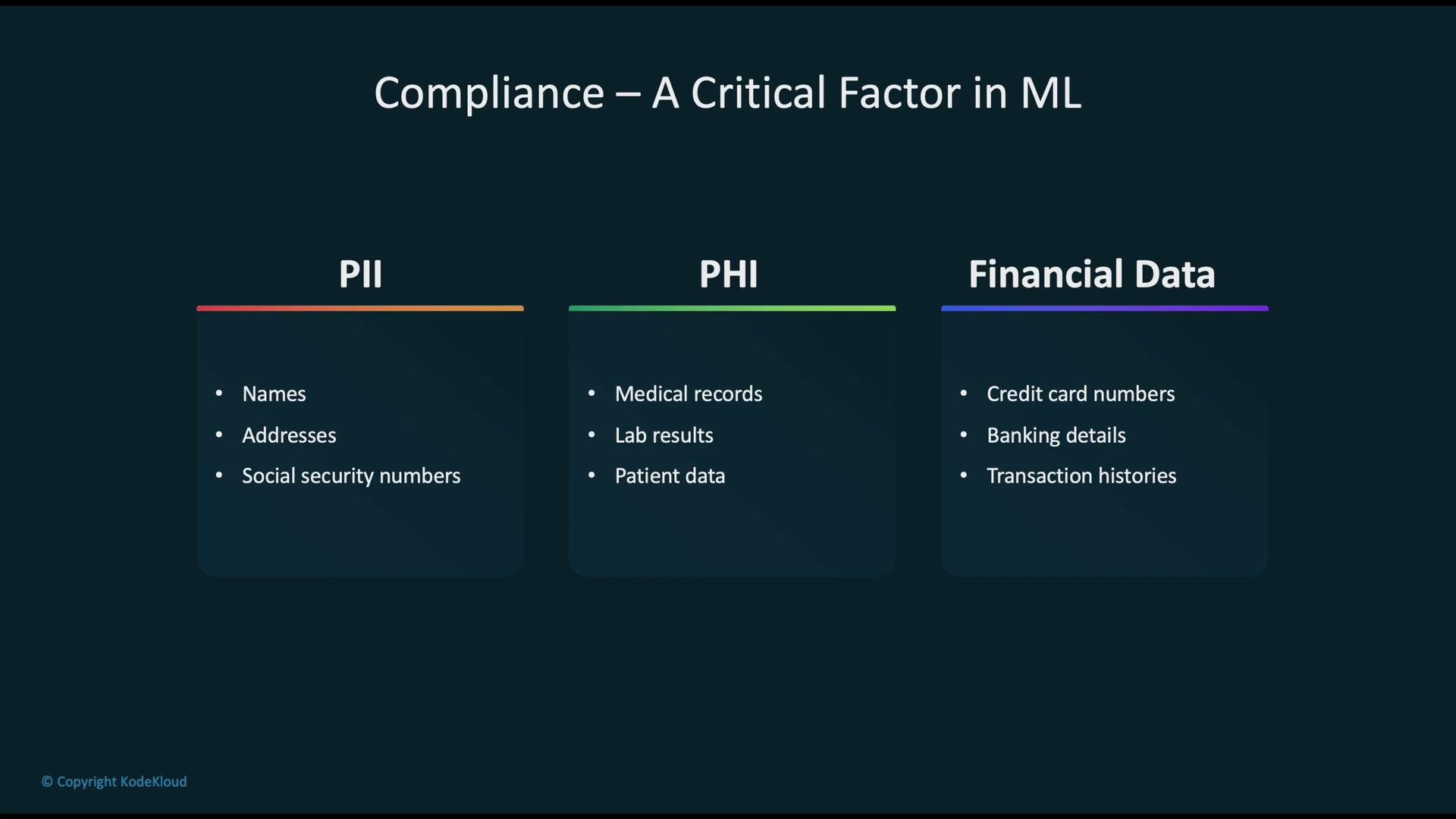
- Personally Identifiable Information (PII)
- Protected Health Information (PHI)
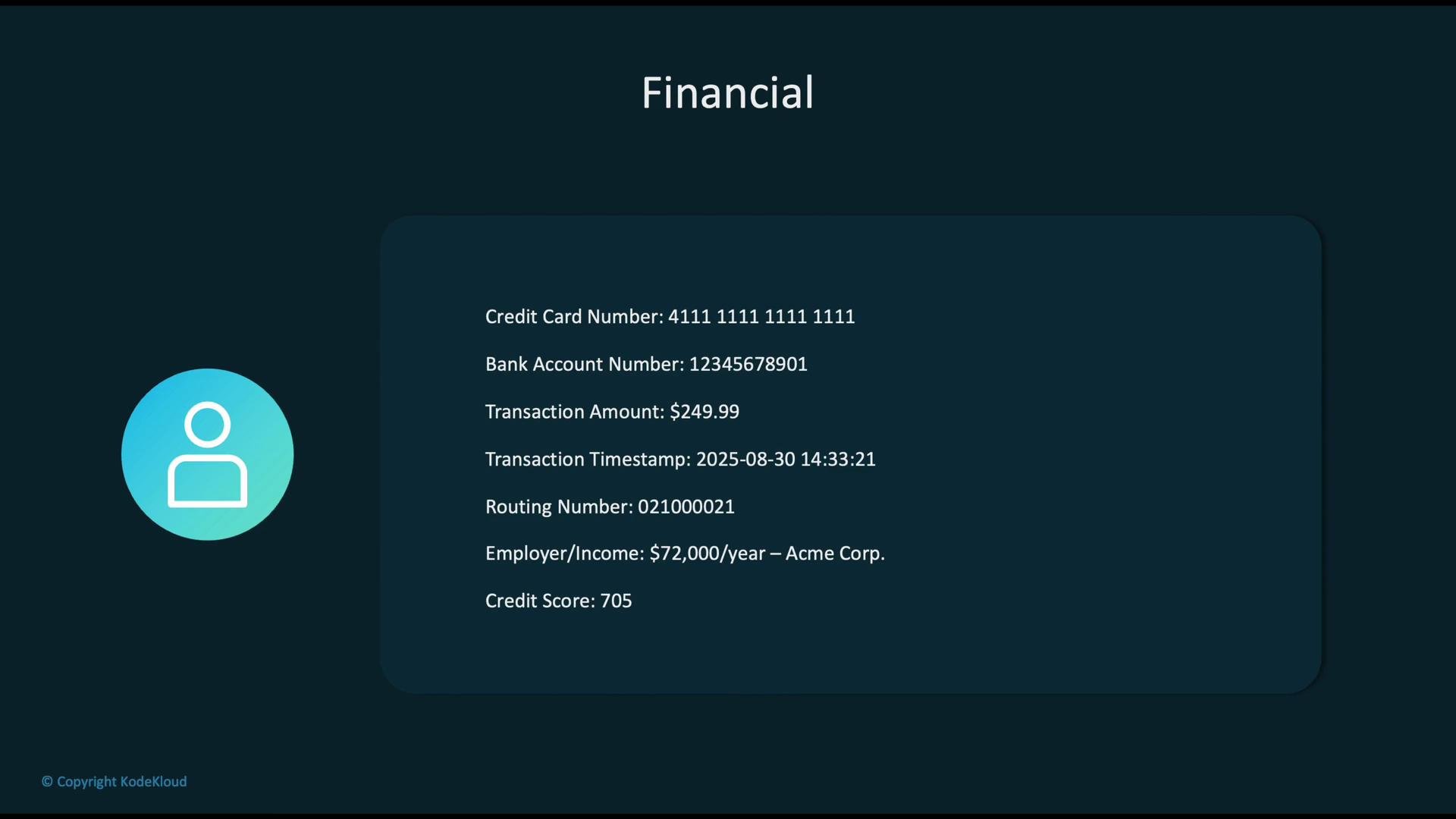
- Financial data
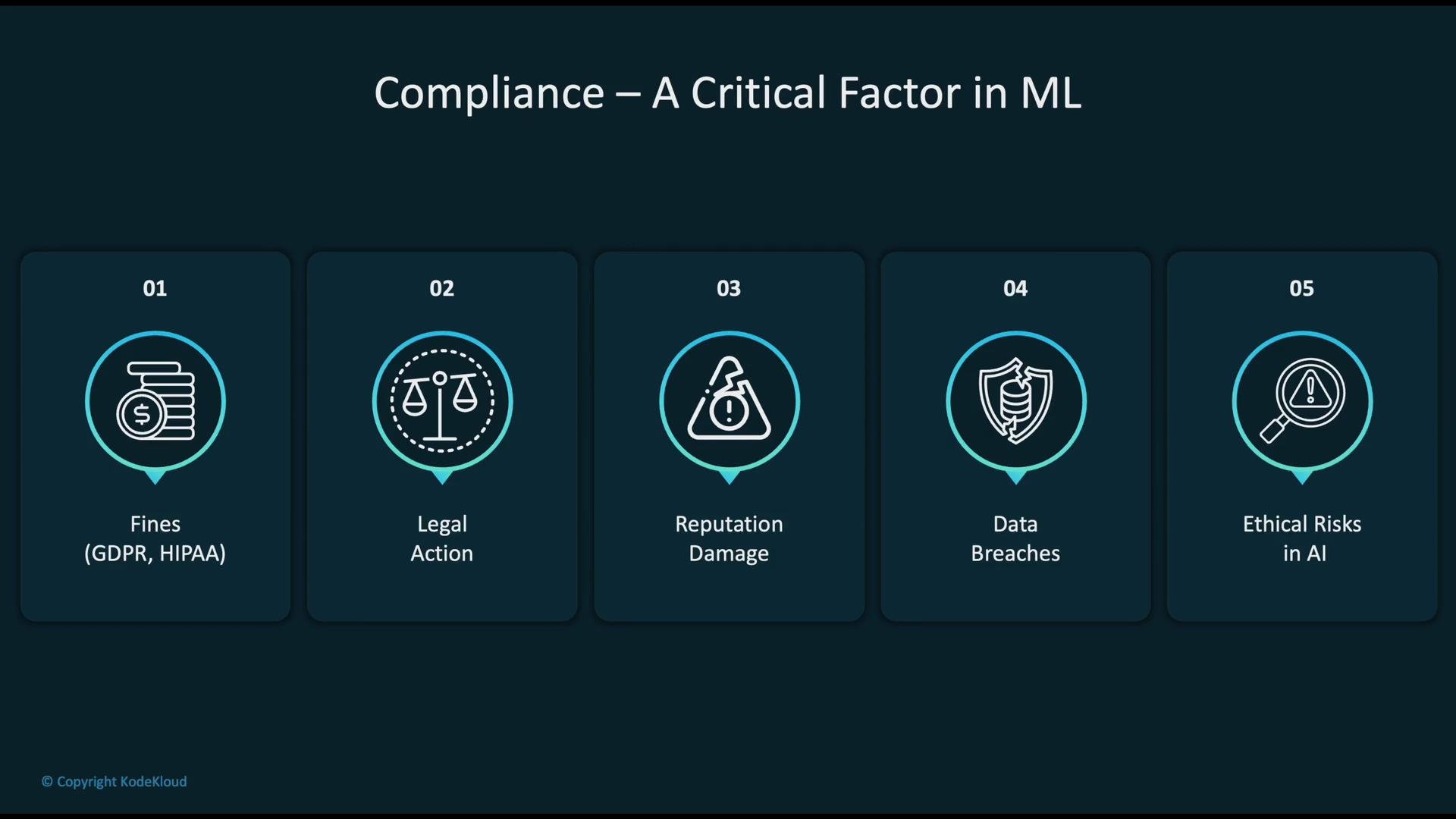
Why compliance matters: consequences of mishandling sensitive data
Failure to secure PII, PHI, or financial data can produce severe and lasting consequences:- Financial penalties: Regulations such as the EU GDPR can impose fines up to 4% of global annual revenue; HIPAA violations also carry significant penalties.
- Legal actions and restrictions: Regulatory investigations, lawsuits, or operational constraints may follow non‑compliance.
- Reputation damage: Loss of customer trust can be costly and long-term.
- Data breaches: Inadequate controls on ML systems can leak sensitive records.
- Ethical risks: Biased models, opaque data usage, or misuse of sensitive data can lead to discriminatory or harmful outcomes.
Key compliance focus areas for ML: accurately identify sensitive data (PII/PHI/financial), enforce appropriate data residency, apply encryption and least-privilege access, and maintain robust auditing and logging.
Sensitive data categories and examples
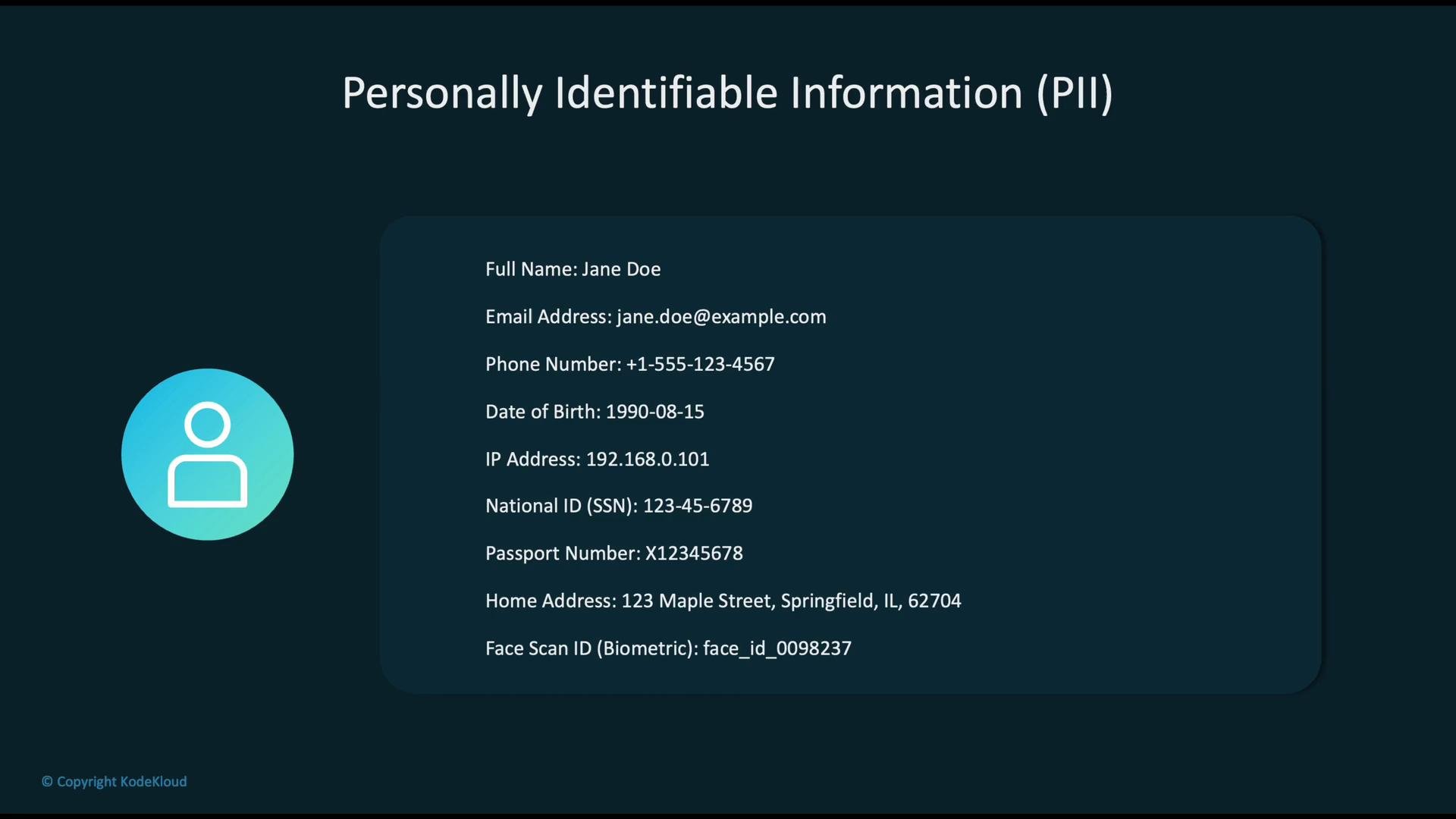
Below are concise definitions and examples that help guide classification and handling decisions. PII (personally identifiable information)- Data that can uniquely identify or be linked to an individual: full name, email, phone number, physical address, date of birth, Social Security number, passport or national ID.
- Technical identifiers and biometrics (IP addresses, device IDs, face scans) are often treated as PII.
- Protect PII to reduce risk of identity theft and misuse in ML training and inference.
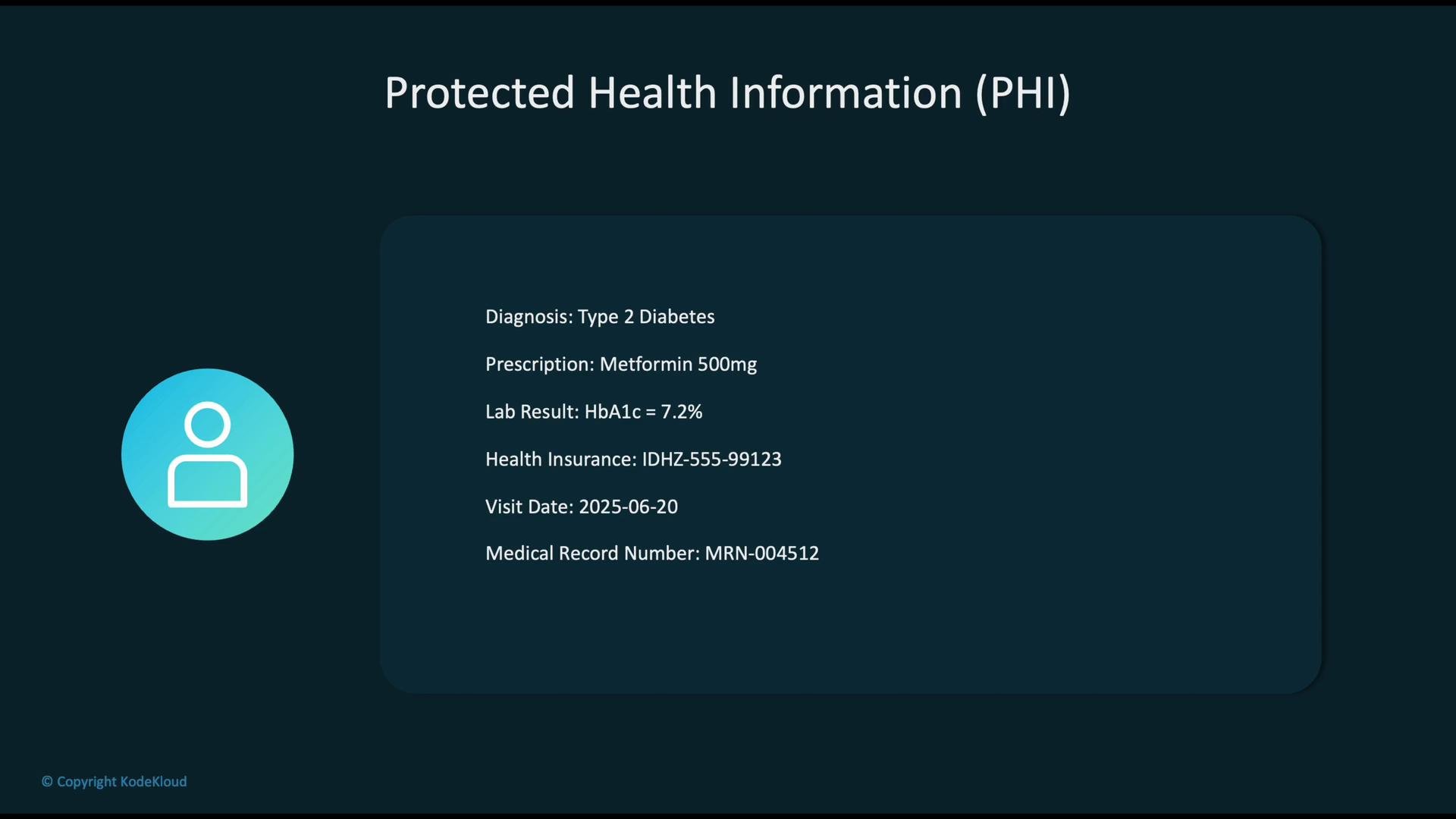
- Health-related personal data, including diagnoses, prescriptions, lab results, insurance identifiers, medical record numbers, and treatment/visit histories.
- PHI is tightly regulated (for example, by HIPAA in the United States); special handling and contractual protections are usually required.
- Examples include credit card and bank account numbers, transaction amounts and timestamps, routing numbers, employer and income details, and credit scores.
- Leakage of financial data can enable fraud and direct monetary loss.
Key regulations and where they apply
Common regulations that often affect ML data handling include: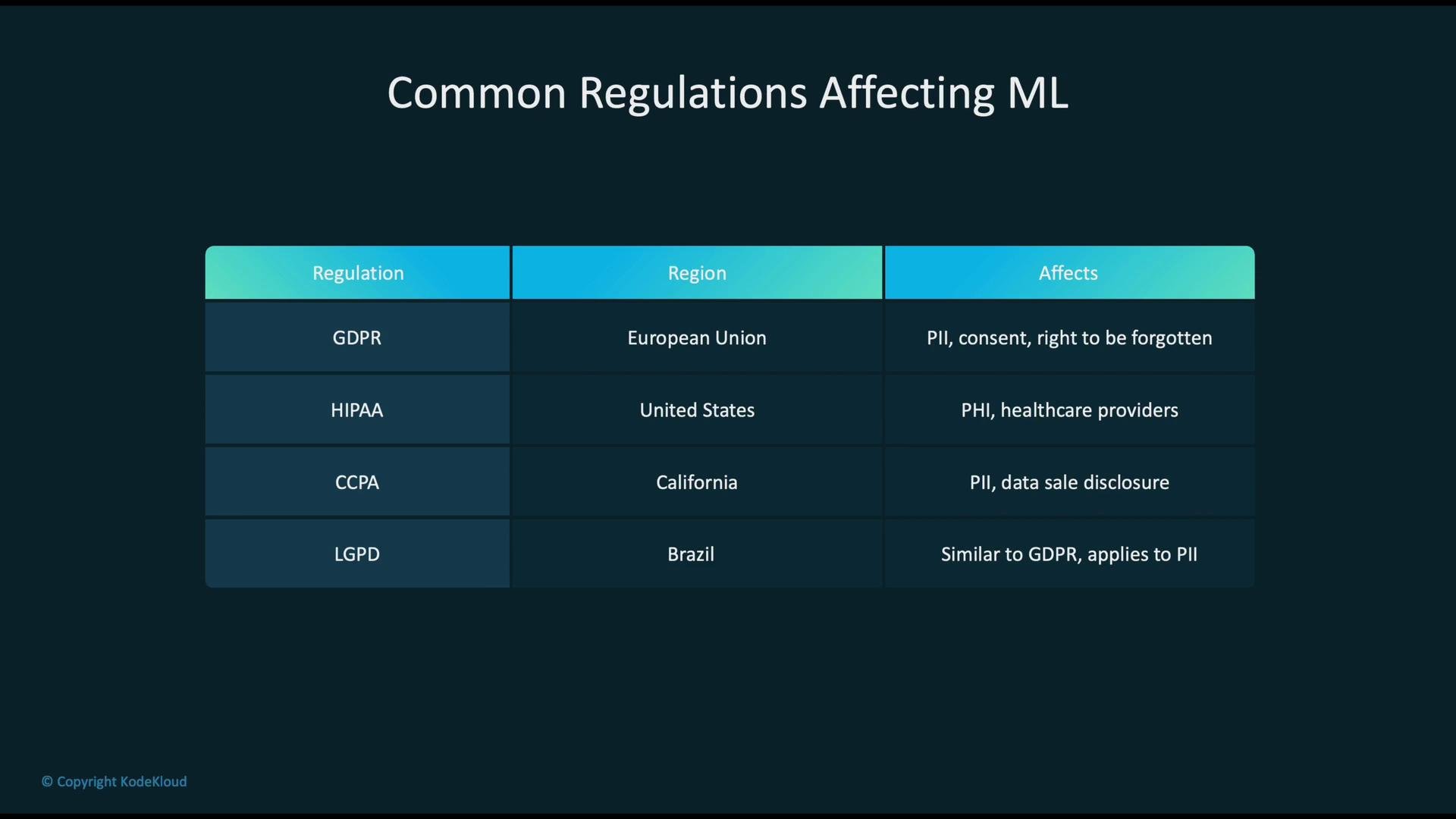
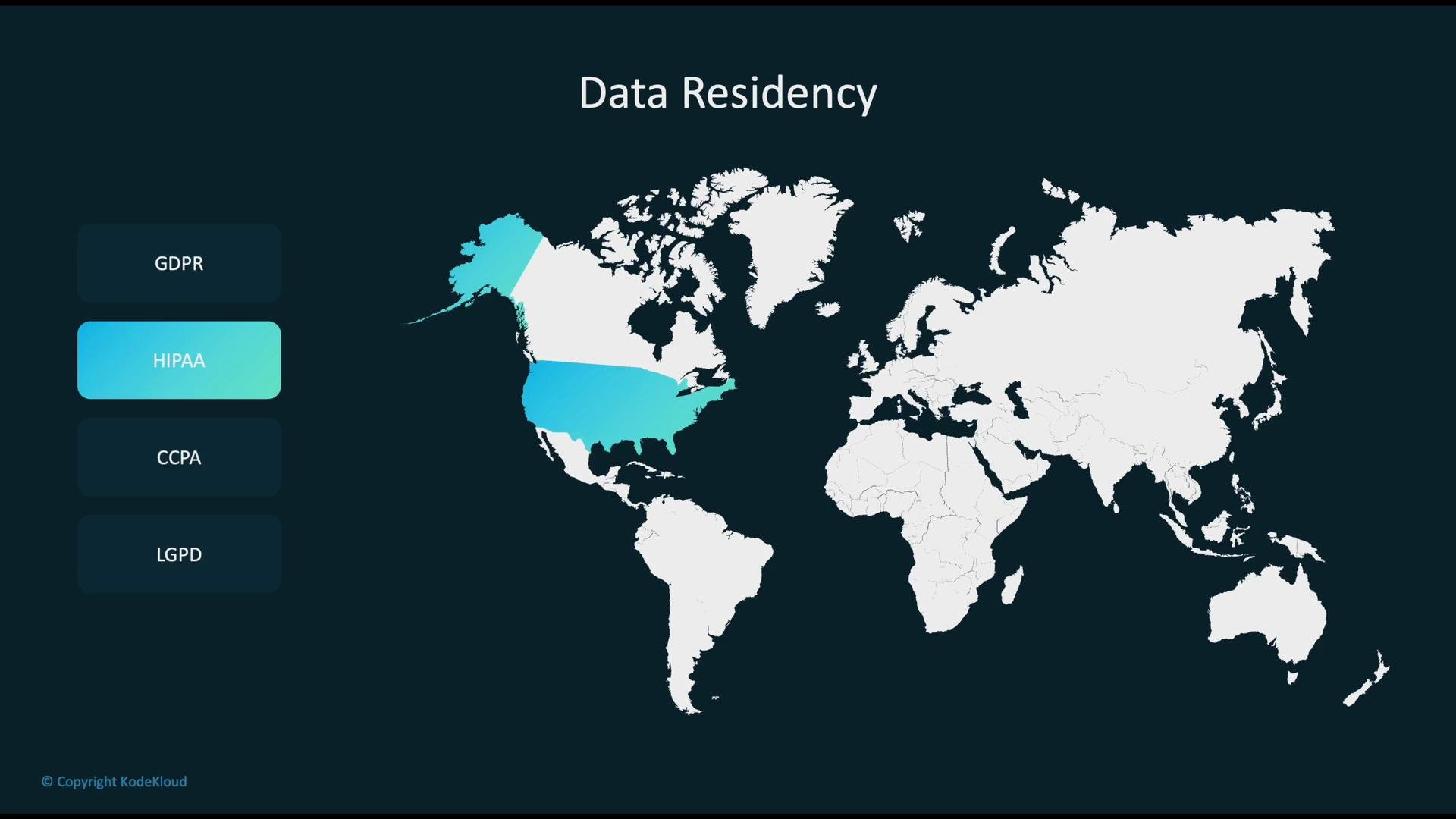
If data residency applies, avoid cross‑region transfers unless legally permitted and necessary. Ensure that backups, logs, and disaster‑recovery replicas also respect residency constraints.
AWS services and features to help meet compliance
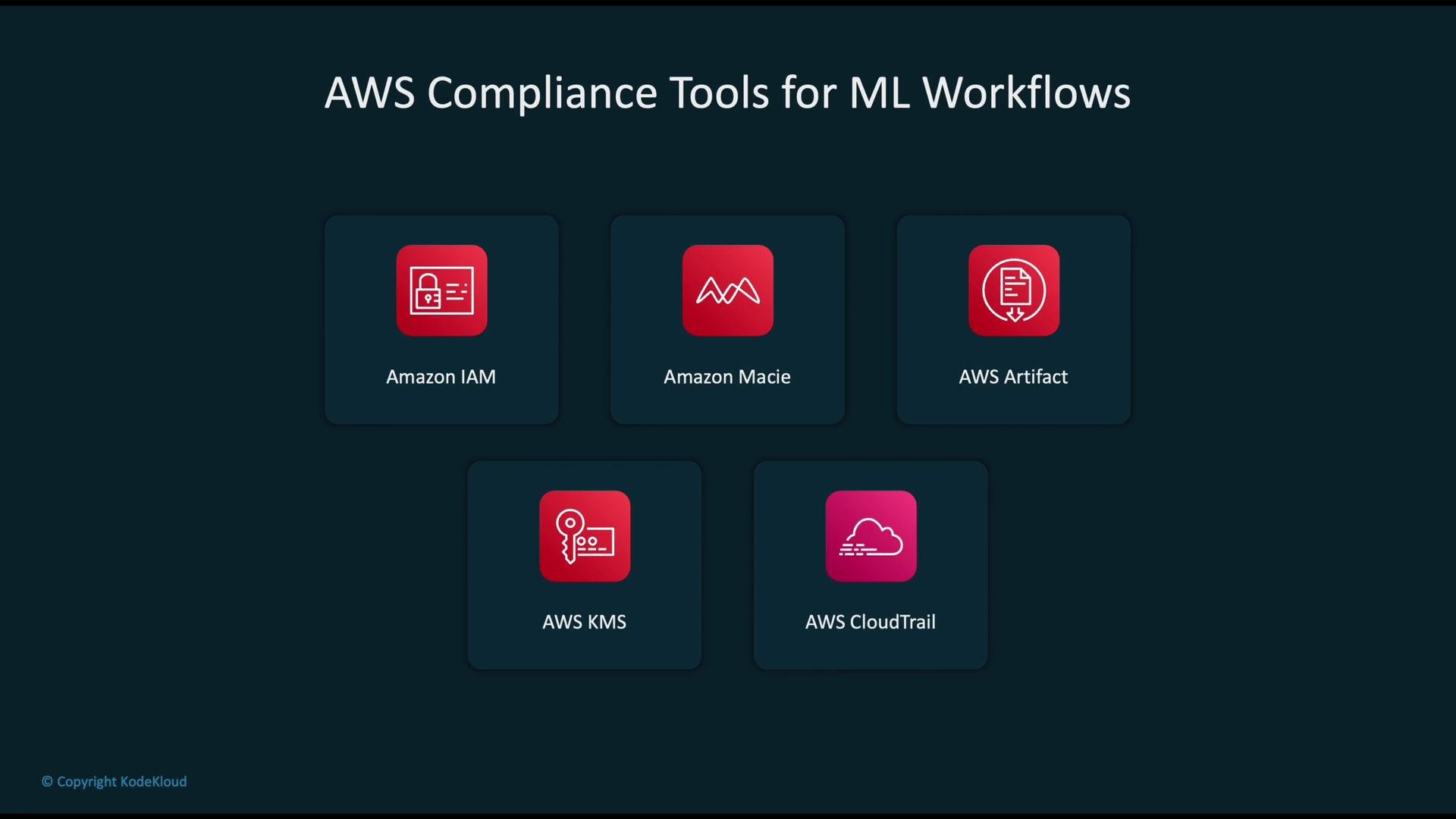
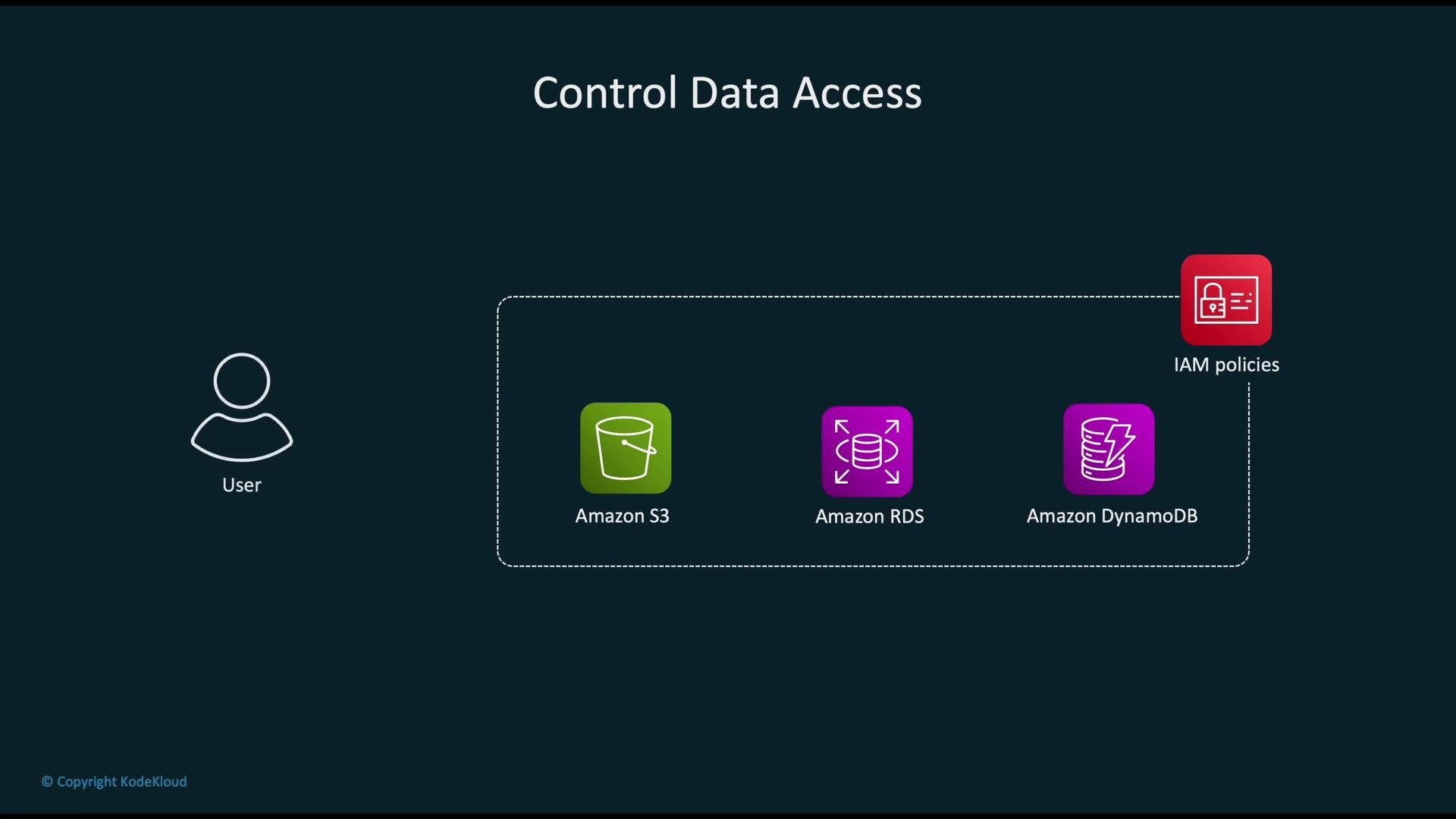
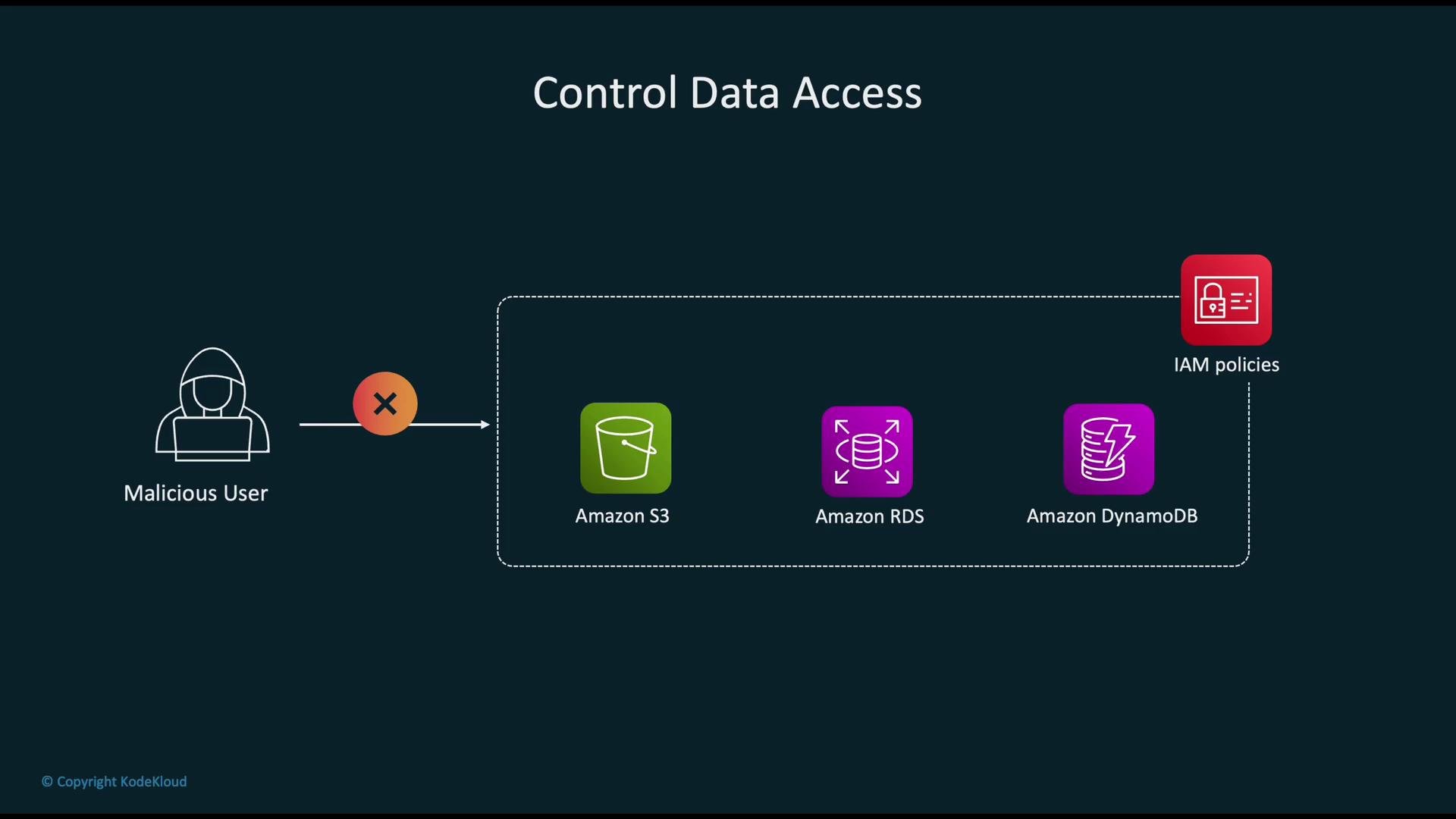
AWS offers many services and controls that support a compliant ML posture. The list below highlights commonly used tools and how they fit into ML workflows:- AWS Identity and Access Management (IAM): implement least-privilege access using roles and policies.
- Amazon Macie: discovers and classifies PII in S3 buckets using ML and pattern matching.
- AWS Artifact: on-demand access to AWS compliance reports and security documentation to support audits.
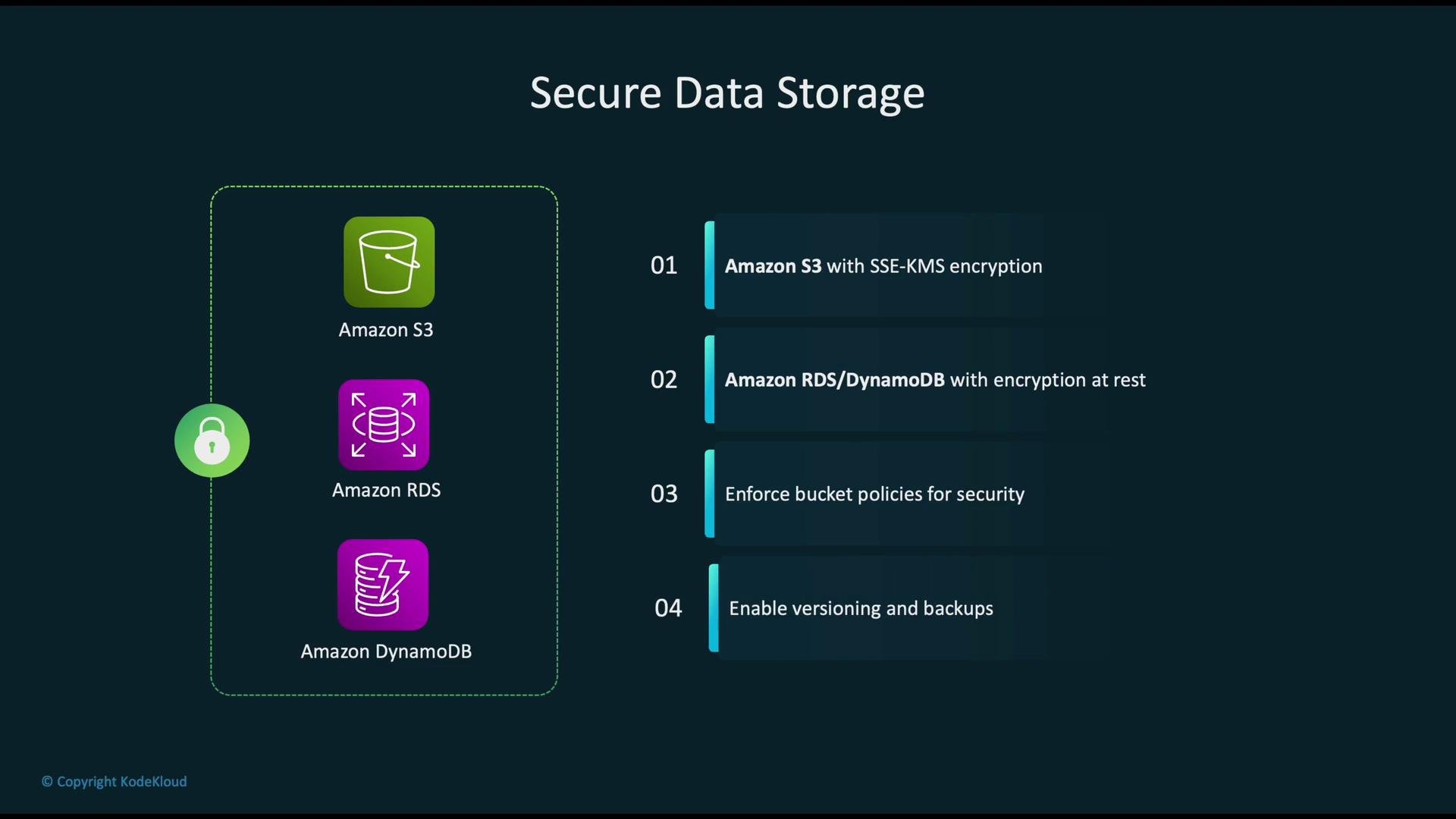
- AWS Key Management Service (KMS): centralized key management for encryption at rest, envelope encryption, and client-side encryption scenarios.
- AWS CloudTrail: records API activity across AWS for auditing, forensics, and compliance reporting.
- Amazon S3: server-side encryption (SSE-KMS), bucket policies, versioning, object lock, replication controls.
- Amazon RDS & DynamoDB: encryption at rest, automated backups, and fine-grained access controls.
- Amazon SageMaker: can be HIPAA-eligible when used under the appropriate Business Associate Addendum (BAA) and with correct configuration.
- AWS KMS: central key policies, key rotation, and audit trails that integrate across services.
Access control and monitoring best practices
Strong access controls and monitoring are critical to limiting exposure:- Implement least privilege via IAM policies and role separation—grant the minimum permissions needed for each task.
- Require multi-factor authentication (MFA) for privileged users.
- Instrument CloudTrail, Amazon GuardDuty, and AWS Config to detect unexpected behavior and configuration drift.
- Centralize logs for analysis and long-term retention (ensure log storage follows residency rules).
Example automated workflow: Amazon Macie + EventBridge + Lambda
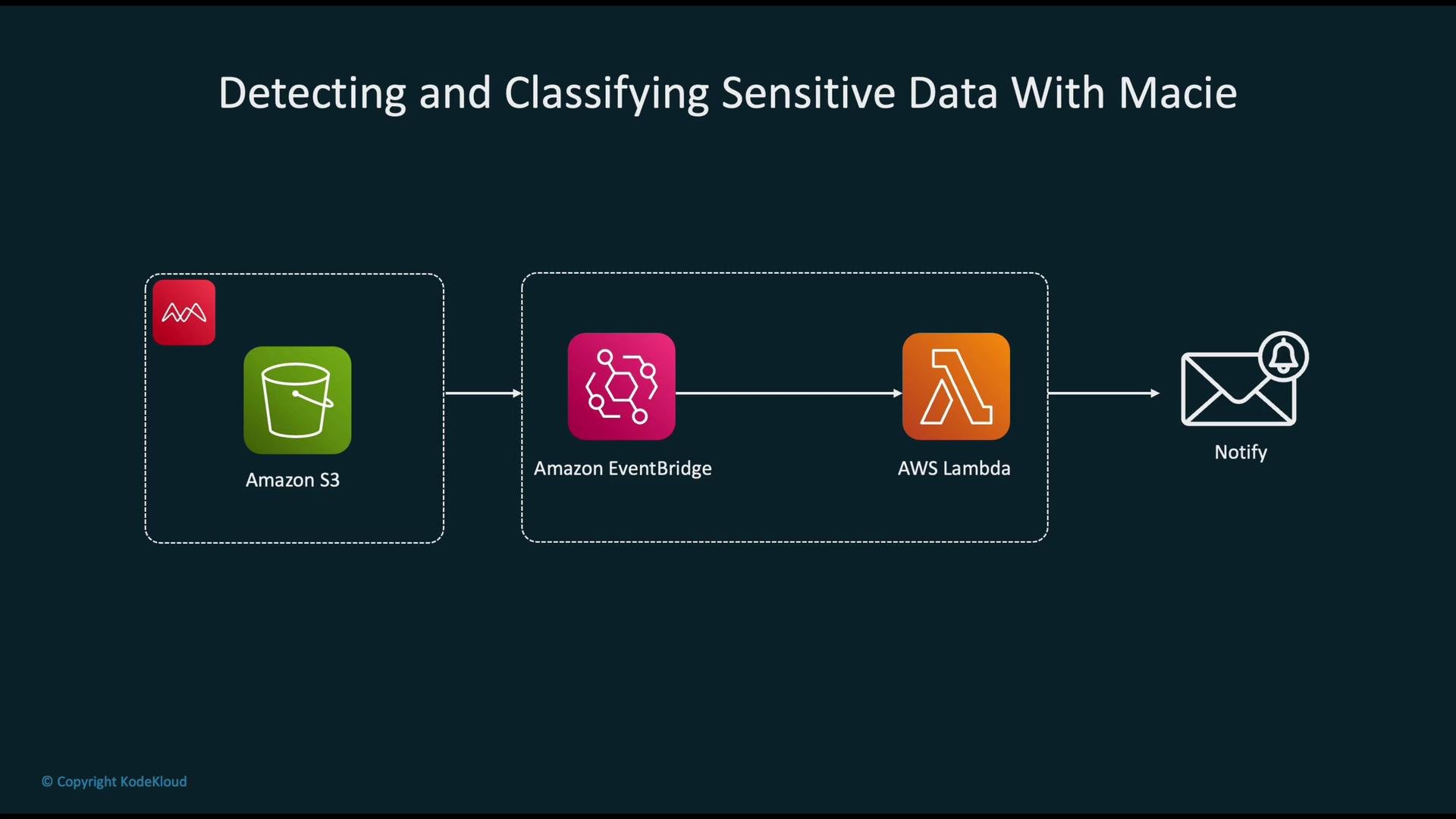
A common pattern for automated sensitive-data discovery and remediation:- Amazon Macie inspects S3 buckets to detect and classify sensitive objects (PII/PHI).
- Macie emits findings when it identifies sensitive data.
- Amazon EventBridge rules receive Macie findings and trigger AWS Lambda functions.
- Lambda can execute automated remediation: quarantine objects, update bucket policies, tag or move objects, or notify the security/compliance team.
- Notifications and incident management workflows ensure human review when required.
AWS Artifact and compliance evidence
- AWS Artifact provides on-demand access to AWS compliance reports and security documentation (SOC, ISO, PCI, HIPAA guidance, etc.).
- Use Artifact during audits to obtain evidence of AWS’s control posture and to understand shared responsibilities for your ML workloads.
AWS services and compliance posture (summary)
Designing compliant ML pipelines: checklist
- Classify and inventory data: discover sensitive objects early (use Amazon Macie or similar tools).
- Apply data minimization and anonymization techniques where feasible.
- Enforce least privilege for access and isolate workloads using VPCs, IAM roles, and resource policies.
- Encrypt data at rest and in transit; manage keys with AWS KMS and enforce key usage policies.
- Implement logging, monitoring, and automated remediation (CloudTrail, GuardDuty, EventBridge, Lambda).
- Document controls and retain evidence for audits (use AWS Artifact to obtain AWS reports).
- Validate residency and sovereignty requirements for storage, processing, backups, and logs.
- AWS Identity and Access Management (IAM)
- Amazon Macie documentation
- AWS Key Management Service (KMS)
- AWS Artifact
- AWS CloudTrail