

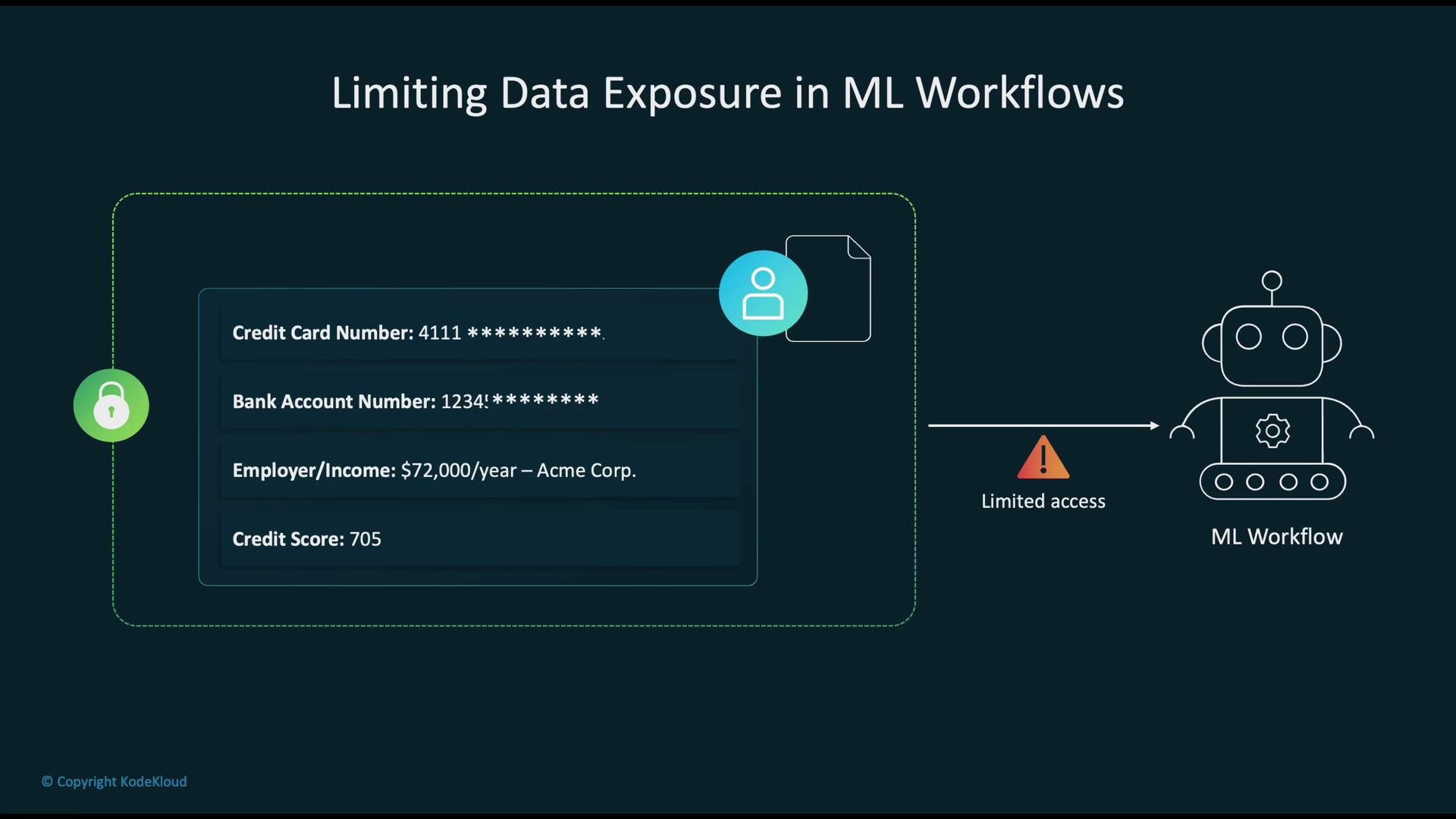
Why classification matters
Data classification is the foundation of any data protection strategy. Tagging data by sensitivity and intended use enables automated enforcement of access policies, encryption rules, and retention schedules. Classification also guides downstream decisions—what data can be included in training, what must be masked or removed, and what requires stronger controls for audit and compliance. Amazon Macie automates detection of common sensitive data patterns by scanning objects in Amazon S3. It discovers SSNs, email addresses, phone numbers, and other PII/PHI patterns and generates findings and metadata that you can use to trigger alerts, tag data, or initiate remediation workflows. Combine automated detection with manual review and rule-based tagging for the most accurate classification.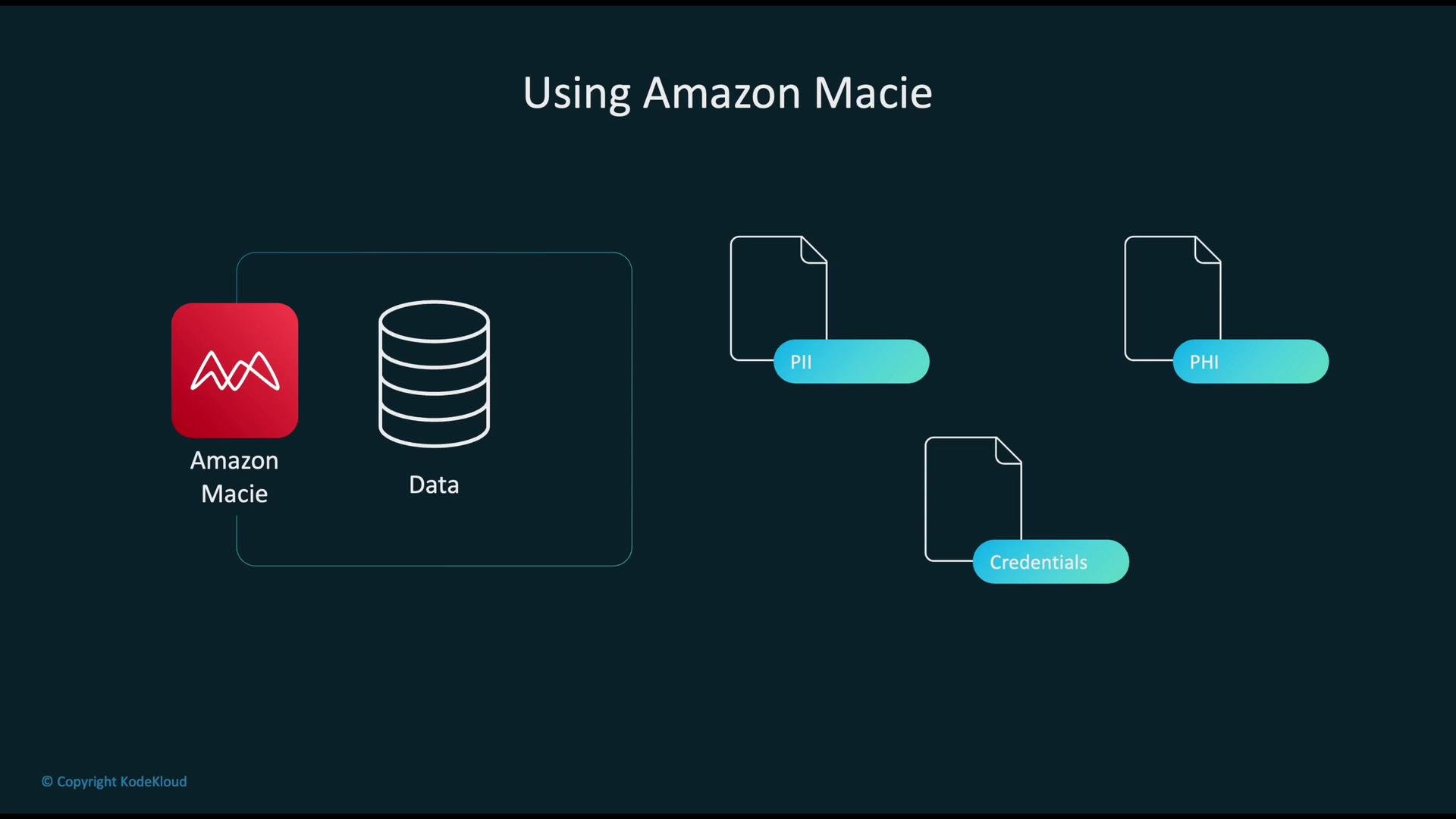
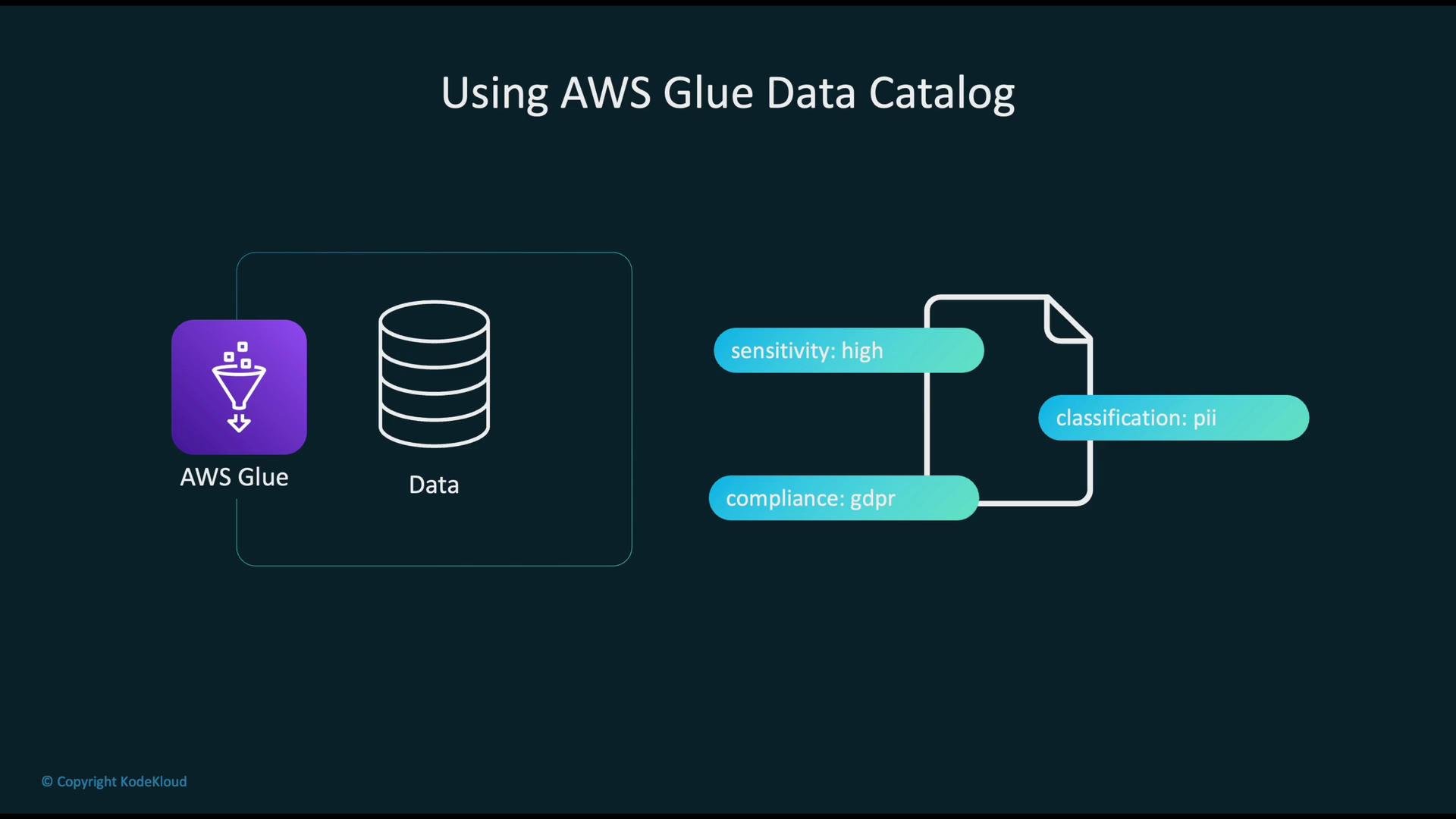
PII, PHI, FIN, or GDPR. These tags enable access control policies and automated workflows to treat data appropriately throughout its lifecycle.
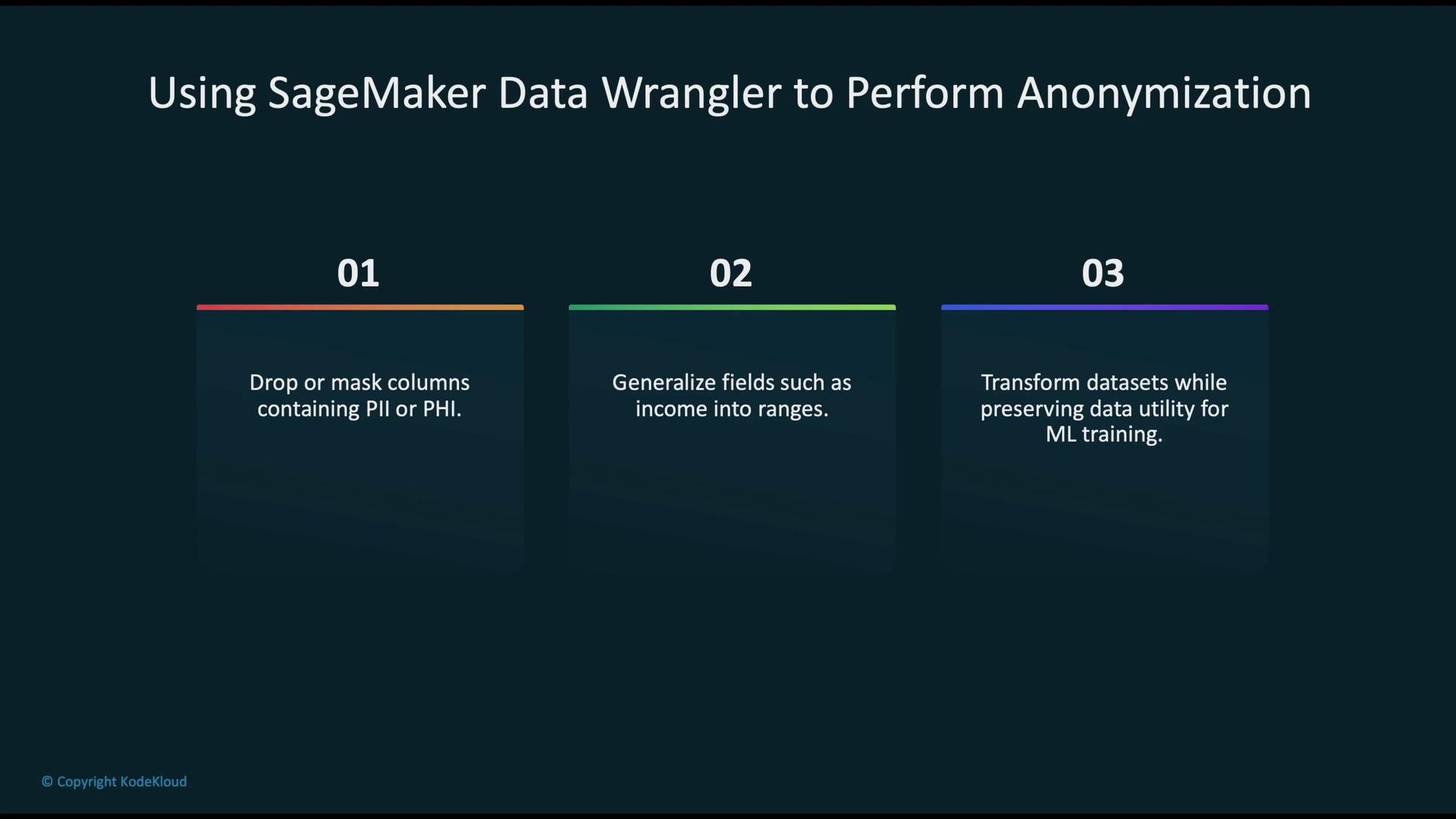
Anonymization techniques
Data anonymization irreversibly removes or transforms identifying information so records cannot be traced back to individuals. Common techniques include:- Generalization: Replace a precise value with a broader category (e.g., age 33 → age group 30–40).
- Suppression: Remove or omit fields entirely (e.g., drop
nameand exactaddress). - Hashing: Apply an irreversible transformation (e.g., SHA-256). Use salting or HMACs for low-entropy fields to prevent brute-force/dictionary attacks.
- Tokenization: Replace a value with a random token and store the mapping securely if reversible re-identification is required.
- Perturbation: Add noise or alter values slightly to preserve statistical properties while obfuscating individuals.
Masking and format-preserving protection
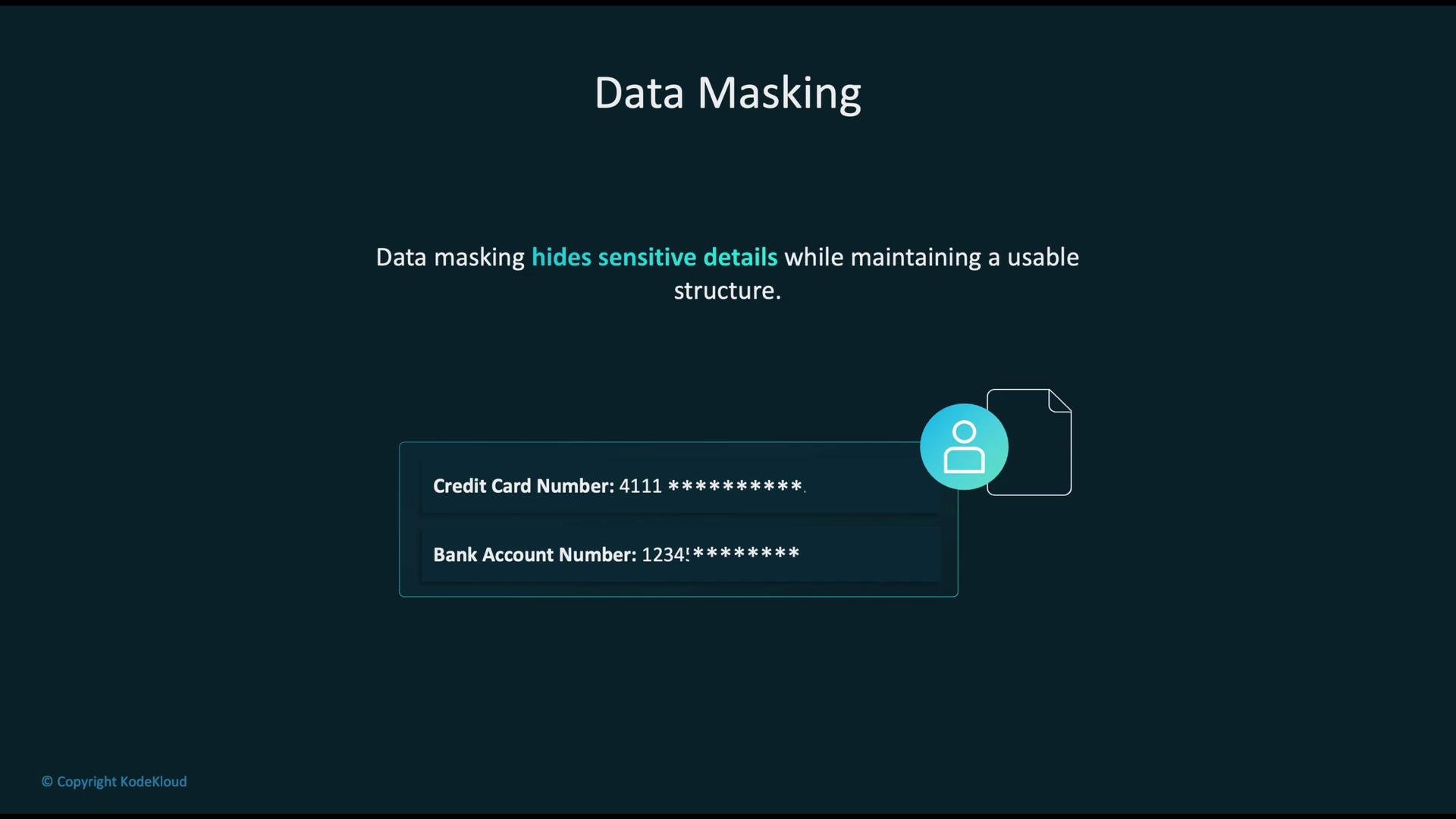
Data masking conceals sensitive details while preserving format and usability for testing or preprocessing. For example, a credit card number can be transformed to a masked string that keeps length and grouping but hides digits. Masking methods are sometimes reversible (if mapping or keys are retained), whereas anonymization is intended to be irreversible.Masking may be reversible if mappings or encryption keys are retained. Choose anonymization when you need irreversible de-identification.
Hashing low-entropy values (for example, short IDs or dates) can be vulnerable to brute-force attacks. Use salts or keyed HMACs, or prefer tokenization with a secure vault for reversible mappings.
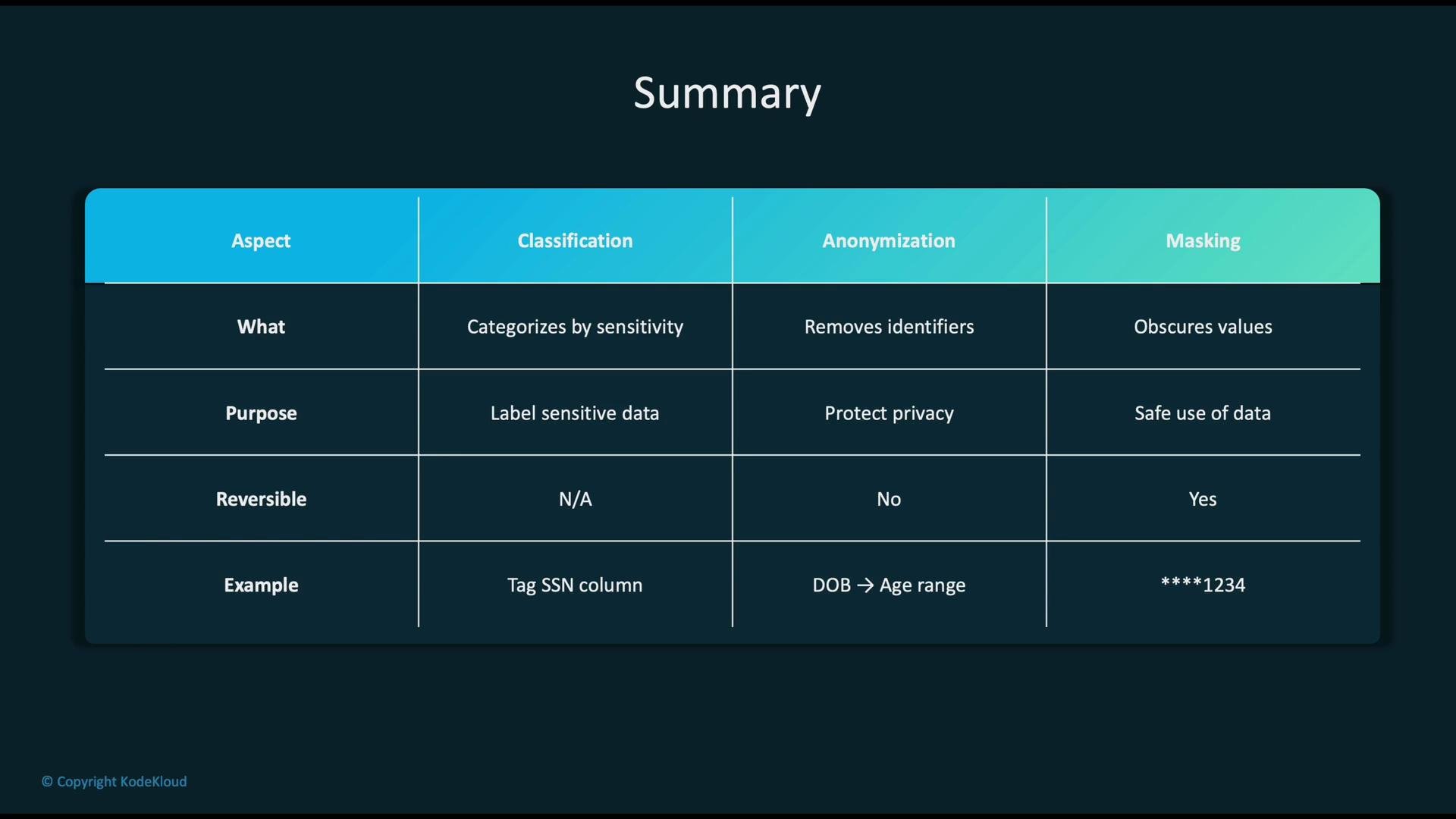
Quick comparison: classification, anonymization, masking
Recommended best practices
- Classify data early and keep classification metadata in a central data catalog.
- Apply the principle of least privilege: restrict access only to users and services that need the data.
- Prefer irreversible anonymization when re-identification is not required.
- Use format-preserving masking (or tokenization) for downstream testing and preprocessing needs.
- Log and audit transformations and data access for compliance (GDPR, HIPAA, CCPA).
- Combine automated detection (e.g., Amazon Macie) with human review to reduce false positives/negatives.
Links and references
- Amazon Macie: https://aws.amazon.com/macie/
- Amazon S3: https://aws.amazon.com/s3/
- AWS Glue Data Catalog: https://aws.amazon.com/glue/features/data-catalog/
- SageMaker Data Wrangler: https://aws.amazon.com/sagemaker/data-wrangler/
- SageMaker Pipelines: https://aws.amazon.com/sagemaker/pipelines/
- AWS Glue: https://aws.amazon.com/glue/