

- Deploy a second model variant with SageMaker JumpStart
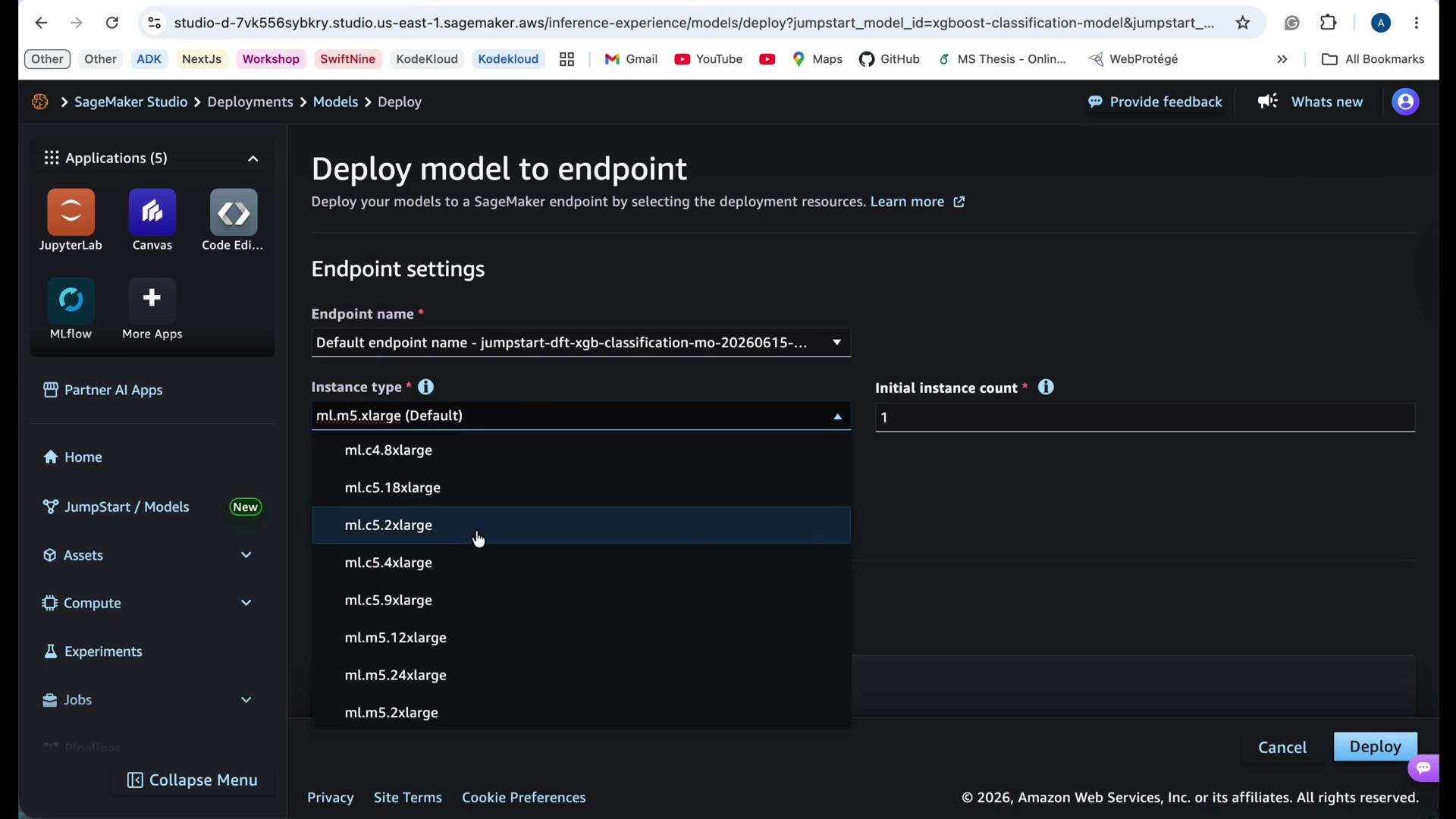
- Open SageMaker JumpStart and choose the XGBoost classification solution.
- Deploy a new model, selecting an appropriate instance type such as
ml.m5.2xlarge. - Complete the deployment process and wait for the model to be created.
- Confirm models in the SageMaker console
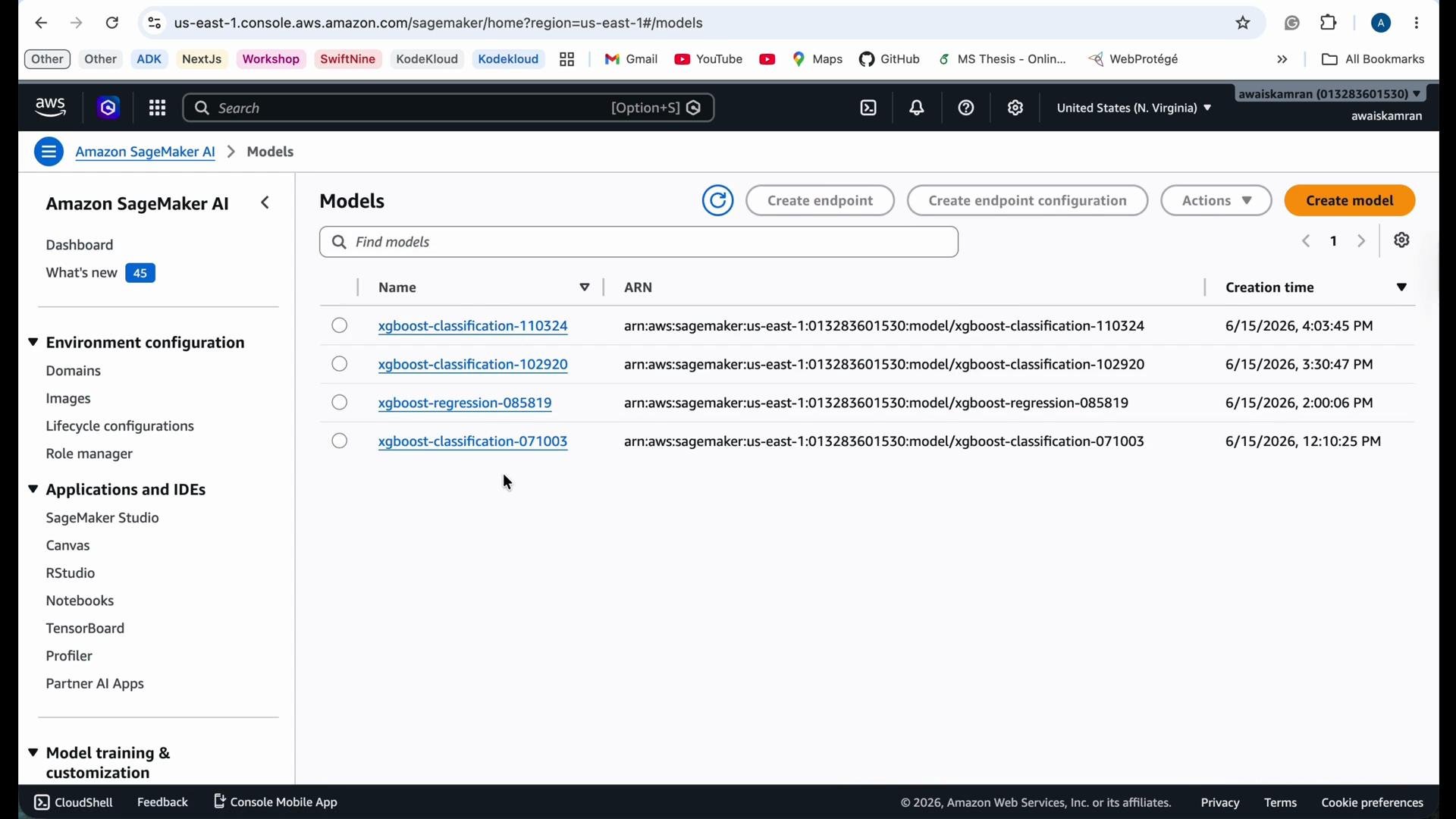
- Navigate to SageMaker Console → Dashboard → Models to see all model artifacts.
- You should see the newly created model alongside your previously deployed model(s).
- Create or update an endpoint configuration
- Select the model you want to expose and click Create endpoint.
- If you don’t have an existing endpoint configuration, create a new one with a descriptive name.
- Choose a provisioned endpoint (recommended for real-time inference).
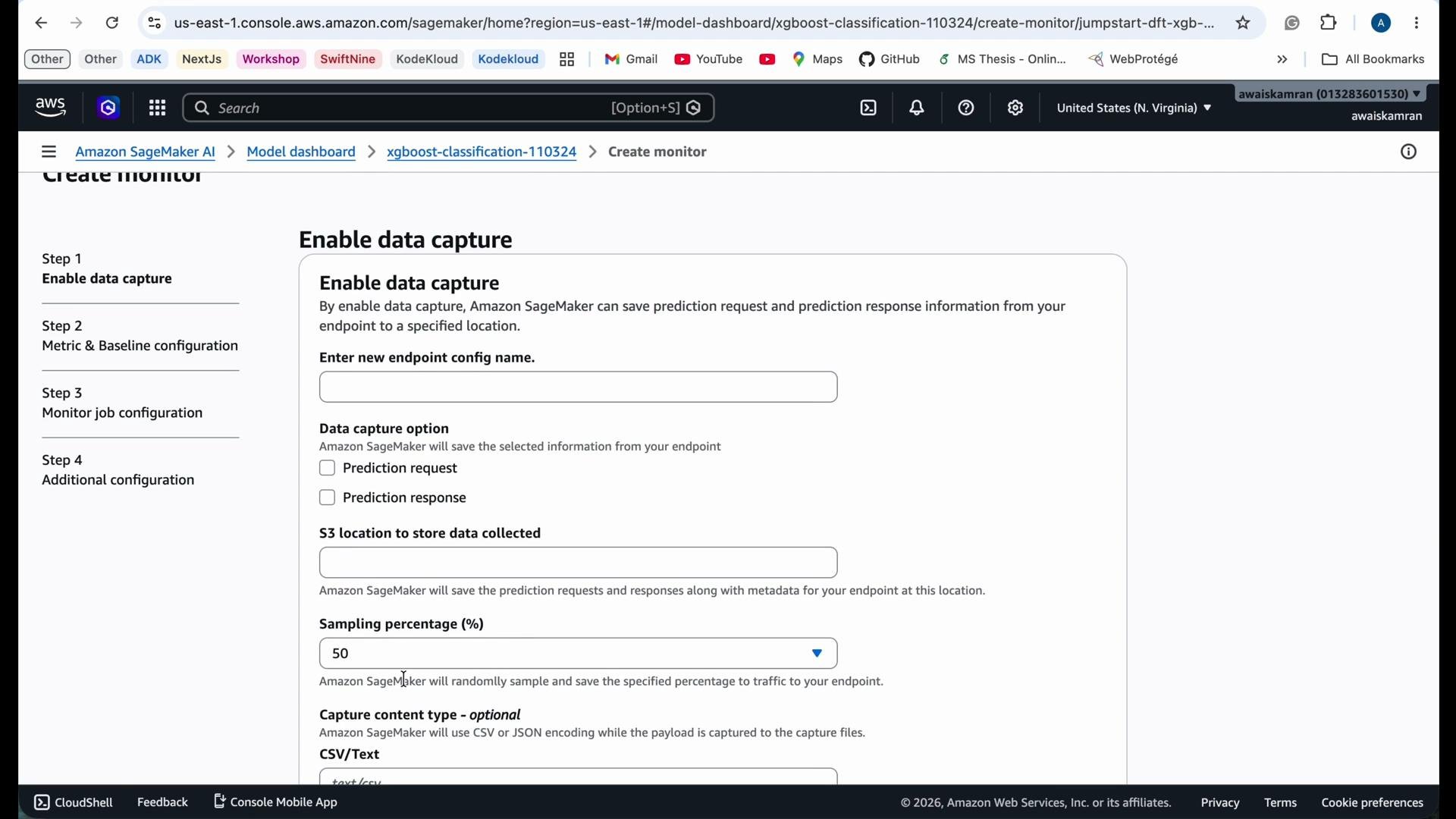
- Configure encryption and data capture as needed. Enabling data capture here will automatically record request/response payloads for Model Monitor to consume later.
- Configure traffic splitting (A/B testing)
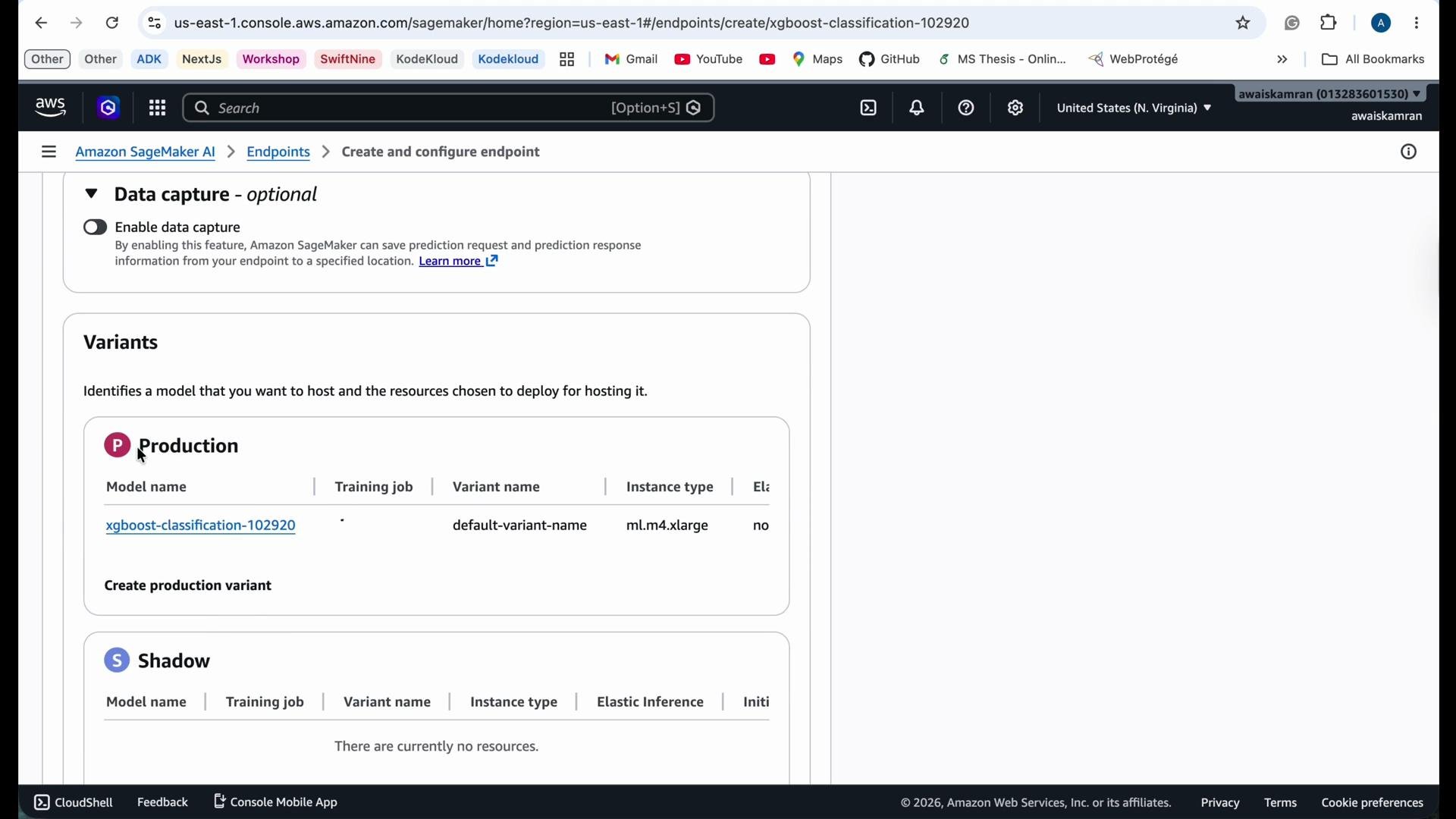
- Add both models as production variants in the endpoint configuration and assign traffic weights.
- Example for a 50/50 split:
- Alternatively, add one model as a production variant and the other as a shadow variant if you only want to mirror traffic for testing.
- Configure data capture (sampling and destination)
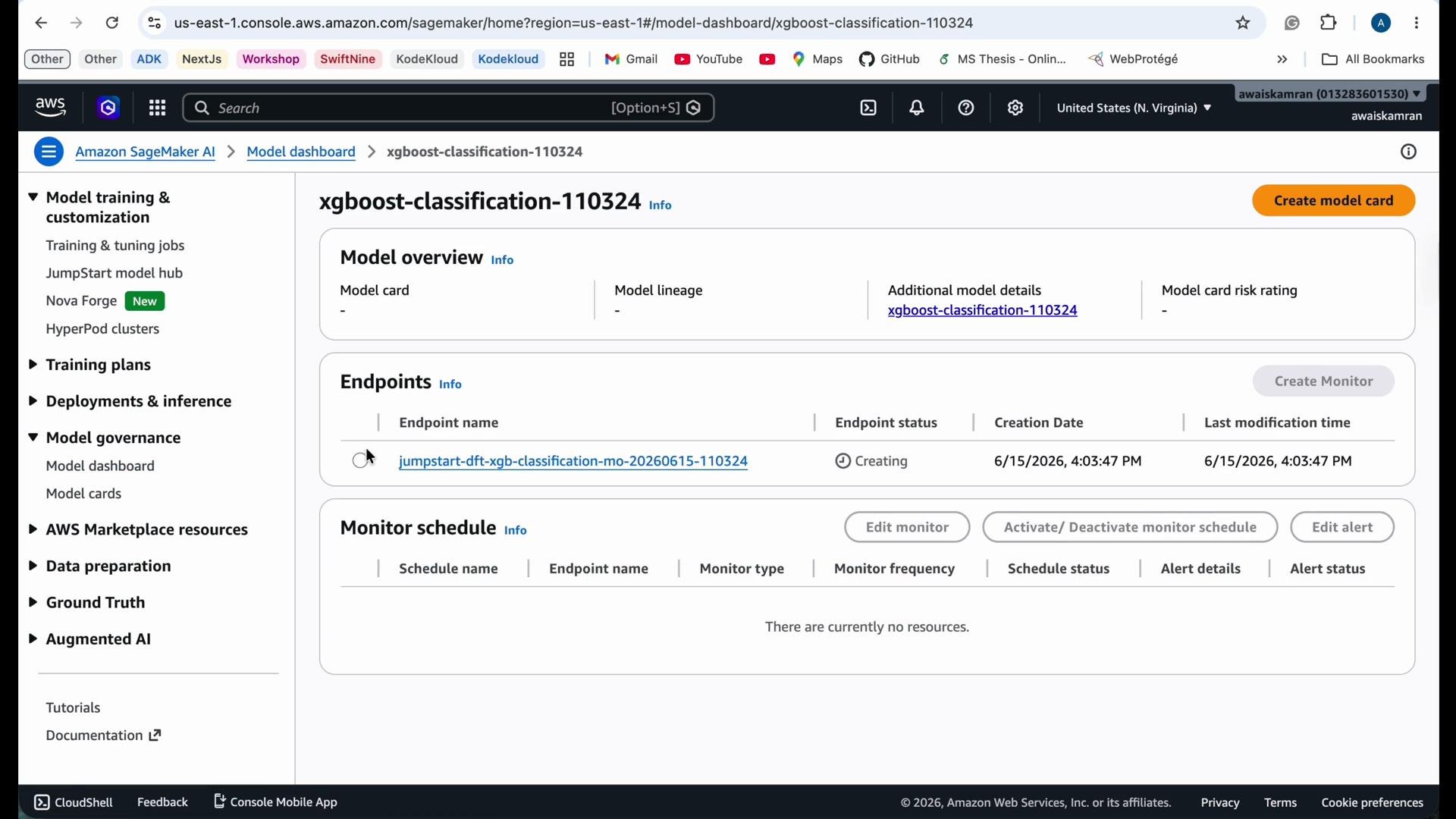
- When creating the endpoint configuration, enable data capture and set the sampling percentage to control what fraction of requests/responses are stored.
- Captured data is what Model Monitor consumes to detect data drift, feature distribution changes, and other issues.
- Evaluate and iterate using captured data and Model Monitor
- Compare latency, input/output distributions, error rates, and other telemetry between variants using the captured data.
- To compare accuracy (or other label-dependent metrics), you need ground-truth labels — for example, delayed feedback or a labeled validation dataset.
- Use Model Monitor to generate reports and schedules that continuously evaluate production data and trigger alerts when anomalies or drift are detected.
- Based on these analyses, decide to promote a candidate variant to full production or iterate on the model.
Use production variants with traffic weights for controlled live A/B tests and shadow variants to mirror traffic for safe offline evaluation. Always enable data capture if you plan to use Model Monitor — captured payloads are the foundation for drift detection, distribution comparisons, and model promotion decisions.
- Amazon SageMaker: https://aws.amazon.com/sagemaker/
- SageMaker Model Monitor: https://docs.aws.amazon.com/sagemaker/latest/dg/model-monitor.html
- SageMaker JumpStart: https://docs.aws.amazon.com/sagemaker/latest/dg/jumpstart.html