

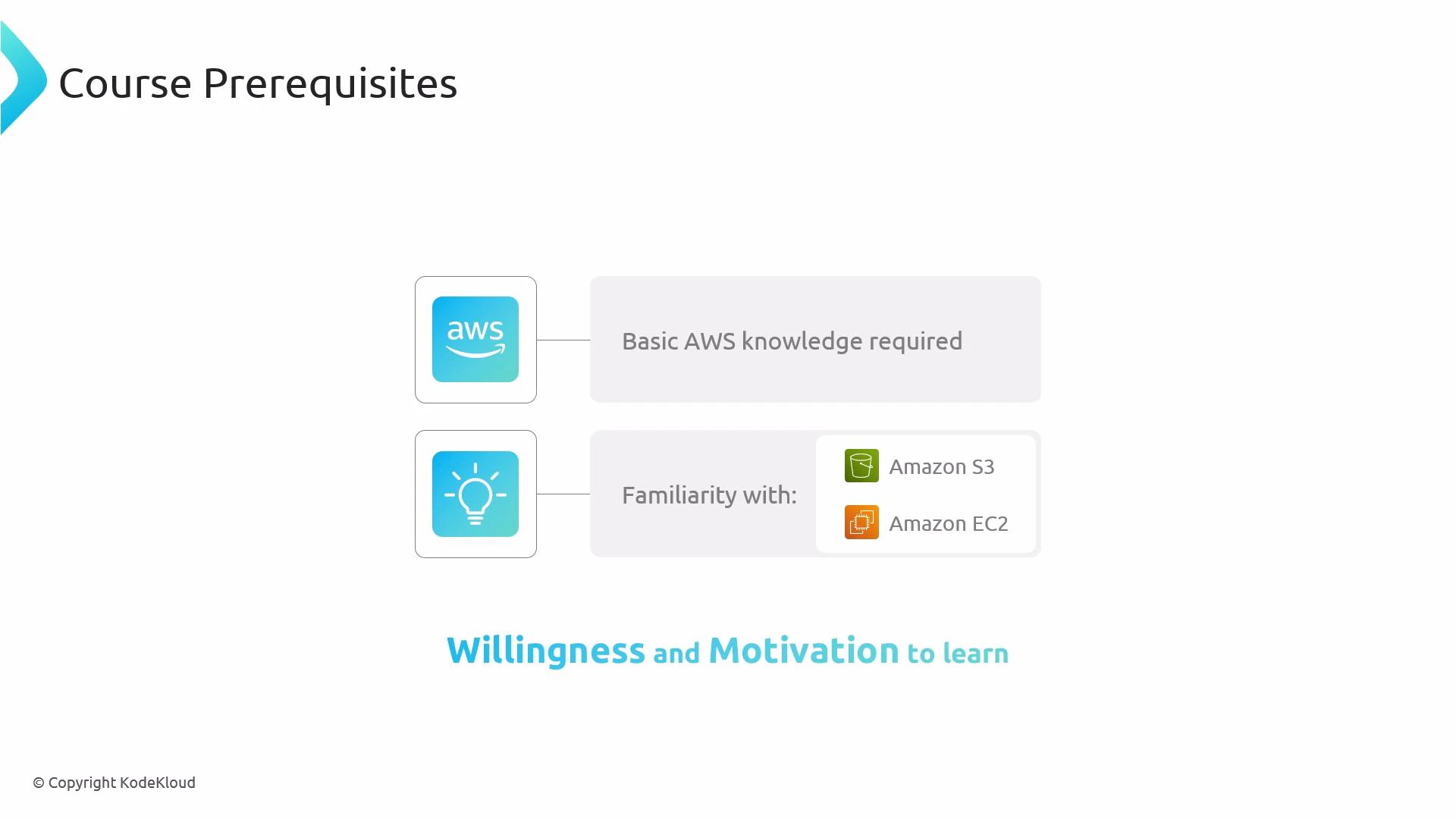
- Basic understanding of AWS Cloud fundamentals (Cloud Practitioner level).
- Familiarity with Amazon Simple Storage Service (Amazon S3) and Amazon Elastic Compute Cloud (EC2), since we’ll use these services frequently in hands-on CloudFormation templates.
- A willingness to learn and experiment with templates and infrastructure-as-code.
- Hands-on CloudFormation templates that create and configure AWS resources such as S3 buckets and EC2 instances.
- Occasional references to other AWS services; basic familiarity with the AWS Management Console, VPCs, subnets, and security groups is helpful but not mandatory.
Estimated preparation time: 1–4 hours (depending on prior experience).
If you are new to AWS, consider quickly reviewing the introductory guides for Amazon EC2 and Amazon S3. A short refresher on VPC basics will also make the hands-on CloudFormation examples much easier to follow.
- AWS Cloud Practitioner (CLF-C02)
- Amazon Simple Storage Service (Amazon S3) course
- Amazon Elastic Compute Cloud (EC2) course