

This article highlights the core ways GitHub supports open source: free infrastructure, standardized workflows, automated security, discoverability and growth, financial support, and long-term preservation.
Key pillars GitHub provides
1. Free infrastructure
GitHub removes a major financial barrier by offering free hosting, bandwidth, and CI/CD features for public repositories. Combined with free GitHub Actions usage for public projects, maintainers can build, test, and deploy without additional infrastructure costs. Benefits:- Lowers cost to entry for individuals and small teams
- Makes reproducible CI/CD pipelines widely accessible
- Encourages experimentation and growth of early-stage projects
2. Standardized workflows
Features like pull requests, issues, review requests, and protected branches create a shared contribution model across millions of repositories. A common interface and process drastically reduce cultural and organizational friction when contributors move between projects.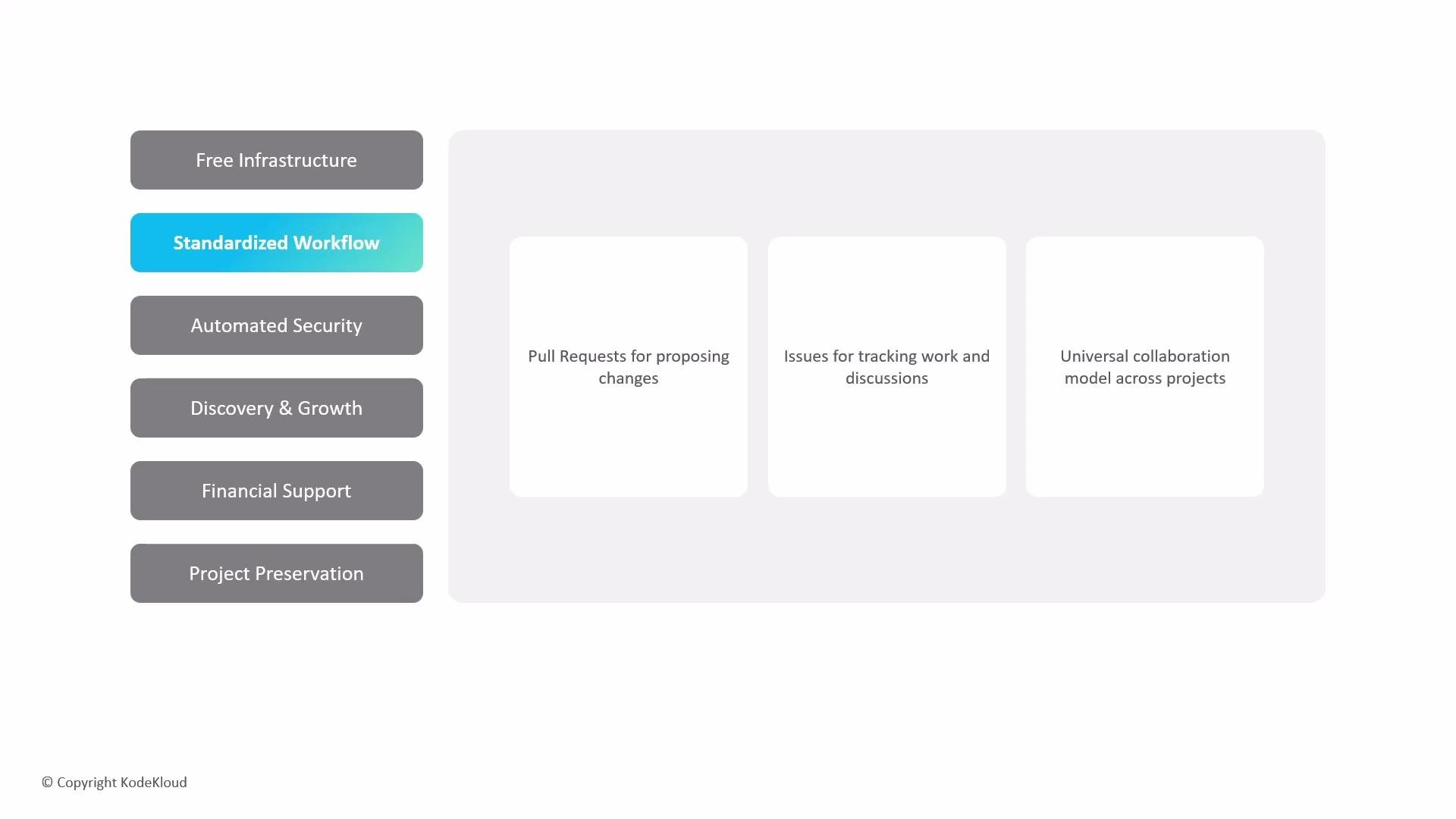
- New contributors spend less time learning project-specific processes
- Maintainers can adopt templates and automation to scale contribution workflows
- Consistent workflows improve code quality and project governance
3. Automated security
GitHub integrates automated security tools that scan code and dependencies continuously. Services such as Dependabot and CodeQL surface vulnerabilities and offer automated fixes or guidance.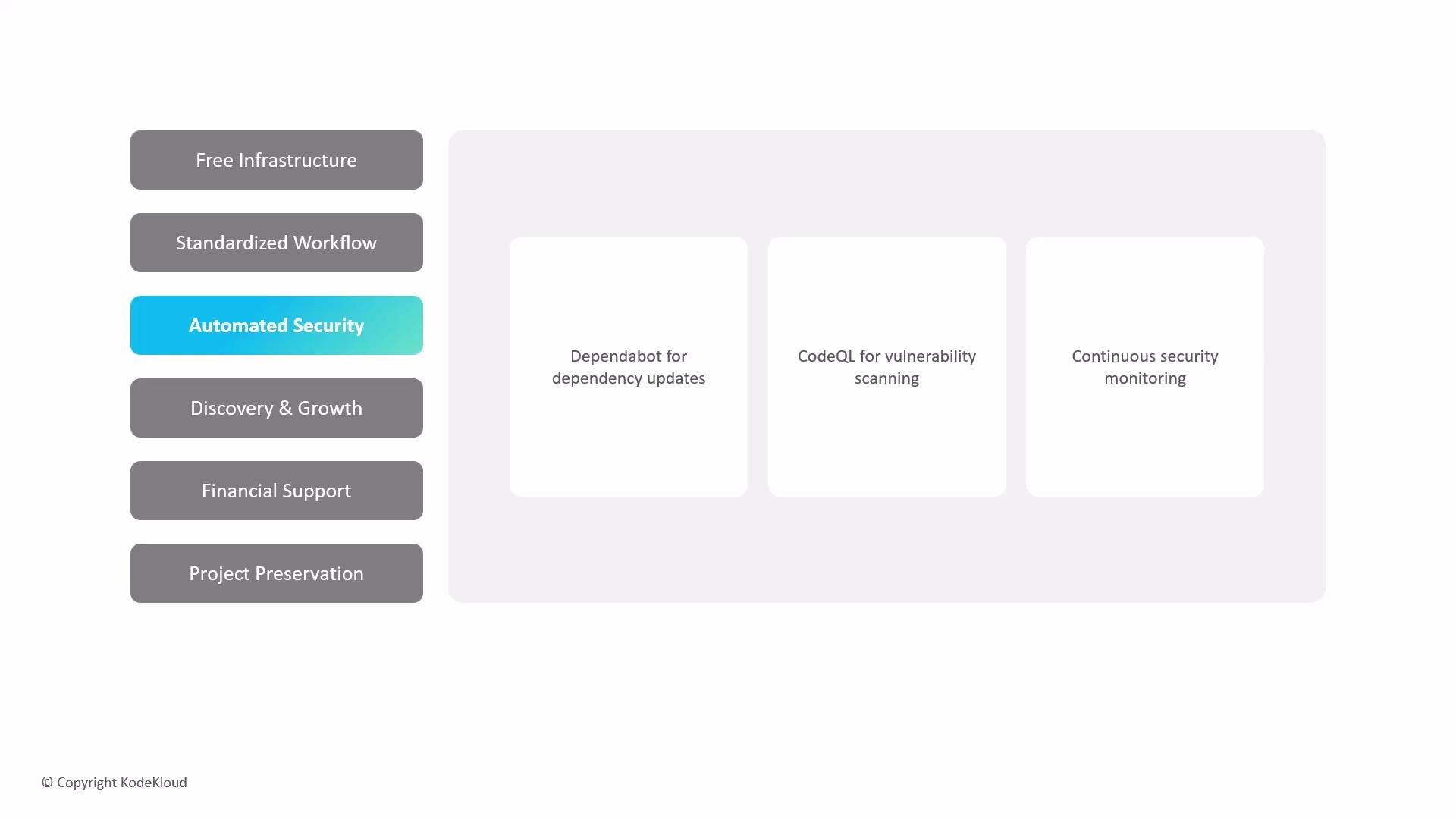
- Faster detection of vulnerable dependencies
- Automated pull requests to update dependencies
- Continuous code analysis to find security issues early
4. Discovery and growth
Built-in discovery features like Explore, Trending, and repository stars surface projects to potential contributors and users, acting as lightweight popularity and quality signals.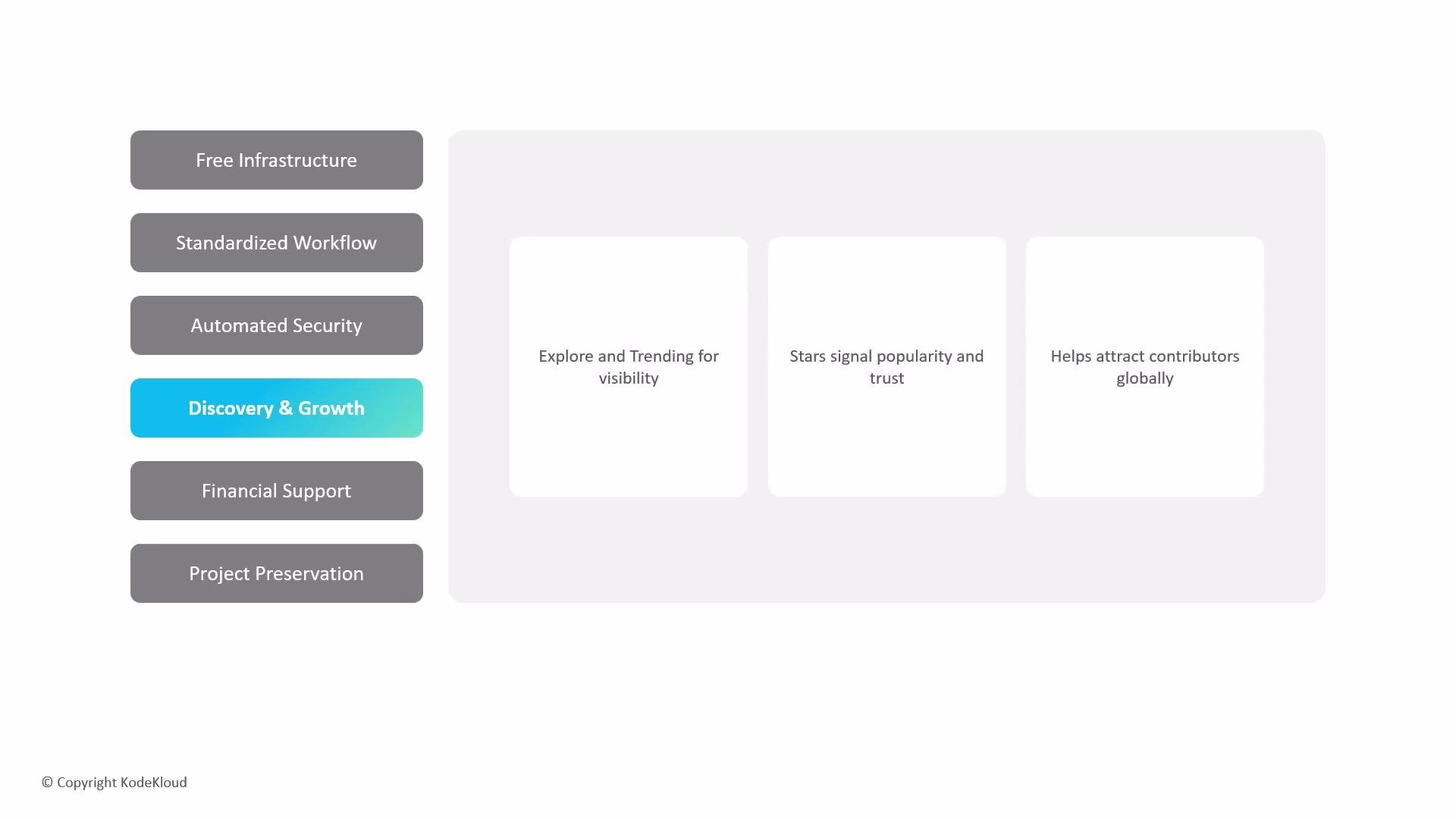
- Improved visibility increases contributor and user acquisition
- Social signals (stars, forks) help newcomers assess project activity
- Discovery channels drive long-tail adoption across ecosystems
5. Financial support
GitHub Sponsors and integrated funding tools let individuals and organizations contribute directly to maintainers. This creates a pathway for sustainable funding that’s built into the same platform where the code lives.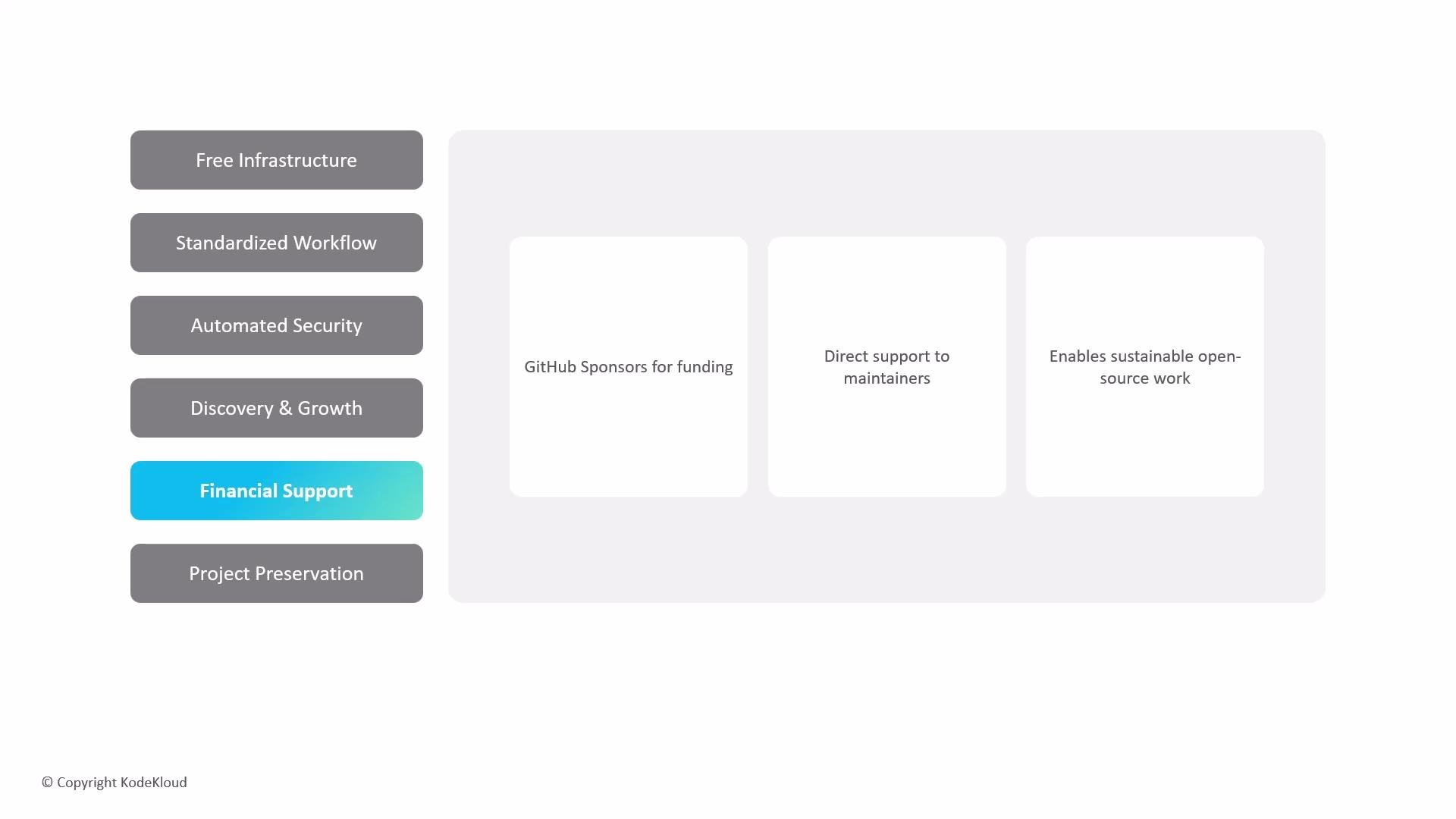
- Helps retain maintainers and reduce burnout
- Enables paid work on critical infrastructure projects
- Lowers the risk of project abandonment
6. Project preservation
Long-term preservation initiatives like the GitHub Archive Program and the Arctic Code Vault ensure that today’s open source artifacts are preserved for future generations, protecting collective technical knowledge.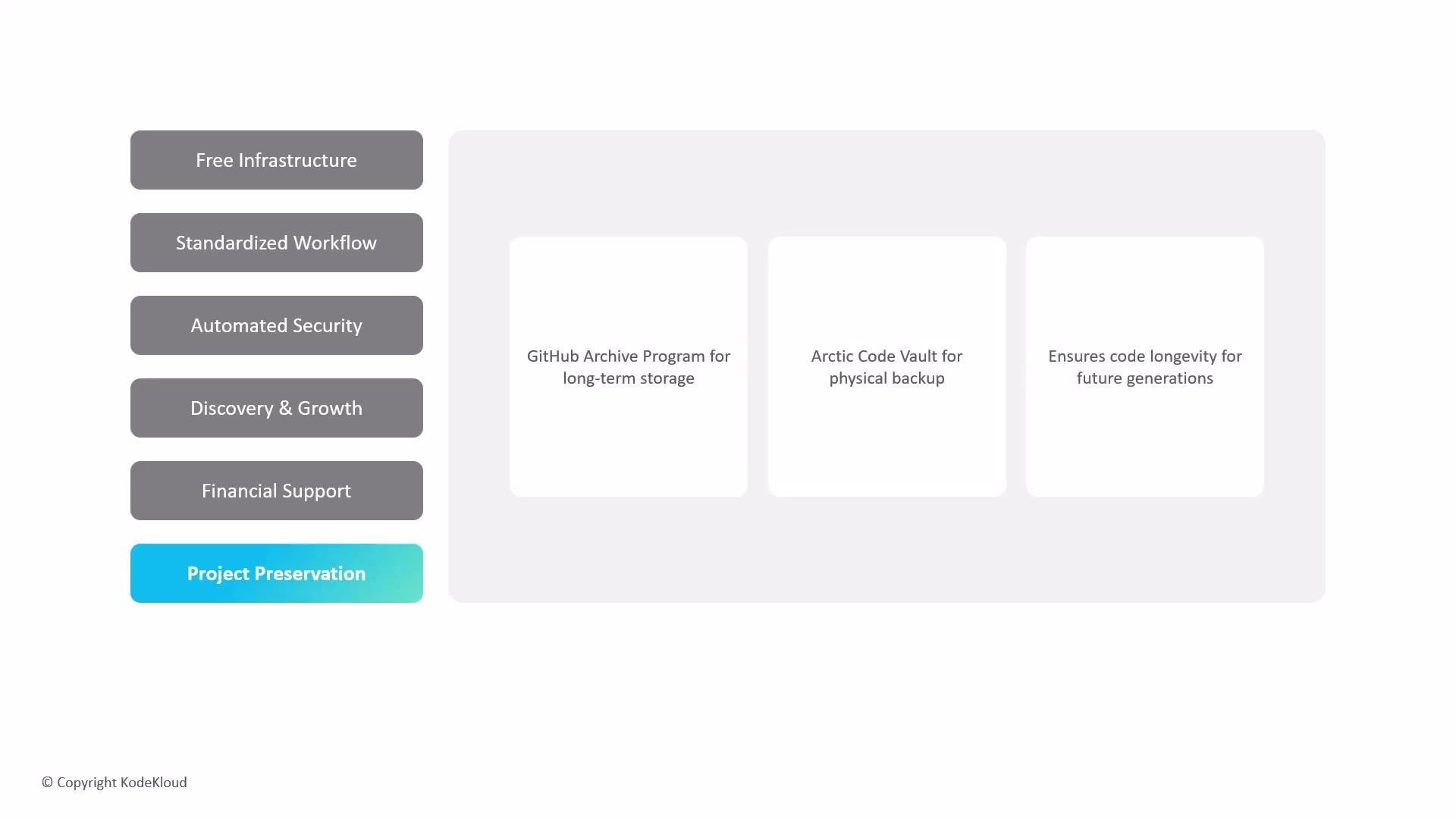
- Acts as a historical and technical insurance policy
- Maintains access to code regardless of future platform changes
- Supports research, education, and restoration efforts
Conclusion
By combining free infrastructure, standard workflows, automated security, discoverability, funding mechanisms, and preservation programs, GitHub turns code hosting into a holistic platform for sustaining open source. These pillars work together to lower barriers, improve safety, attract contributors, and protect our shared software heritage.Links and references
- GitHub Actions: https://github.com/features/actions
- Dependabot: https://github.com/dependabot
- CodeQL: https://securitylab.github.com/tools/codeql
- GitHub Explore: https://github.com/explore
- GitHub Trending: https://github.com/trending
- GitHub Sponsors: https://github.com/sponsors
- GitHub Archive Program: https://archiveprogram.github.com/