

-
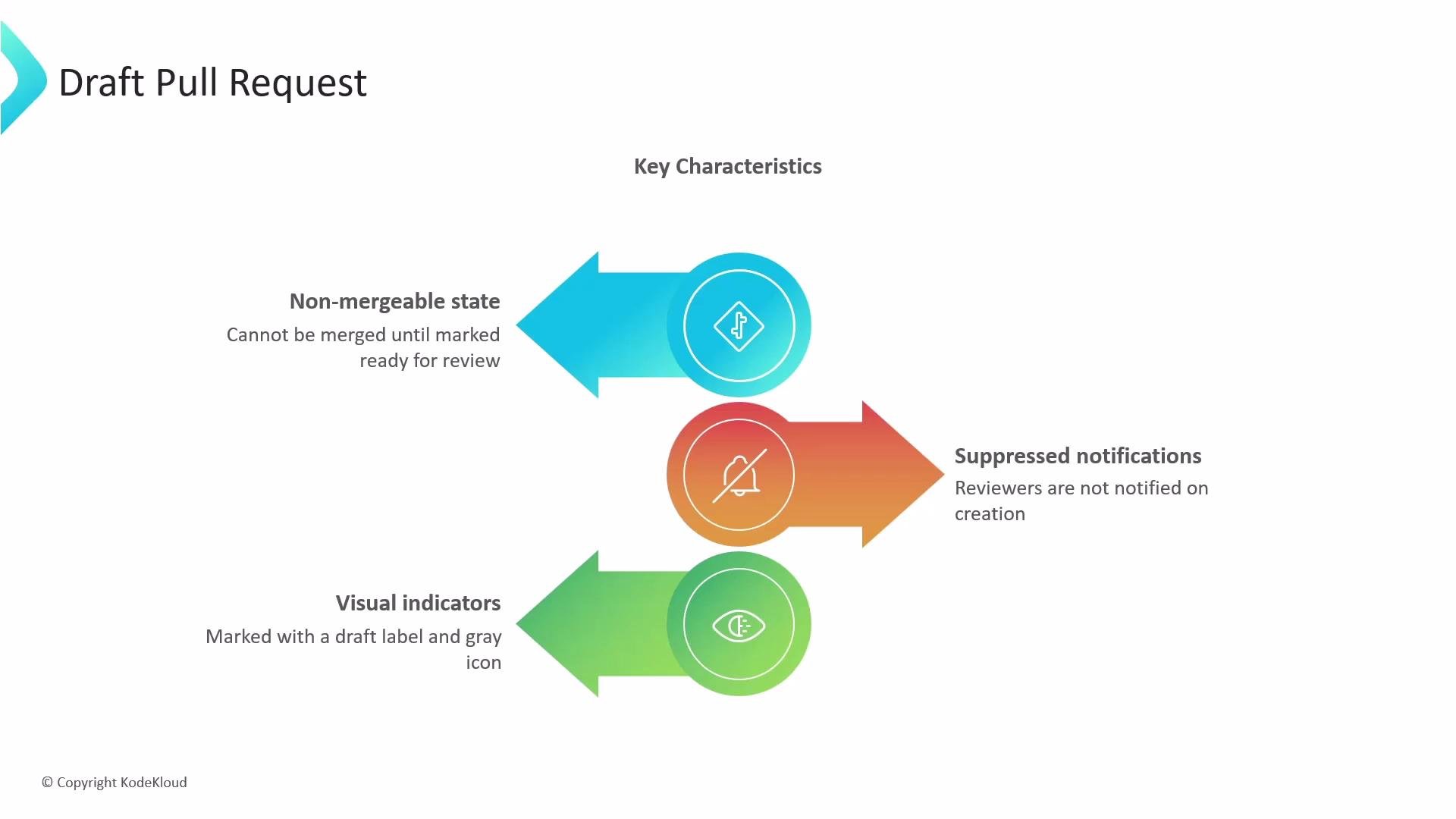
Non-mergeable state
Draft PRs are locked and cannot be merged until the author converts them to a ready-for-review state. This prevents accidental merges into the base branch. -
Suppressed notifications
Creating a draft PR does not automatically notify repository owners or designated reviewers. This reduces unnecessary review pings and prevents review fatigue. -
Visual indicators
Draft PRs are visibly labeled with a draft badge and use a distinct gray icon in lists so reviewers can quickly distinguish them from active PRs.
Converting a draft pull request to “Ready for review” is a deliberate, manual step. Only after that conversion will the PR become mergeable and trigger reviewer notifications.
-
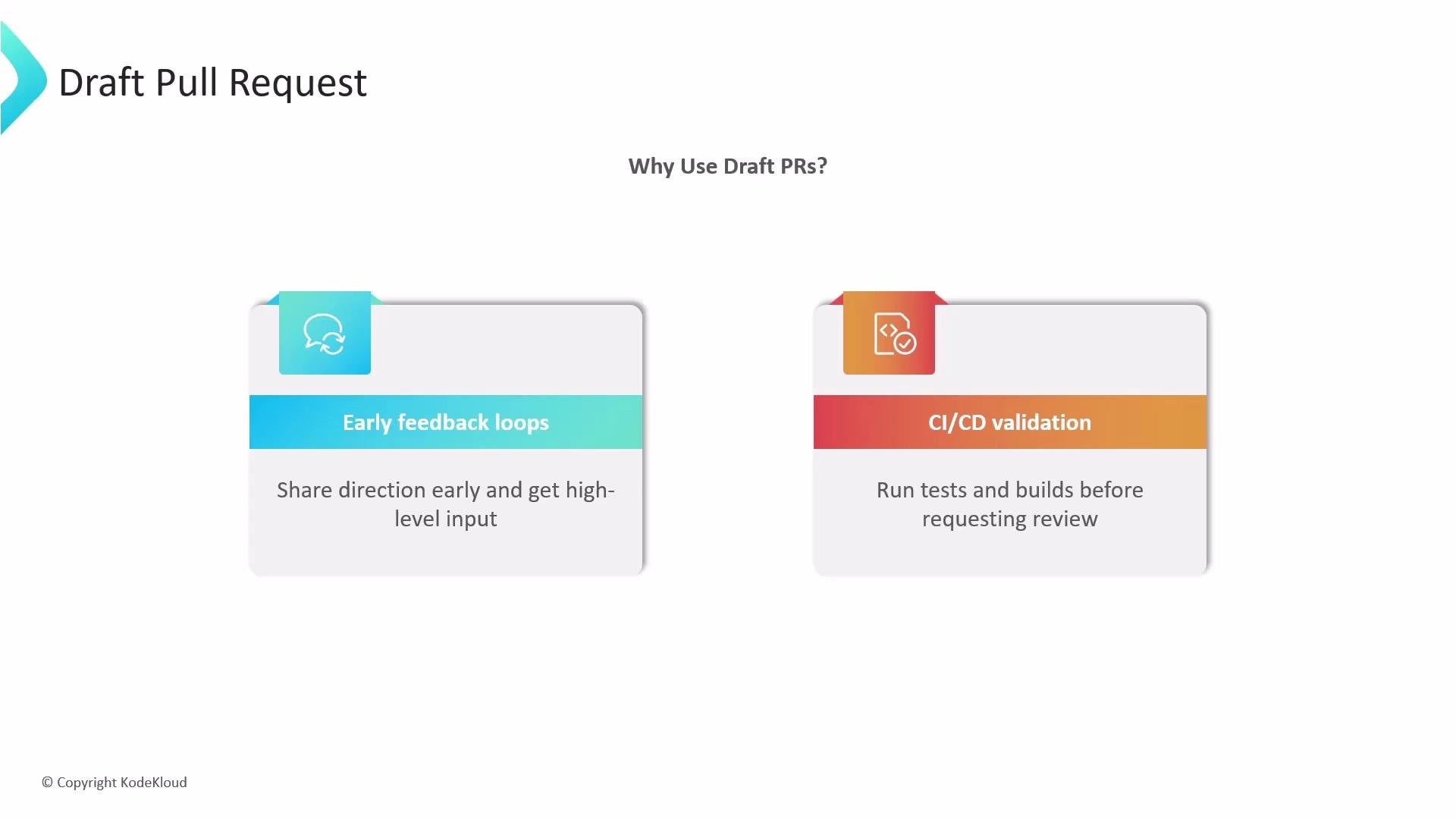
Early feedback
Draft PRs let you share high-level direction, architecture, or approach so teammates can give early feedback before you finalize the implementation. This early collaboration helps catch design issues and reduces rework. -
CI/CD validation
Most repositories run continuous integration checks (builds, tests, linters) on draft PRs. That lets authors verify the code compiles and tests pass as they iterate, reducing trivial failures when the PR is later marked ready for review.
- Use draft PRs for early design reviews and integration checks, not for finalized changes.
- Update the PR description as work progresses so reviewers understand the current scope.
- Convert to “Ready for review” only when the implementation and CI results are stable.