

This course emphasizes active learning: each module pairs foundational concepts with hands-on labs so you can practice workflows, make mistakes safely, and learn by doing.
What you’ll learn
This course combines theory with practical labs to build confidence in everyday Git and GitHub workflows. Key topics include:- Version control fundamentals: why version control matters and how Git models history.
- Git architecture: local repository, staging area (index), and remote repository.
- Core Git workflows and commands: cloning, fetching, pulling, committing, staging, branching, merging, and pushing.
- Working with GitHub: repository creation and configuration, branch protection, pull requests, issues, discussions, and documentation best practices.
- GitHub platform features: account types, product tiers, and interfaces (web, Desktop, mobile).
- Automation and developer tooling: GitHub Actions for CI/CD, GitHub Copilot for AI-assisted coding, and Codespaces for cloud development.
- Project and release management: project boards, milestones, and automation to track work.
- Security and permissions: authentication, access control, best practices for securing code and workflows.
- Open source and community engagement: inner source, contributing to projects, and community collaboration strategies.
- Exam readiness: comprehensive practice assessments to validate knowledge for certification.
Version control and Git workflow
You’ll learn the concepts and then apply them with practical examples. Here’s a quick view of the local ↔ remote workflow this course covers: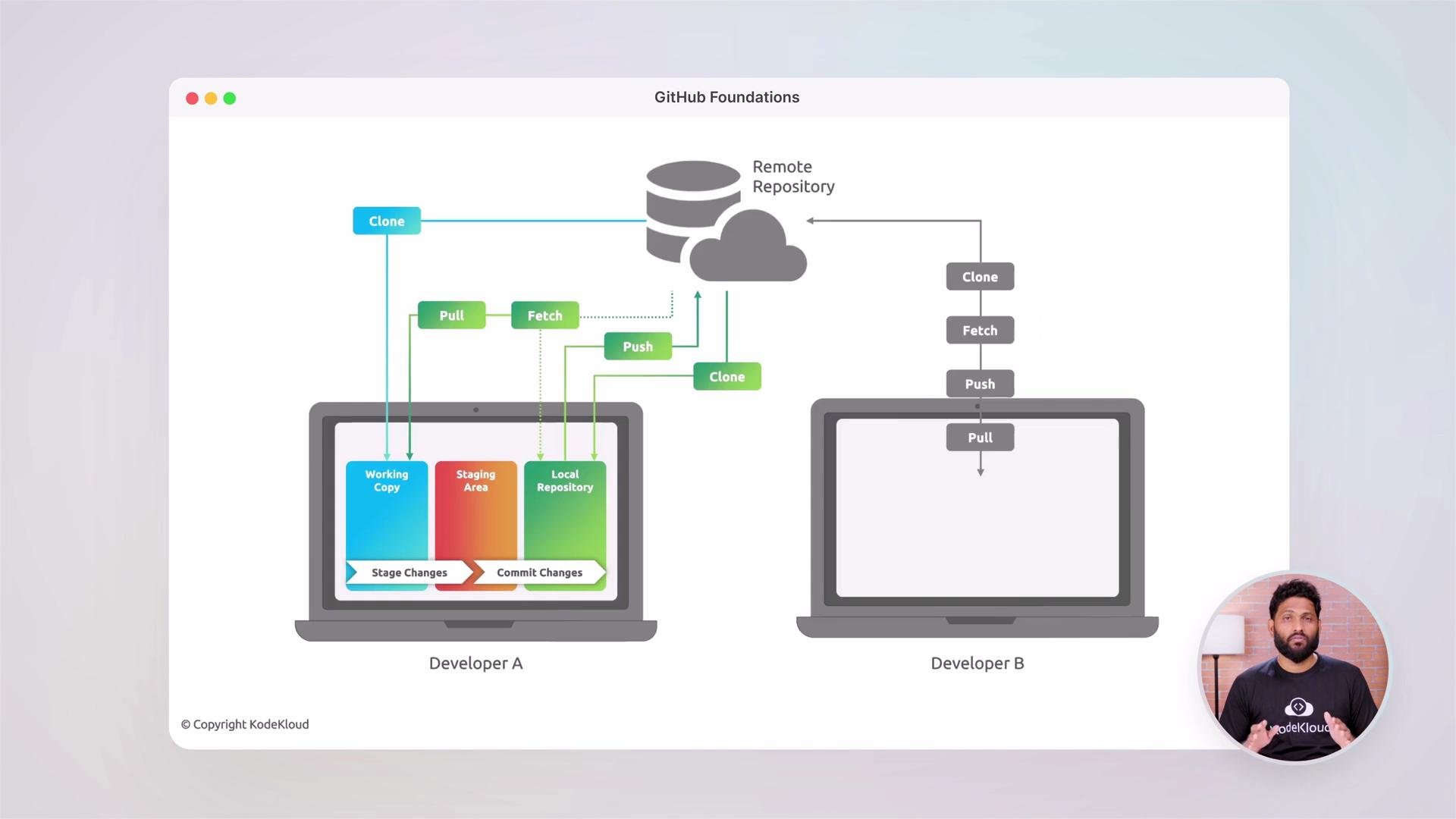
Exploring the GitHub platform
You’ll get hands-on with the GitHub UI and features that help teams collaborate and deliver reliably. Topics include repository insights (code frequency, dependency graph, network), forks, and how to configure visibility and branch protection.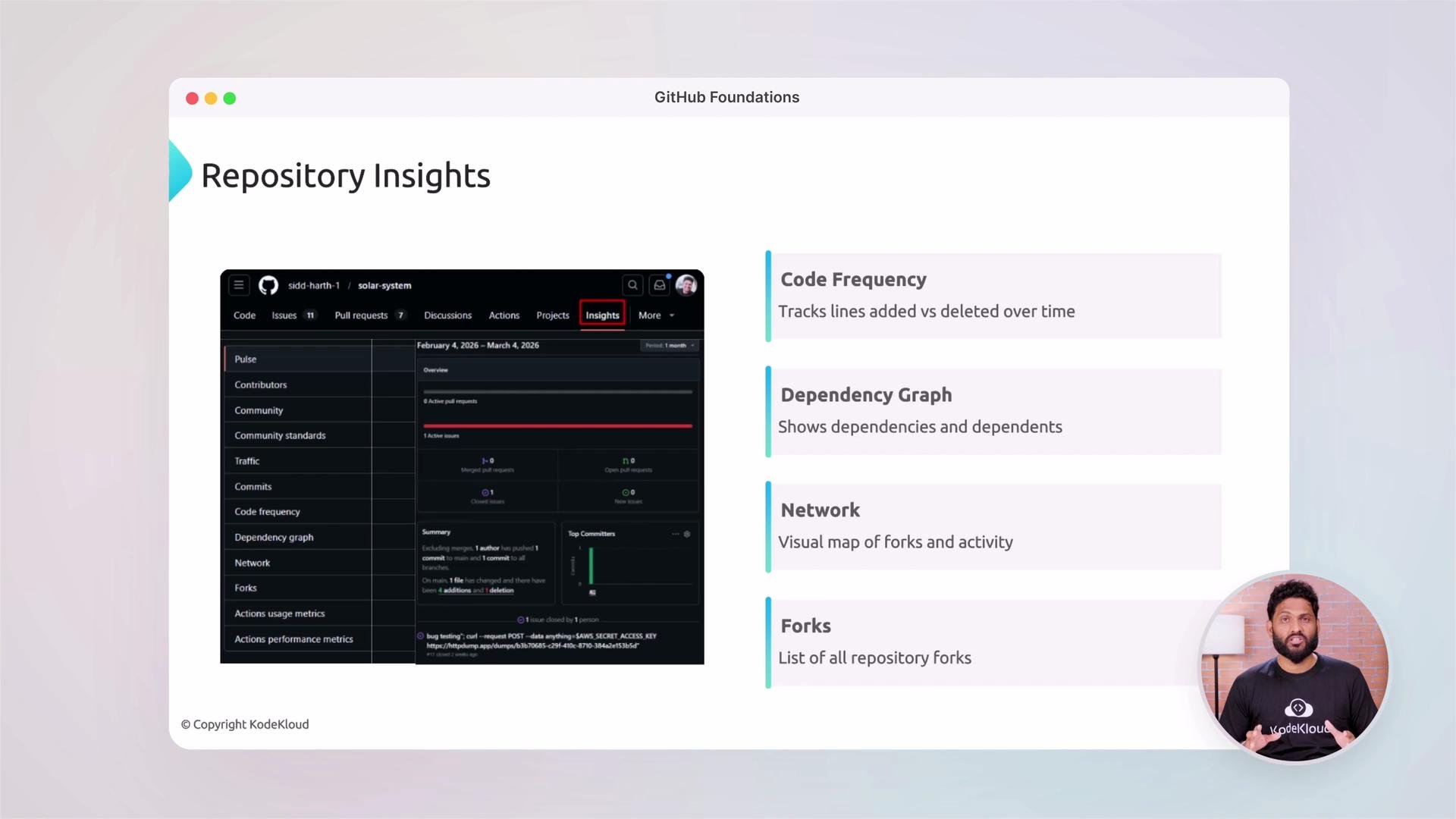
Course outline (at a glance)
Who this course is for
- Developers and engineers new to GitHub who want practical, job-ready skills.
- DevOps professionals seeking to automate CI/CD using GitHub Actions.
- Contributors to open source projects who want to understand collaboration workflows.
- Teams adopting GitHub for code review, security, and project management.
How you’ll learn
- Short conceptual lessons followed by hands-on labs in realistic scenarios.
- Step-by-step exercises to practice Git commands, create PRs, configure Actions, and manage security.
- Practice assessments that simulate the certification exam experience.