

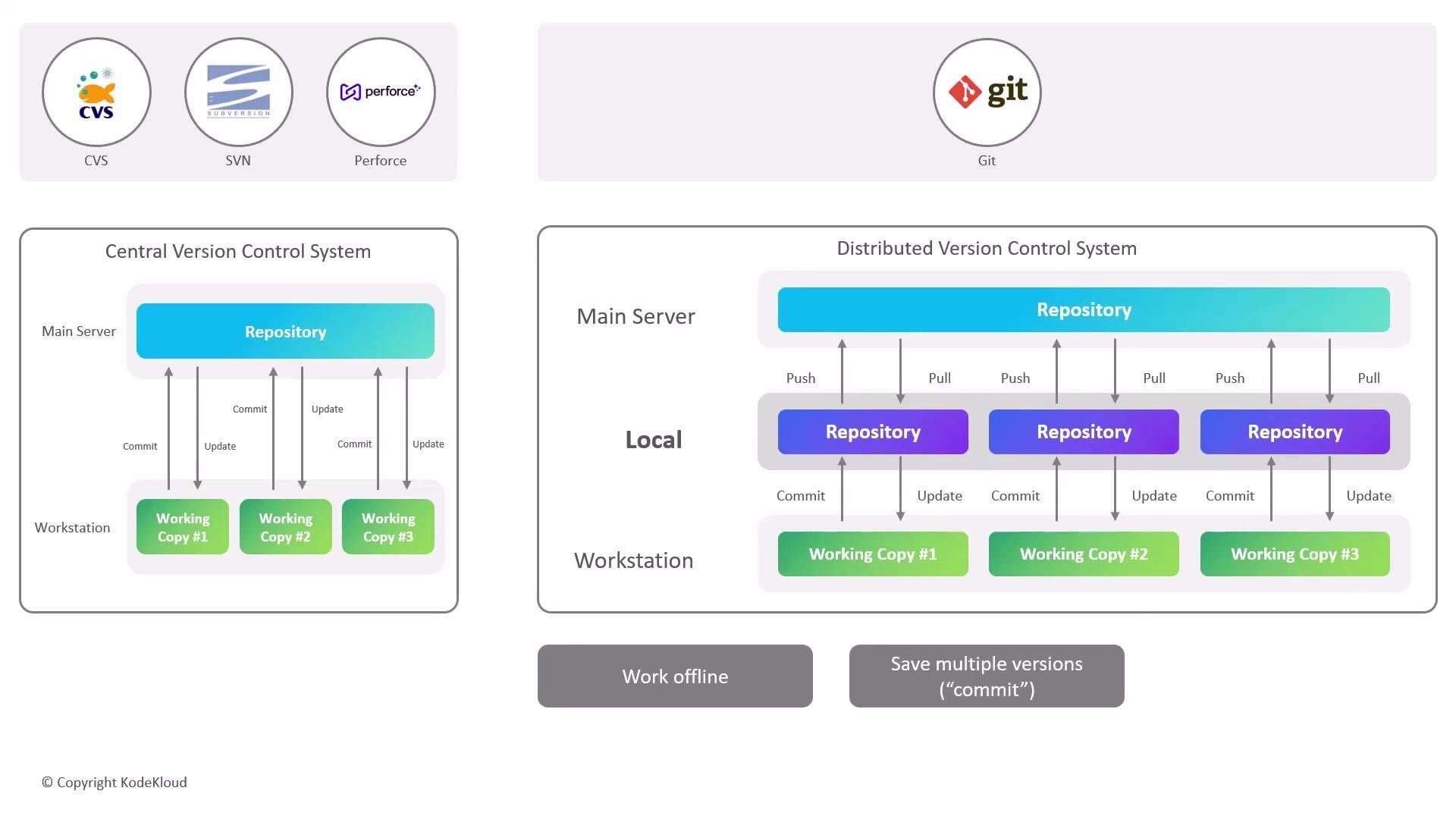
- Work offline: you can commit locally without network access, keeping incremental history on your machine.
- Reduced coupling to remotes: network connectivity is required only when exchanging changes with a remote (for example,
push,fetch, orpull). - Redundancy and recovery: any clone with the required history can act as a backup of the project, reducing the risk of total data loss (note: shallow clones that omit older commits are an exception).
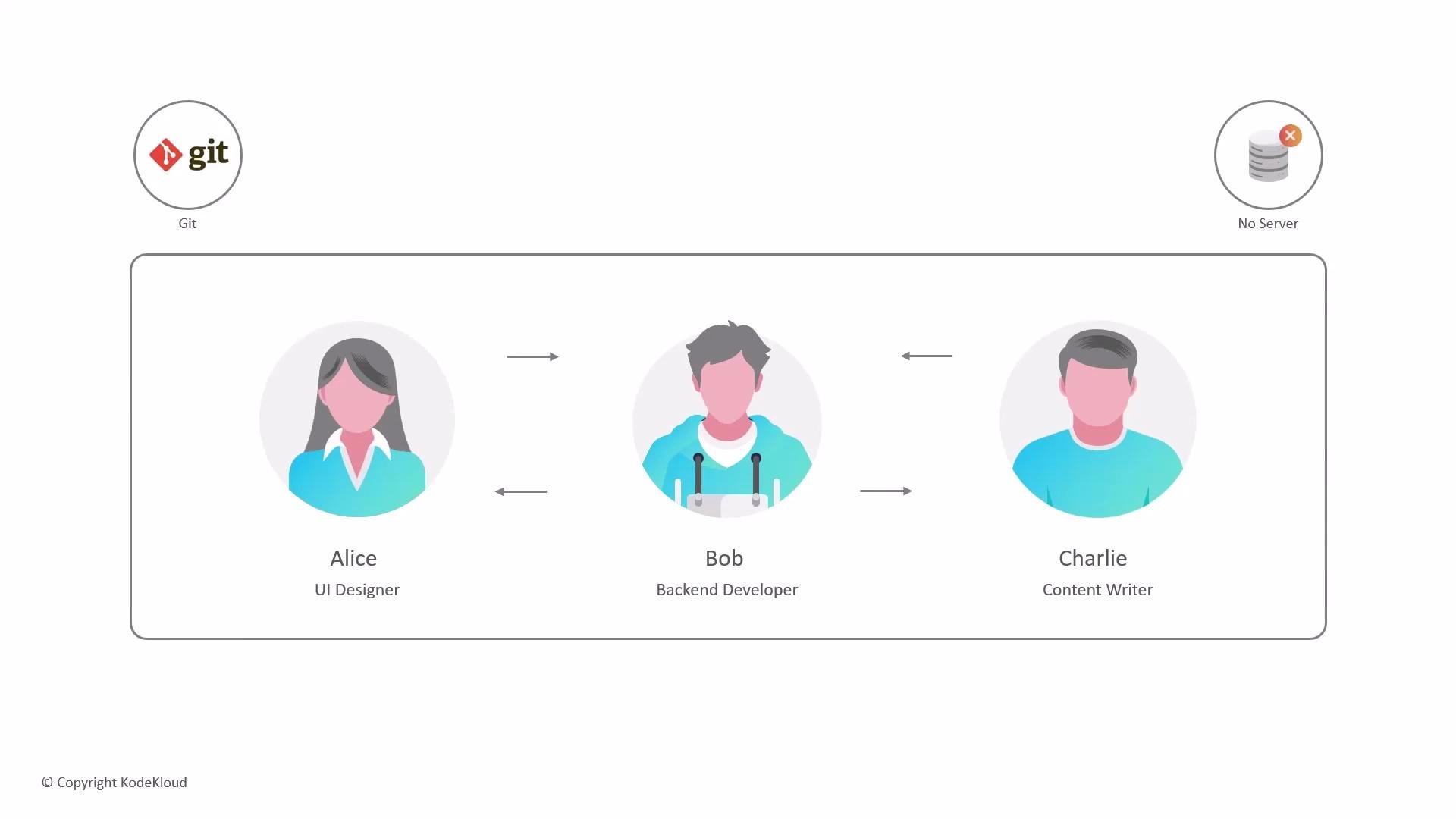
Distributed does not mean “no server.” Most teams use remote hosting (for example, GitHub, GitLab, or a self-hosted Git server) to simplify collaboration, code review, CI/CD, and backups while still benefiting from Git’s distributed model.
Beware of shallow clones (e.g.,
git clone --depth <n>). They omit older history and can prevent full repository recovery if a remote is lost. Use shallow clones only when you understand the trade-offs.
Links and references
In short: Git’s distributed architecture removes the single point of failure inherent in centralized systems, enables robust offline workflows, and gives teams flexible options for sharing and backing up history — while remote hosts provide the coordination and services teams typically depend on.