

- Faster iteration: Community contributions enable rapid feature development, bug fixes, and experimental ideas that might not appear in closed-source projects.
- Improved security and reliability: Publicly accessible code allows independent audits and quicker fixes when vulnerabilities are discovered.
- Vendor neutrality: Open standards and implementations reduce lock-in and increase portability between systems.
- Professional growth: Contributing is a practical way to gain experience, demonstrate expertise, and build professional reputation.
- Code contributions and pull requests
- Documentation and tutorials
- Issue triage and testing
- Mentoring new contributors and maintaining onboarding resources
When choosing a project to contribute to, read its license and contribution guidelines. License compatibility controls how you can reuse code, and clear contribution rules speed up onboarding and increase the chances your changes will be accepted.
Impact on the industry
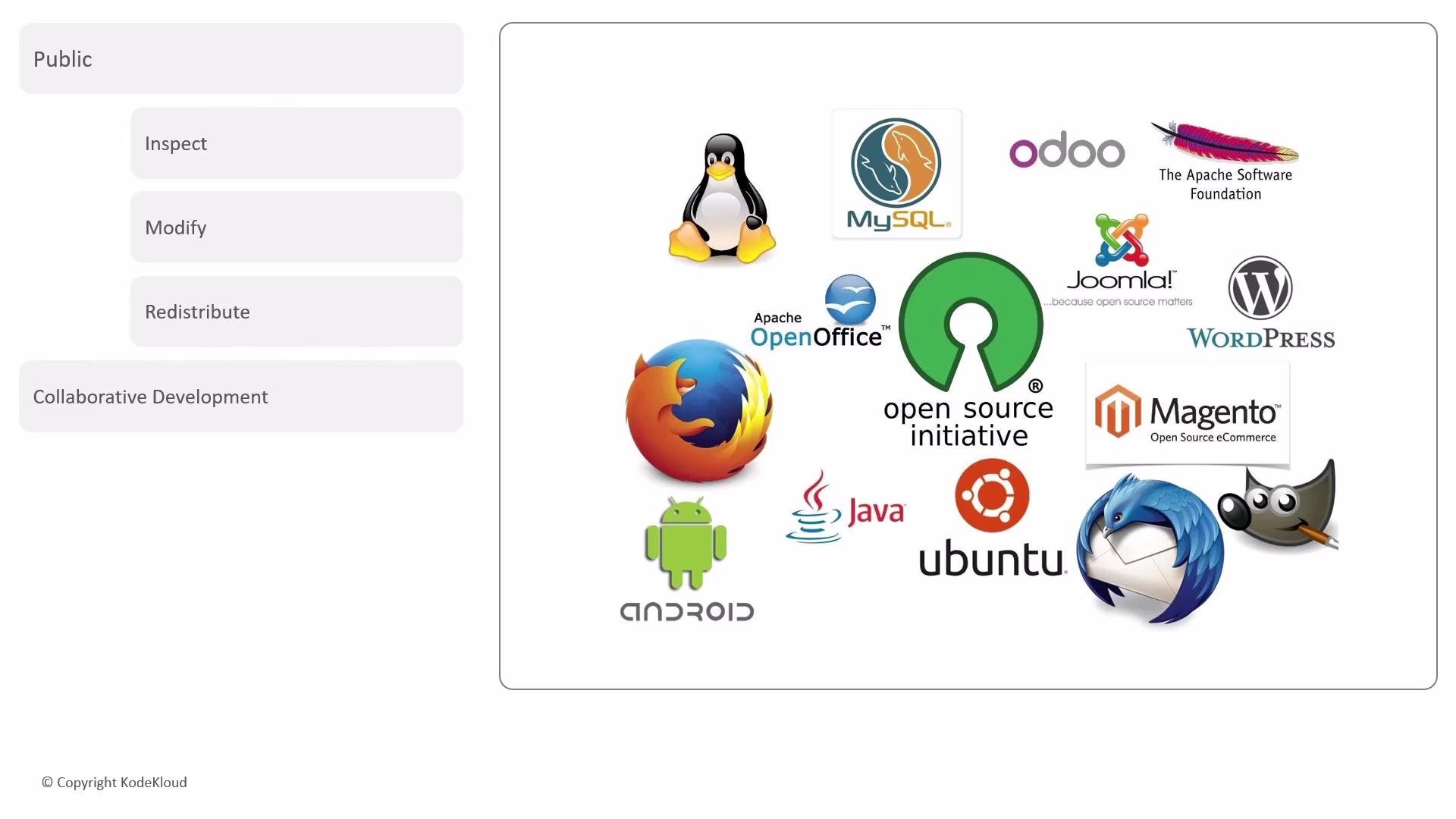
Open source technology underpins much of the modern software stack. Examples include the Linux kernel powering servers and mobile devices and the Firefox browser used for web access. For developers, evolving from a user to an active contributor is both a learning path and a way to influence critical tools used across the industry. Contributing helps:
- Improve software stability and security for everyone
- Build visibility and credibility within the community
- Shape project direction and feature priorities
- Kubernetes Documentation
- Docker Hub
- Terraform Registry
- Open source license references: MIT, Apache 2.0, GPL v3