

Best practices for constructive reviews:
- Focus on scope and clarity: flag only issues that affect correctness, security, or maintainability.
- Use
Commentfor stylistic or non-blocking suggestions to avoid unnecessary workflow friction. - When requesting changes, include clear reproduction steps and a prioritized list of fixes.
- Comment — Use this to provide general feedback, ask technical questions, or note observations without changing the formal status of the pull request. This is a non-binding option intended to facilitate discussion and clarification without blocking or approving the merge.
- Approve — This is the formal sign-off. Choose Approve when the proposed changes meet project requirements and are verified for integration into the base branch. An approval is often required by branch protection rules before a pull request can be merged.
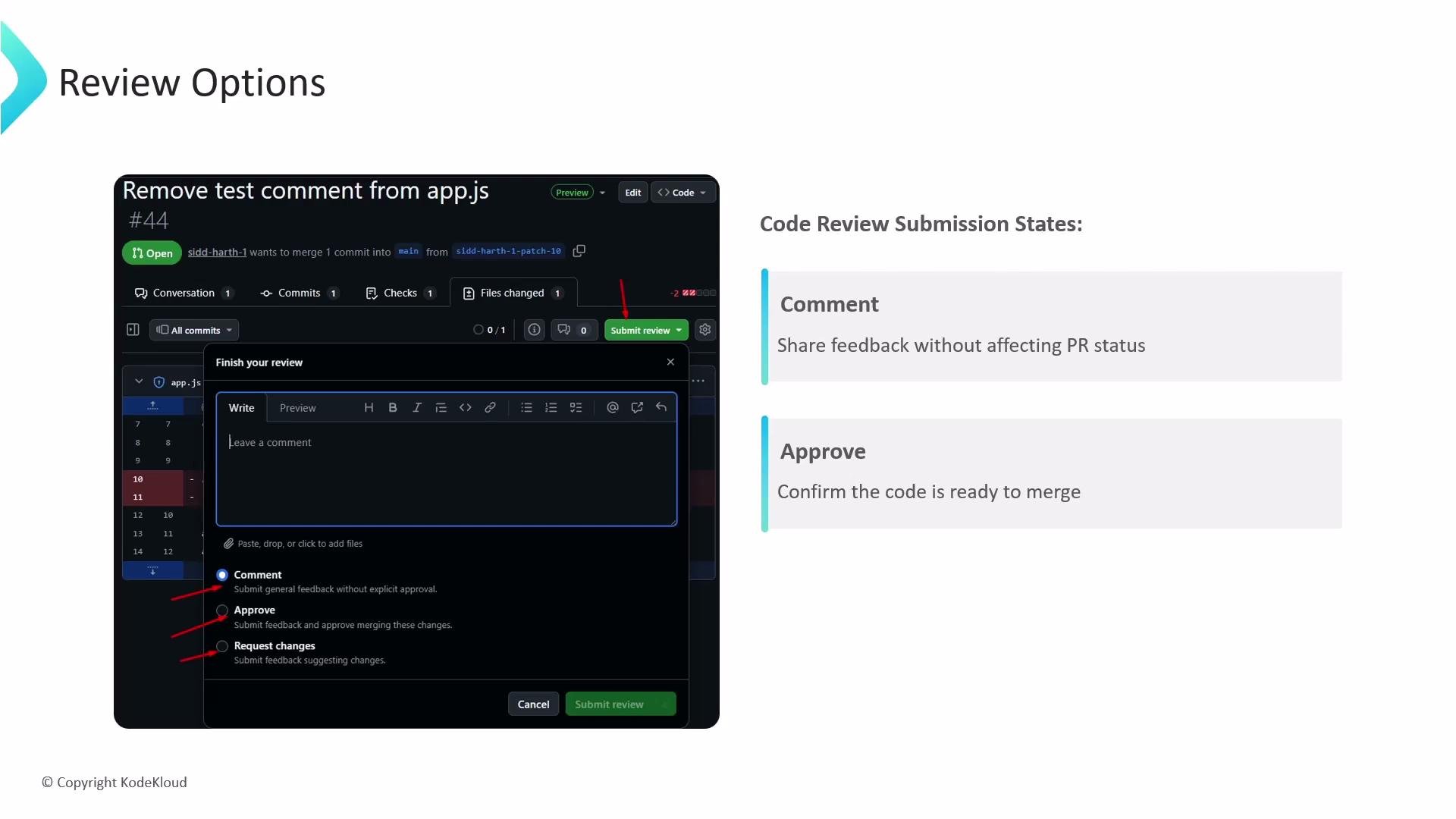
- Request changes — Use this when you identify critical bugs, security vulnerabilities, or architectural issues that must be fixed before the pull request can be merged. This status formally blocks the pull request until the author addresses the requested changes and you re-review.
Requesting changes prevents the pull request from being merged until the issues are resolved and the reviewer either re-approves or the branch protection rules are satisfied.
Guidance for reviewers
- Match the review status to impact: non-blocking feedback = Comment, acceptance = Approve, blocking issues = Request changes.
- Be specific in comments: link to failing tests, include code snippets, or point to relevant docs.
- If a change is required but small, consider leaving a clear
Commentand following up with a suggested patch; otherwise useRequest changes.