

Layouts
- Projects (Classic): Limited to fixed Kanban columns; items are moved manually and views are single-purpose.
- GitHub Projects (Modern): Supports table, board, and roadmap views so you can choose the visualization that fits your workflow. Modern Projects also support draft issues to capture early ideas and display user presence so collaborators can see who’s viewing or editing a project in real time.
- Projects (Classic): Uses a simple, fixed model of columns and cards with small amounts of per-card metadata.
- GitHub Projects (Modern): Uses flexible custom fields (text, number, date, select), plus a dedicated iteration field to manage sprints or cycles with flexible date ranges. Items can connect to pull requests, issues, and more rich metadata to support reporting and automation.
- Projects (Classic): Organization is mostly manual and constrained by column layout.
- GitHub Projects (Modern): Offers instant sorting, ranking, and grouping by any custom field or metadata so you can create multiple live perspectives (for example by assignee, priority, or sprint).
- Projects (Classic): Only basic progress metrics are available.
- GitHub Projects (Modern): Includes an insights layer for custom charts (bar, line, area) with aggregation modes (sum, average, count) so teams can track velocity, throughput, and project health.
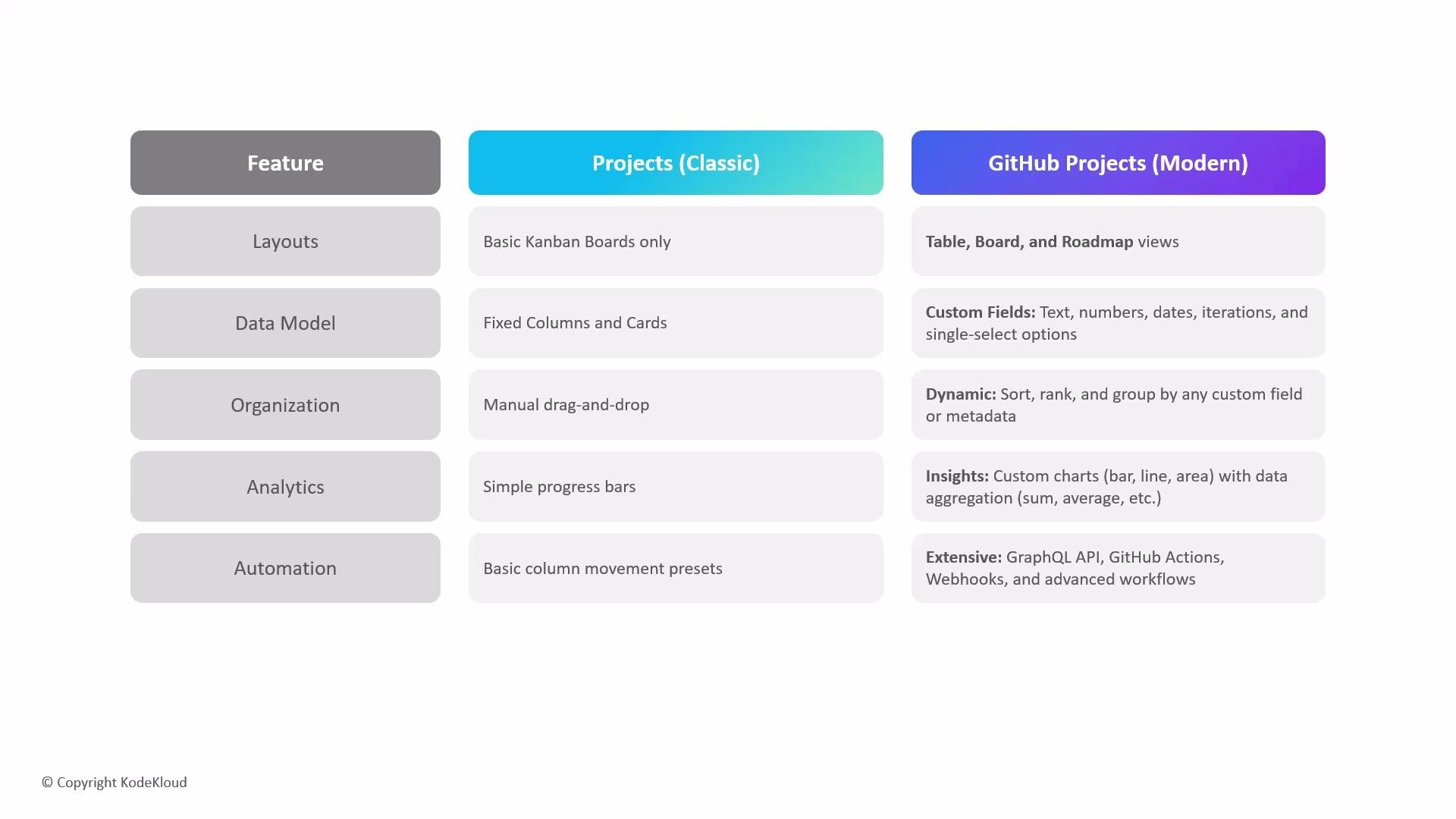
- Automatically add or move items based on labels, milestones, or custom field values.
- Trigger project updates from CI/CD events, pull request merges, or external systems.
- Build event-based workflows that update status, populate fields, or notify stakeholders without manual steps.
Modern GitHub Projects turn work into structured data. That data enables flexible views, powerful reporting, and automation that scales across repositories and teams.