

Key characteristics of a draft pull request
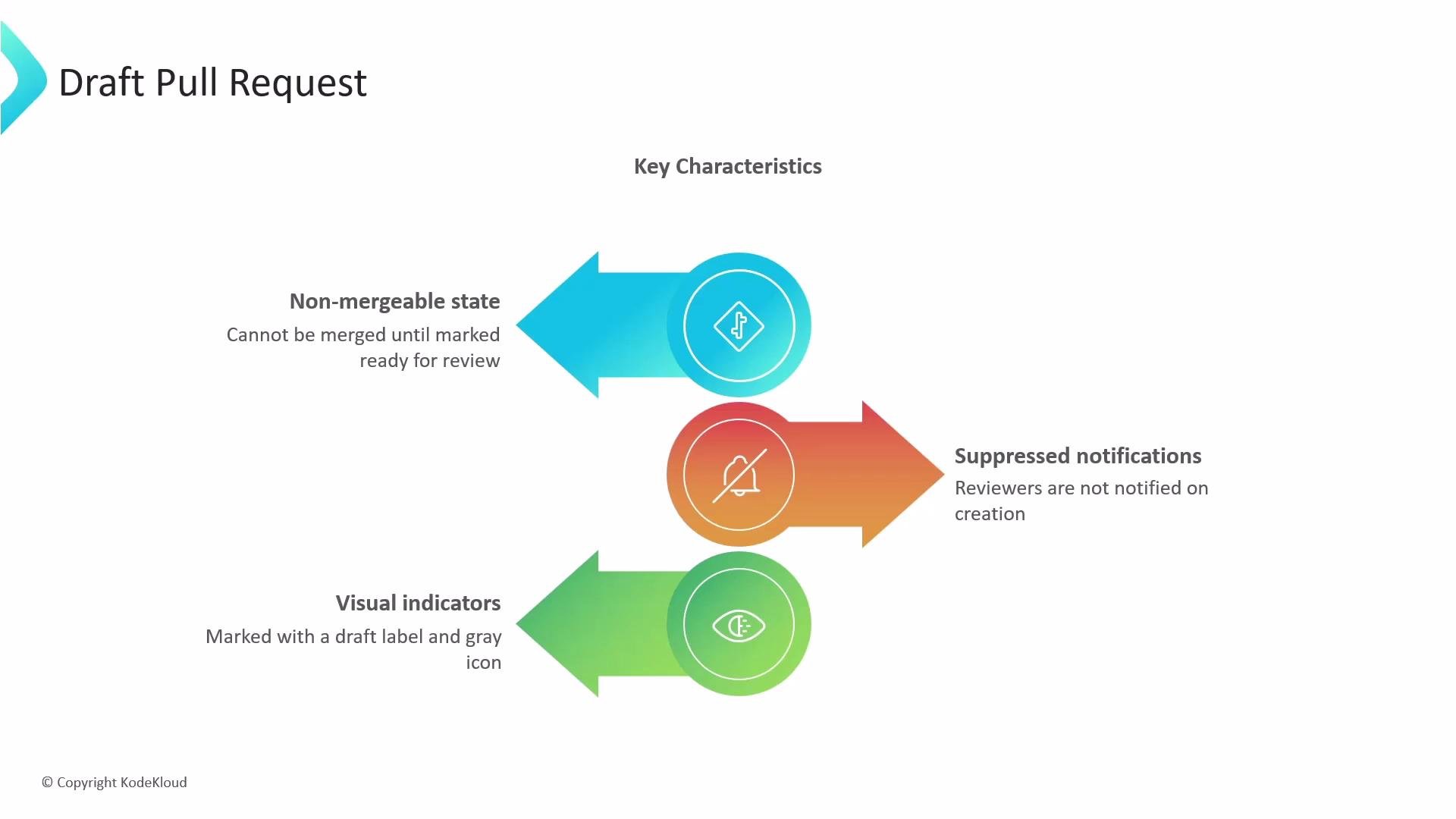
- Non-mergeable state: Draft PRs are initially locked and cannot be merged until the author explicitly converts them to a ready-for-review status.
- Suppressed reviewer notifications: Creating a draft does not automatically request reviewers, reducing unnecessary notifications while the work is incomplete.
- Visual indicators: Draft PRs are clearly labeled with a draft badge and a distinctive gray icon in the pull request list so collaborators can quickly identify WIP contributions.
Why create a draft pull request?
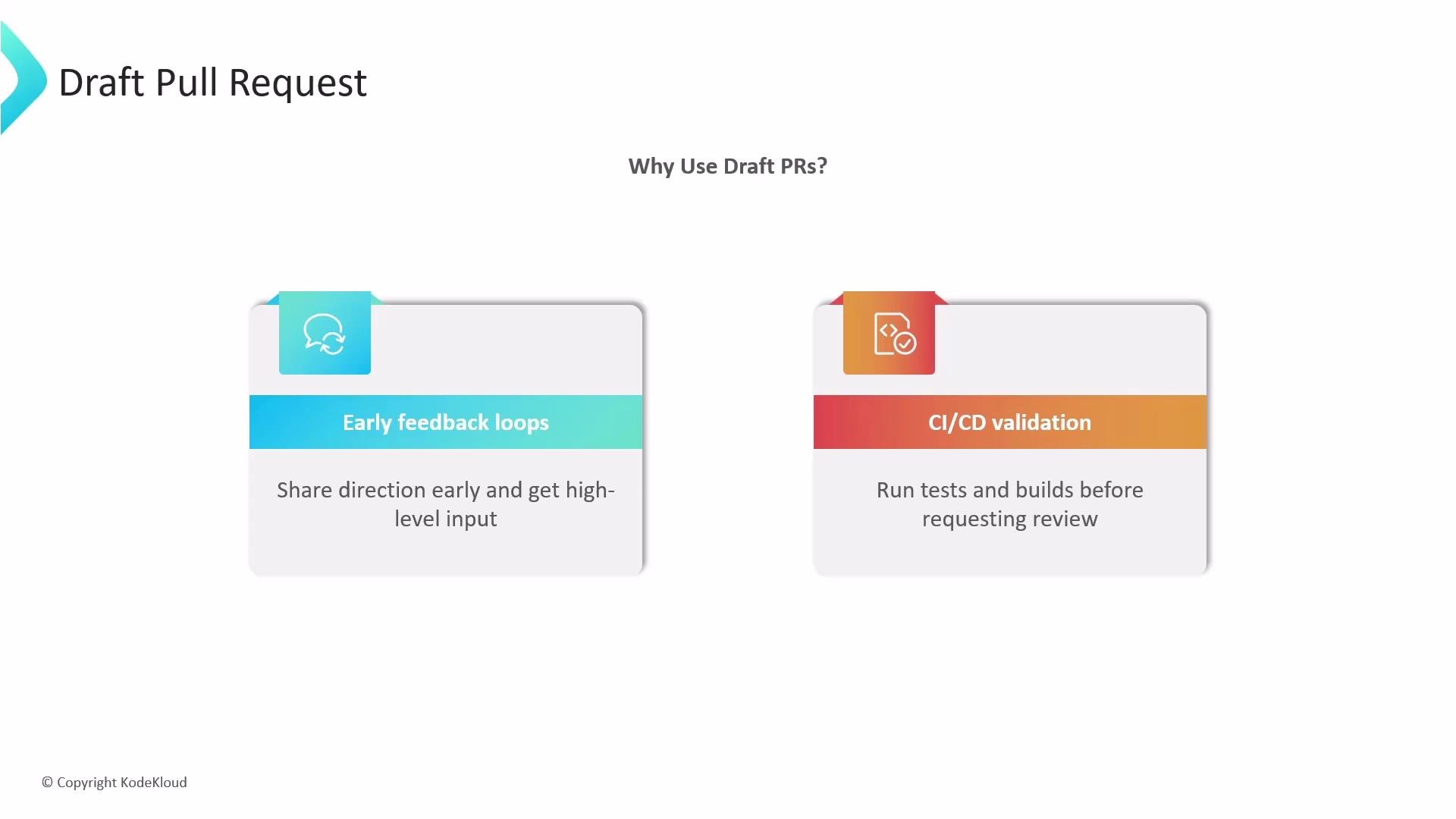
- Early feedback loops: Share the design, architecture, or high-level approach to get input before finalizing implementation details.
- CI/CD validation: Many continuous integration pipelines and automated checks still run for draft PRs (depending on your CI config), allowing you to validate builds and tests earlier in the process.
- Incremental visibility: Team members can see progress and leave comments or suggestions that shape the final implementation.
Converting a draft to ready-for-review
When the work is complete and you’re ready for formal review, follow these steps:- Open the draft pull request in GitHub.
- Click the Ready for review button at the top of the PR page to convert it to a standard PR.
- After conversion, the PR becomes mergeable subject to branch protection rules and required status checks.
- The repository workflow will then typically request reviewers and begin any configured review processes.
- Ensure automated tests and CI checks pass.
- Confirm code style and linting issues are resolved.
- Add a clear description, task list, and any necessary context for reviewers.
- Tag or request appropriate reviewers if your repo requires manual selection.
Draft pull requests are ideal for incremental collaboration: they combine early CI feedback and team visibility while avoiding premature review requests and merges.
Best practices
- Use draft PRs for exploratory work, rough implementations, or when you want CI validation before soliciting reviews.
- Add a short summary of what remains to be done in the PR description so collaborators understand the status.
- Keep draft PRs focused and update them regularly to reflect progress.