

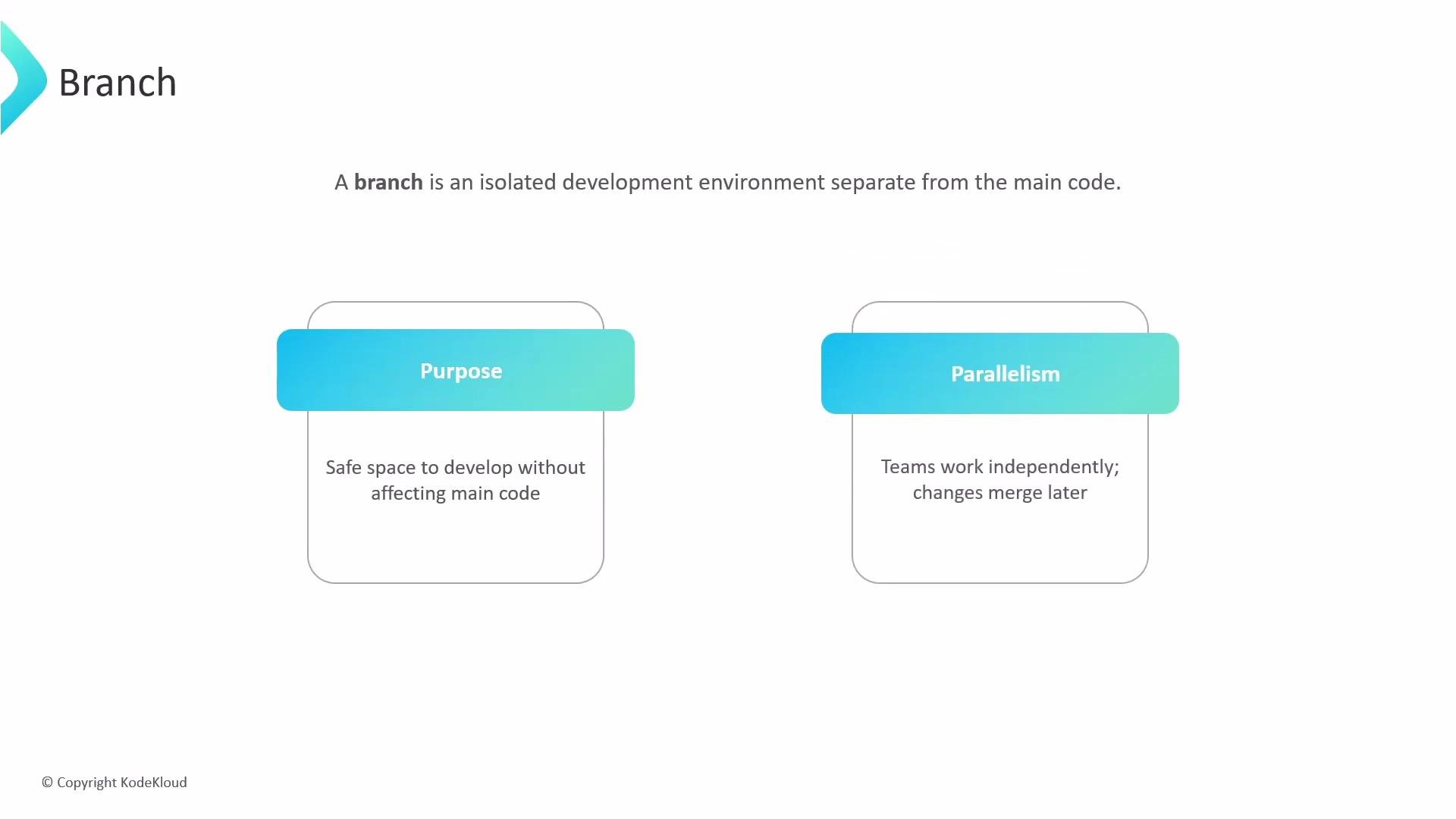
main). As projects grow, unmanaged merges can cause regressions, lost work, or conflicting changes. A structured review process reduces these risks.
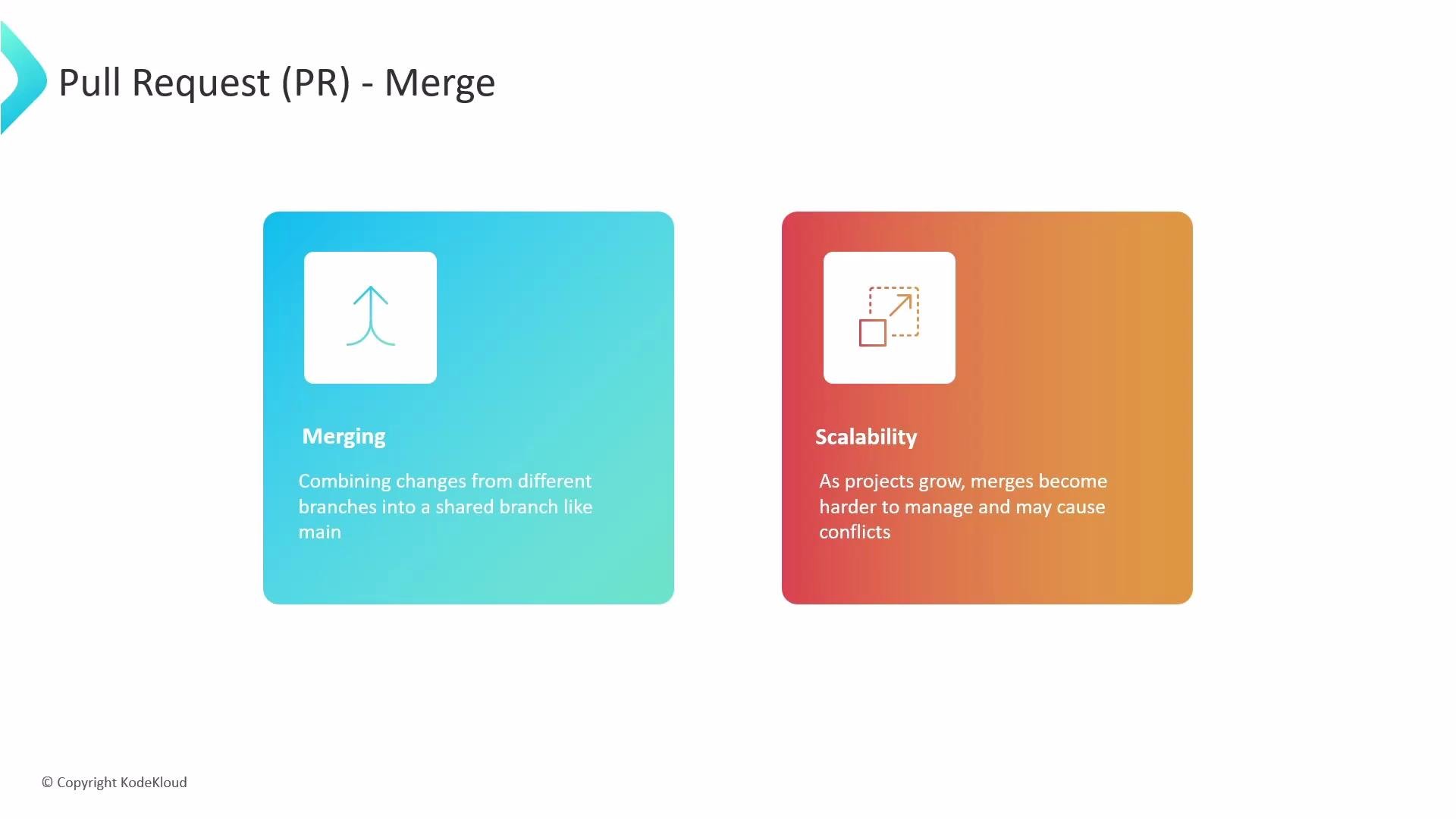
- Enable code review and collaboration.
- Run automated checks (CI) before integration.
- Create an auditable history of why changes were made.
- Facilitate discussion and discovery of design or implementation issues.
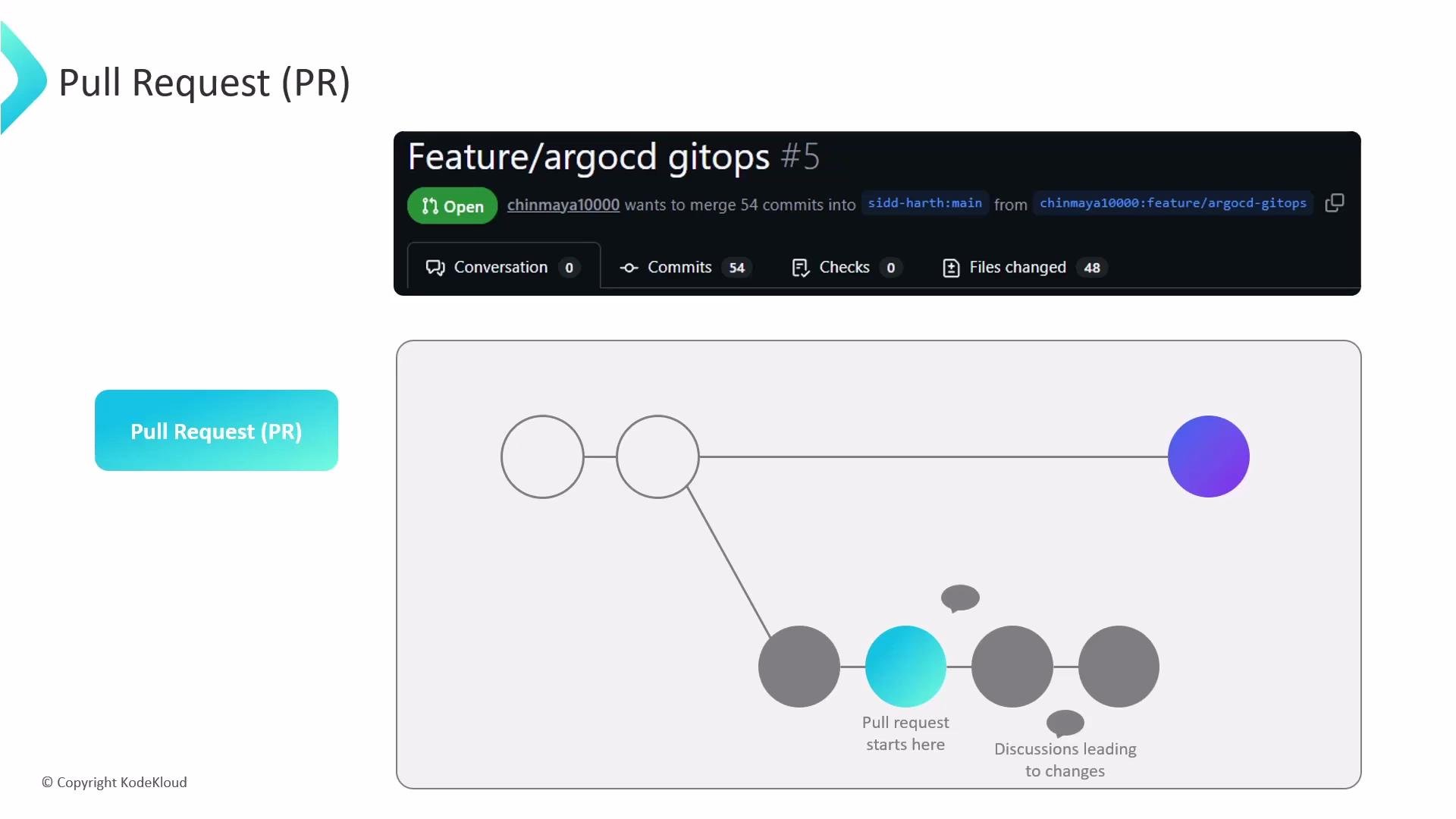
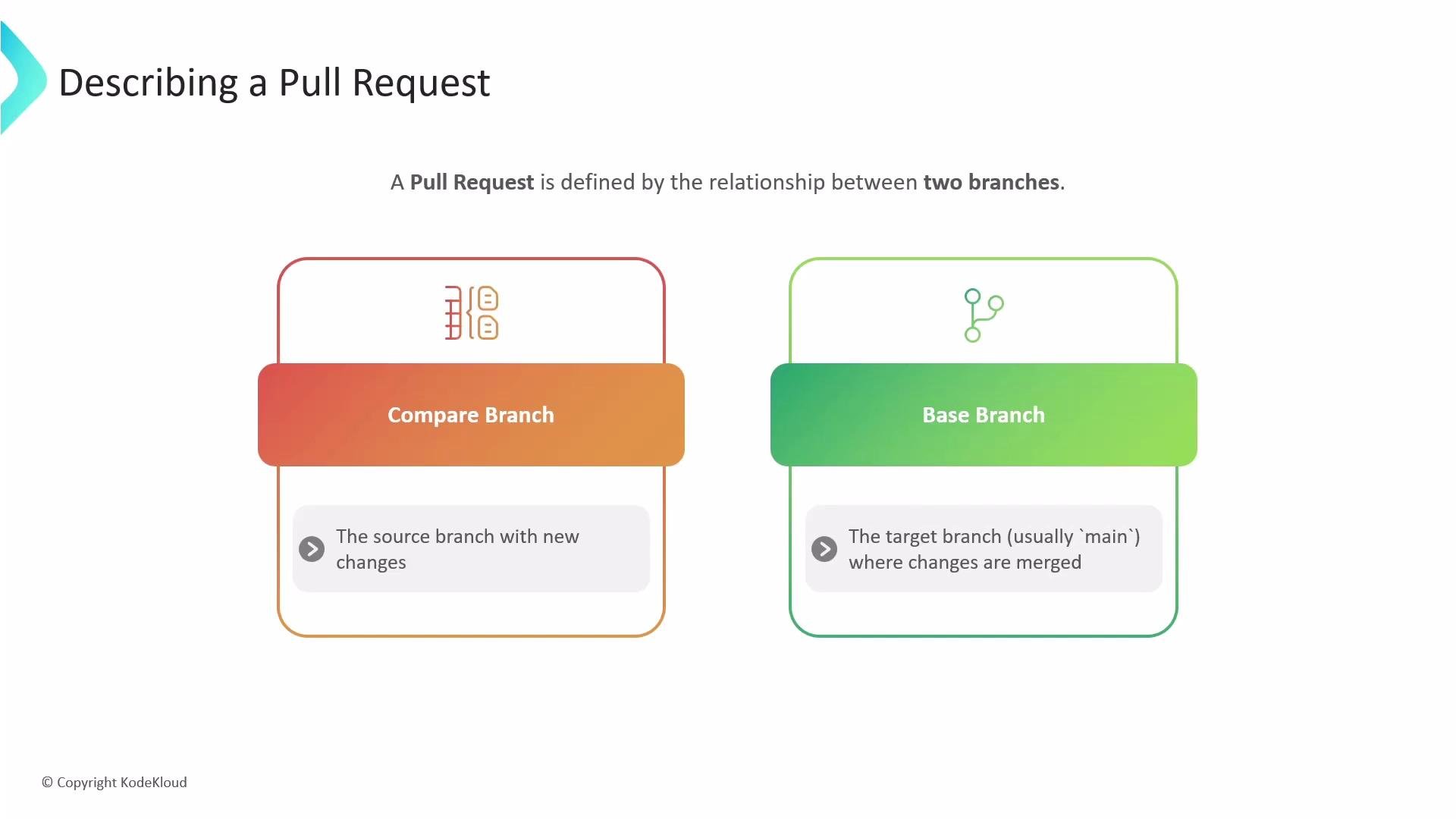
main. When a PR is opened, GitHub generates a diff highlighting file and line changes so reviewers can focus on the actual modifications.
- The list of commits included in the PR.
- All changed files with a line-by-line diff and inline commenting.
- Status checks and CI results (passing or failing).
- Mergeability status (clean merge vs. conflicts).
- A discussion thread for comments, requested changes, and resolutions.
Merge methods: when to use each
Handling merge conflicts
If GitHub reports merge conflicts, update your branch and resolve them locally, then push the resolved branch back to the remote. Two common approaches are merge or rebase:
Merge approach:
- Leave inline comments on specific lines.
- Request changes or approve the PR.
- Verify passing CI checks and automated tests.
- Ensure code owners or maintainers sign off if required.
- CI pipelines (tests, builds).
- Linters and static analysis.
- Protected branch rules (require reviews, passing checks).
Keep pull requests small and focused. Small PRs are easier to review, test, and merge. Include a clear description, testing steps, and references to related issues or tickets.
Do not merge a pull request while checks are failing or when review comments are unresolved. Merging under these conditions can introduce regressions or unstable code into the base branch.
- Use descriptive branch names and PR titles (e.g.,
feature/auth-login,fix/typo-readme). - Write a clear PR description with the motivation, changes, and testing steps.
- Run and ensure CI checks pass before requesting review.
- Address requested changes and keep the PR updated with the base branch as needed.
- Prefer smaller, frequent PRs over large, monolithic ones to reduce review friction and risk.