

- Branch protection
- CODEOWNERS
- Required reviewers
At-a-glance: governance pillars
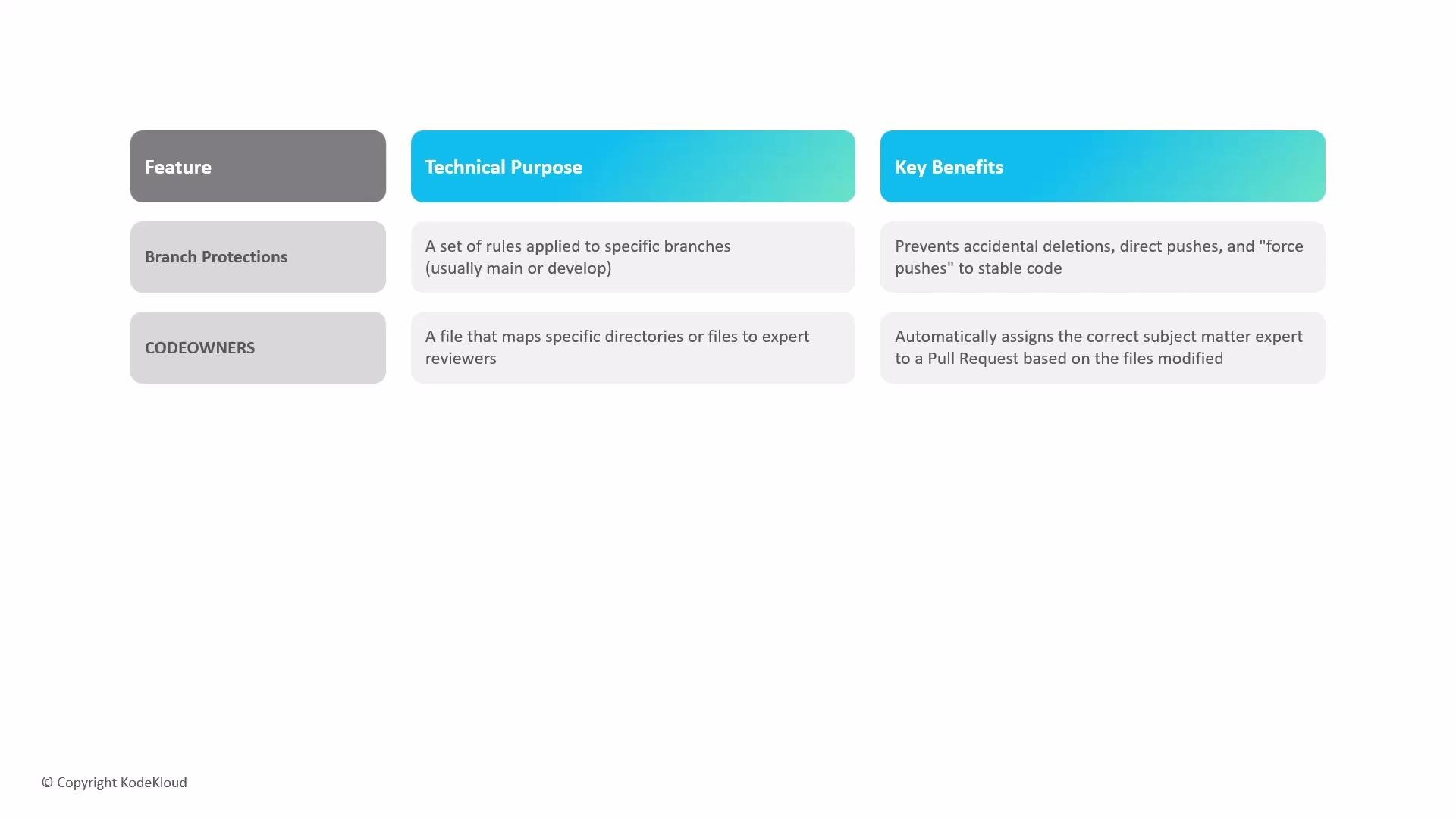
1) Branch protection
Branch protection rules are immutable guardrails you apply to important branches (for example,main or production). They convert ad-hoc Git operations into policy-driven workflows: merges must follow rules, CI must pass, and direct pushes or force pushes can be blocked. Typical branch protection features include required status checks, required approving reviews, and restrictions on who can push or merge.
Benefits:
- Enforce a pull-request-only workflow
- Prevent accidental overwrites or bypassing CI/CD
- Require specific checks and approvals before merge
2) CODEOWNERS
ACODEOWNERS file maps file paths to users or teams so that GitHub automatically requests reviews from the right people when code touching those paths is changed. Place it at .github/CODEOWNERS, the repository root, or in the .github folder in the repository.
CODEOWNERS example:
CODEOWNERS matters:
- Reduces reviewer fatigue by routing reviews to the right experts
- Ensures specialized areas (security, infra, APIs) always receive appropriate oversight
- Integrates with branch protection to require owners’ approvals automatically
3) Required reviewers
Requiring reviewers makes code review a blocking policy: a pull request cannot be merged until the required approvals are provided. This helps share knowledge across the team and prevents a single developer from bypassing review controls. Branch protection rules can be configured to:- Require one or more approving reviews
- Dismiss stale reviews when new commits are pushed
- Enforce that reviews come from
CODEOWNERSwhen enabled
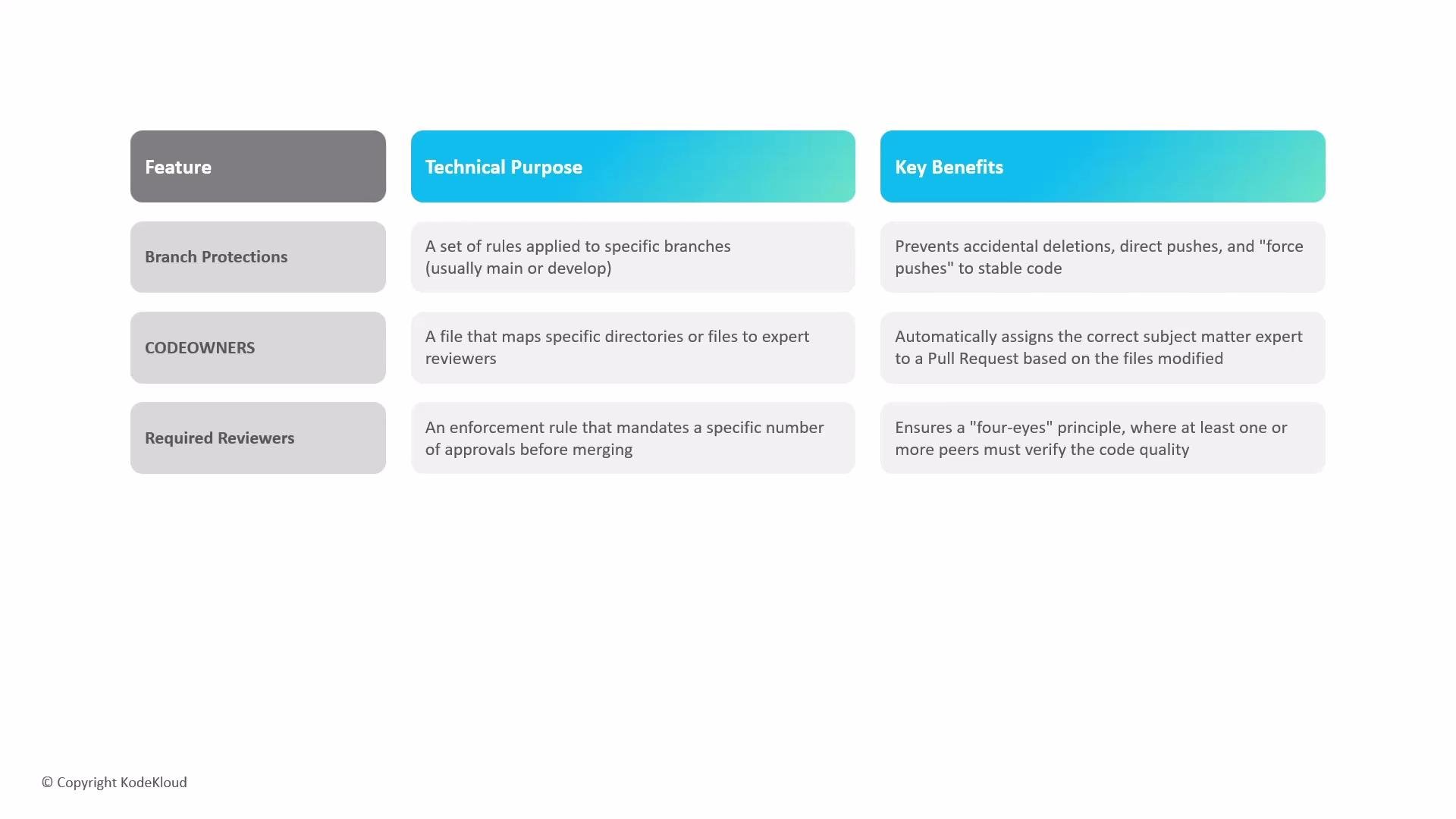
Enable “Require pull request reviews before merging” and, if you use CODEOWNERS, also enable “Require review from Code Owners” in branch protection rules to ensure owners are automatically requested and their approvals enforced.
Recommended branch protection settings
Applying these governance controls ensures that changes are reviewed, tested, and auditable before reaching production branches. Combined, branch protections, CODEOWNERS, and required reviewers create a “trust but verify” culture that enables teams to move quickly while maintaining code quality and an auditable history.