

Current State and Challenges
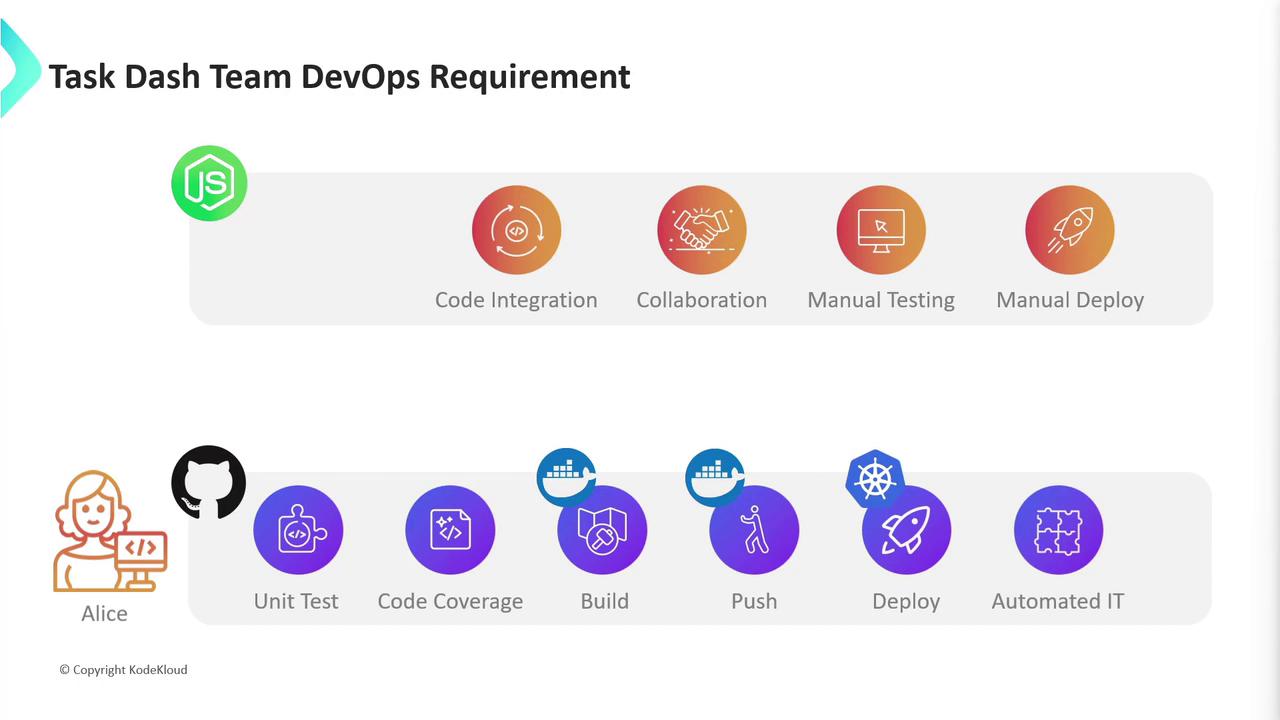
Alice’s assessment uncovered several critical gaps in the existing Node.js project:- No version control system in place
- Developers work in isolation with manual code integration
- Slow, error-prone testing and infrequent merges
- Manual deployments across development, staging, and production
Without version control and automation, release risk is high and collaboration suffers.
Defining the CI/CD Pipeline
To address these challenges, Alice defined a CI/CD pipeline with these stages:- Adopt GitHub for version control and team collaboration
- Automate unit tests and measure code coverage
- Build and push Docker images
- Deploy the application to Kubernetes
- Run automated integration tests
Evaluating CI/CD Tools
The market offers many CI/CD solutions:
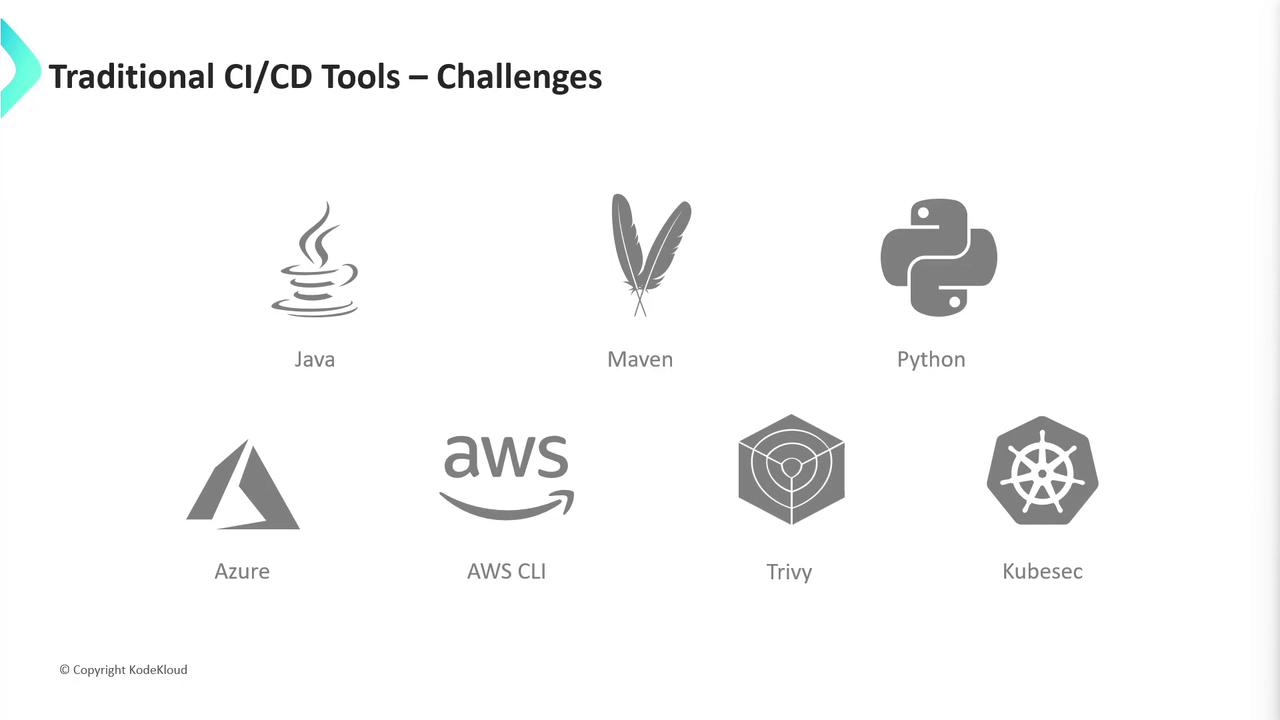
These tools require provisioning servers, installing dependencies, and ongoing management. As projects multiply (Java, Python, AWS, Azure), manual overhead grows:
Jenkins Setup: Manual Steps
If choosing Jenkins, the initial setup includes:As the ecosystem expands, you may also need Maven, Python, AWS CLI, Trivy, KubeSec, and other DevSecOps tools.
Why GitHub Actions?
Alice needed a solution that:- Requires minimal setup and no separate infrastructure
- Lets the team focus on pipeline development, not server management
- Scales automatically across multiple languages and clouds
- Initialize the GitHub repository for Node.js
- Configure workflows for testing and code coverage
- Build and publish Docker images
- Deploy to Kubernetes using
kubectland Helm - Automate end-to-end integration tests
Links and References
- GitHub Actions Documentation
- Docker Hub
- Kubernetes Basics
- Trivy: Container Image Security Scanner
- Helm Charts