

Why GitOps?
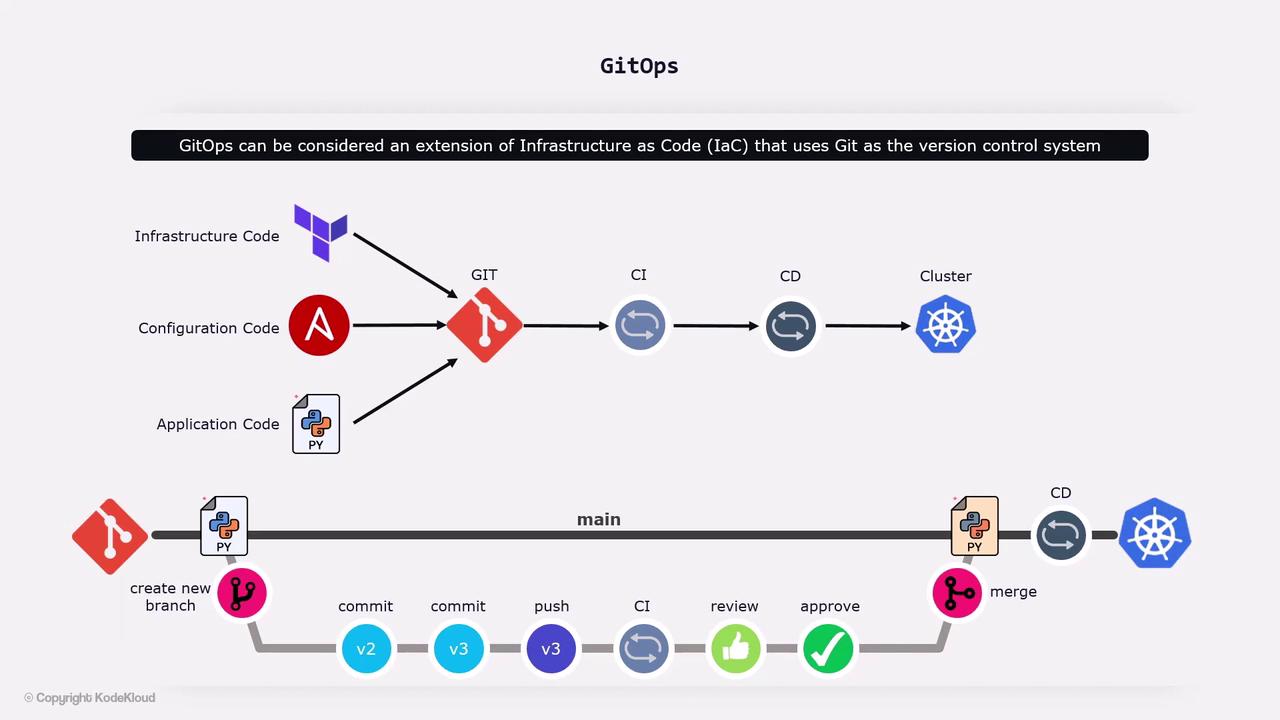
- Git-Centric Control
Every change is performed via Git commits and pull requests. - Declarative Desired State
Infrastructure and applications are described in code, making the system reproducible. - Automated Reconciliation
A GitOps operator constantly syncs the live cluster state with the Git repository.
- Declarative Configuration
Store all infrastructure, application manifests, and configuration files in Git. - Versioned and Immutable
Every change is tracked. Roll back by reverting to a previous commit. - Automated Delivery Pipeline
A GitOps operator inside your Kubernetes cluster watches Git for updates. - Continuous Reconciliation
Drift detection ensures the live environment matches the desired state.
Developer Workflow
- Create a feature branch from
main. - Update application code or Kubernetes manifests.
- Open a pull request for review.
- After approval, merge back into the central repository.
CI/CD Integration
A CI system automatically:- Runs unit and integration tests.
- Builds a Docker image and pushes it to a container registry.
- Updates the Kubernetes manifests in your Git repository.
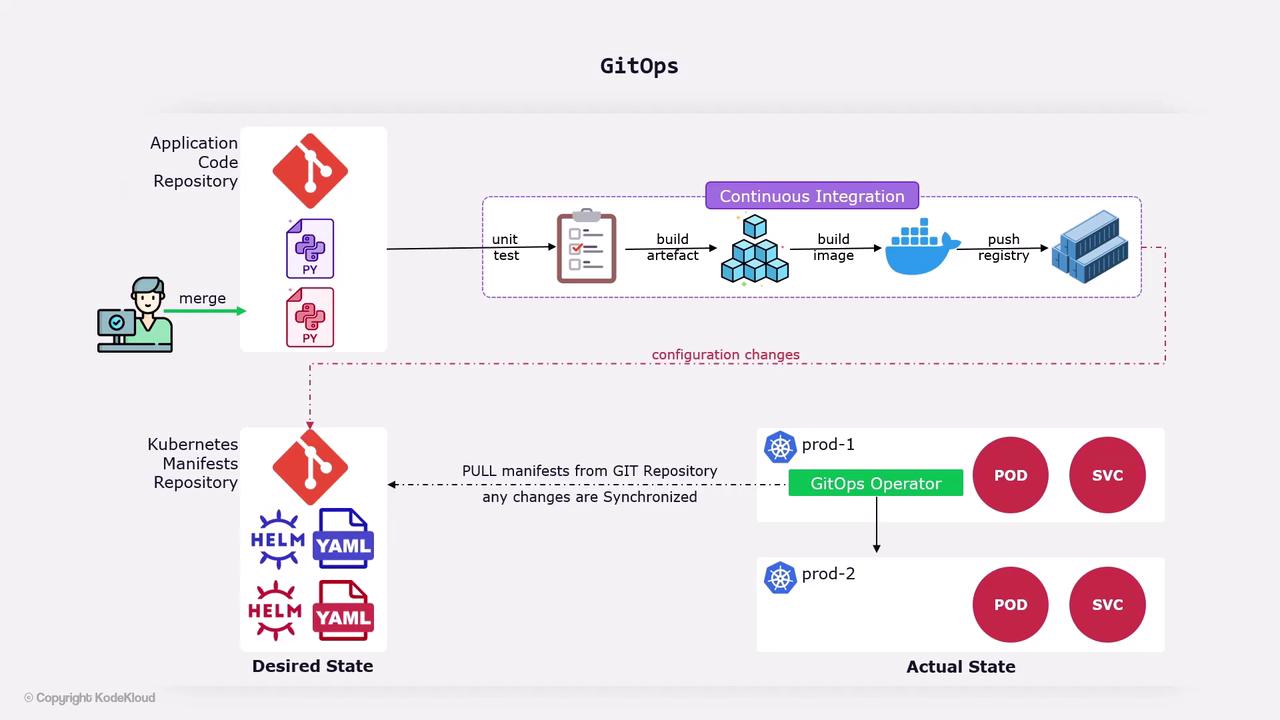
GitOps Operator Workflow
- The operator polls (or listens for webhooks) on your Git repository.
- Detects changes in manifests or configs.
- Applies updates to your Kubernetes cluster (or clusters).
- Continuously monitors live state and reconciles any drift.
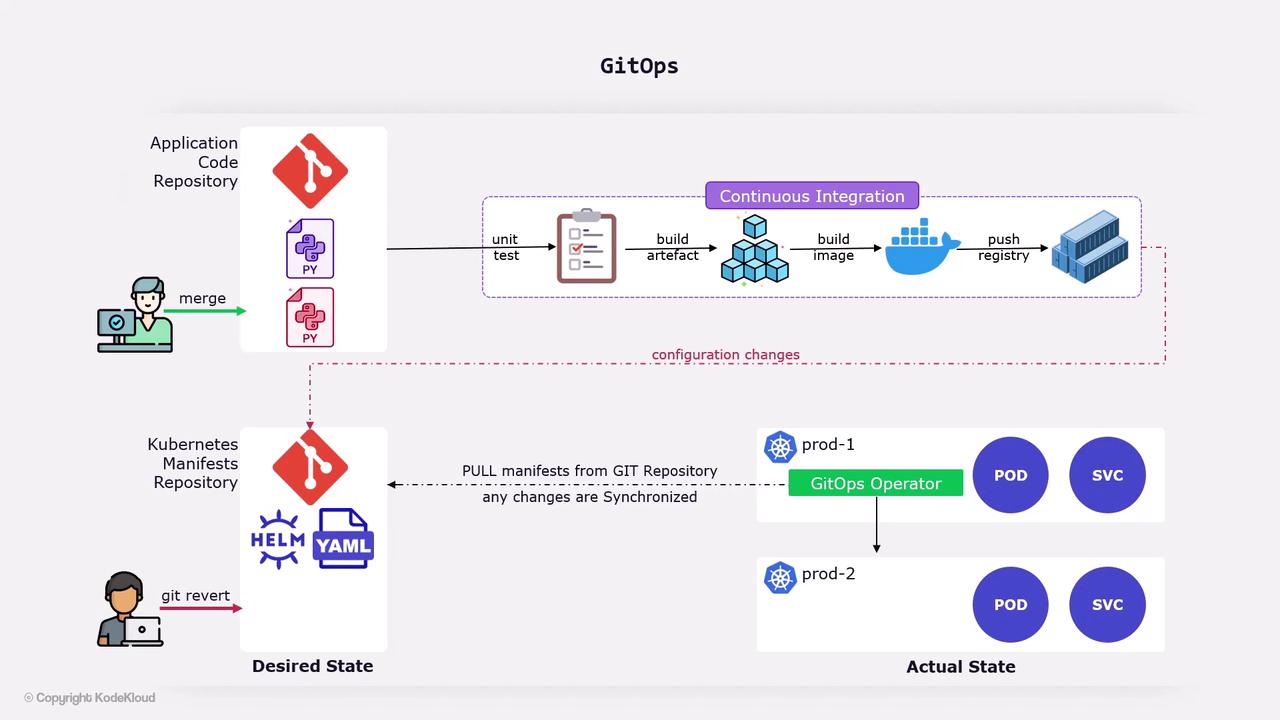
Since all changes are versioned, reverting is as simple as:
GitOps operators typically reconcile every few seconds. If you manually change resources in your cluster, the operator will revert them to match the Git state.