

What Is AWS Lambda?
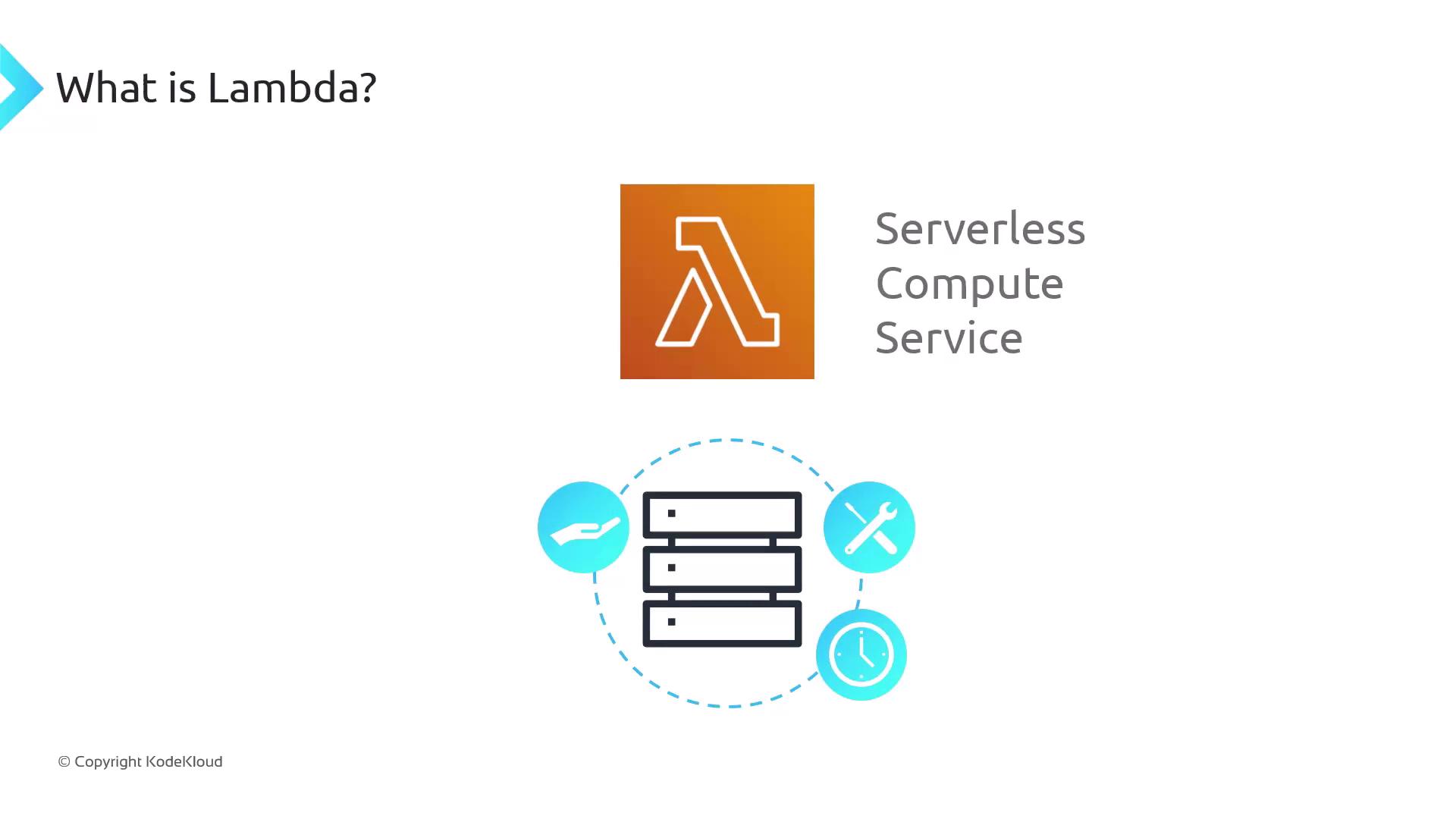
Imagine a clever inventor who wrote a program to spark fire by rubbing sticks together. In the old world, he’d wait days for a server to be built, provisioned, and maintained—delaying his warmth and dinner. AWS Lambda changes that:- You simply upload your code as a “Lambda function.”
- Lambda takes care of the infrastructure, scaling from zero to thousands of concurrent executions.
- You pay only for the milliseconds your code runs.
AWS Lambda is a Functions-as-a-Service (FaaS) offering. It abstracts away servers, operating systems, and scaling concerns so you can focus entirely on your application logic.
Key Benefits of AWS Lambda
Supported Languages and Runtimes
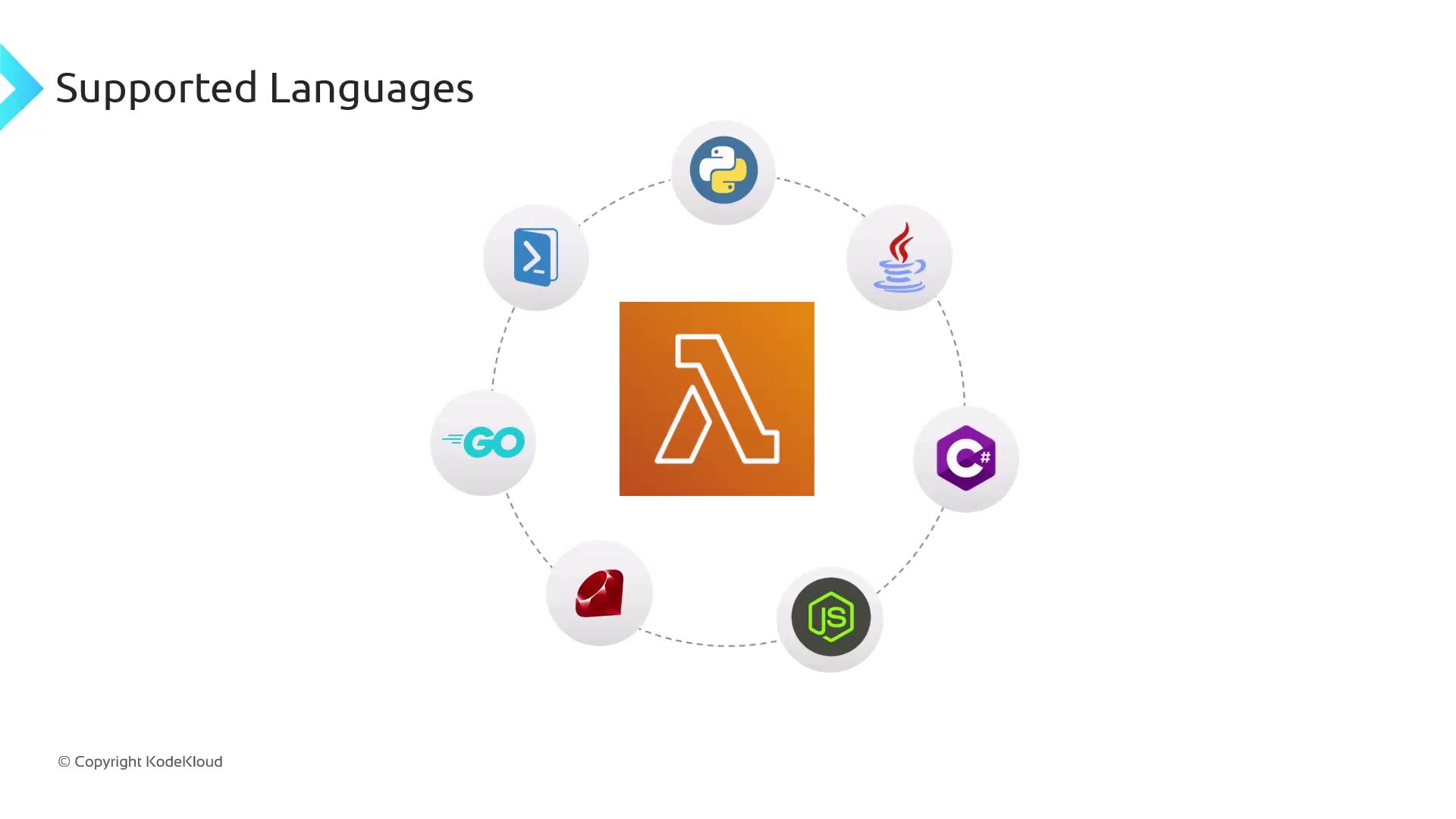
AWS Lambda natively supports these runtimes:
If you need a different language or version, use the Lambda Runtime API to bring your own runtime. AWS even demonstrates running legacy COBOL applications on Lambda via custom runtimes.
Lambda functions can experience cold starts, especially in VPCs or when using large deployment packages. Design for stateless, short-duration handlers to minimize latency.
About This Course
In this hands-on module, we will:- Create and configure a Node.js Lambda function.
- Set up a Jenkins pipeline to deploy and invoke the Lambda.
- Monitor performance using CloudWatch logs and metrics.