Common Types of Software Testing
- Unit Testing
Verifies individual functions or methods in isolation. - Integration Testing
Ensures that modules or services communicate correctly. - Smoke Testing
A quick, surface-level check of critical features. - Functional Testing
Validates the software against functional requirements. - Non-Regression Testing
Confirms that new changes haven’t broken existing functionality. - Acceptance Testing
Tests the system from an end-user perspective. - Code Quality & Static Analysis
Identifies code smells, style violations, and potential bugs using tools like ESLint or SonarQube. - Performance Testing
Measures responsiveness and stability under load. - Security Testing
Scans for vulnerabilities such as SQL injection or cross-site scripting. - Manual Testing
Exploratory or UX-focused tests performed by QA engineers.
Test Categories by Execution Speed
Manual testing is best reserved for exploratory scenarios and usability validation after your automated suites pass.
Balanced Testing Strategy
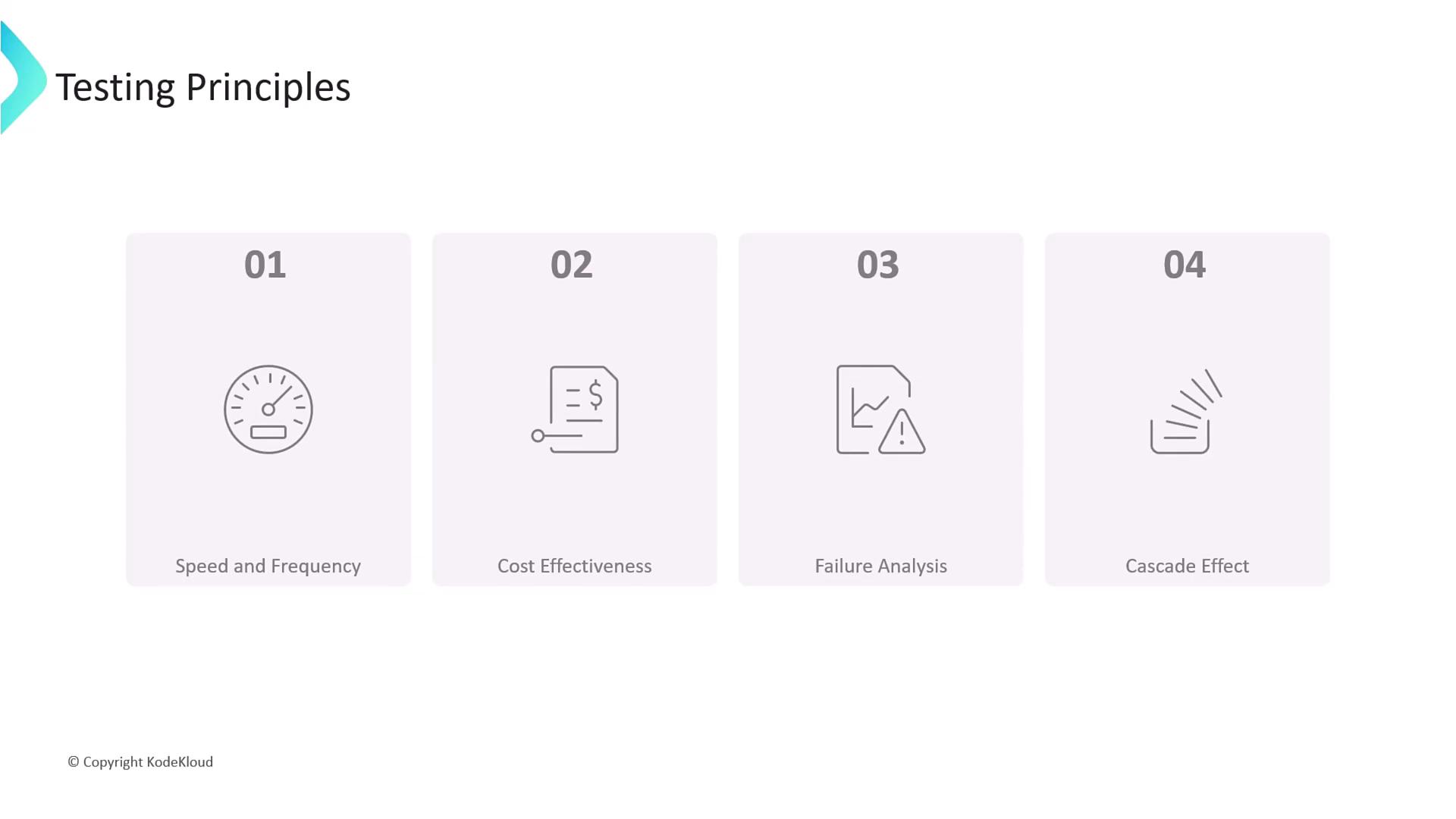
A layered testing approach optimizes feedback loops and resource usage:- Run Unit Tests First
Trigger these on every commit for fast error detection. - Schedule Higher-Level Tests
Execute functional, non-regression, and acceptance tests on a build server or nightly job. - Investigate Failures from Bottom Up
Always start with unit or integration test errors to pinpoint the root cause.
Skipping unit tests can lead to cascading failures in higher-level tests. Always fix the smallest failing test before moving up the testing pyramid.