

etcdctl client. If you already understand etcd basics, you can skip ahead to more advanced material that covers clustering, Raft, and production operation.
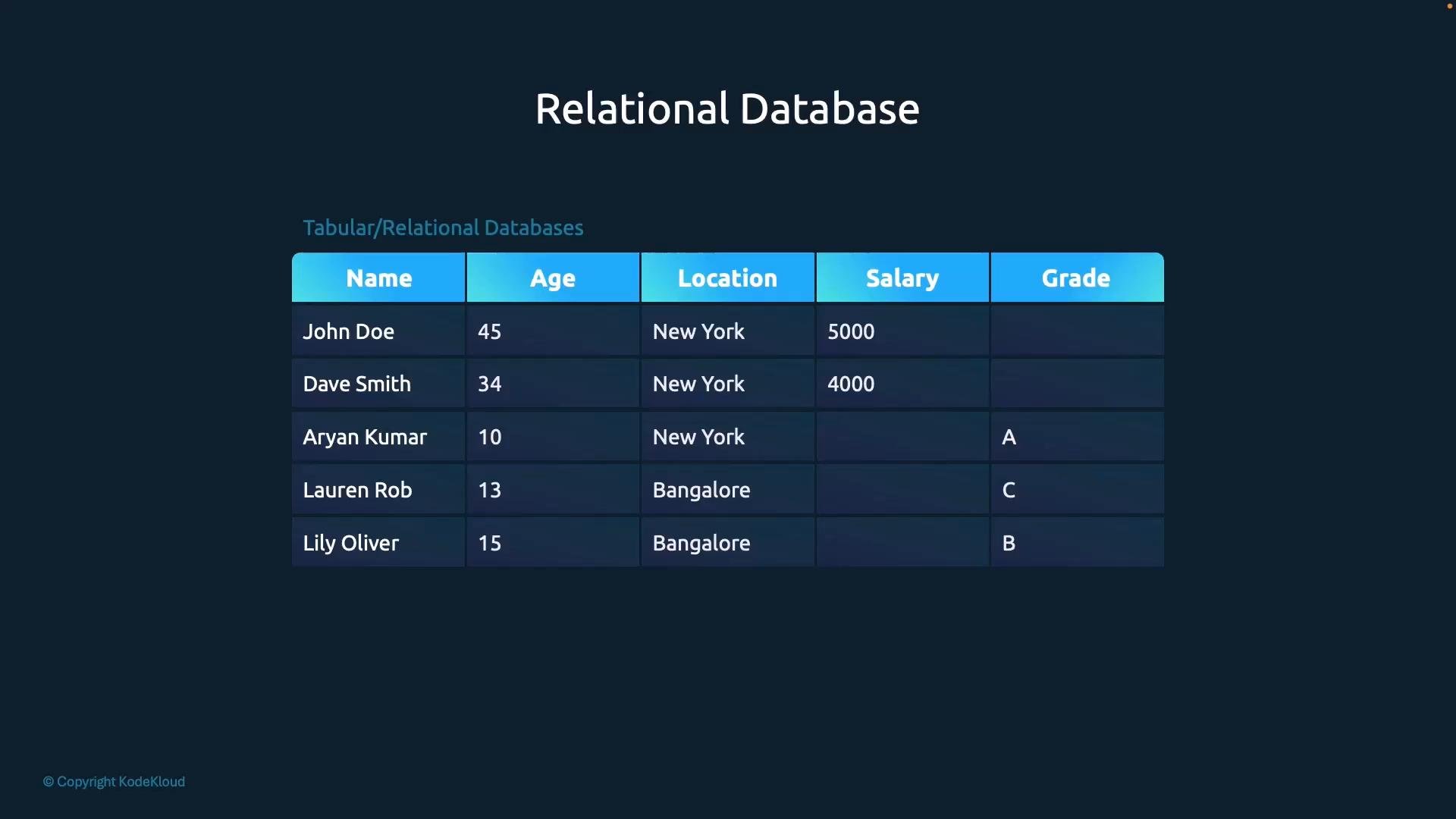
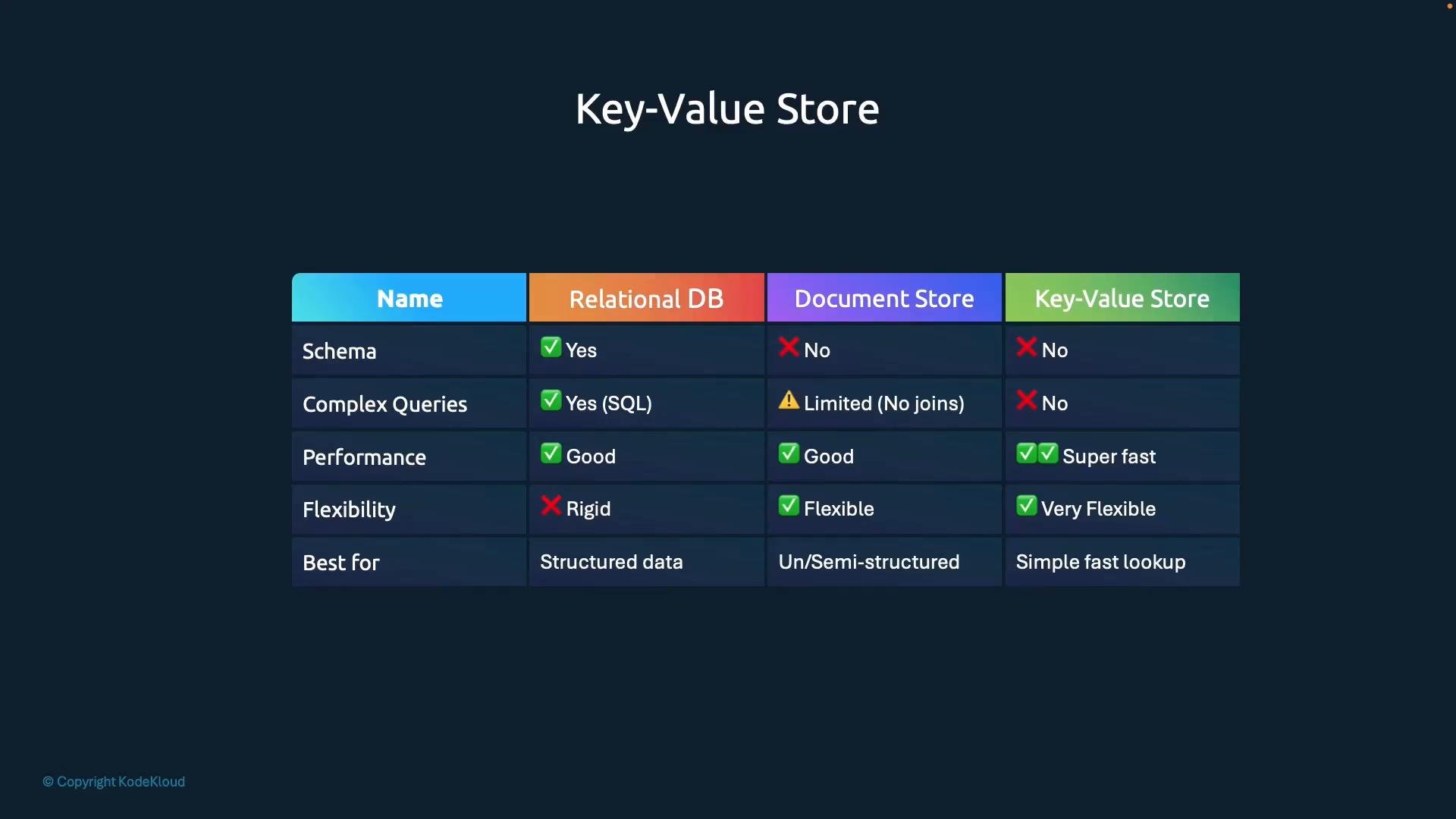
- Enforce a strict schema and table structure.
- Support complex queries (joins) using SQL.
- Offer strong consistency for transactional workloads.
- Are best for highly structured data and complex relational queries.
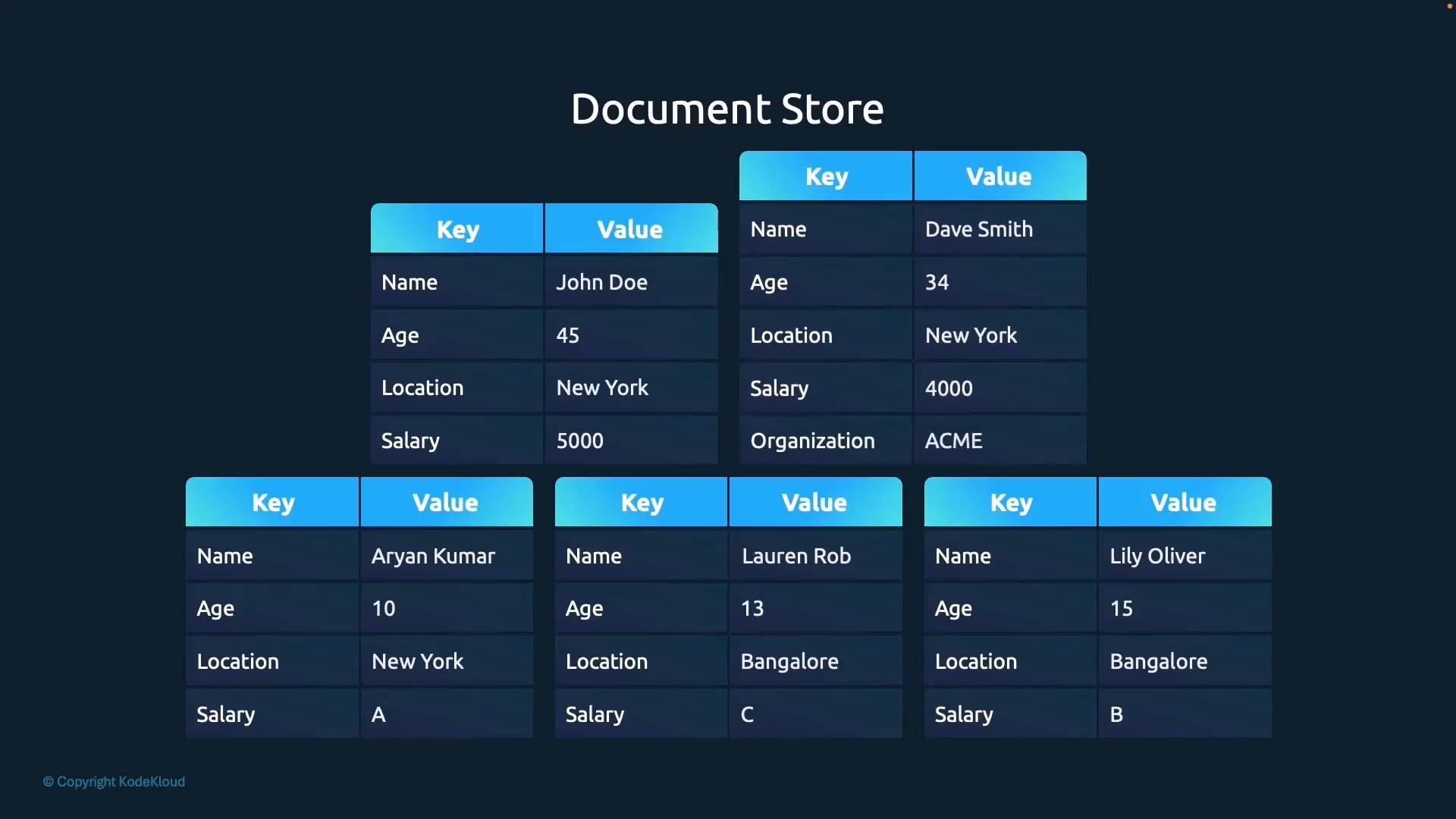
- Are schema-flexible and often use JSON/BSON formats.
- Make it easy to evolve records without costly schema migrations.
- Are less convenient for complex multi-document joins.
- Are a good fit for semi-structured application data.
- Are schema-less and highly flexible.
- Optimize for very fast lookups by key.
- Do not generally support complex queries or joins.
- Are ideal for configurations, leader election, service discovery, and other fast-access patterns.
etcd in this landscape
etcd is a distributed key-value store built for consistency and reliability in distributed systems. In Kubernetes, etcd stores cluster state, configuration, and secrets (when not using other secret stores). The distributed and consensus aspects (Raft) enable strong consistency; those operational details are covered in advanced documentation.
Quick start — Installing and running etcd
The fastest way to try etcd locally is to download the prebuilt archive from the etcd GitHub Releases page, extract it, and run the binaries.
Example (replace
v3.5.0 with the desired release for your OS):
2379 for client requests.
etcdctl command-line client to interact with the key-value store.
Common commands:
Example interaction:
set, rm). Modern etcd (v3+) uses put, get, and del, and supports transactions and advanced operations.
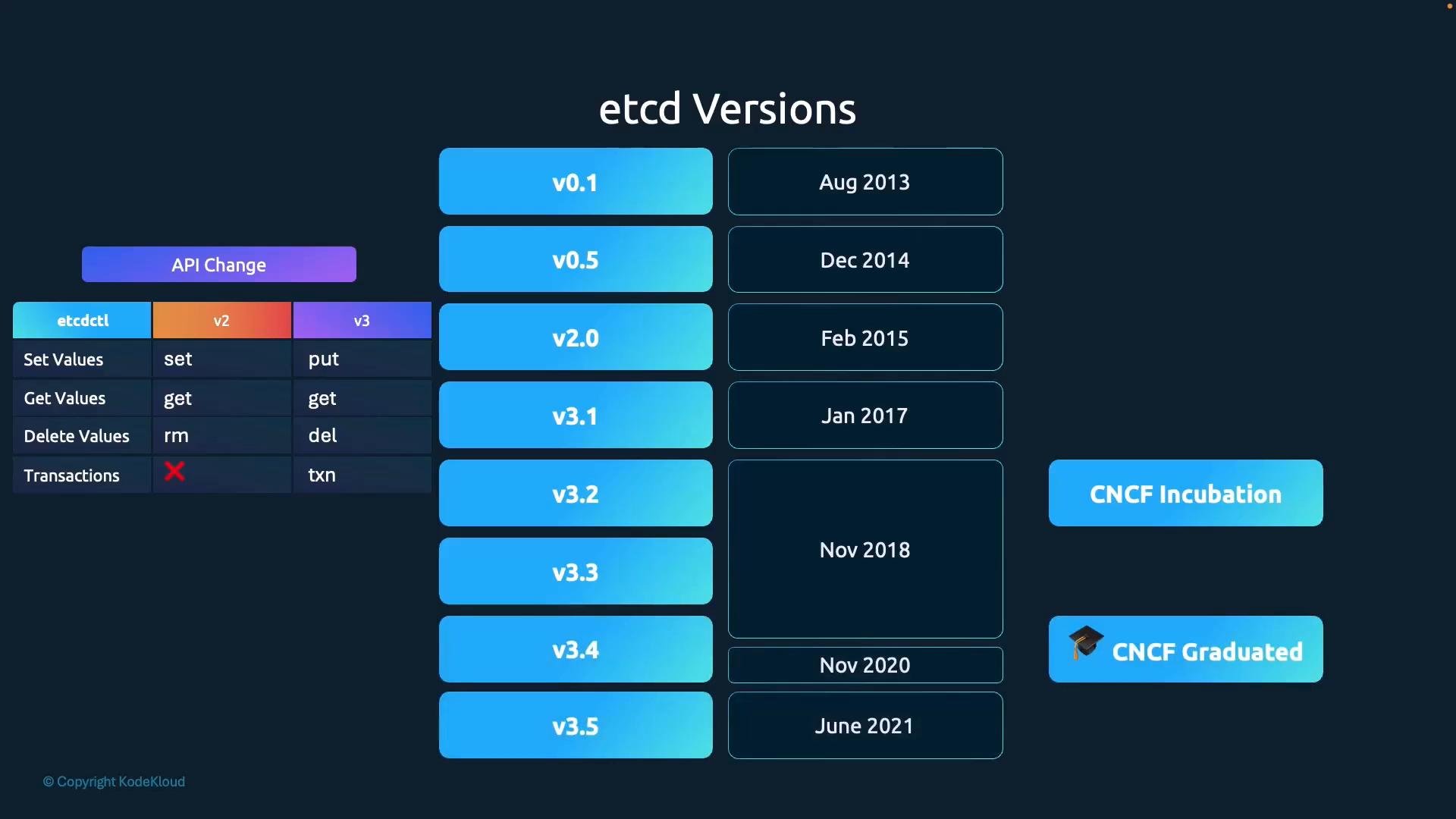
- etcd v0.1 — initial release (Aug 2013).
- etcd v2 (Feb 2015) — Raft redesign and improved write semantics.
- etcd v3 (Jan 2017) — performance and API improvements, transactions support.
- Nov 2018 — etcd accepted into CNCF incubation; graduated in 2020.
- v3.5+ — incremental optimizations and stability improvements.
If your environment uses an older etcdctl API by default, explicitly set the client API to v3:Use
./etcdctl version to confirm the client/server versions and API compatibility.- etcd is a lightweight, high-performance distributed key-value store designed for consistency and reliability.
- It’s commonly used as the backing store for Kubernetes and other distributed systems that need a consistent configuration and coordination store.
- Start by running a single etcd instance and experimenting with
etcdctl put/get/del. Clustering, Raft consensus, high-availability, backups, and operational hardening are advanced topics that you should explore next.
- etcd GitHub Releases:
https://github.com/etcd-io/etcd/releases - etcd documentation: https://etcd.io/docs/
- Kubernetes etcd usage and best practices: https://kubernetes.io/docs/tasks/administer-cluster/configure-upgrade-etcd/