

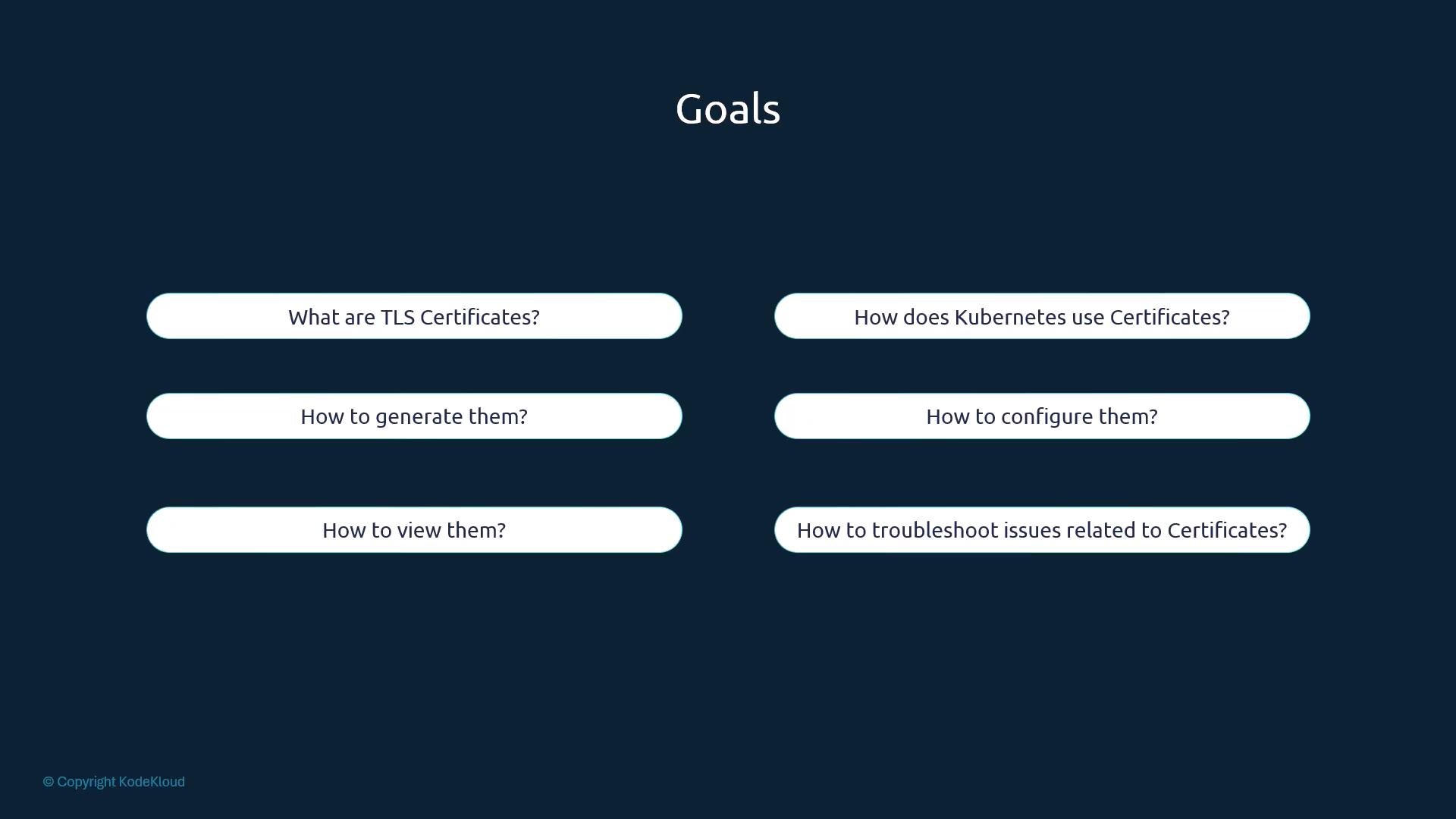
- A clear explanation of TLS certificates, private keys, and certificate authorities (CAs).
- Hands-on steps to generate and inspect X.509 certificates using common tools (e.g.,
openssl). - How to configure TLS for Kubernetes services and API endpoints.
- Understanding of how Kubernetes issues, consumes, and validates certificates internally.
- Practical troubleshooting techniques for common certificate failures (hostname mismatches, expired certs, incorrect CA chains, key/cert format issues).
If you already know TLS basics (certificates, private keys, and CAs), feel free to focus on the Kubernetes-specific material in this section.
- Concepts first: brief, practical definitions (certificate, CA, key, CSR, SAN, chain).
- Hands-on examples: commands to create keys/CSRs and issue certificates with a CA (
opensslexamples). - Kubernetes integration: how kube-apiserver, kubelet, and ingresses use certificates; where certs live (
/etc/kubernetes/pki, Secrets, etc.). - Troubleshooting checklist: verifying chains, comparing Subject Alternative Names (SANs), checking expiration, and decoding certs for human-readable diagnostics.
- Kubernetes TLS docs: https://kubernetes.io/docs/reference/command-line-tools-reference/kubeadm/kubeadm-certs/
- OpenSSL documentation: https://www.openssl.org/docs/
- General TLS/X.509 reference: https://en.wikipedia.org/wiki/X.509
This lesson uses a practical approach: concise conceptual explanations, reproducible commands, and Kubernetes-focused examples so you can confidently configure TLS and resolve certificate problems in real clusters.