

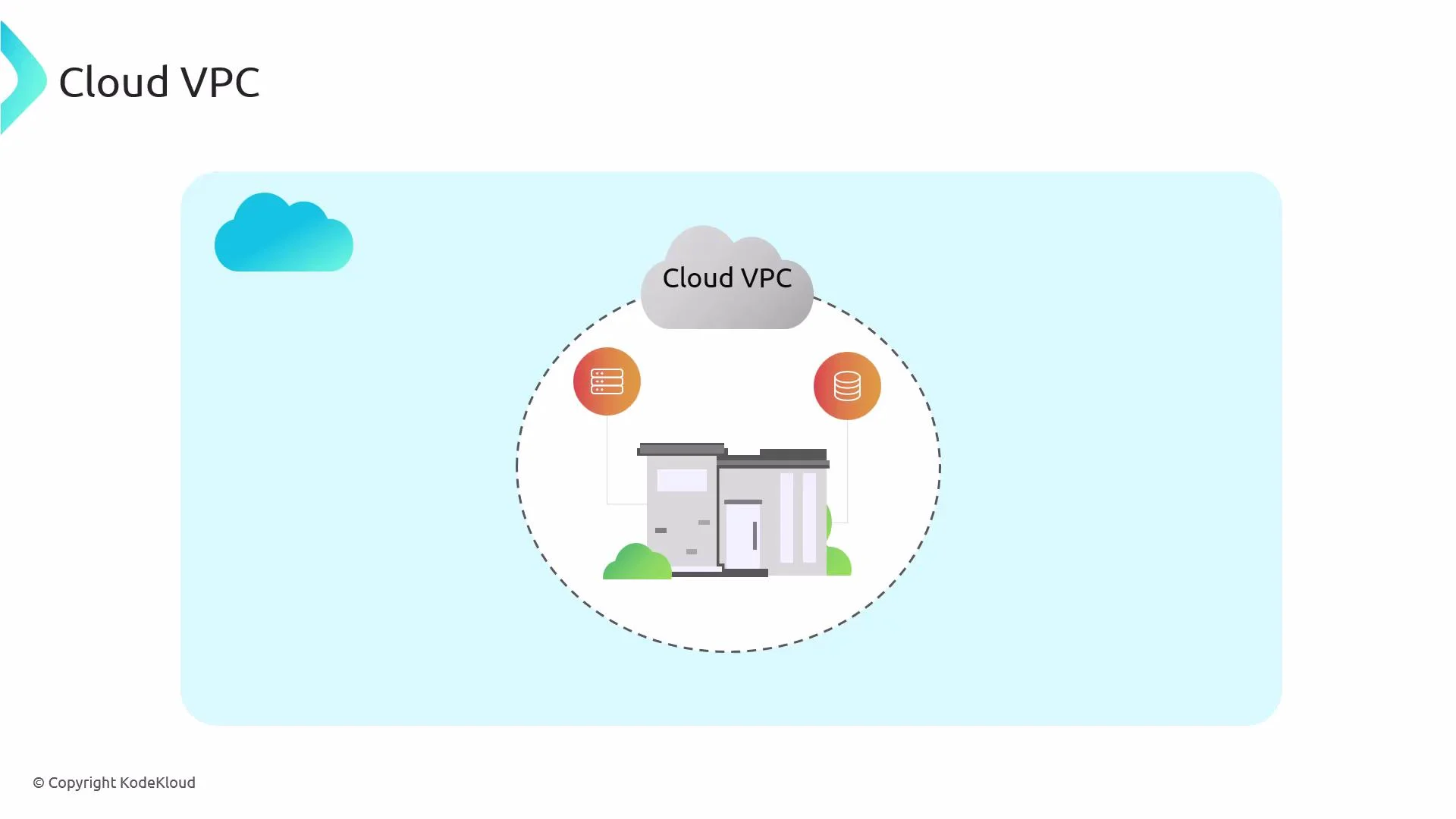
- Logical isolation: VPCs provide a secure “bubble” for your cloud resources, separated from other customers’ networks.
- Network control: Define IP ranges, subnets, routing tables, and security (firewall) rules.
- Flexible connectivity: Connect VPCs to each other or on-premises networks using peering, VPNs, or dedicated interconnects.
- Compliance and segmentation: Use subnets and firewall rules to isolate environments (production, staging, dev).
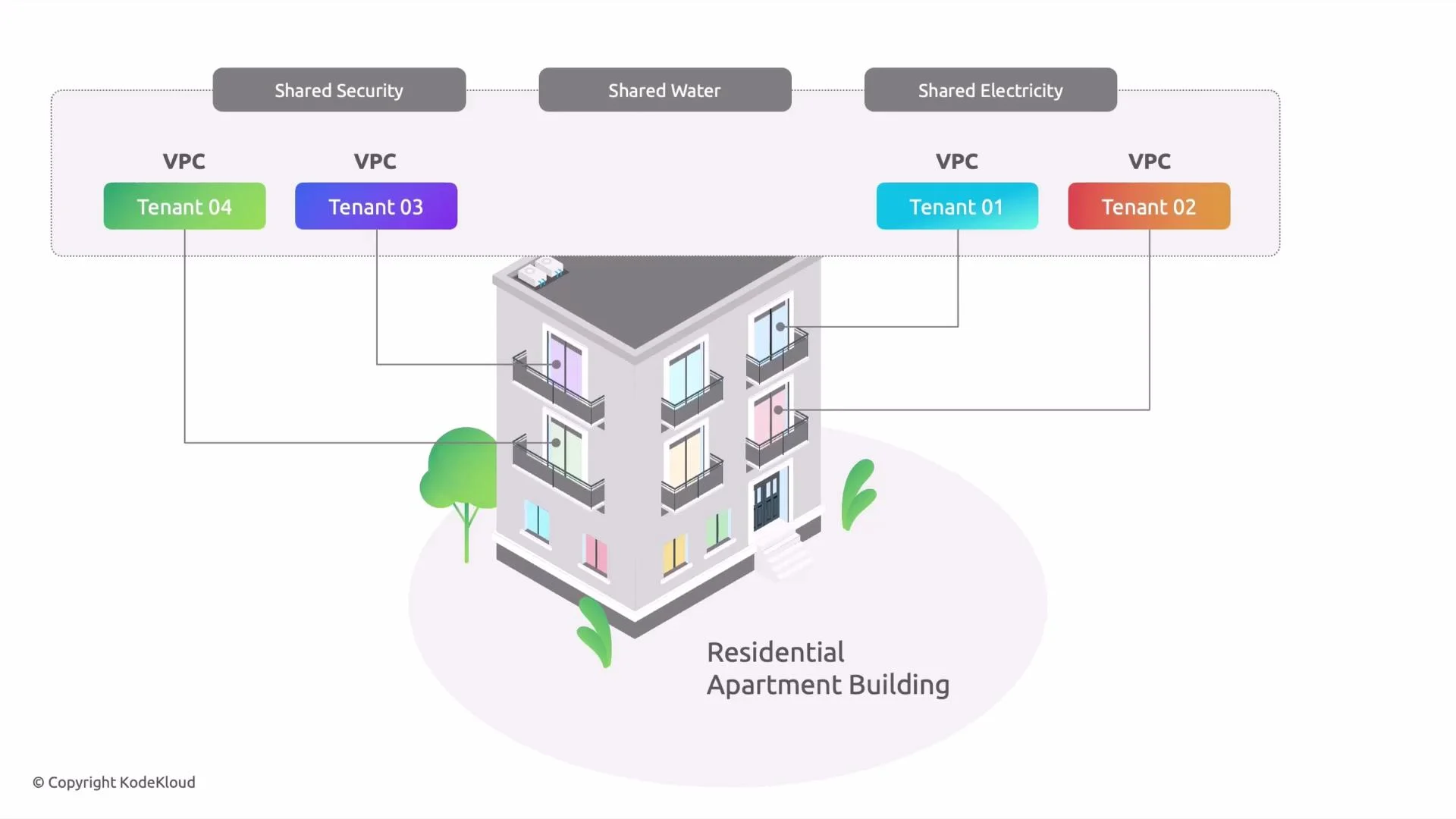
- The cloud provider is the building owner/manager: they run the physical datacenter, network backbone, and managed platform services.
- Your VPC is your apartment: you design the layout, pick which rooms (subnets) you use, and control who can enter (firewall rules).
- Tenants are separate customers: activities inside one tenant’s apartment don’t affect other tenants unless explicitly connected.
Key clarifications and best practices
- Shared responsibility: The provider secures and operates the physical layer; you are responsible for network design, segmentation, and access controls inside your VPC.
- Isolation: VPCs are isolated at the network level. No cross-VPC access occurs unless you configure VPC peering, a VPN, or a dedicated interconnect.
- Segmentation: Use subnets and IP ranges to separate environments and control communication with routing and firewall rules.
- Naming and IP planning: Plan CIDR ranges and subnet sizes early to avoid overlapping address spaces when you later peer VPCs or connect to on-prem networks.
VPCs give you network-level isolation and control. The provider secures and operates the physical infrastructure, while you design IP addressing, subnets, firewall policies, and routing for your workloads.
- VPC Peering — Private, non-transitive connection between two VPCs for low-latency internal traffic.
- VPN — Encrypted tunnel for secure connectivity between a VPC and on-premises networks or other clouds.
- Interconnect / Direct Connect — Dedicated, high-throughput private link between your network and the cloud provider.
- Shared VPC / Transit Gateway / Hub-and-spoke — Centralized models for managing many VPCs at scale.