

SDLC (Software Development Life Cycle) is the structured sequence of activities used to design, build, test, deliver, and maintain software. CI/CD automates parts of the SDLC—mainly build, test, and deployment—to accelerate delivery and reduce risk.
What SDLC Covers (At a Glance)
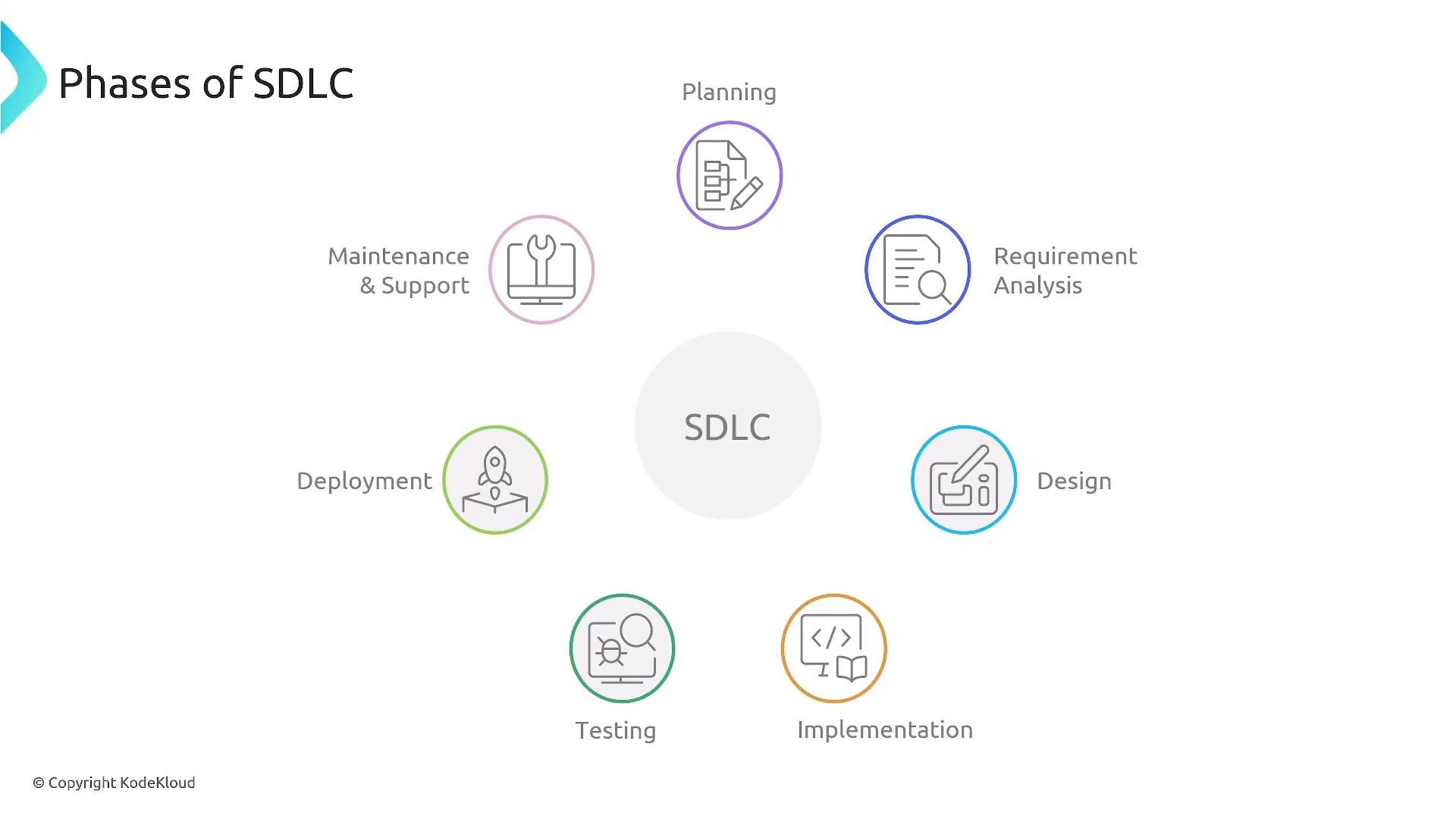
At a high level, SDLC organizes the work required to transform business needs into running software. Typical activities include:- Planning: scope, feasibility, risks, and objectives.
- Requirement Analysis: convert business needs into technical requirements and acceptance criteria.
- Design: architecture, component boundaries, and interfaces.
- Implementation: coding, integration, and unit-level validation.
- Testing: unit, integration, system, E2E, and user acceptance testing (UAT).
- Deployment: releasing software to production and provisioning infrastructure.
- Maintenance & Support: monitoring, patching, bug fixes, and evolution.
Why Follow an SDLC?
A defined SDLC helps teams deliver predictable, high-quality software by:- Aligning implementation with business requirements and acceptance criteria.
- Reducing rework and wasted effort through planning and early validation.
- Improving quality with structured, repeatable testing and review cycles.
- Facilitating communication and coordination among stakeholders (development, QA, operations, product, and customers).
- Enabling auditability and traceability from requirements to production.
SDLC Models Overview
Various delivery models describe how SDLC phases are organized and how feedback loops are handled. The most common models are Waterfall, Agile, and DevOps (as applied to infrastructure and operations). Each model trades off predictability, flexibility, and speed.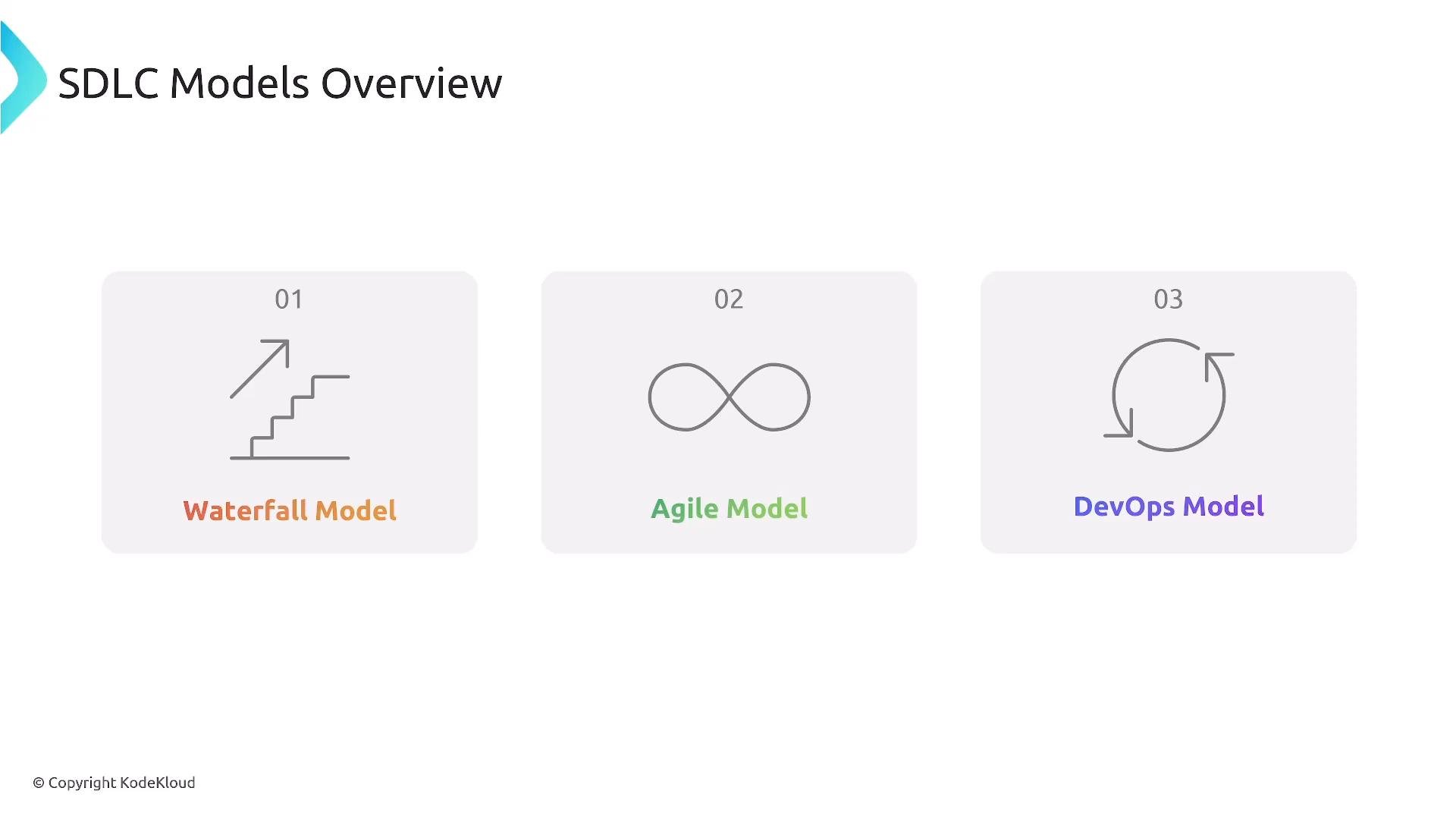
Waterfall Model
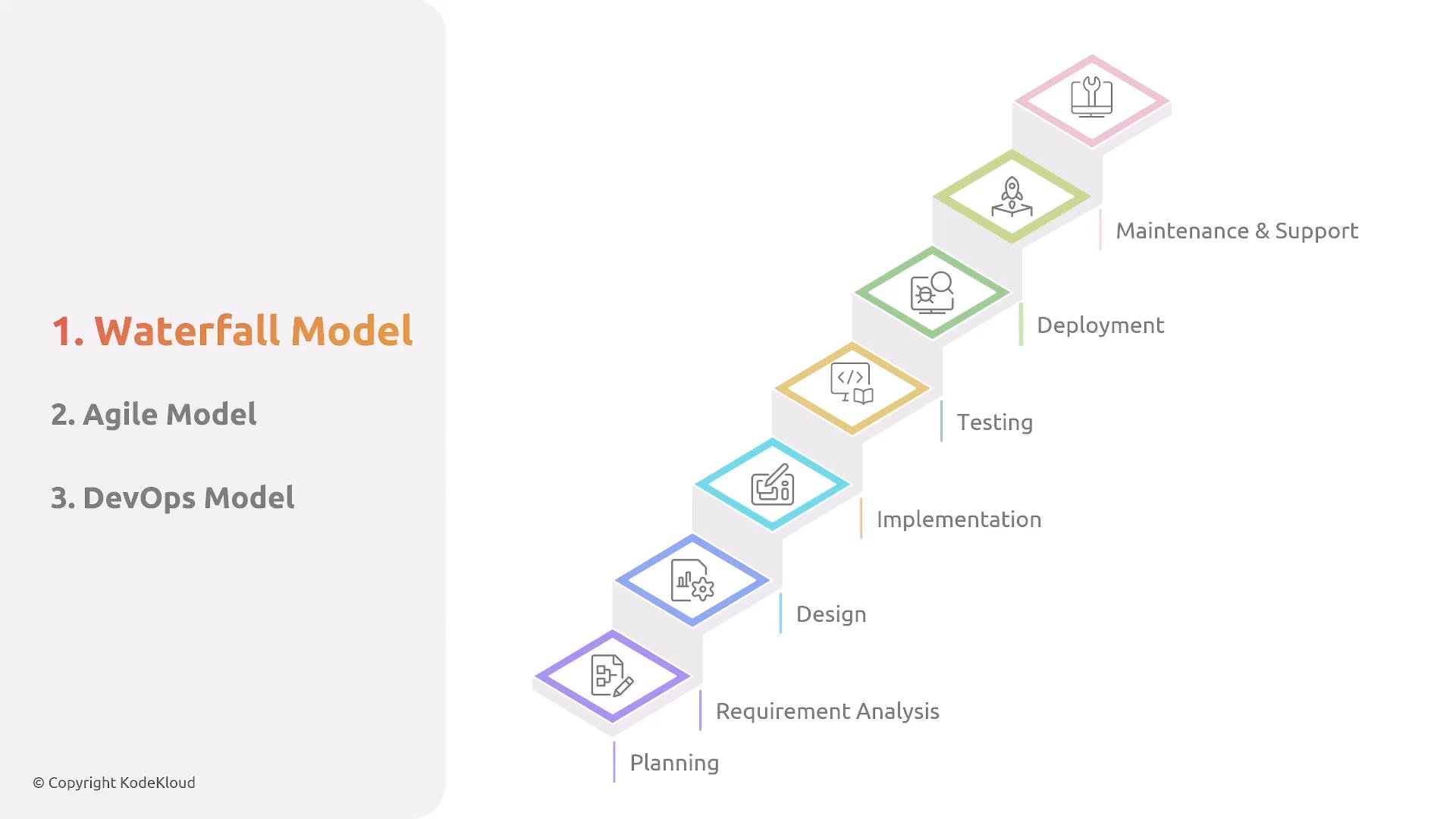
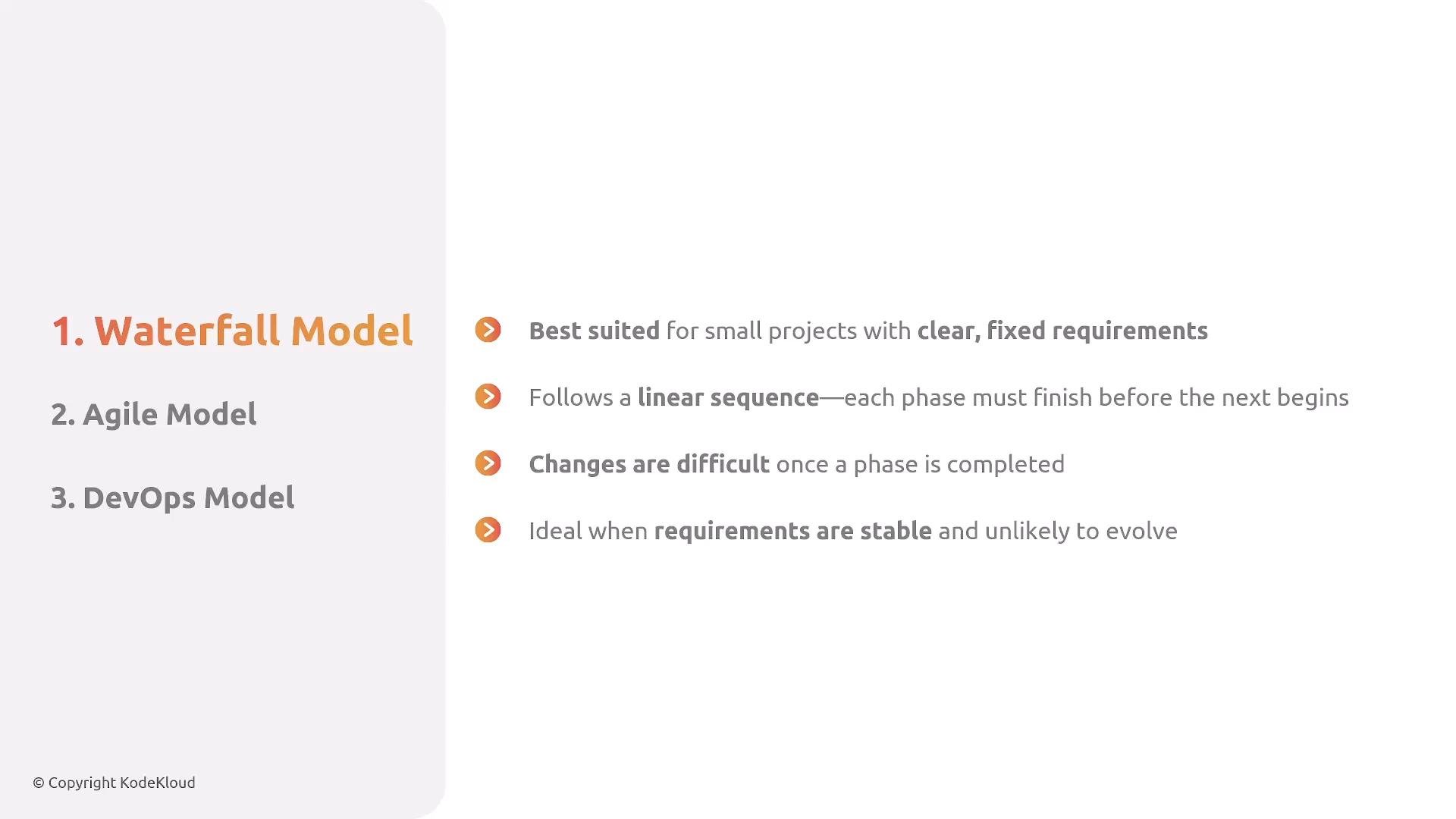
Waterfall is a linear, stage-gated approach: complete one phase before moving to the next. It works when requirements are stable and well-understood.- Characteristics: Sequential, clearly defined hand-offs, limited iteration.
- Best for: Projects with fixed requirements or regulatory constraints (e.g., certain hardware integrations).
- Drawbacks: Change is costly; slow feedback loops.
Agile Model
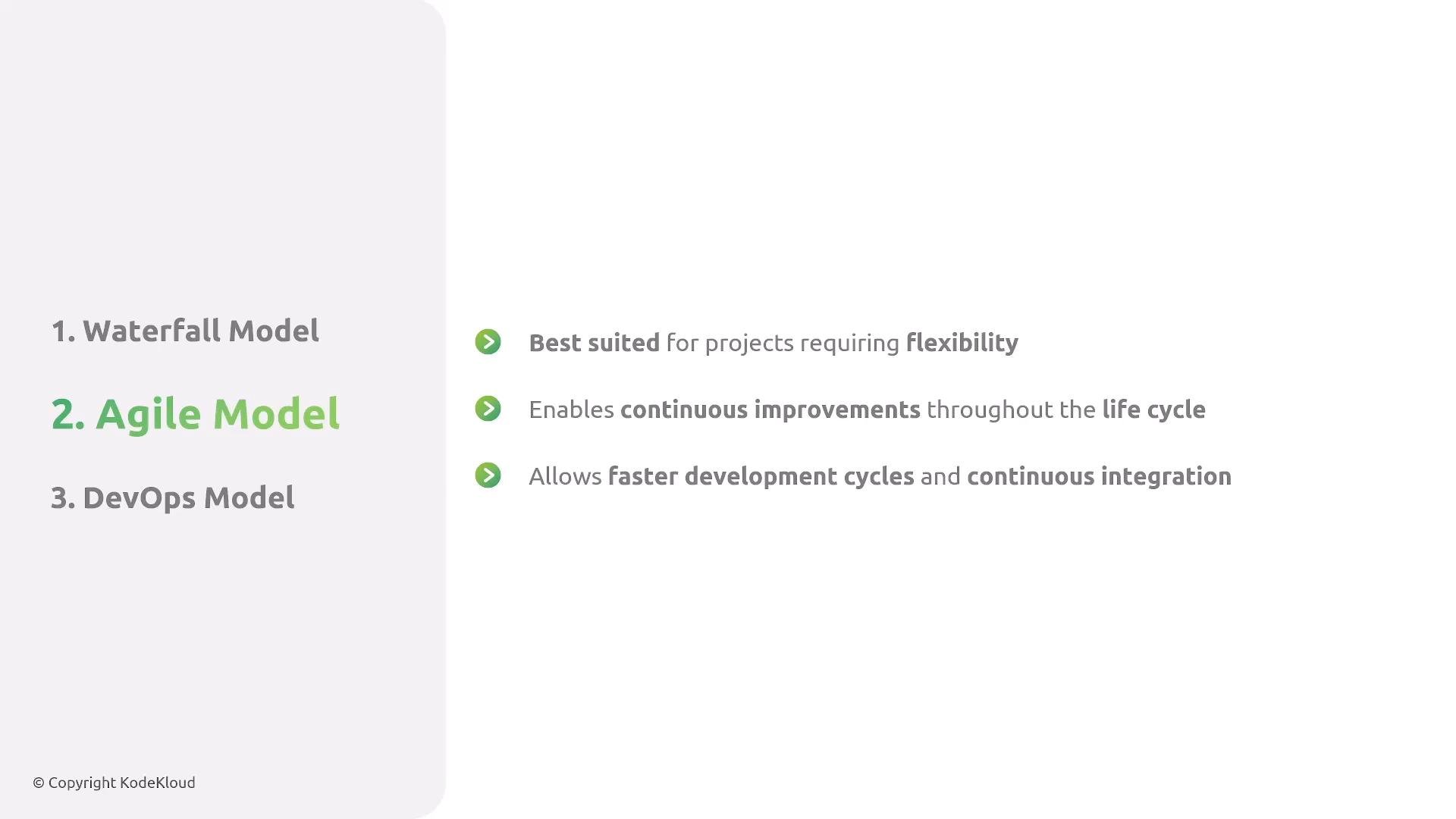
Agile organizes work into small, iterative increments (sprints or iterations) with frequent feedback and cross-functional teams.- Characteristics: Iterative, incremental, collaborative, feedback-driven.
- Best for: Projects with changing requirements or where rapid delivery of incremental value is needed.
- Benefits: Short feedback loops, continuous improvement, and the ability to pivot based on customer feedback.
DevOps Model (Infrastructure-Focused)
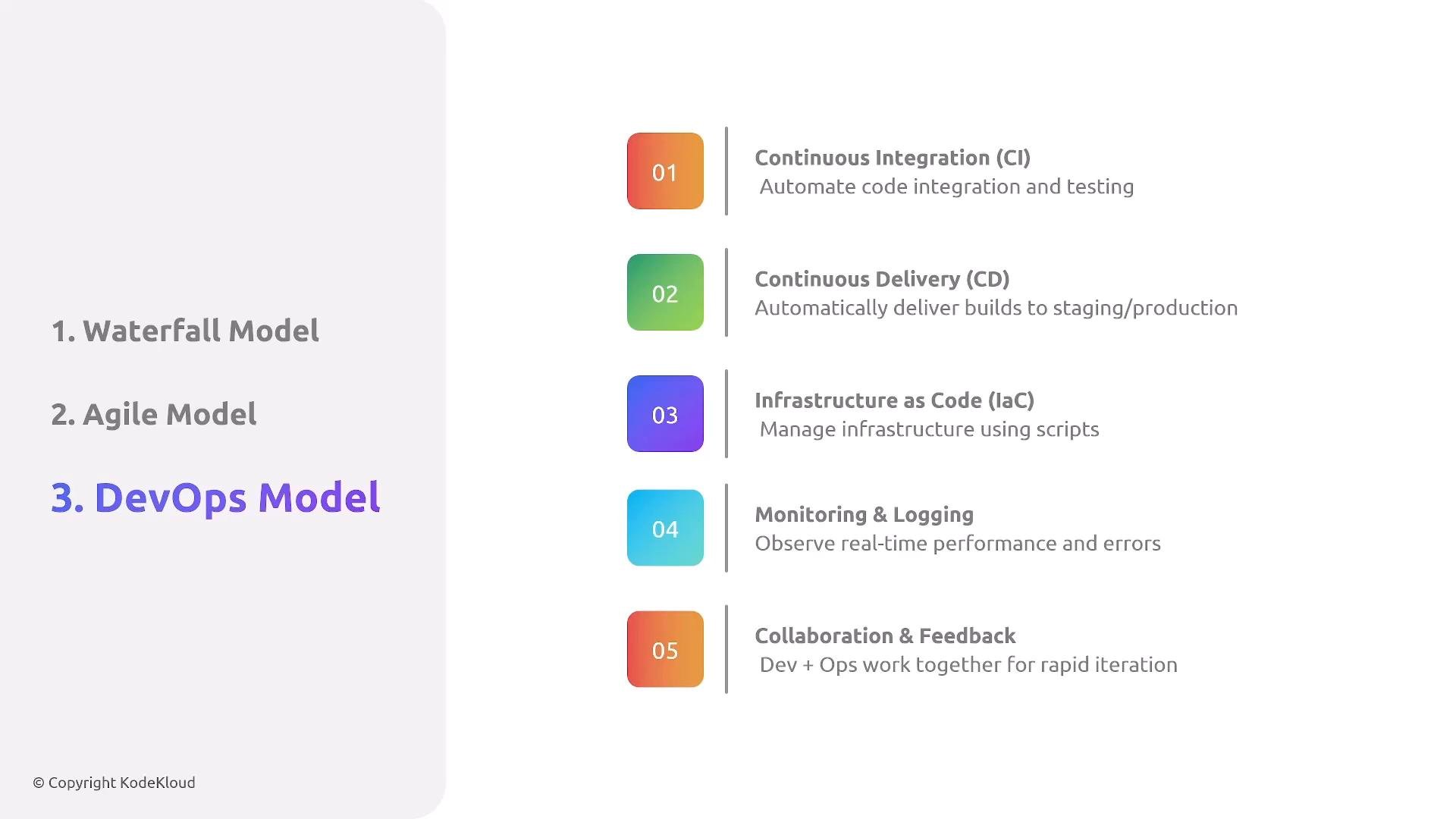
DevOps is a culture, set of practices, and automation-first approach that shortens the lead time from code/infra changes to production operations.- Characteristics: Automation (CI/CD, IaC), monitoring and observability, cross-functional collaboration between development and operations.
- Best for: Delivering and operating infrastructure and applications in a repeatable, automated way.
- Benefits: Faster, more reliable deployments and continuous feedback from production.
Choosing an SDLC Model
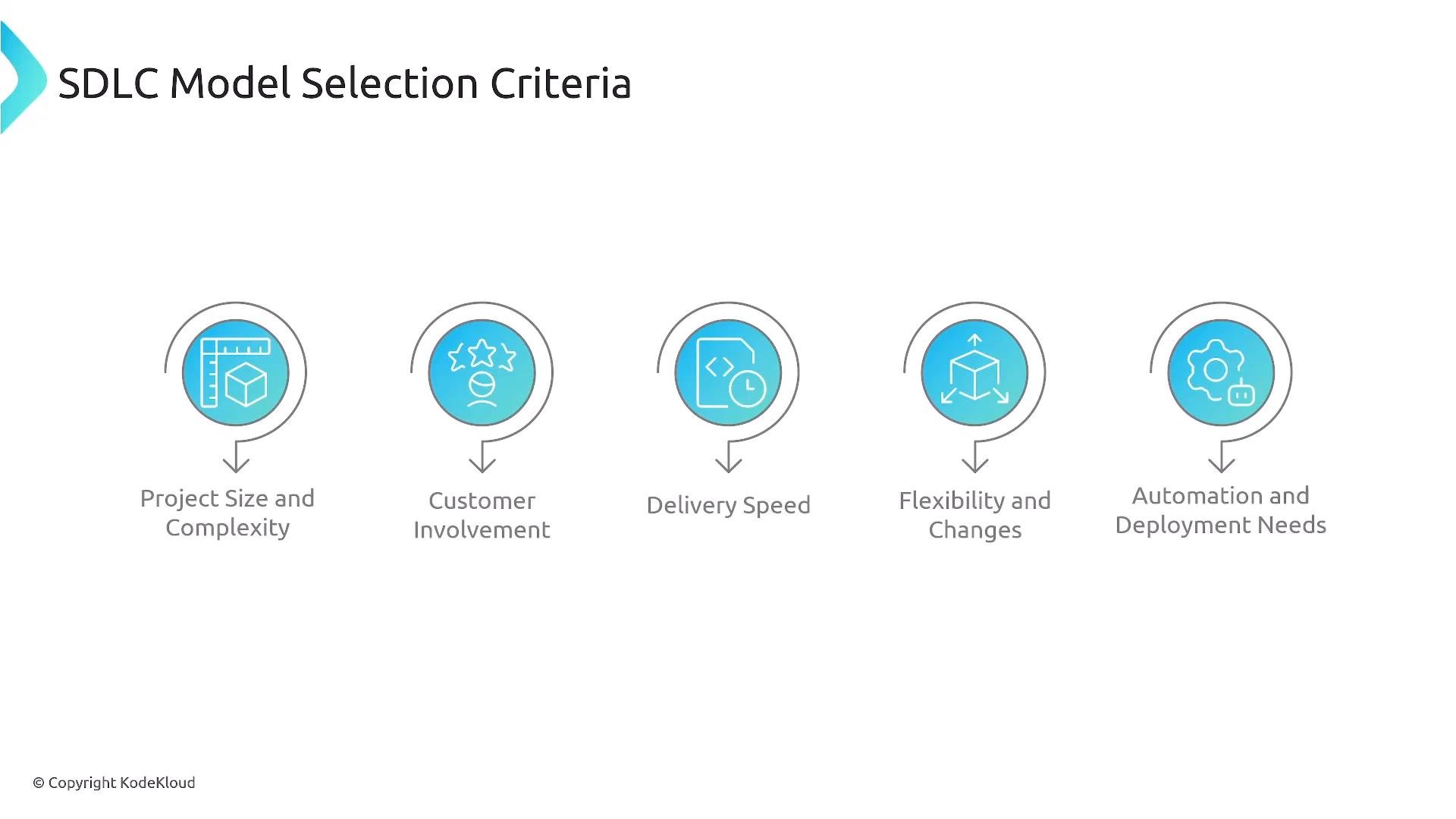
Decide based on project and organizational needs. Consider:- Project size and complexity
- Customer involvement and ability to provide feedback
- Required delivery speed and release cadence
- Expected changes during development
- Need for automation, CI/CD, and Infrastructure as Code
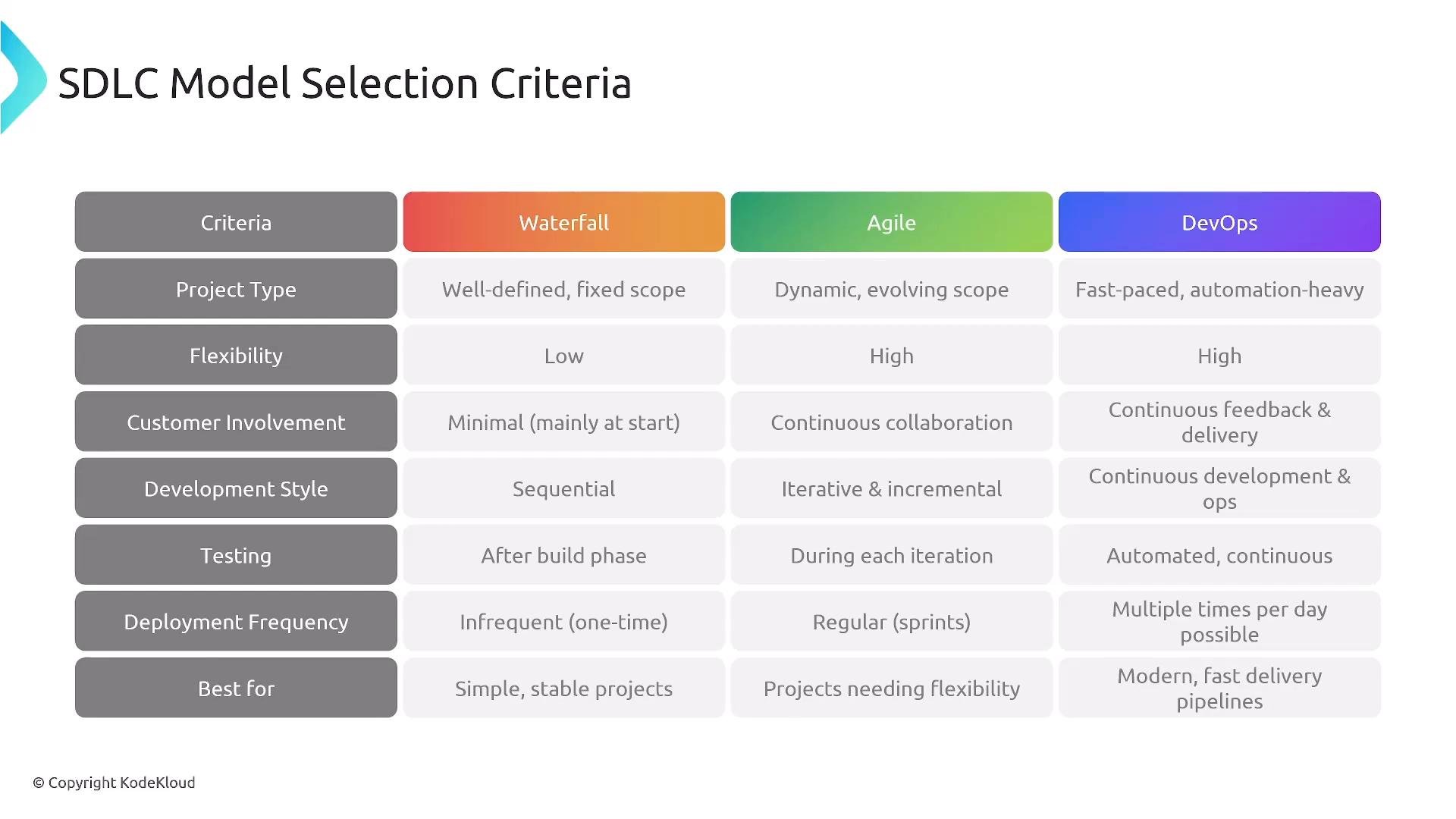
- Waterfall often suits projects with rigid requirements.
- Agile fits projects that need frequent feedback and adaptability.
- DevOps centers on automating delivery and operations but is often combined with Agile for application delivery.
SDLC vs CI/CD
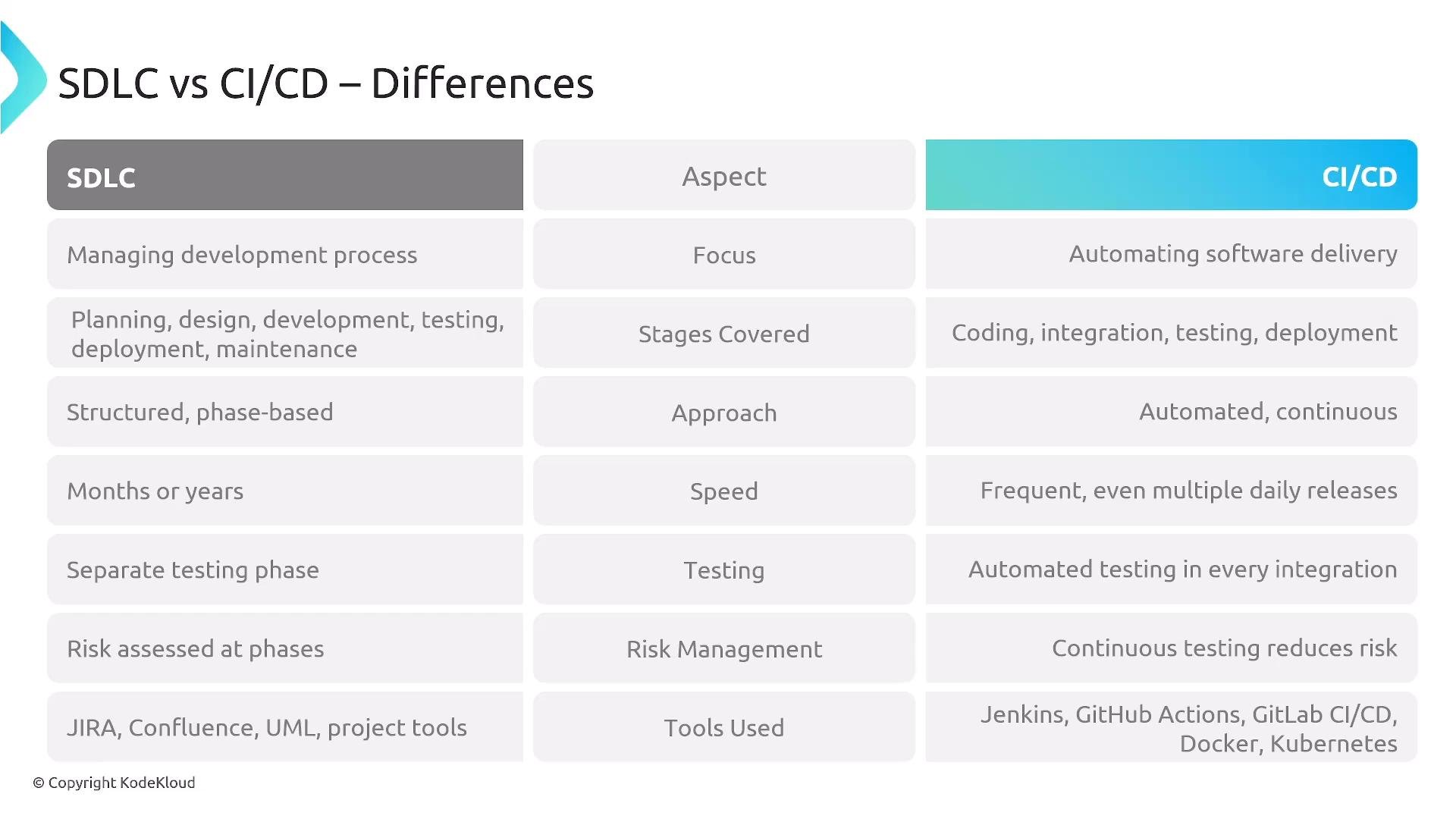
It’s important to distinguish SDLC from CI/CD:- SDLC: The end-to-end lifecycle covering planning, requirements, design, development, testing, deployment, maintenance, and retirement.
- CI/CD: Automation practices that accelerate and standardize integration, testing, and deployment within the SDLC.
Do not conflate SDLC (process & governance) with CI/CD (automation). CI/CD implements parts of the SDLC to reduce manual steps and improve reliability, but SDLC still includes non-automatable activities like stakeholder alignment and architectural design.
Best Practices for a Healthy SDLC
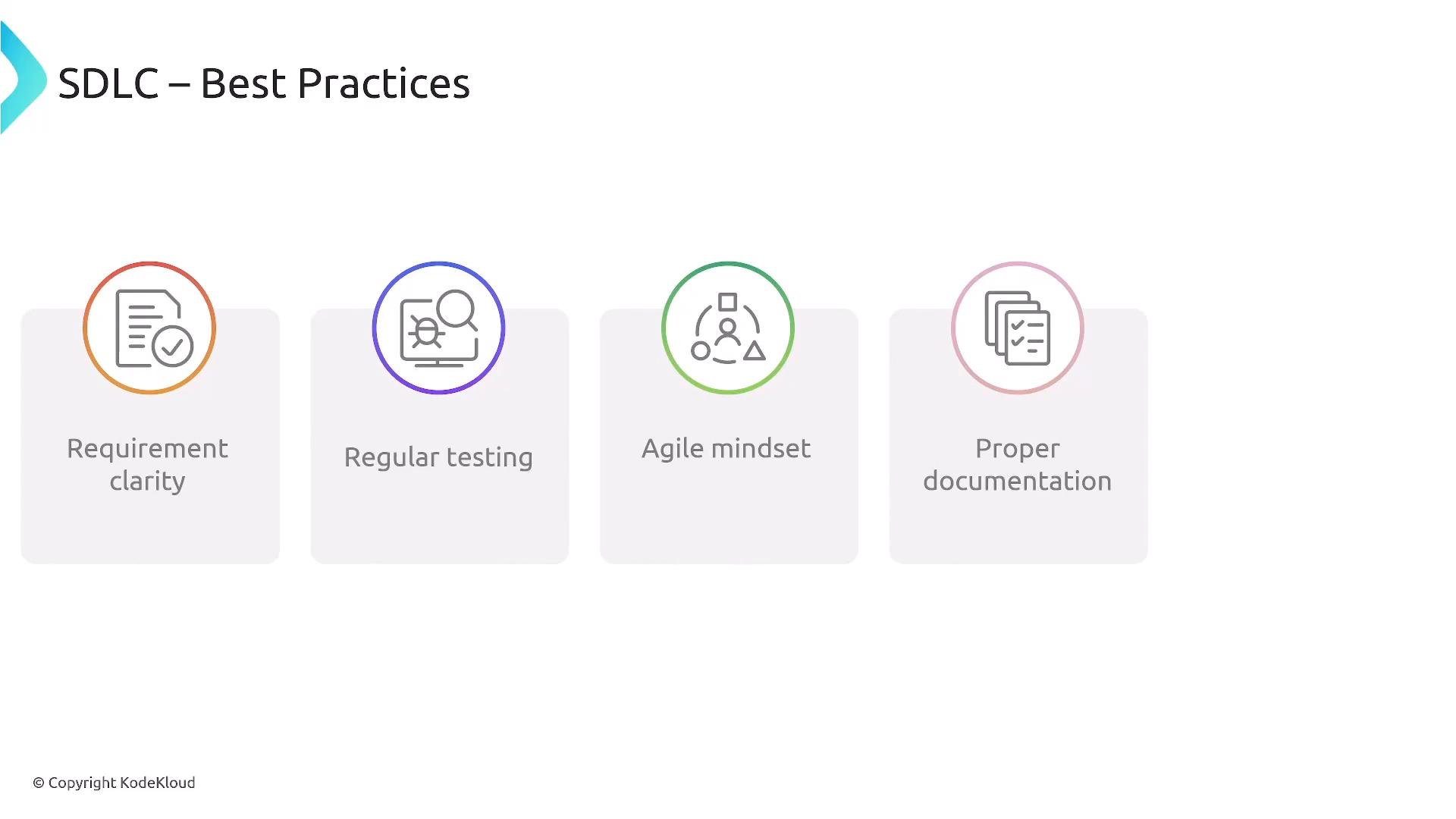
- Requirement clarity: Capture acceptance criteria and measurable outcomes.
- Shift-left testing: Integrate testing as early as possible.
- Embrace iteration: Use feedback loops to refine the product continuously.
- Automate safely: Implement CI/CD pipelines and Infrastructure as Code (IaC) to reduce manual errors.
- Maintain documentation: Keep architecture diagrams, runbooks, and knowledge-transfer artifacts up to date.
- Cross-functional collaboration: Break silos between product, development, QA, and operations.
Quick Reference Tables
Phases of SDLC
High-level comparison: Waterfall vs Agile vs DevOps
Key Takeaways
- SDLC defines the full lifecycle from planning through maintenance and retirement.
- CI/CD is a subset of SDLC that automates integration, testing, and deployment to speed delivery and reduce human error.
- Choose Waterfall, Agile, DevOps, or a hybrid approach based on project size, required speed, customer involvement, and automation needs.
- Modern delivery typically combines SDLC structure, Agile practices, and DevOps automation to achieve quality and velocity.