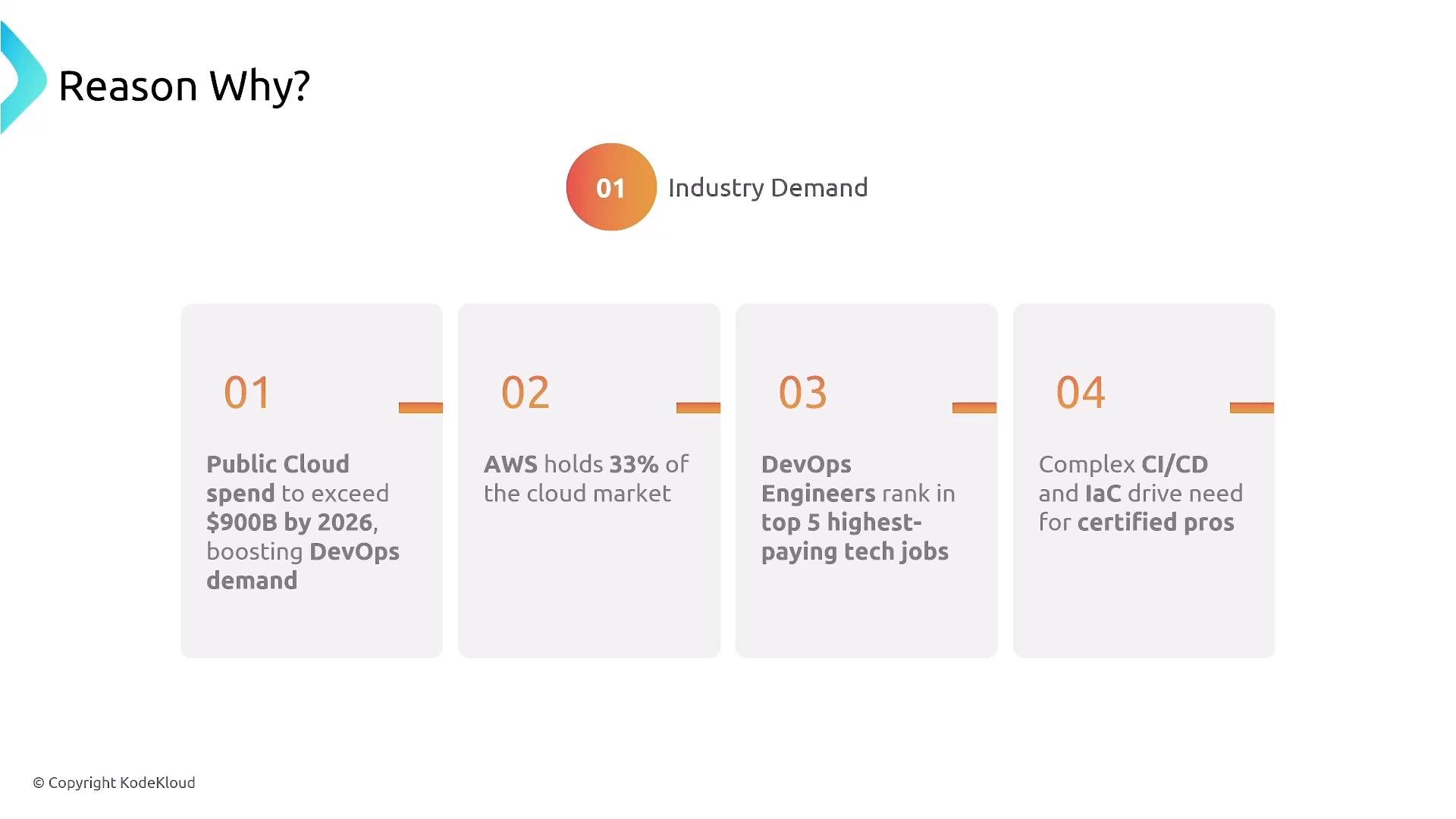
There is strong, sustained demand for DevOps and platform engineers who can demonstrate practical, cloud-native skills. The AWS Certified DevOps Engineer — Professional is a knowledge- and scenario-based credential that validates your ability to design, operate, and manage CI/CD pipelines, automation, and infrastructure as code on AWS. Even as AI transforms parts of the tech stack, organizations still need engineers who can design reliable pipelines and manage IaC at scale.
Preparing for this certification deepens domain expertise in key areas: CI/CD pipeline design, infrastructure-as-code (IaC), automation, incident management, and cloud security controls. You will learn advanced pipeline patterns, how to author and deploy IaC using CloudFormation, CDK, and Terraform, and how to integrate automated security and compliance checks into deployment workflows.
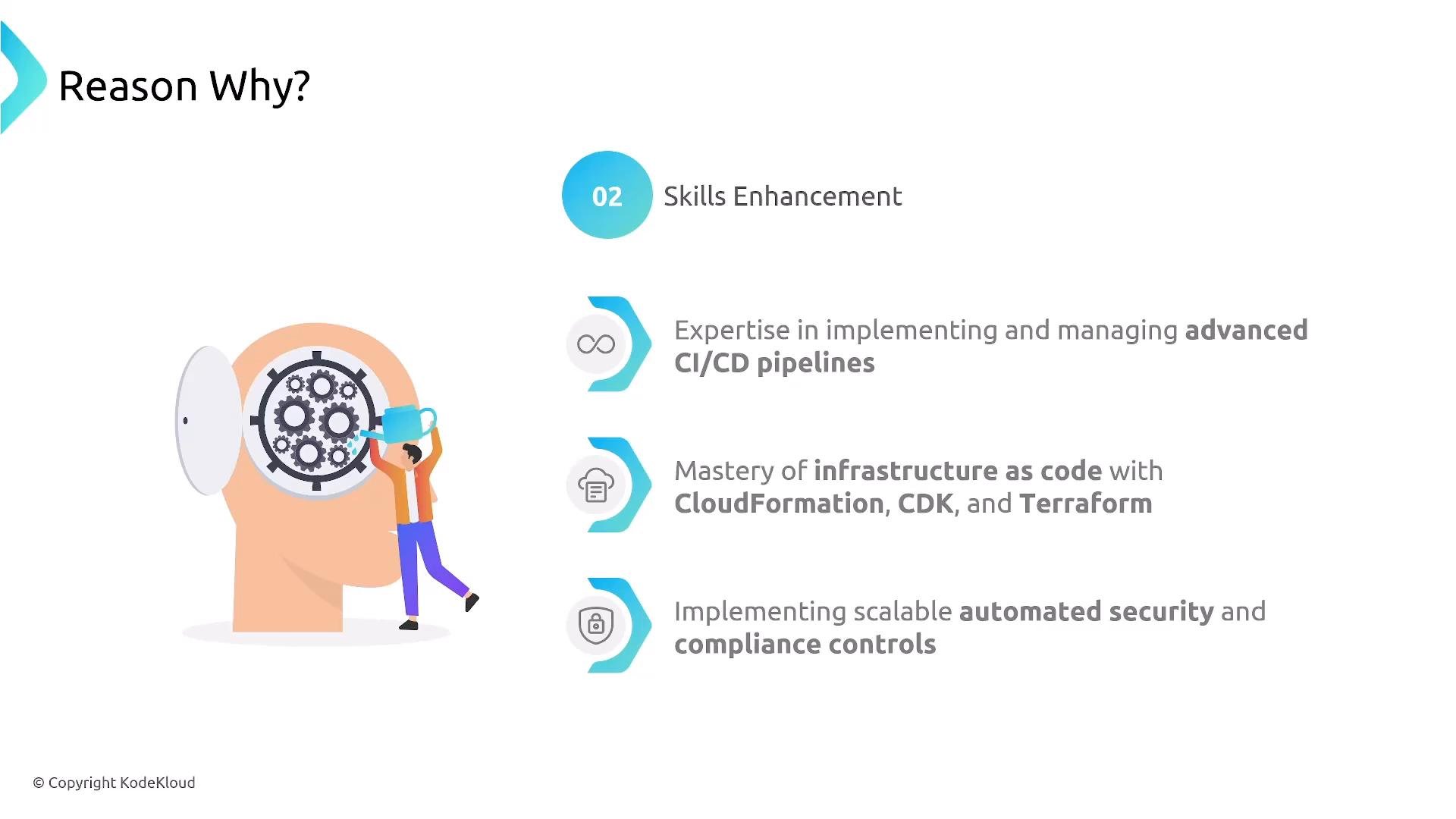
This course goes beyond pipeline construction. You’ll design resilient, self-healing architectures, implement monitoring and observability best practices (logs, metrics, traces), and build event-driven automation for operational and security use cases. These production-ready skills are exactly what employers look for in senior cloud engineers. Four — Compensation and career impact
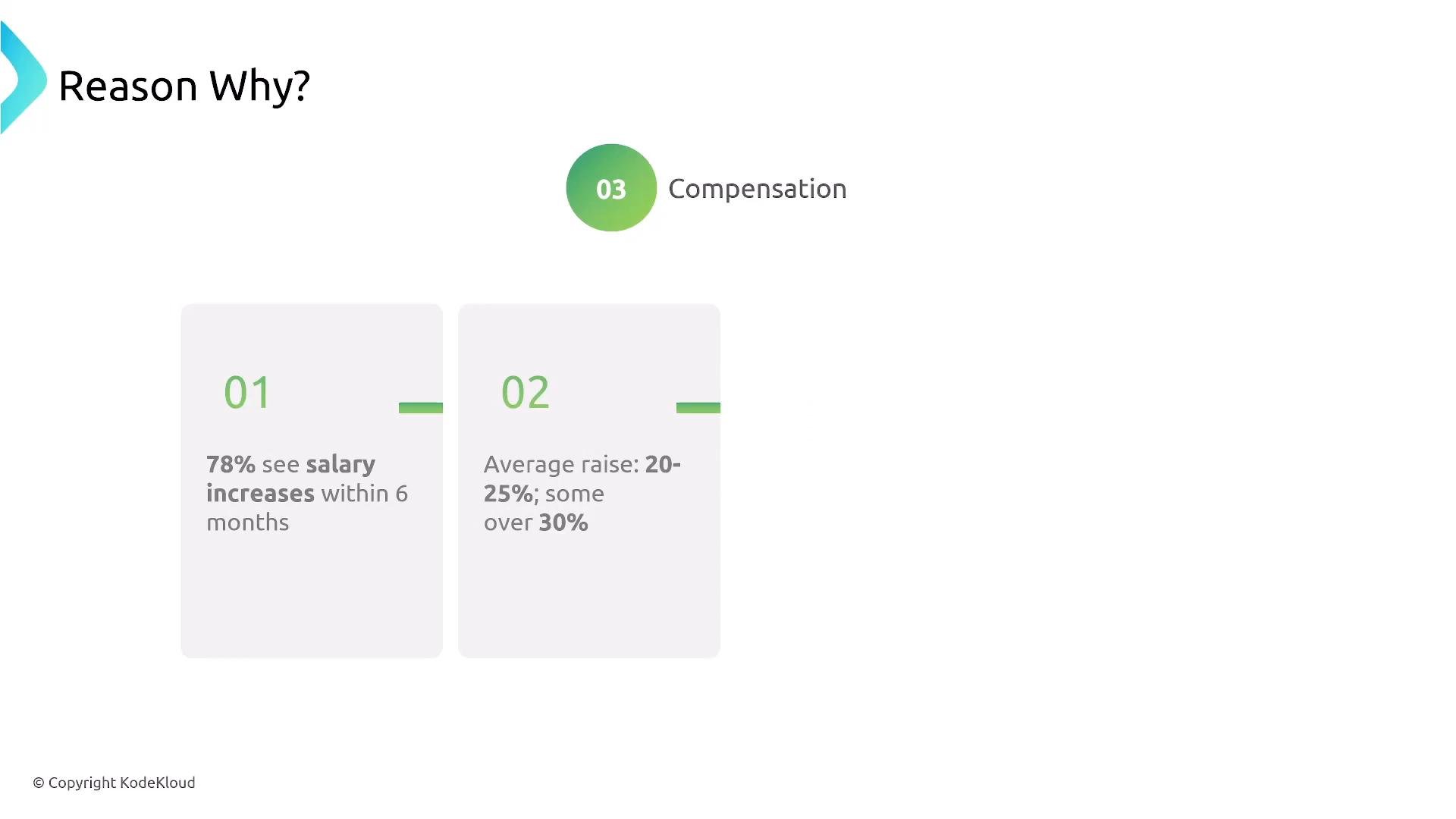
Professional-level certifications are rarer than associate-level ones and often correlate with higher compensation and faster career progression. Many candidates report salary increases and better role opportunities after earning professional certifications.
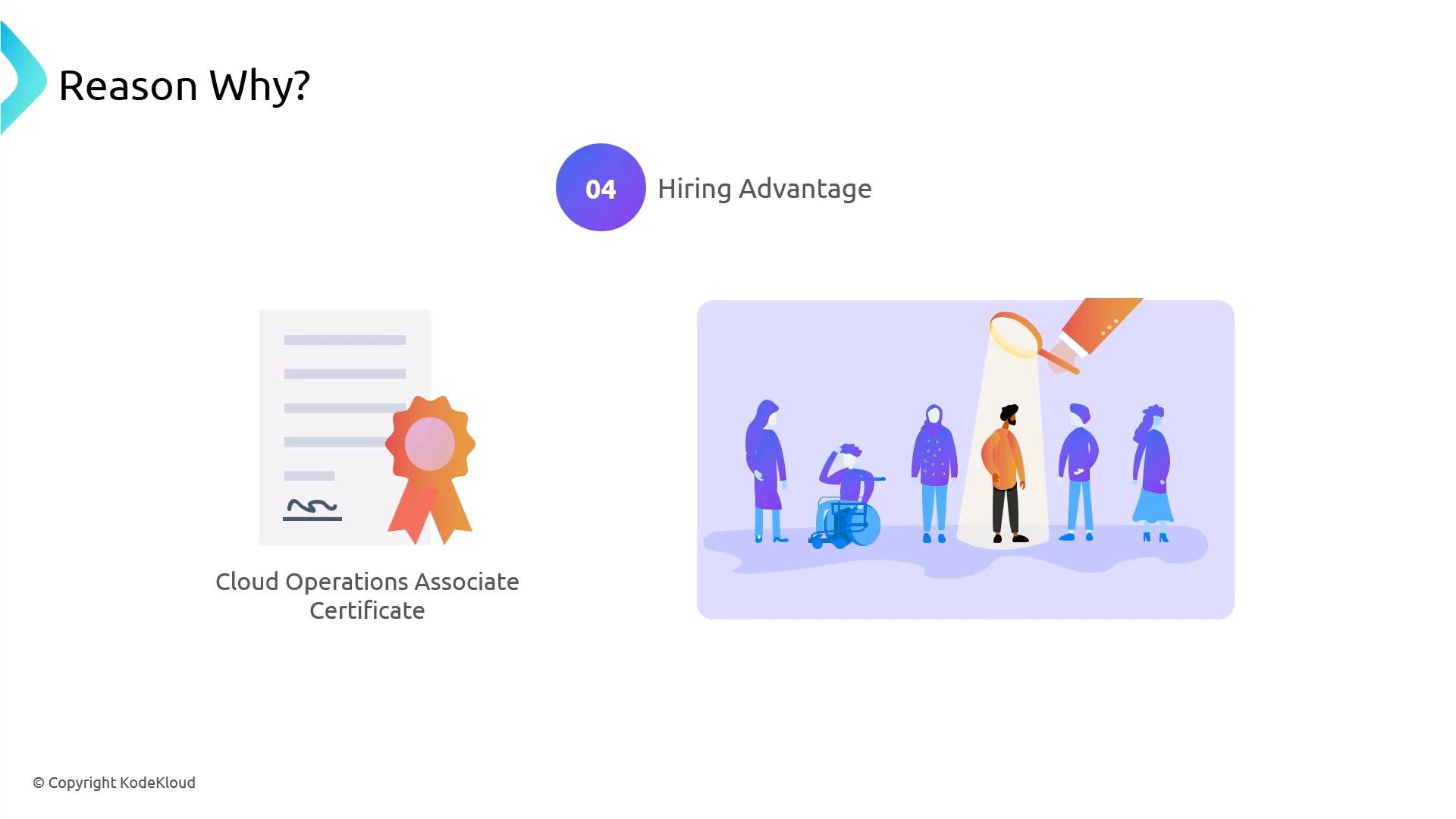
When work experience is comparable between candidates, certifications can be a tie-breaker. Holding Cloud Operations or DevOps credentials signals a verified baseline of cloud operations skills and can give you an edge during hiring and promotion decisions.
Follow a staged path to maximize learning and ensure you have the building blocks needed for a professional-level exam:
Start with foundational and associate exams if you are new to AWS. They build the practical and conceptual base required to succeed on the DevOps professional exam.
AWS periodically updates, reworks, or retires certification exams. Always verify the current exam catalog and recommended paths on the official AWS Certification site: https://aws.amazon.com/certification/
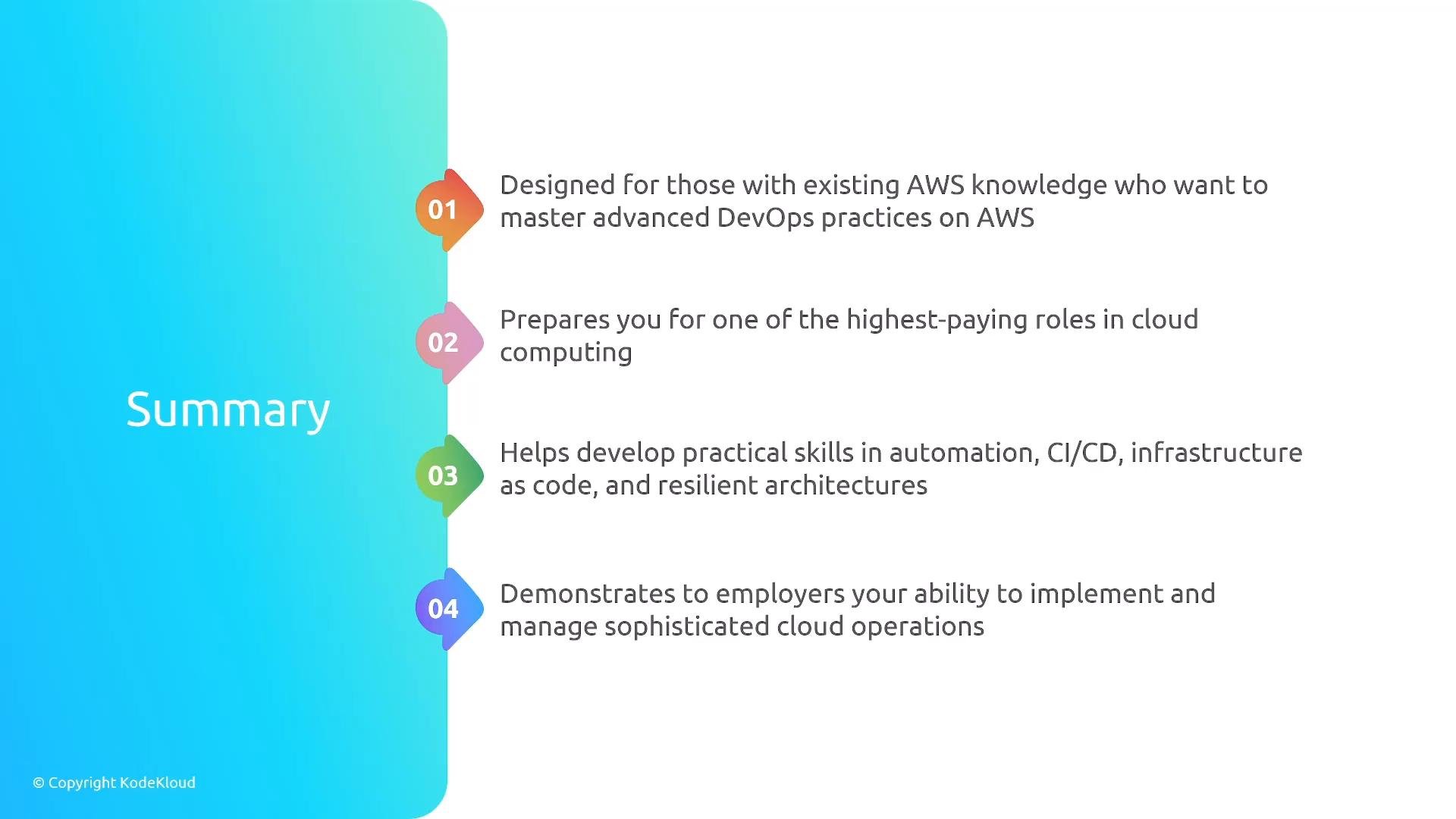
Hi, I’m Michael Forrester. I hold multiple AWS certifications and have helped thousands of students build CI/CD pipelines for Fortune 50 and Fortune 500 companies. This course targets learners with some AWS familiarity who want to master DevOps practices on AWS, gain hands-on experience with automation and IaC, and prepare for higher-paying operational cloud roles. Summary