

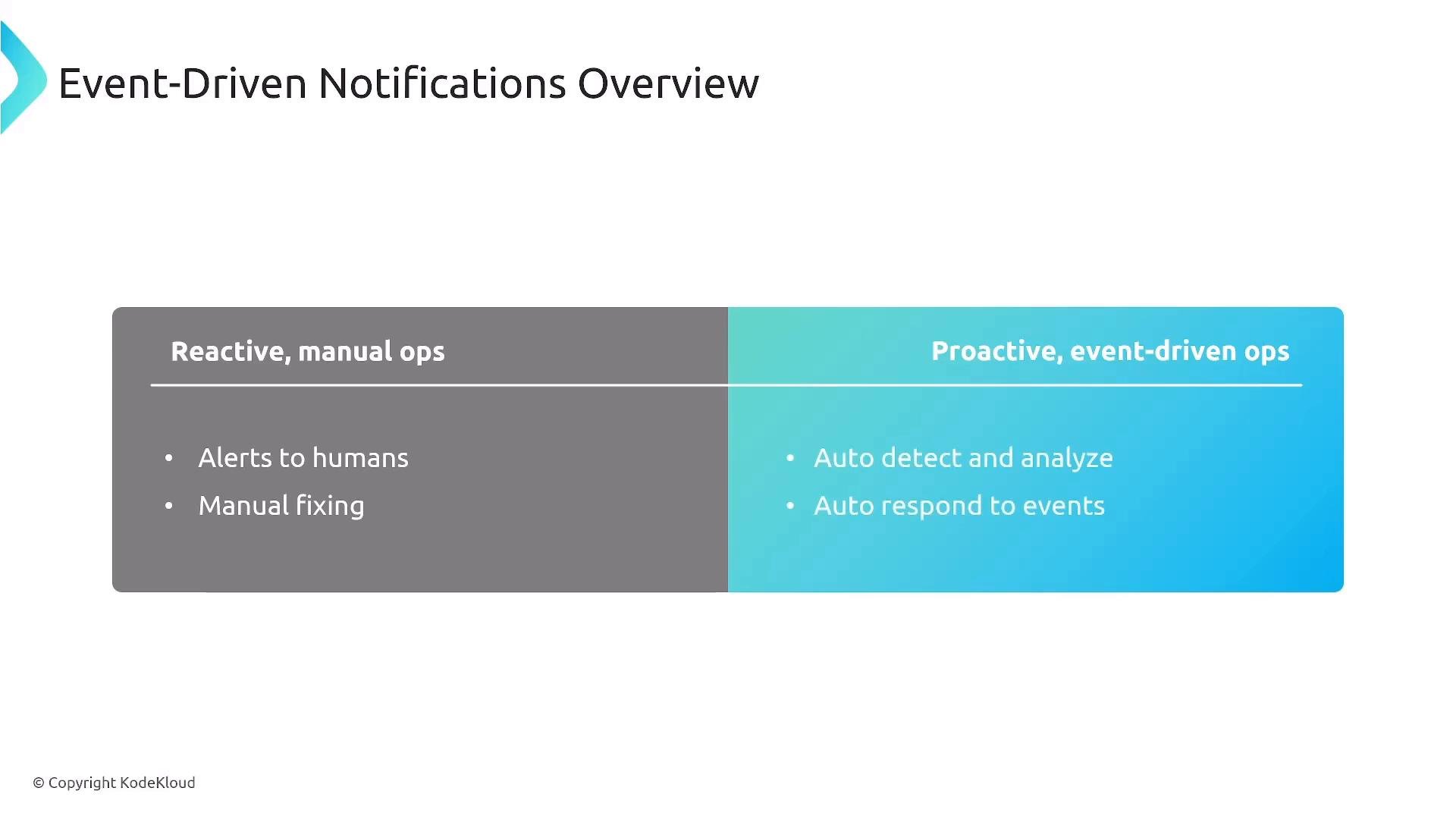
Typical event flow
- CloudWatch Alarm detects a threshold breach, anomaly, or scheduled check.
- The alarm emits an event that is published to Amazon SNS (fan-out) or routed through EventBridge.
- That event invokes targets such as Lambda, Step Functions, Systems Manager, SQS, or third-party services to perform remediation, notifications, logging, or auditing.
Core architectural components
Use the following services and patterns depending on your requirements:Use SNS for straightforward fan-out (email/SMS/Lambda/SQS). Prefer EventBridge when you need content-based routing, transformations, replay/archival, centralized event buses, or cross-account routing.
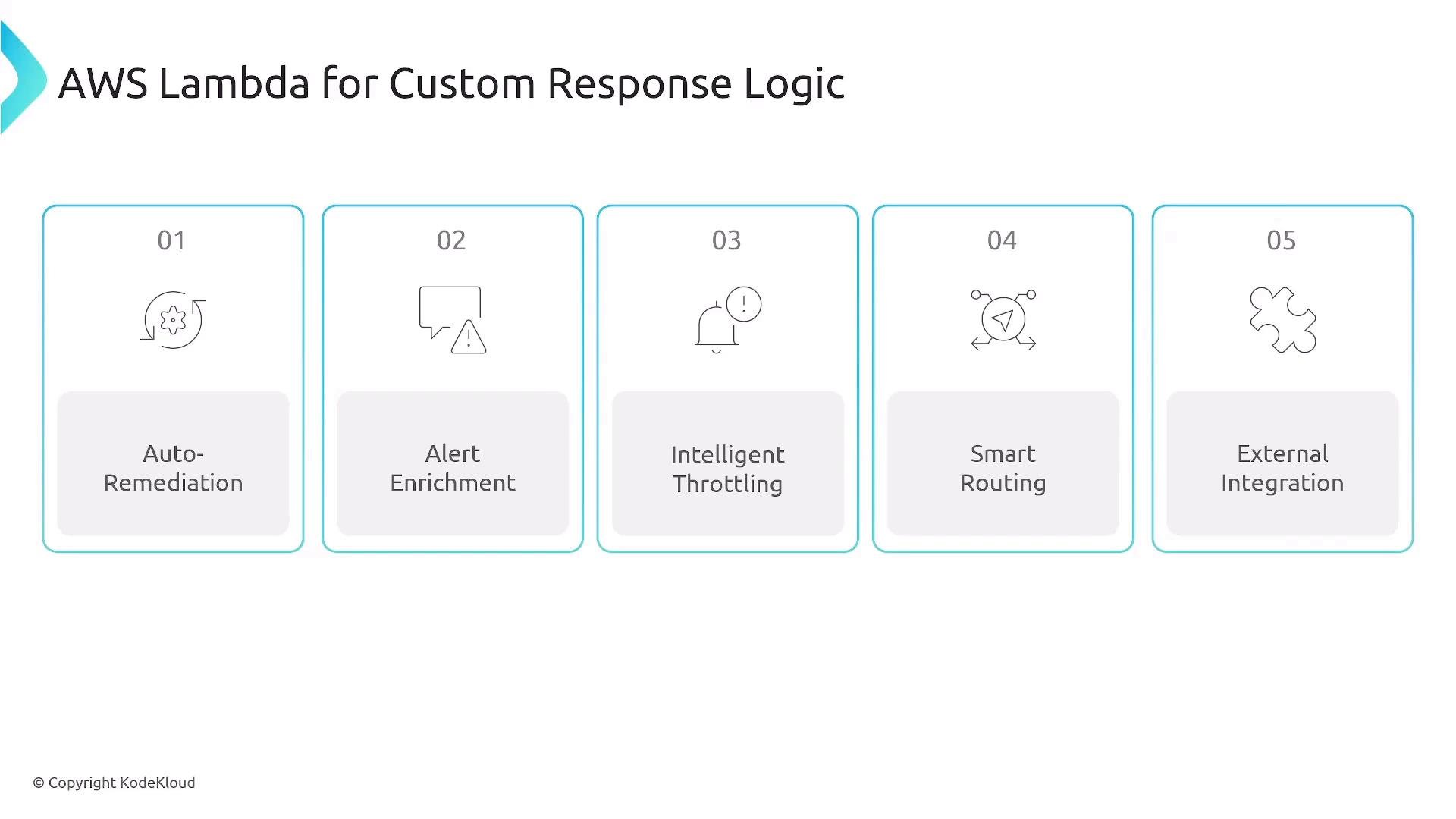
When to use Lambda or Step Functions for response logic
Lambda and Step Functions are appropriate when native SNS/EventBridge targets cannot deliver the required remediation or integration behavior. Typical use cases include:- Auto-remediation and multi-step workflows
- Alert enrichment (e.g., lookup metadata, correlate incidents)
- Intelligent throttling or rate-limited notifications
- Complex routing or decision logic beyond event-pattern matching
- External integrations requiring custom authentication or API calls
Integration patterns and architectures
Choose a pattern that matches your operational requirements (human-in-the-loop, automated remediation, auditing, or intelligent routing).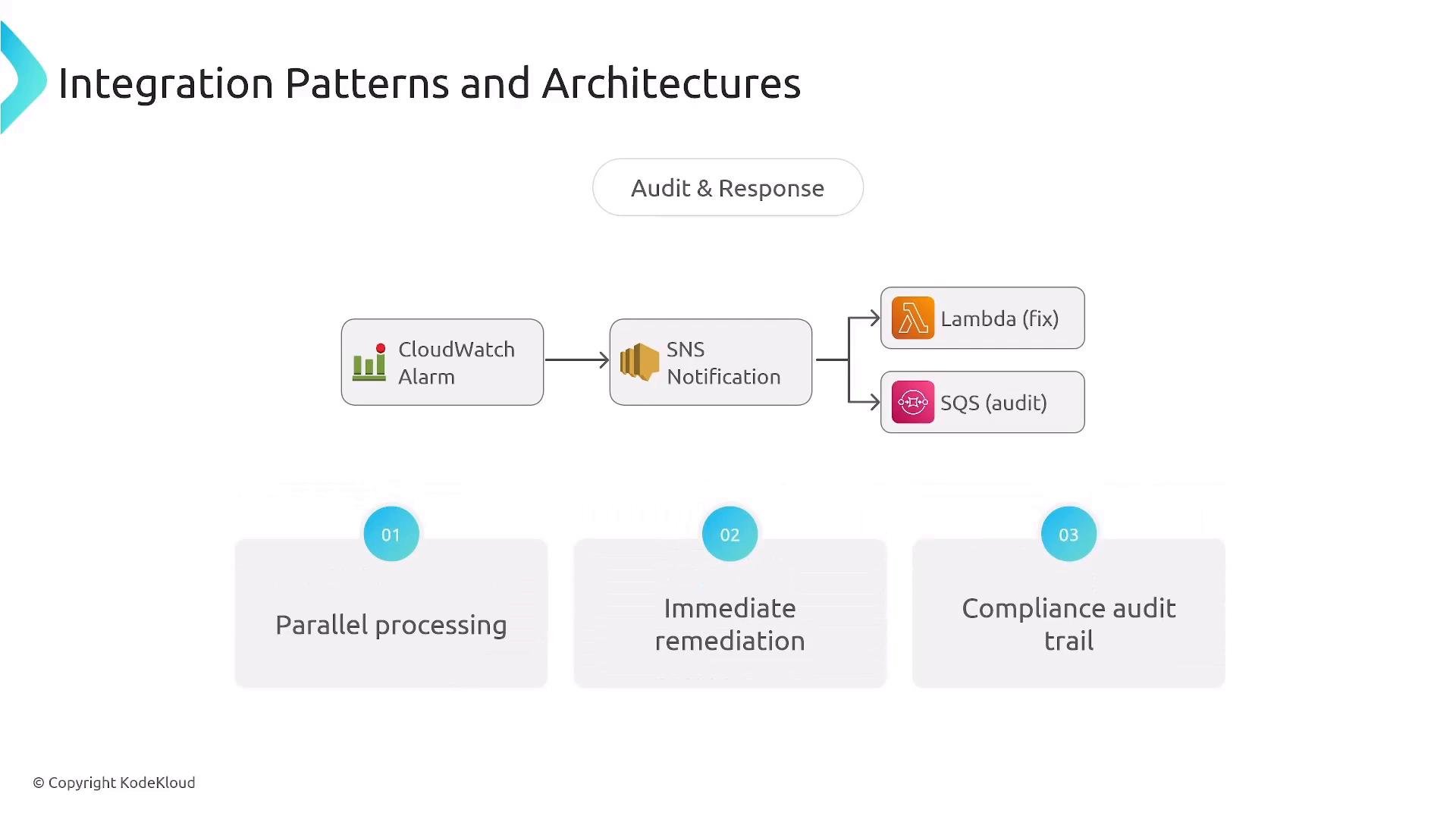
EventBridge vs SNS — key differences
EventBridge is preferred when you need content-based filtering, transformations, multiple targets, replay/archives, or centralized cross-account routing. SNS is a lightweight choice for reliable fan-out delivery to multiple protocols (email, SMS, HTTP/S) and simple pub/sub patterns.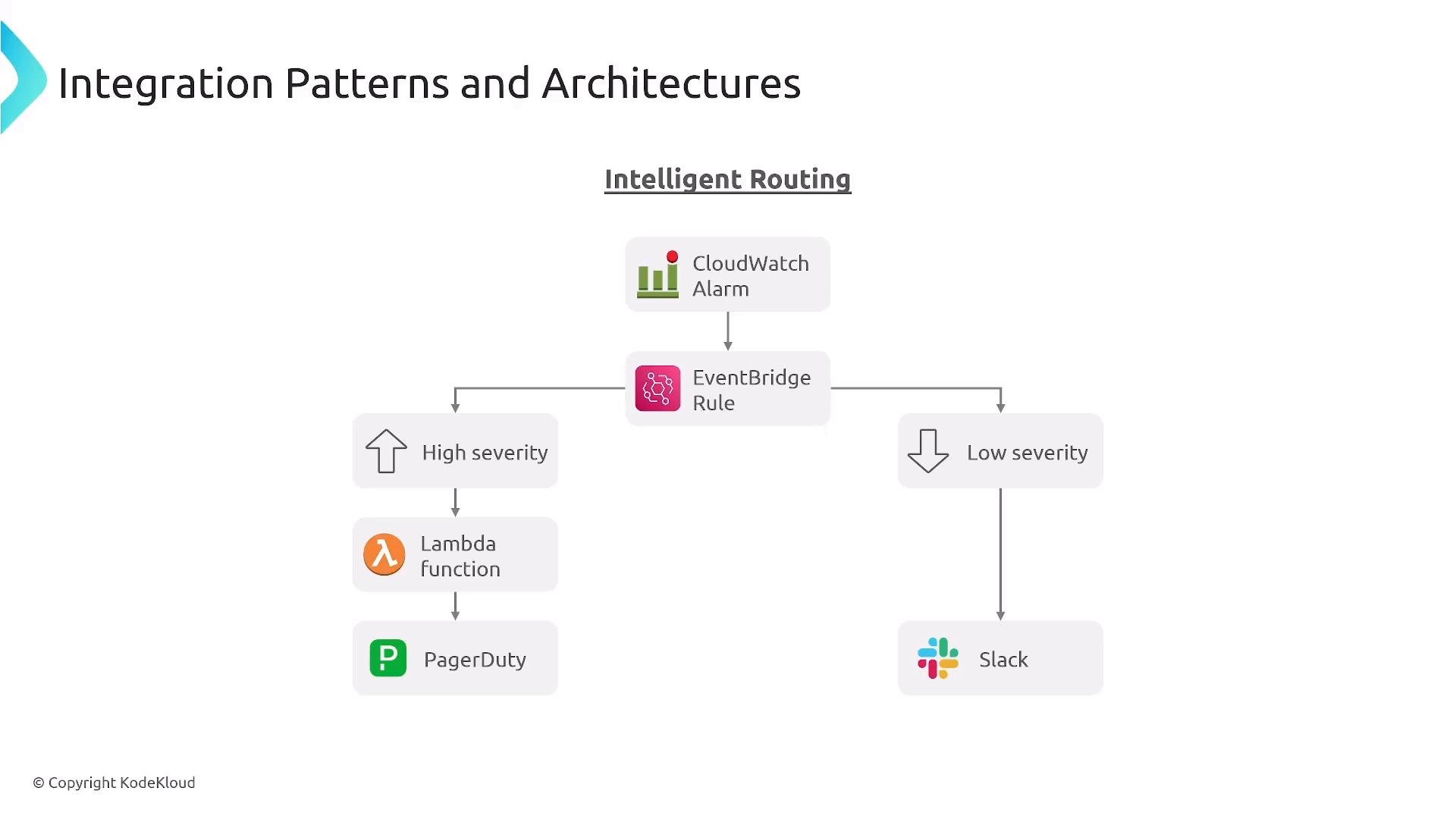
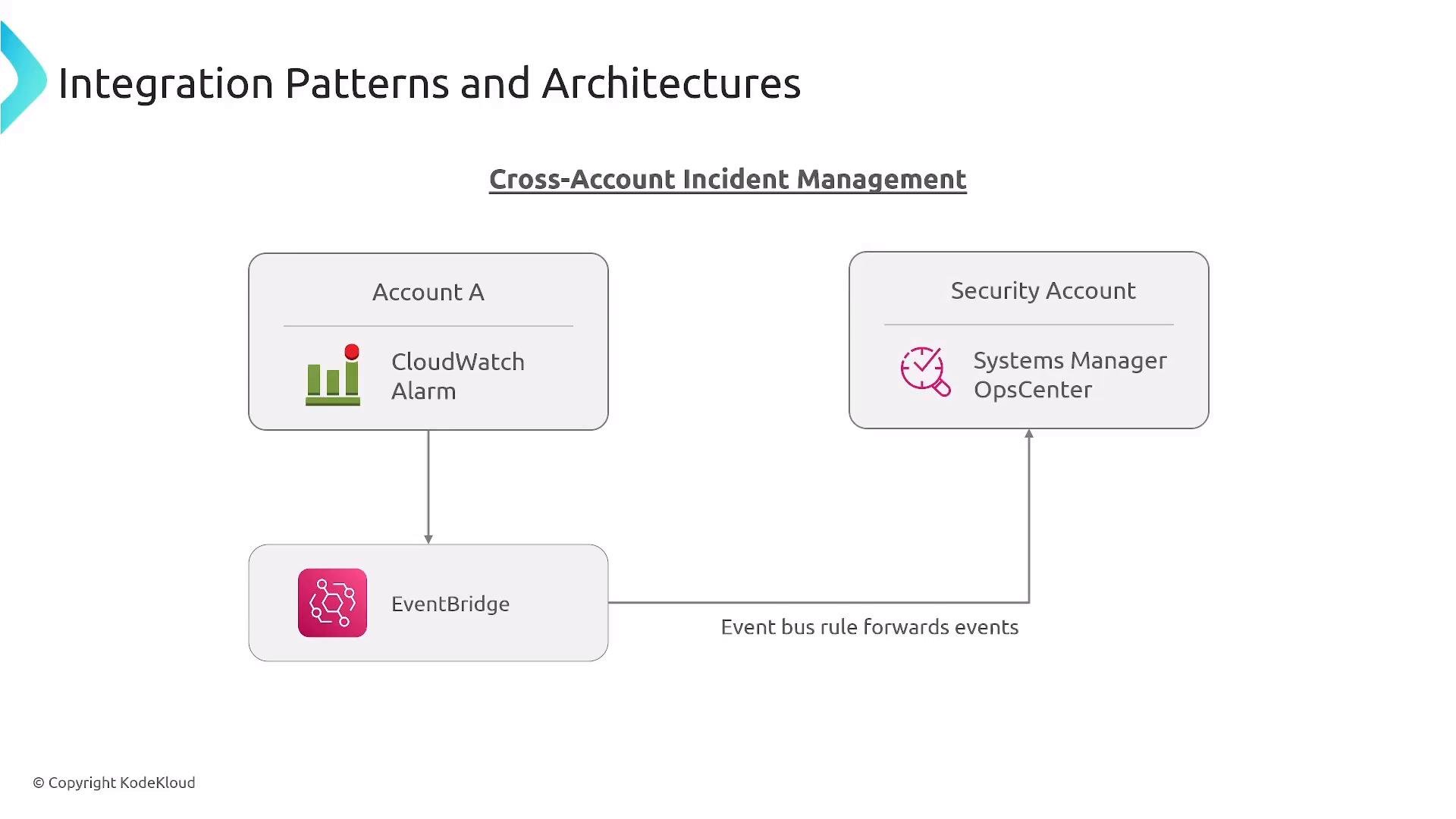
Cross-account incident management
For multi-account environments, consolidate incidents into a central security or SRE account using EventBridge event buses and rules. This simplifies cross-account policies and enables forwarding to centralized tools such as Systems Manager OpsCenter.- Example centralization flow:
Account A CloudWatch Alarm -> EventBridge -> Central Event Bus -> Systems Manager OpsCenter
Best practices and operational considerations
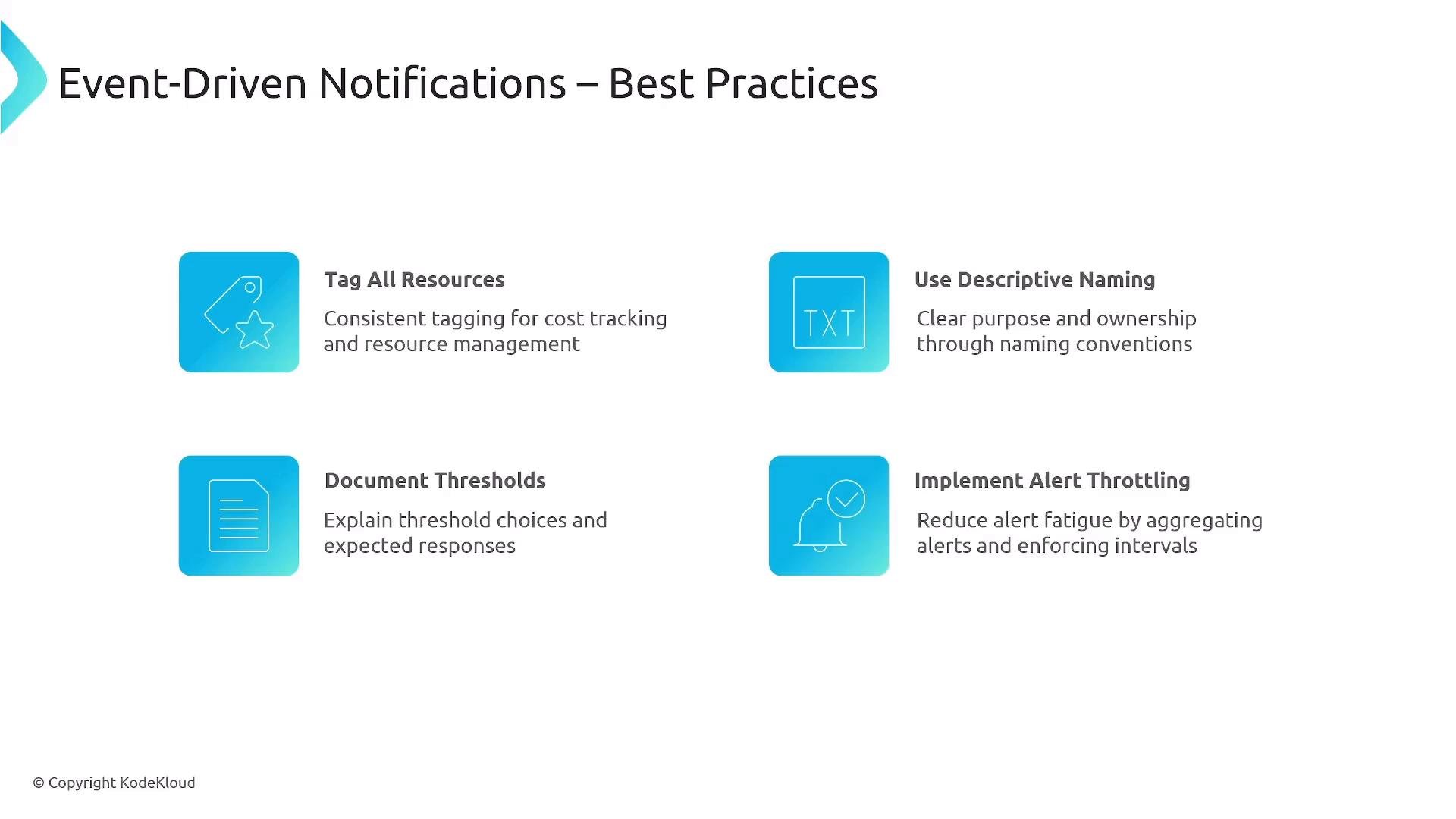
- Configure Dead-Letter Queues (DLQs) for unprocessed messages so you can inspect failures and reprocess events later.
- Implement retries with exponential backoff to handle transient errors and to protect downstream systems from overload.
- Capture logs, metrics, and distributed traces. Validate automated responses with failure testing and Chaos Engineering exercises.
- Tag resources and use descriptive naming; document thresholds and remediation logic to avoid organizational amnesia.
- Implement alert throttling to prevent alert fatigue and keep notifications actionable.
- Choose DLQ placement thoughtfully: at the SNS topic for delivery failures or at the processing target (Lambda/SQS) for processing failures.
Exam tips and common pitfalls
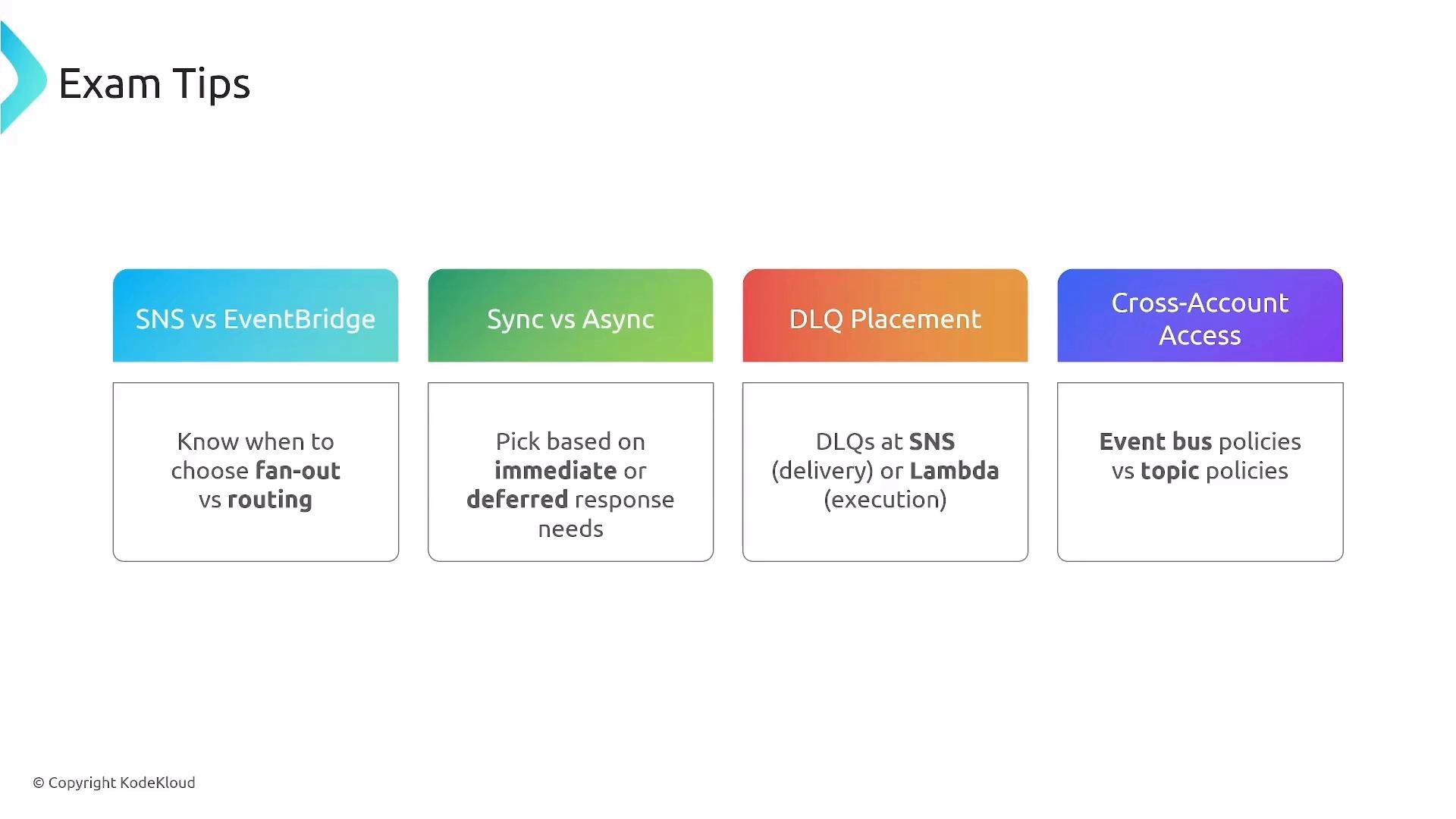
- SNS vs EventBridge: remember SNS provides protocol-based fan-out (email, SMS, HTTP/S); EventBridge supports JSON event pattern matching, transformations, replay, and cross-account routing.
- Sync vs async: decide if remediation must be synchronous (immediate) or can run asynchronously (queued).
- DLQ placement: choose whether DLQ should capture delivery failures (
SNS) or processing failures (Lambda/SQS). - Cross-account access: EventBridge event buses are easier to manage than many SNS topic policies across accounts.
- Scale and volume: EventBridge is typically better for high-volume, multi-account routing.
- Watch for missing DLQs, incorrect IAM/resource policies, or confusion between EventBridge “targets” and SNS “protocols”.
Permissions and security commonly cause failures. Ensure IAM roles and resource policies allow EventBridge and SNS to invoke targets, verify cross-account policies when routing events between accounts, and validate DLQ and retry settings.
Summary
- Use CloudWatch alarms as event sources. Choose SNS for simple fan-out and EventBridge for intelligent routing, replay, and cross-account scenarios.
- Use Lambda or Step Functions when native targets cannot meet your remediation or integration needs.
- Design for reliability: DLQs, retries/backoff, observability (logs/metrics/traces), and regular failure testing.
- Tag and document everything so ownership and intent persist across personnel changes.
Next steps and references
Hands-on demos and labs will help you build these patterns and validate automated remediation workflows. Further reading:- AWS EventBridge documentation
- Amazon SNS documentation
- AWS Systems Manager OpsCenter
- Chaos Engineering course