

- Validating both development and operations expertise on AWS: this course balances application delivery, automation, and operational excellence.
- A stronger focus on automation and integration compared with associate-level operational certifications (for example, AWS Certified CloudOps Engineer – Associate focuses more on operational management).
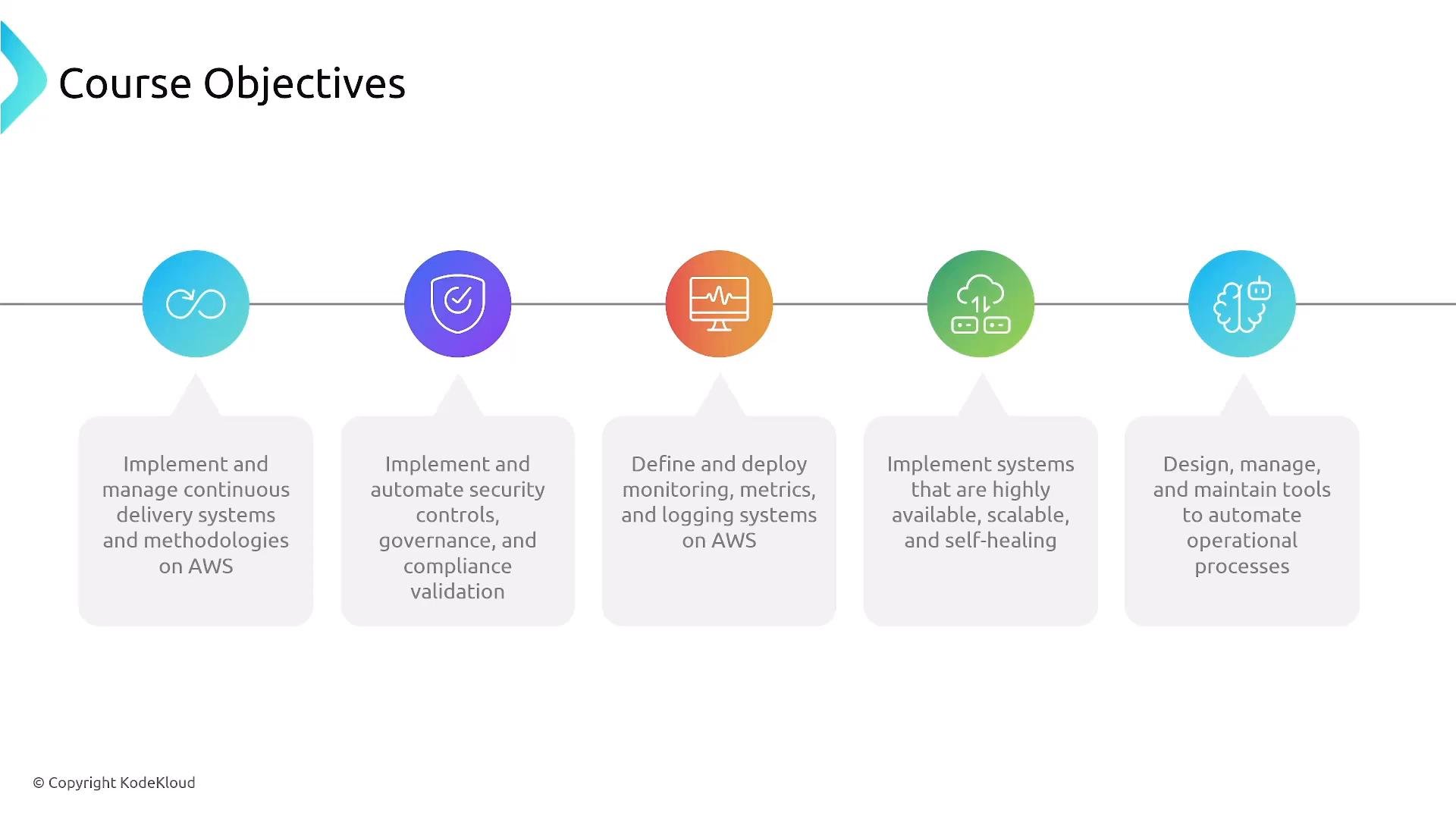
- Implementing continuous delivery systems and CI/CD pipelines (CodePipeline, CodeBuild, deployment patterns).
- Automating security and compliance checks across the delivery lifecycle.
- Designing and operating monitoring, observability, and incident response systems.
- Building highly available, fault-tolerant, and self-healing architectures.
- Automating operational processes using Infrastructure as Code (CloudFormation, CDK) and deployment automation.
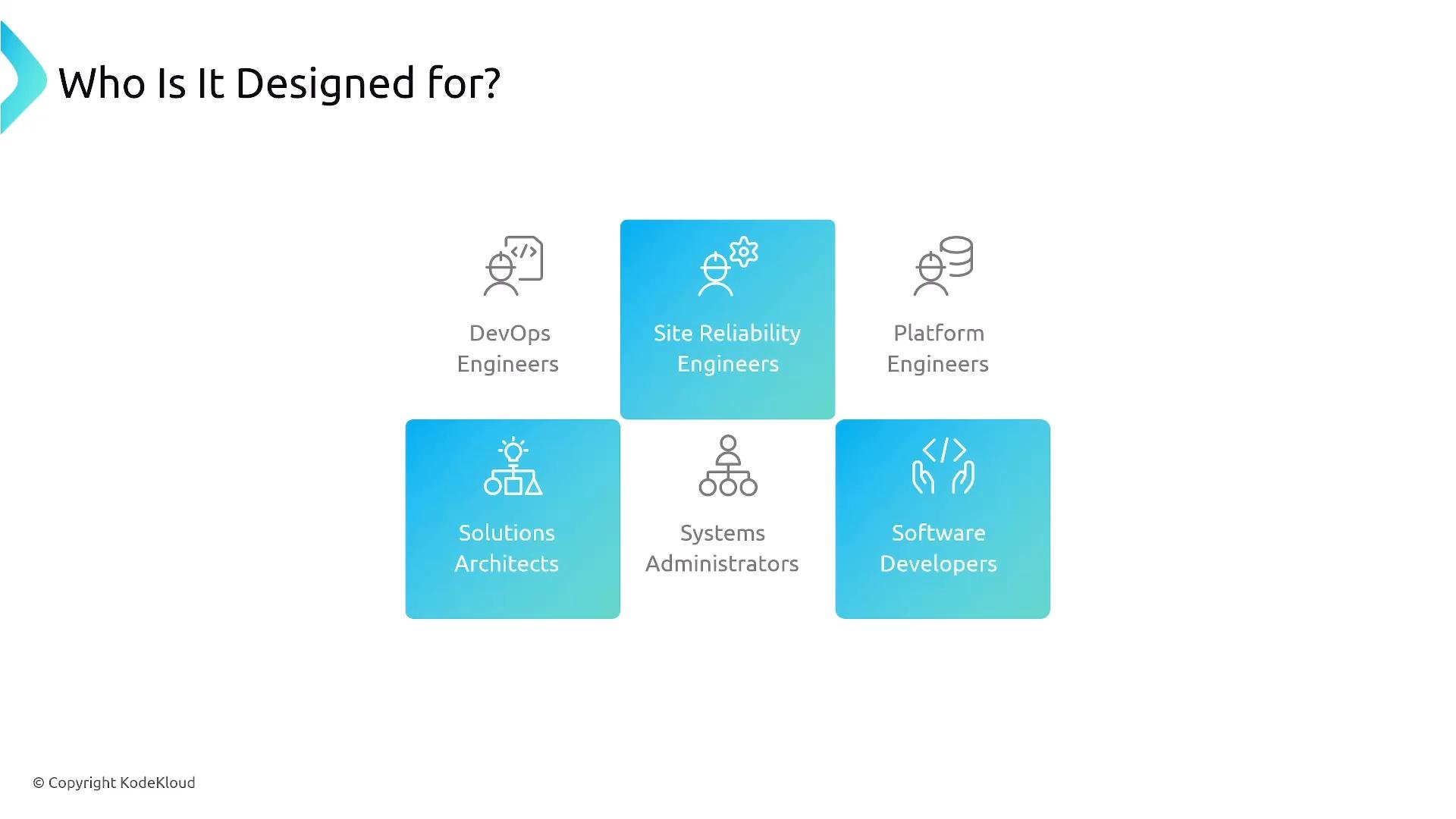
- DevOps engineers and site reliability engineers (SREs)
- Platform engineers responsible for internal developer platforms and CI/CD
- Solutions architects seeking a deeper understanding of deployment automation
- Systems administrators and software developers transitioning to DevOps responsibilities
- This is not an entry-level course. Recommended baseline experience:
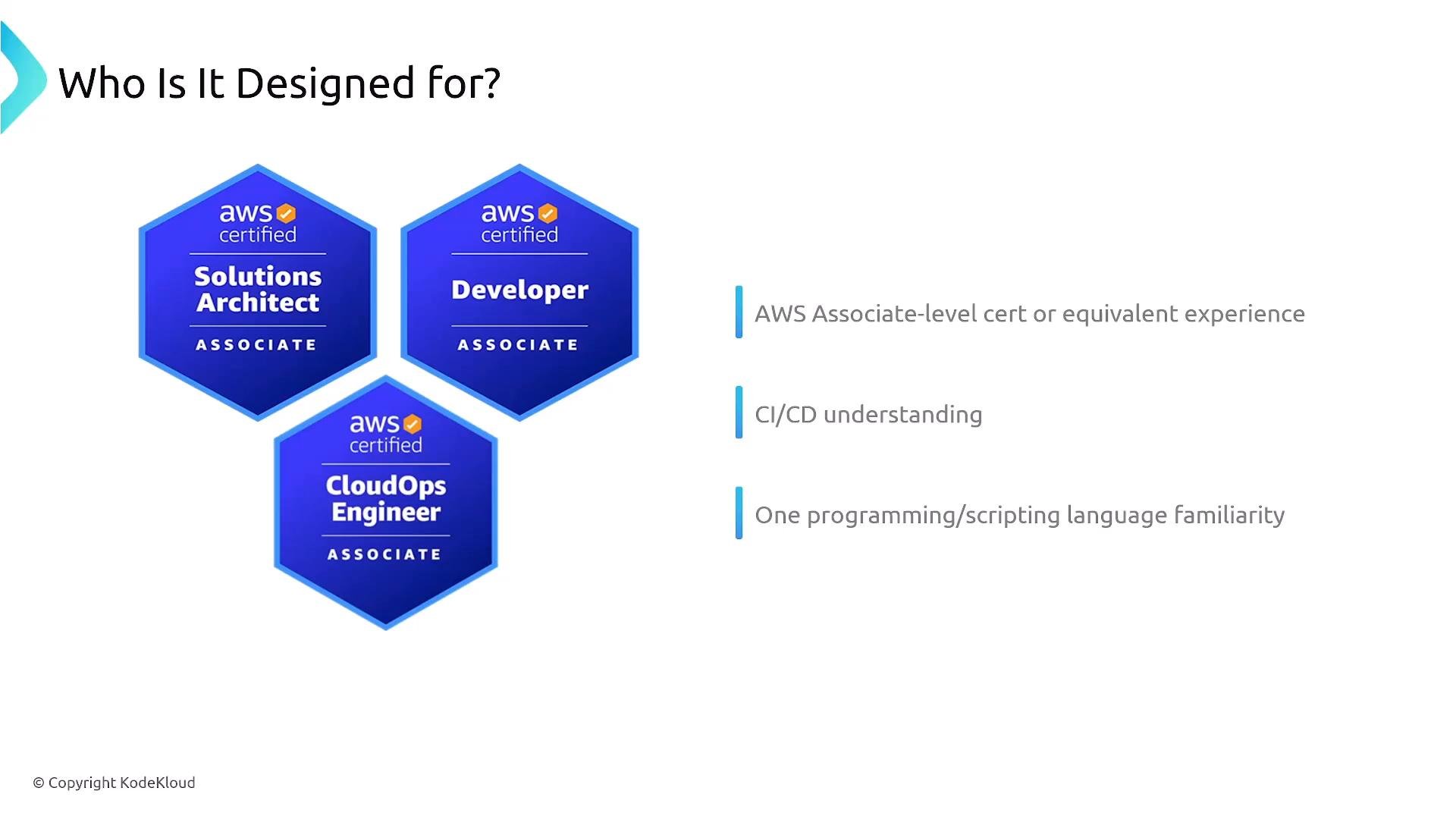
- Hands-on AWS experience or an associate-level certification such as Solutions Architect – Associate or Developer – Associate.
- Working knowledge of CI/CD concepts and at least one scripting or programming language.
- Familiarity with core AWS services (IAM, EC2, S3, VPC, CloudWatch) and basic networking concepts.
- Students typically come from either an operations background learning development and automation, or from development backgrounds expanding into operations and platform engineering — both paths are valid.
Recommended baseline: AWS Associate-level certification or equivalent hands-on experience, a solid understanding of CI/CD, and familiarity with at least one programming or scripting language.
- If you lack operational fundamentals, consider the AWS Certified CloudOps Engineer – Associate course first — it builds a strong operational foundation many students find helpful before this professional-level track.
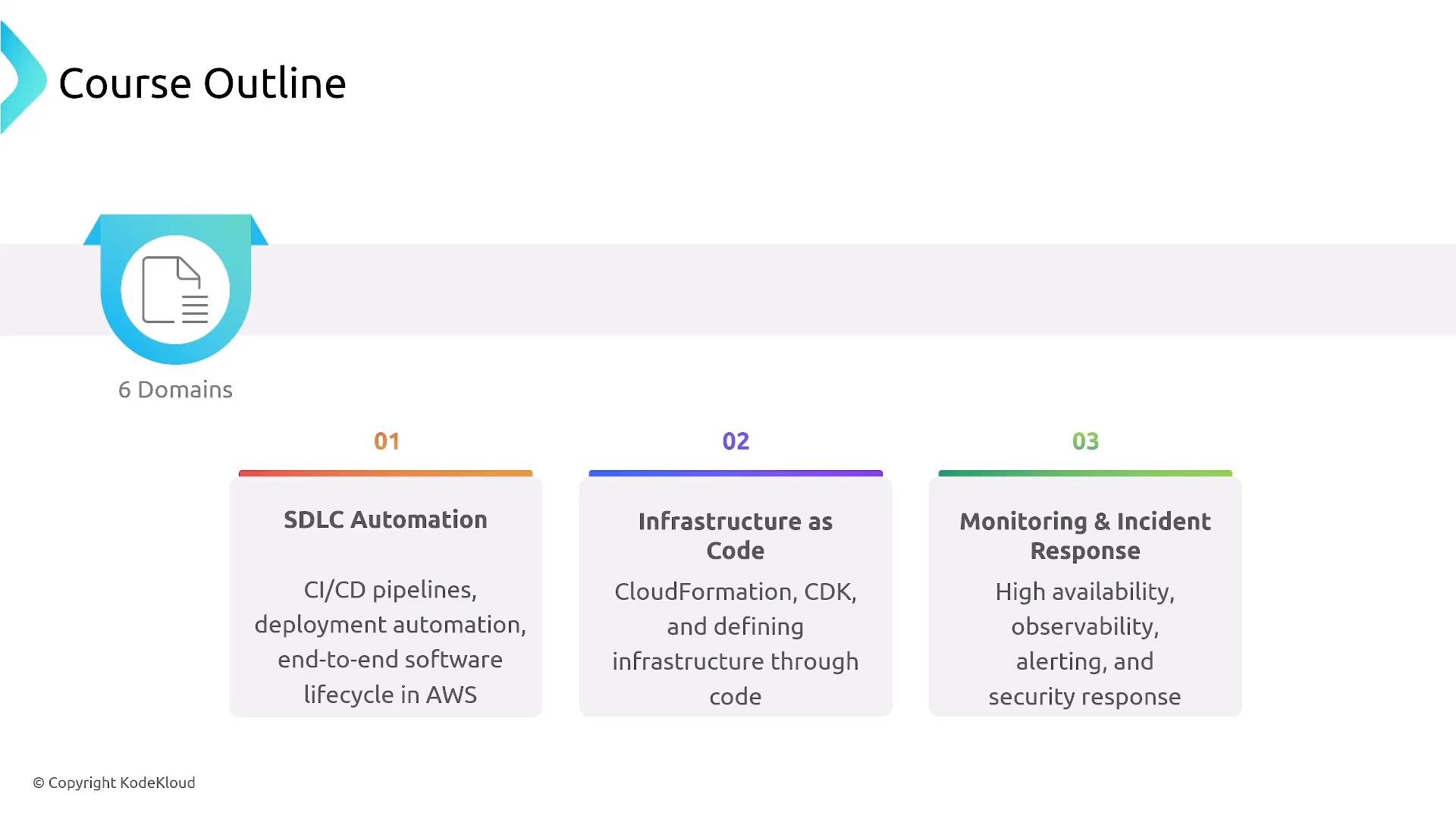
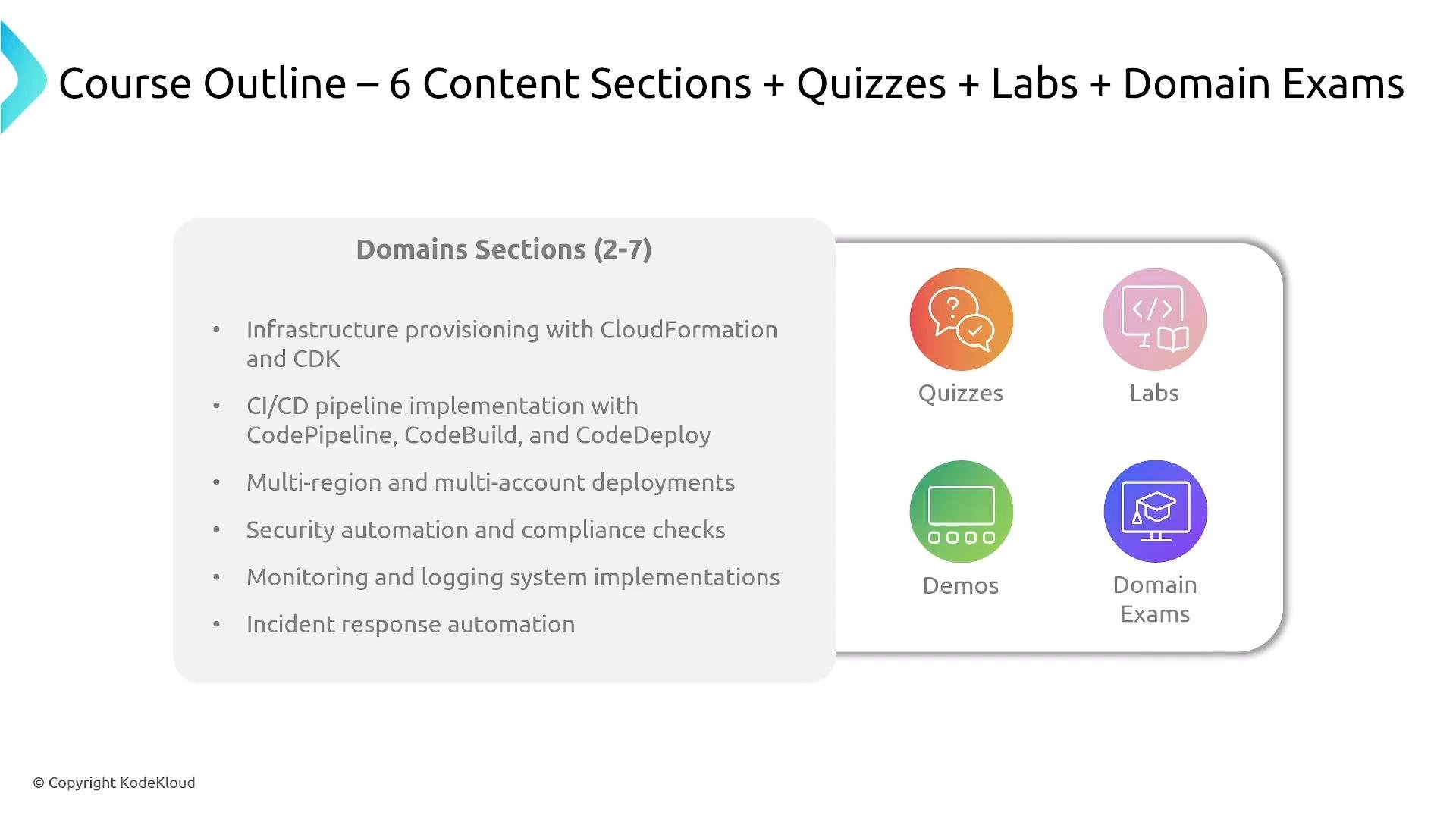
- The course content is organized to align with the six official AWS DevOps Professional exam domains. To help learning, the material is presented in eight sections: an opening section, six domain-aligned content sections, and a closing section.
- Key domain focus areas include:
- SDLC automation (CI/CD and deployment automation)
- Infrastructure as Code (CloudFormation, CDK)
- Monitoring & incident response (observability, metrics, logging, alerting)
- Security automation and compliance
- Multi-account and multi-region deployments (governance and scalability)
- Resilient architectures and fault-tolerance
- Lectures for core concepts and best practices
- Hands-on labs and demos to practice real-world tasks
- Quizzes and domain exams to validate progress
- Practice questions that reflect the exam’s style and reasoning
Assessments, labs, and learning experience
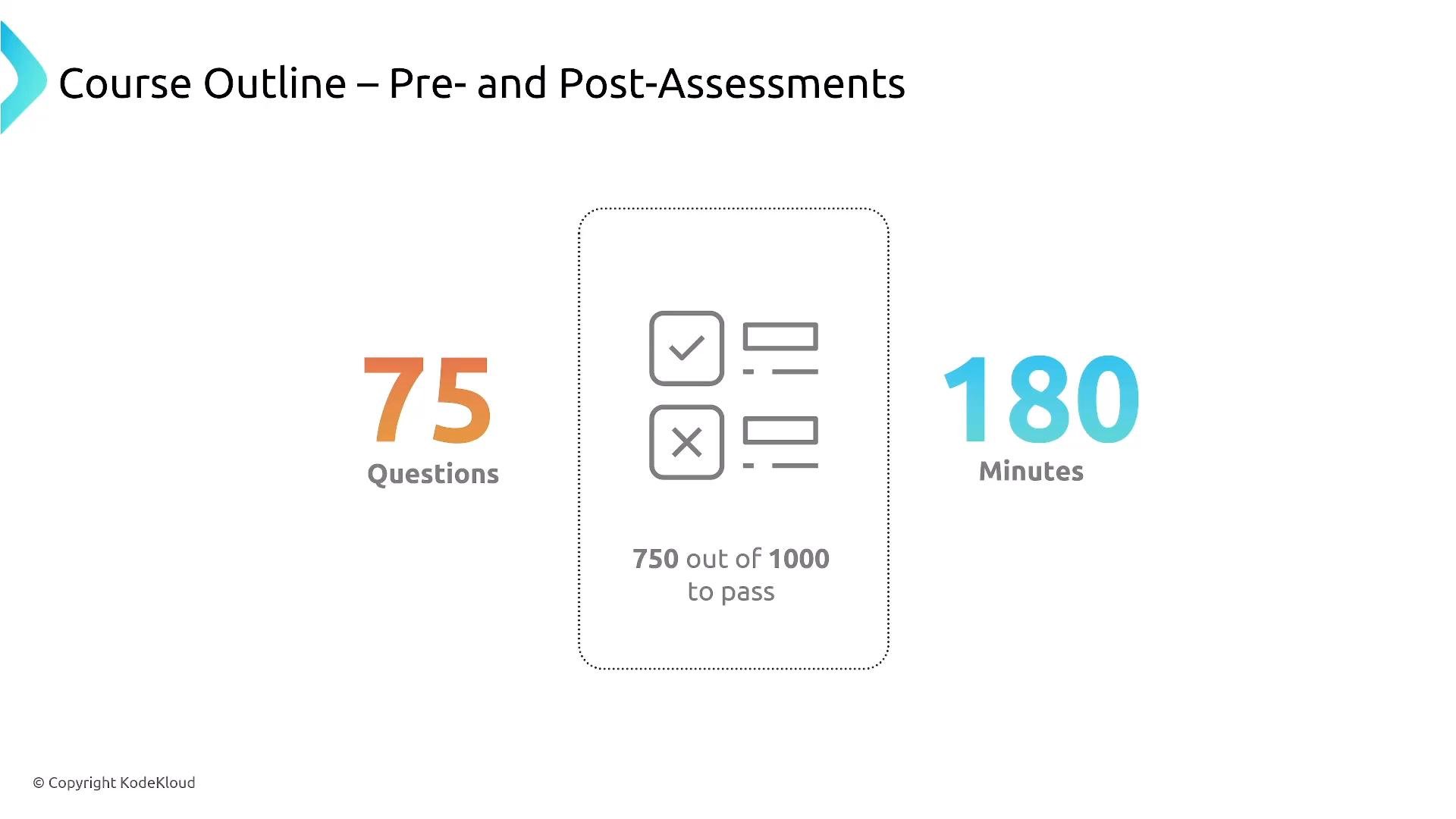
- You will have pre- and post-assessments to benchmark skills and improvement.
- Quizzes and hands-on labs reinforce concepts through practical tasks.
- Practice exams and domain-specific tests mirror the certification format to build confidence.
- Labs include debugging and troubleshooting scenarios to sharpen real-world problem solving.
- AWS DevOps Engineer – Professional exam overview:
- 75 questions
- 180 minutes
- Scored on a scaled basis (for example, many references use 750/1000 as a pass threshold)
- Format: knowledge-based multiple-choice and multiple-response questions (not performance-based).
This is an advanced certification. Consistent study, spaced repetition, and frequent hands-on practice are more effective than last-minute cramming. Schedule regular lab time and practice exams.
- Comprehensive coverage of the official exam domains (updated content).
- Balanced mix of conceptual lectures and practical labs to build both knowledge and hands-on skills.
- Quizzes, domain exams, and full practice exams to assess readiness.
- Practical implementation guidance focused on automating cloud operations — skills you can apply immediately in production environments.
- Be patient and consistent: hands-on practice and spaced repetition produce lasting results.
- Focus on labs to internalize automation patterns, observability practices, and resilient design.
- Use the pre-assessment to determine your starting point and the post-assessment to measure improvement.
- AWS Certified CloudOps Engineer – Associate course (recommended)
- AWS Solutions Architect – Associate course
- AWS Developer – Associate course