- SDLC automation and CI/CD pipelines
- Infrastructure as code and configuration management
- Designing resilient, highly available systems
- Monitoring, observability, and centralized logging
- Incident response and post-incident analysis
- Security, compliance, and governance at scale
Study & test-taking strategy:
- Read each scenario carefully; identify requirements, constraints, and the business context before choosing an answer.
- Use elimination: remove clearly wrong answers first, then compare remaining options.
- Pay attention to priority keywords such as “least downtime,” “lowest operational overhead,” or “most secure.”
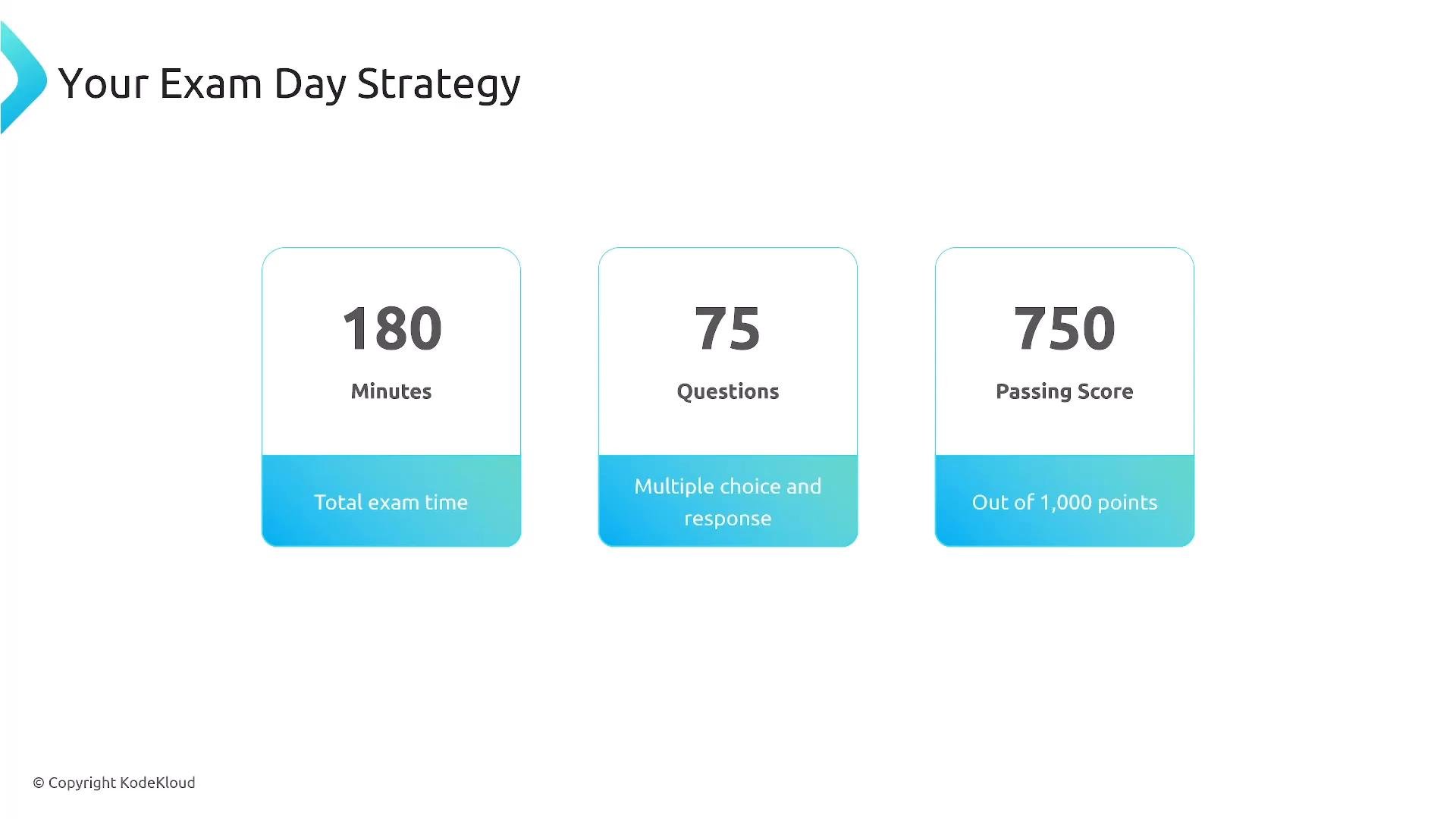
- Time management: with 180 minutes for 75 questions you have generous time, but don’t spend too long on any single question — flag and return to tough items.
- Build exam stamina by taking full-length, timed practice exams that mirror the real format.
Use practice exams to surface weak domains; pair that with targeted review of AWS documentation and re:Invent session recordings to ensure your answers align with AWS best practices.
- Claim your Credly badge and update your LinkedIn profile.
- Share your achievement with your network — it’s a meaningful career milestone.
- Apply your new skills in production projects or home labs to reinforce learning.
- Take a short break, then plan your next learning goal (for example, a Generative AI course or another AWS certification that complements DevOps).
- Give back: mentor peers, answer questions in community forums, and create tutorials or write-ups.
Retakes are common. There is typically a 14-day waiting period before retaking the exam. Use any diagnostic feedback to focus your study on weaker domains.
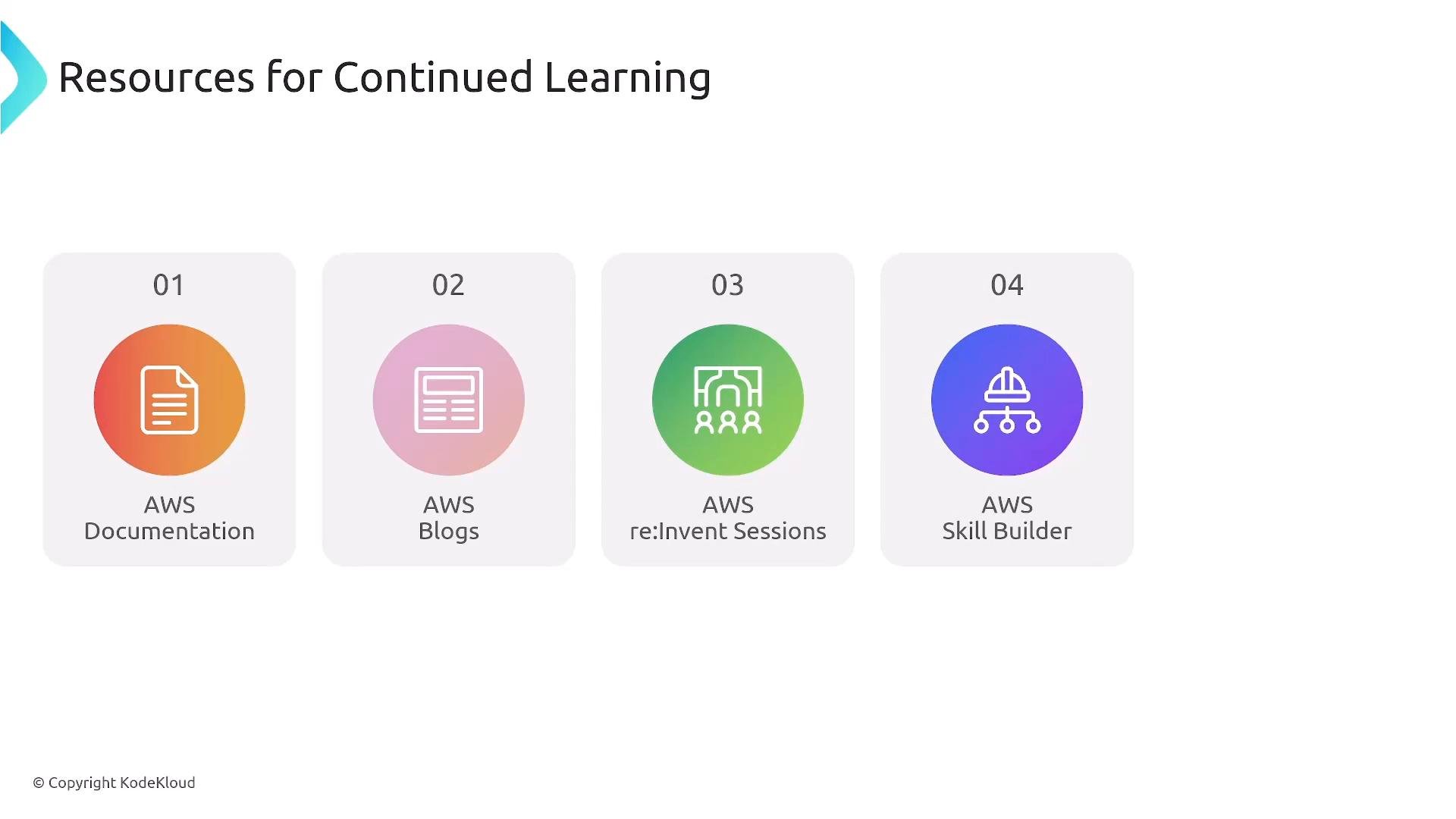
- AWS Documentation: https://docs.aws.amazon.com/
- AWS Blogs: https://aws.amazon.com/blogs/
- AWS re:Invent sessions (recordings): https://reinventvideos.com/
- AWS Skill Builder: https://skillbuilder.aws/
- Credly (badge management): https://www.credly.com/
- Community forums and study groups (e.g., Discord, Reddit, professional Slack communities)
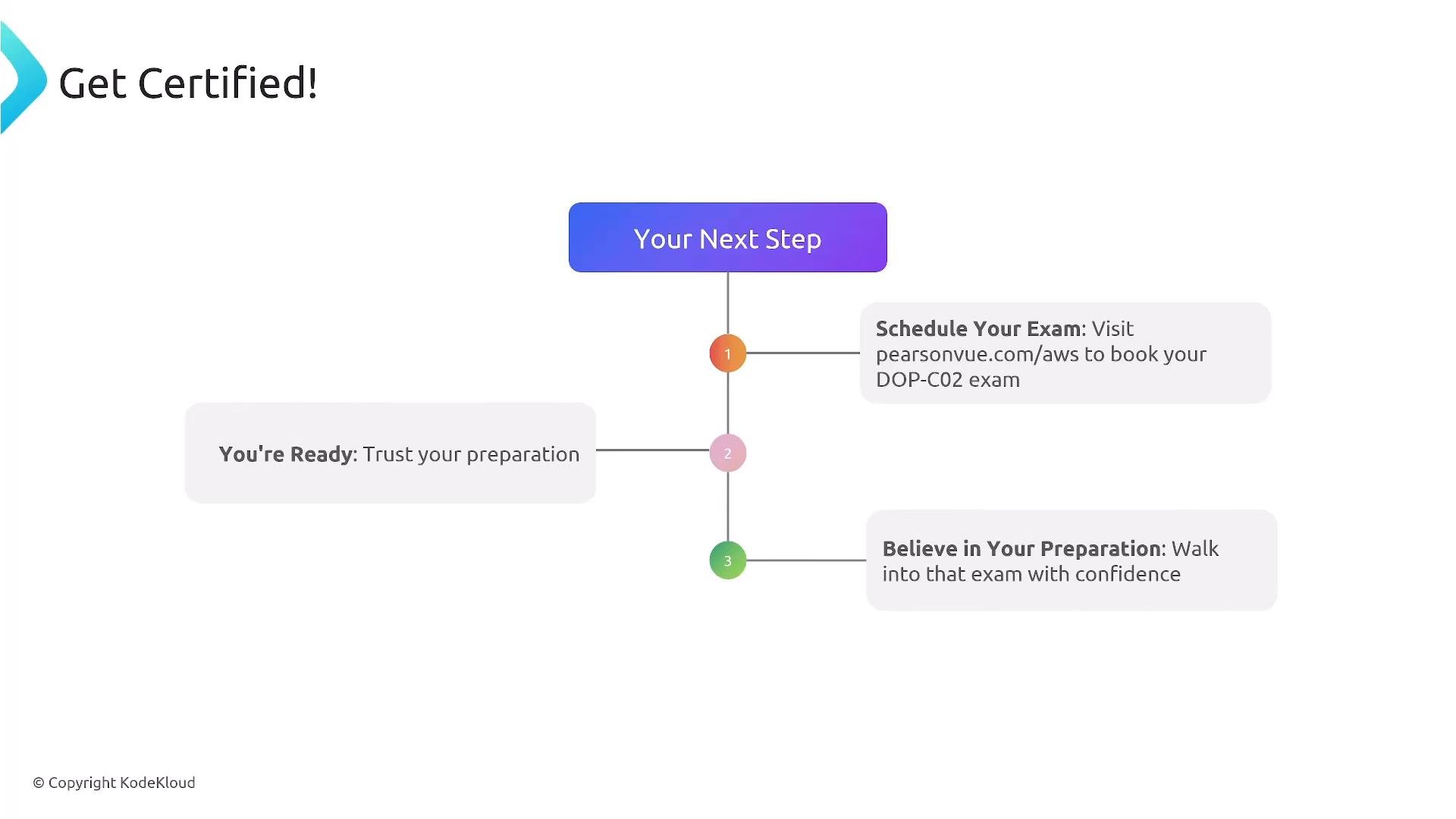
- Schedule your exam when you feel consistently scoring well on practice tests.
- Trust your preparation, manage your time, and bring a calm, methodical approach to each scenario.
- Share your experience with the community — your feedback helps others prepare.