

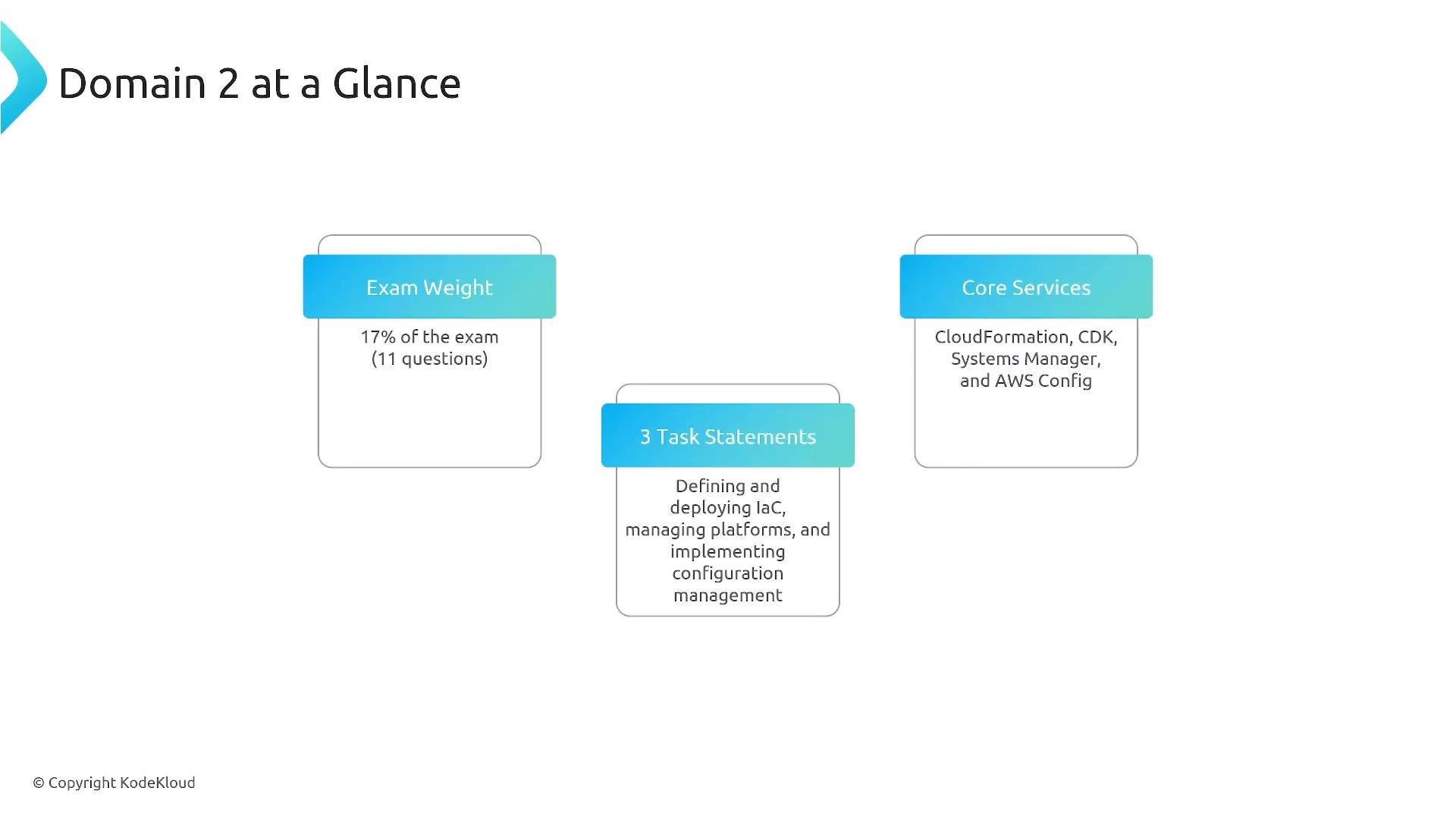
Domain 2 is 17% of the exam (about 11 of 65 questions). Focus on what each service does, common integration points, and design patterns used for multi-account governance, configuration drift prevention, and automated remediation.
CloudFormation fundamentals
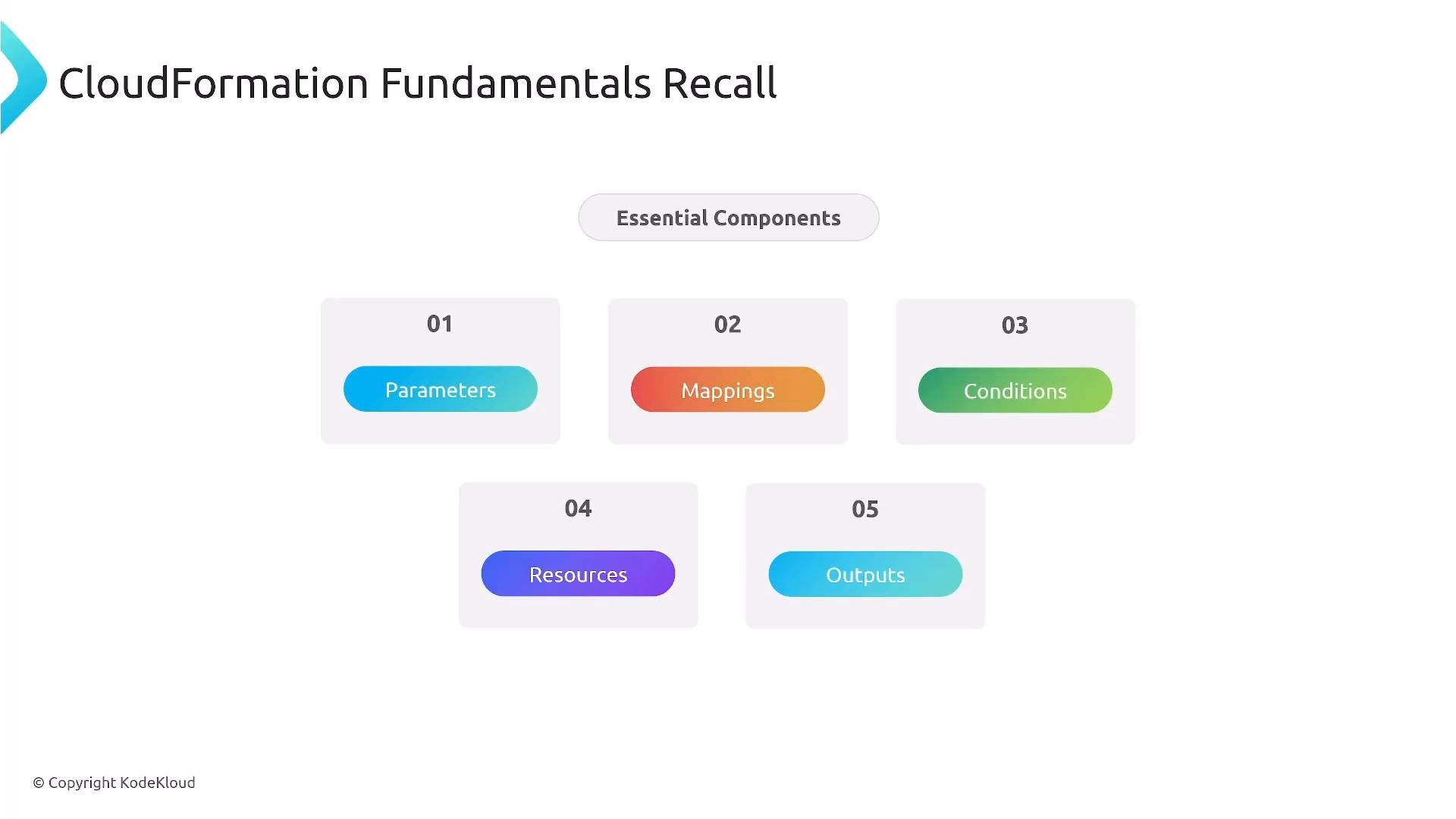
CloudFormation converts a declarative template into a stack and then creates the live resources described in that stack. The typical flow is: Template → CloudFormation engine → Stack → Resources Templates are commonly authored in YAML or JSON. Understand the logical grouping, dependency handling, and change set lifecycle so you can reason about safe updates, rollbacks, and drift.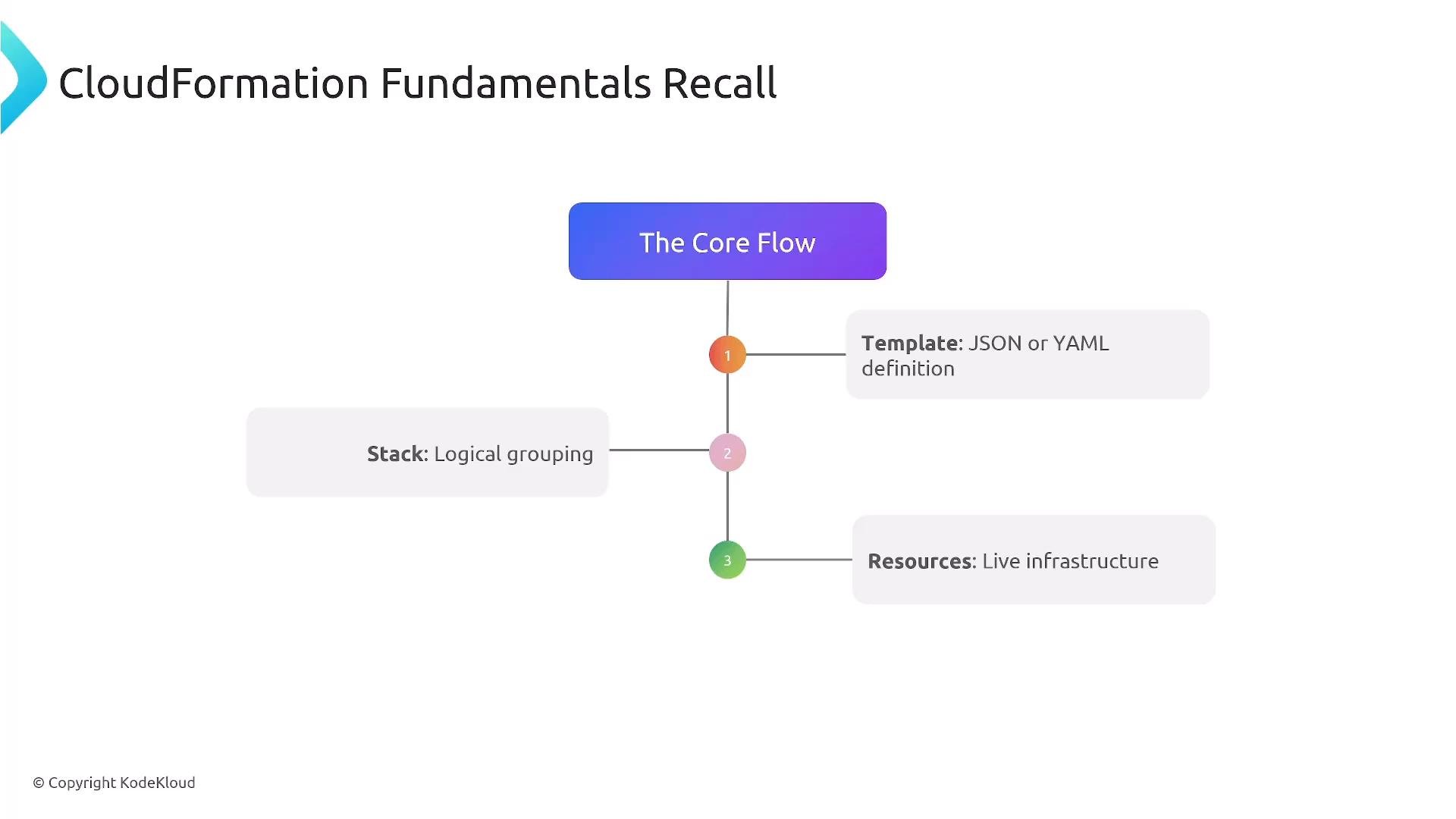
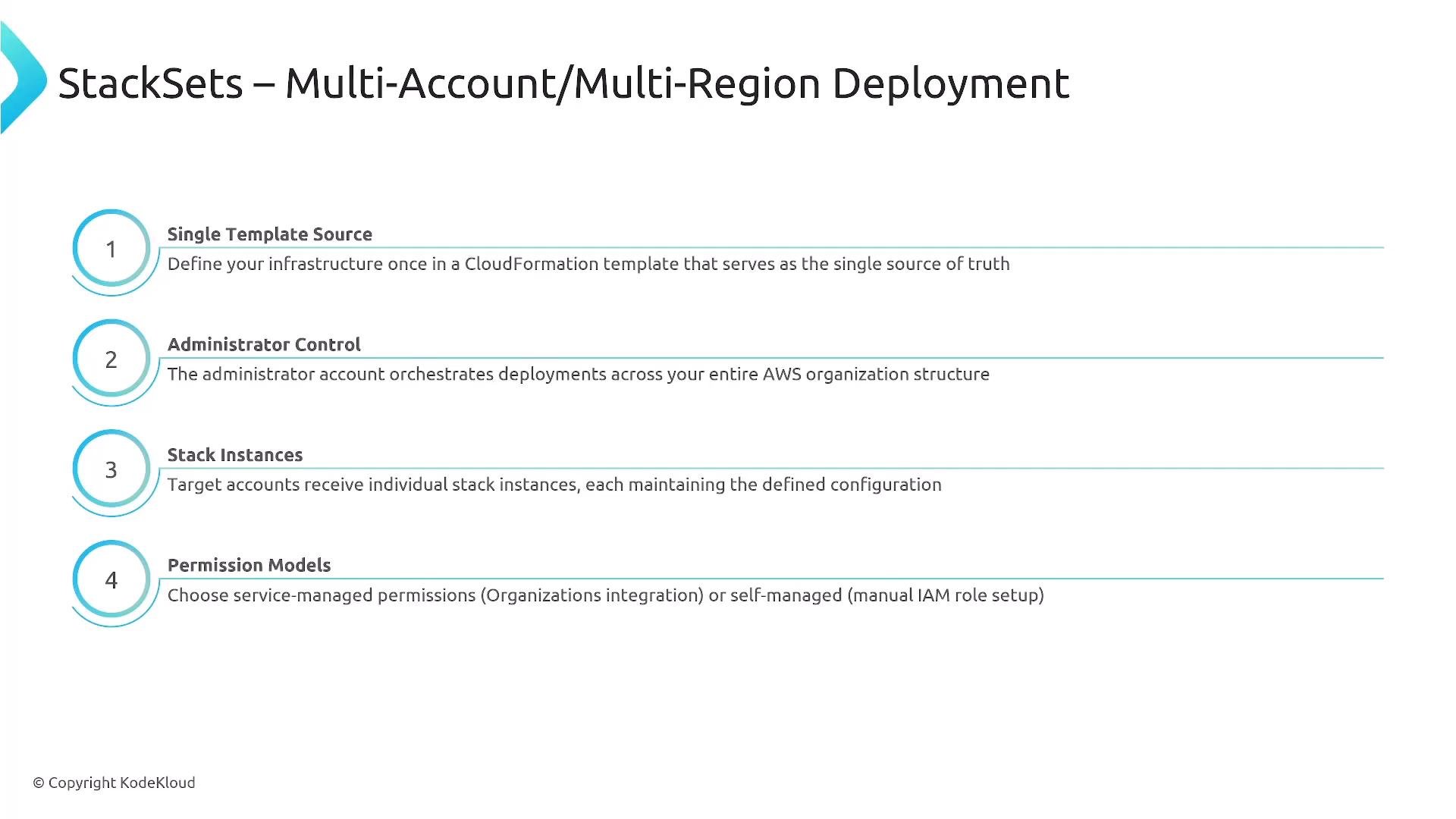
- StackSets: deploy a single CloudFormation template across multiple accounts and regions for centralized, consistent provisioning.
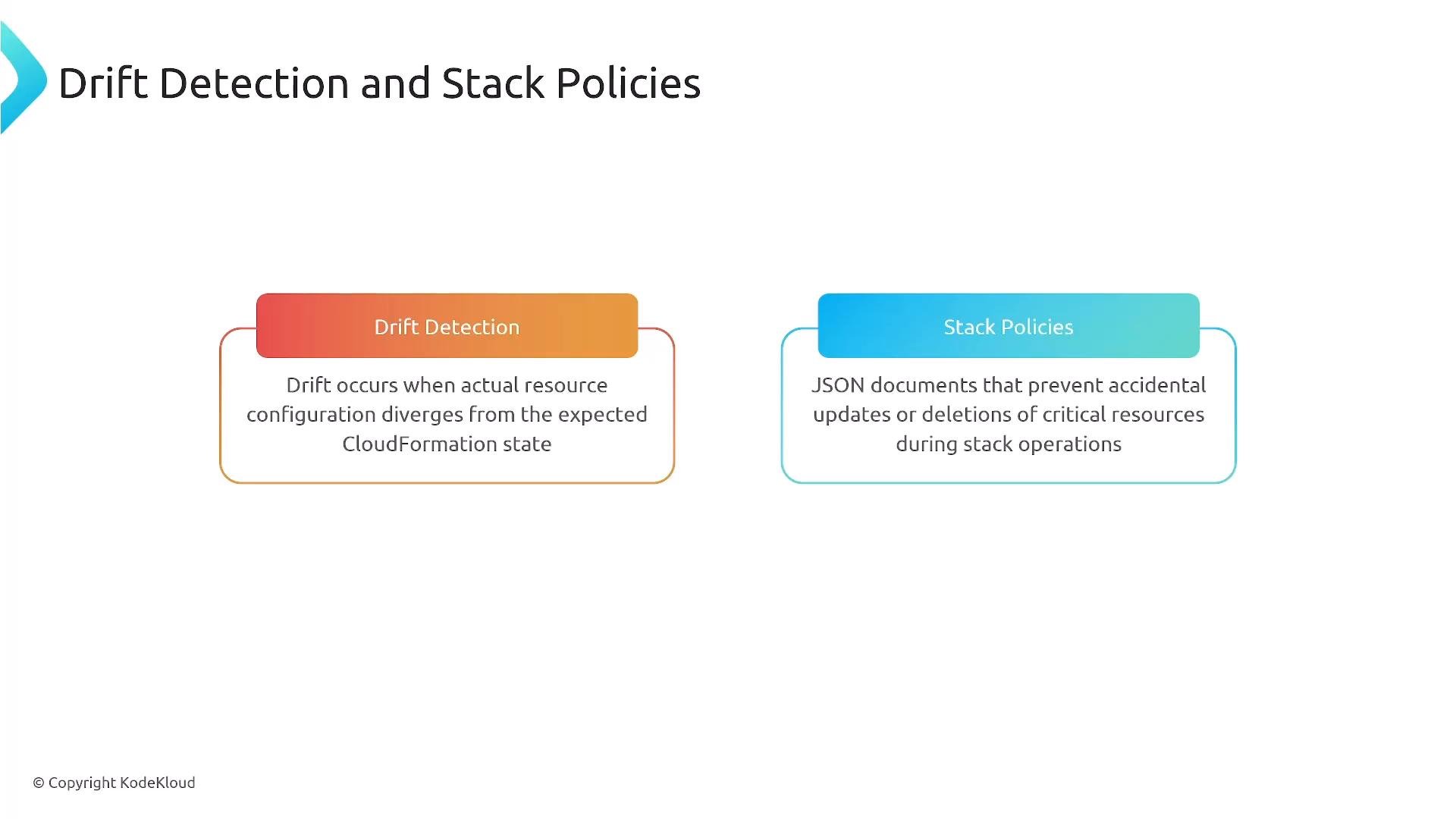
- Drift detection: compares live resource configuration against the template; statuses include
IN_SYNC,MODIFIED,DELETED,NOT_CHECKED. - Stack policies: JSON policies that protect critical resources during updates (they can be applied and intentionally overridden when necessary).
AWS CDK (Cloud Development Kit)
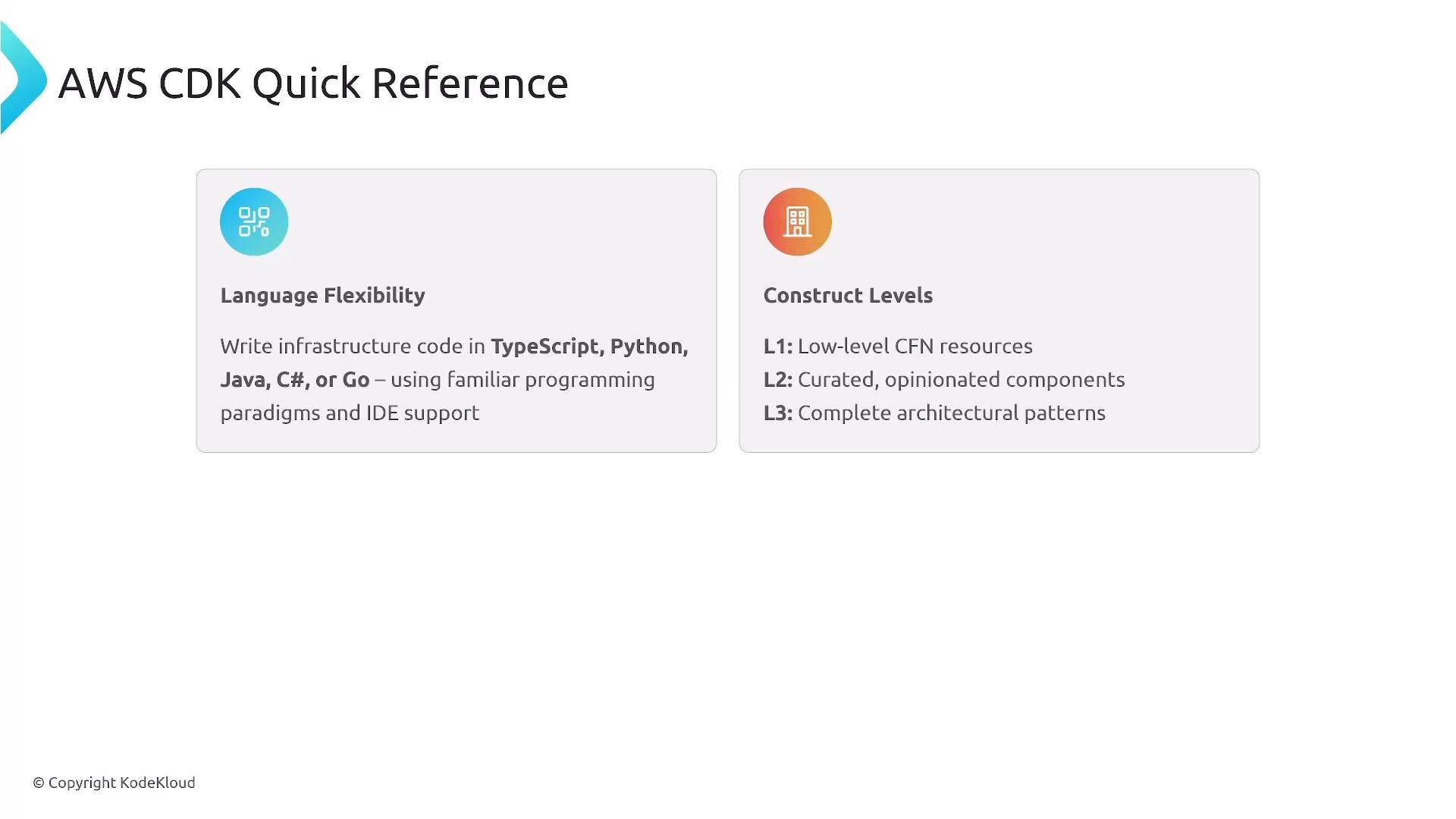
The AWS CDK enables programmatic, higher-level definitions of CloudFormation resources using familiar languages (TypeScript, Python, Java, C#, Go). The CDK synthesizes code into CloudFormation templates and offers construct libraries at different abstraction layers:- L1: low-level CloudFormation resources (1:1 coverage)
- L2: richer, opinionated constructs (convenience for common patterns)
- L3: complete patterns or solutions for common architectures
Systems Manager (SSM) — key subservices
Systems Manager is a suite for configuration, operations, and runtime management. Know the core subservices and typical uses: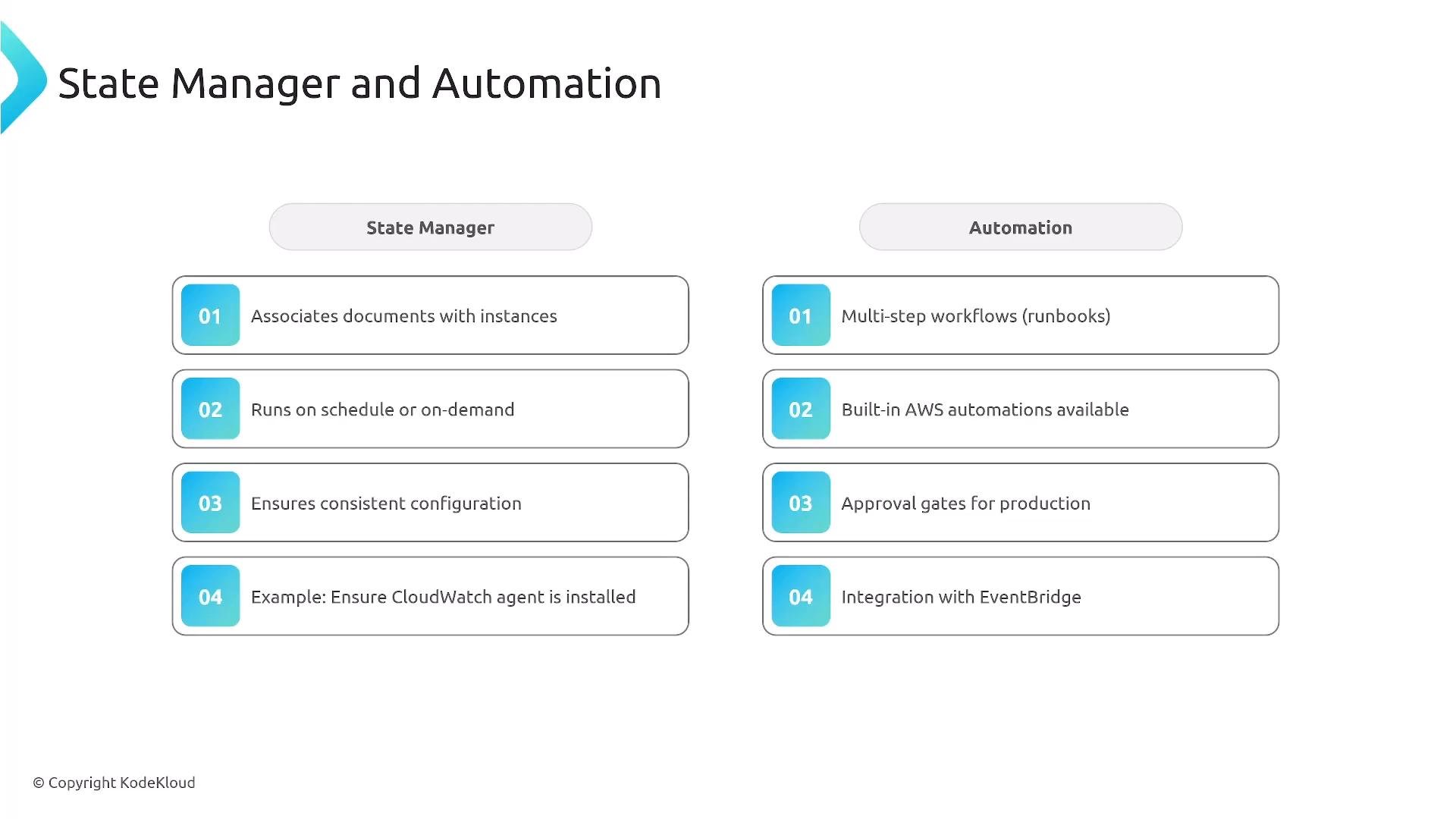
AWS Config — compliance as code
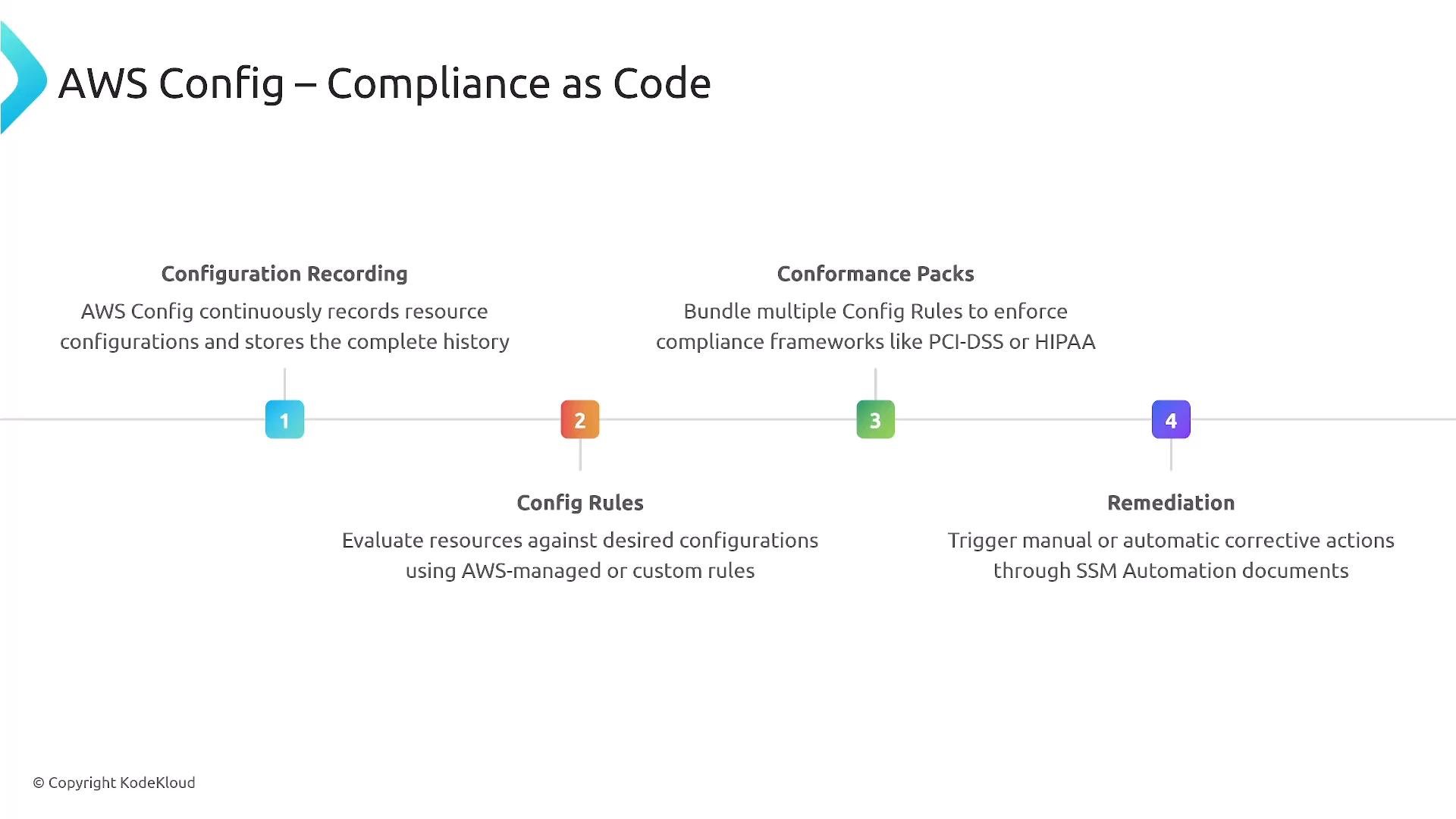
AWS Config continuously records resource configurations, evaluates them against rules, and surfaces compliance results. Typical workflow: Configuration recording → Rule evaluation → Compliance / Non‑compliance → Remediation Key concepts:- Config Rules: Managed or custom checks that evaluate resource state.
- Conformance Packs: Bundled sets of rules + remediation aligned to compliance frameworks (PCI, HIPAA, CIS).
- Remediation: Often implemented by Systems Manager Automation documents to apply fixes automatically.
Control Tower and Organizations
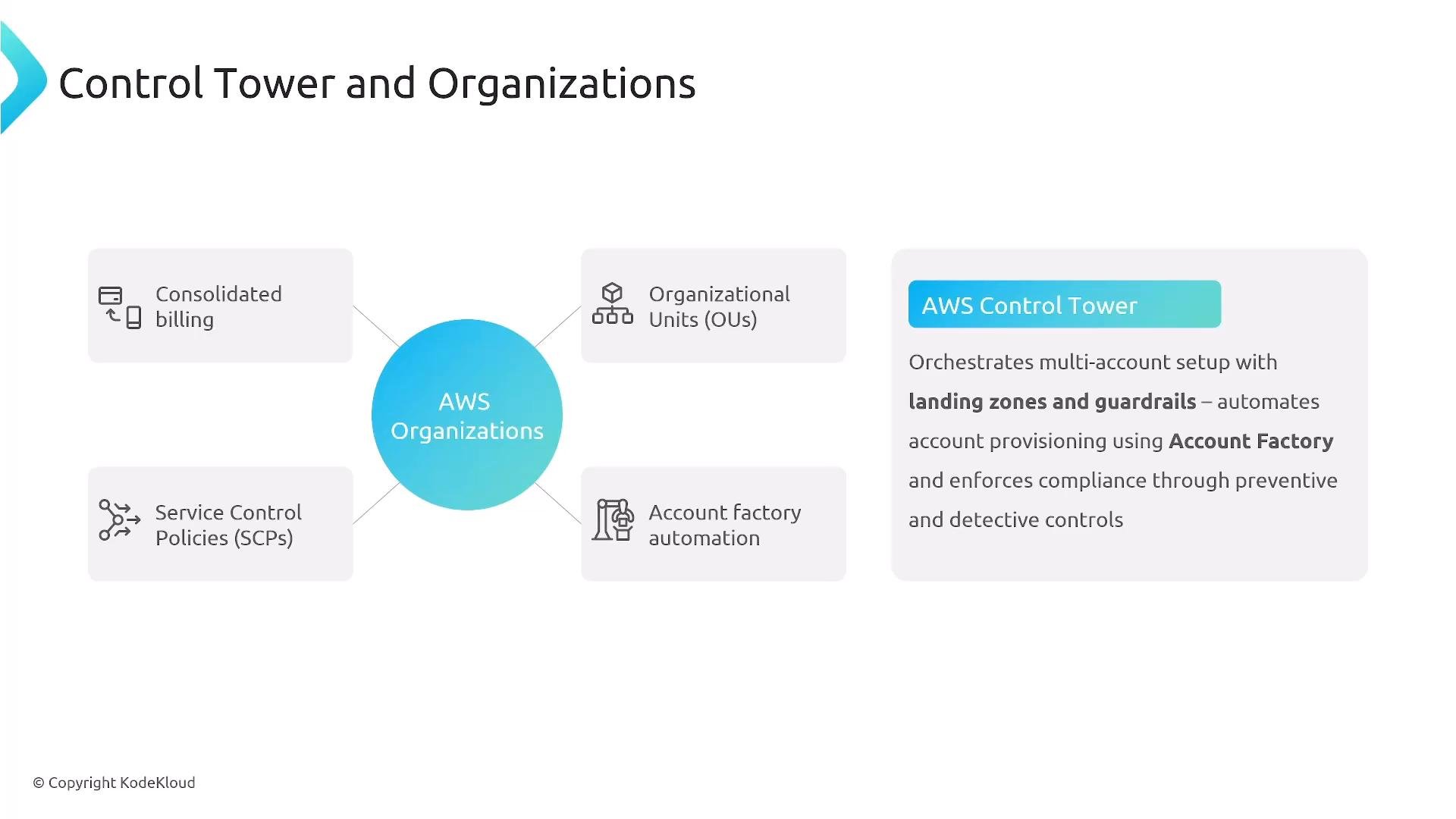
AWS Control Tower orchestrates a best-practice multi-account landing zone using AWS Organizations. Typical responsibilities:- Automated account provisioning (Account Factory)
- Establishing Log Archive and Audit accounts
- Configuring Single Sign-On (SSO)
- Enforcing preventive and detective guardrails via Service Control Policies (SCPs) and Config rules
Service Catalog
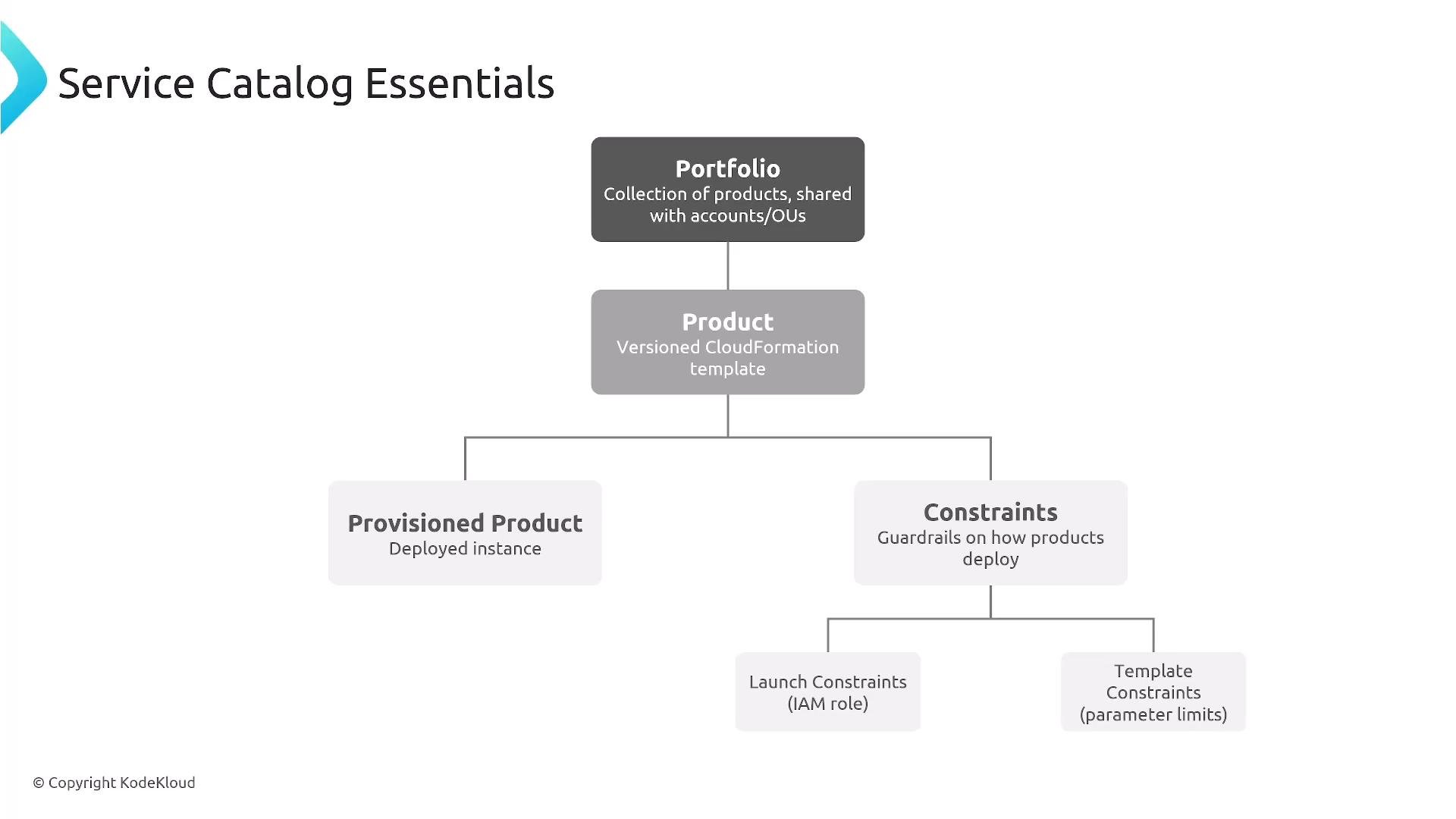
Service Catalog lets platform teams curate and share approved infrastructure and application templates as products. Key concepts:- Portfolio: A collection of products (templates or provisioning resources)
- Product: Versioned template (commonly CloudFormation)
- Provisioned Product: A deployed instance of a product
- Constraints: Governance controls applied to product provisioning
AppConfig vs Parameter Store
Understand when to use each:- Parameter Store (SSM): Secure, hierarchical store for static configuration values and secrets (supports
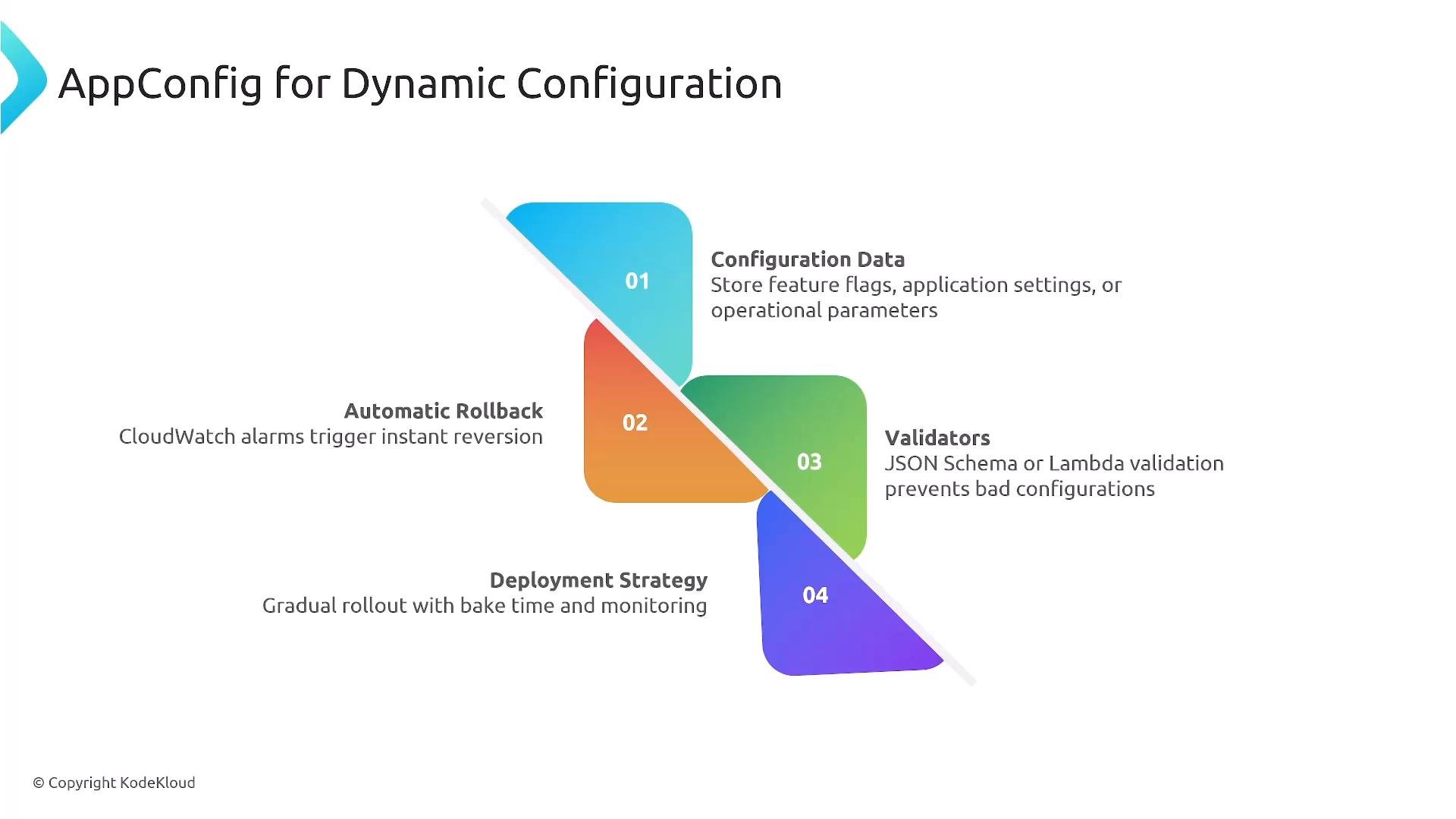
SecureStringfor encryption). Use it for static app settings, secrets management, or cross-account retrieval via IAM. - AppConfig: Runtime configuration management for dynamic controls like feature flags, with validators and safe deployment strategies (can do gradual rollouts, automatic rollback based on metrics or anomalies). Use AppConfig when you need controlled, validated runtime configuration changes.
Patterns to recognize (Design & Operational)
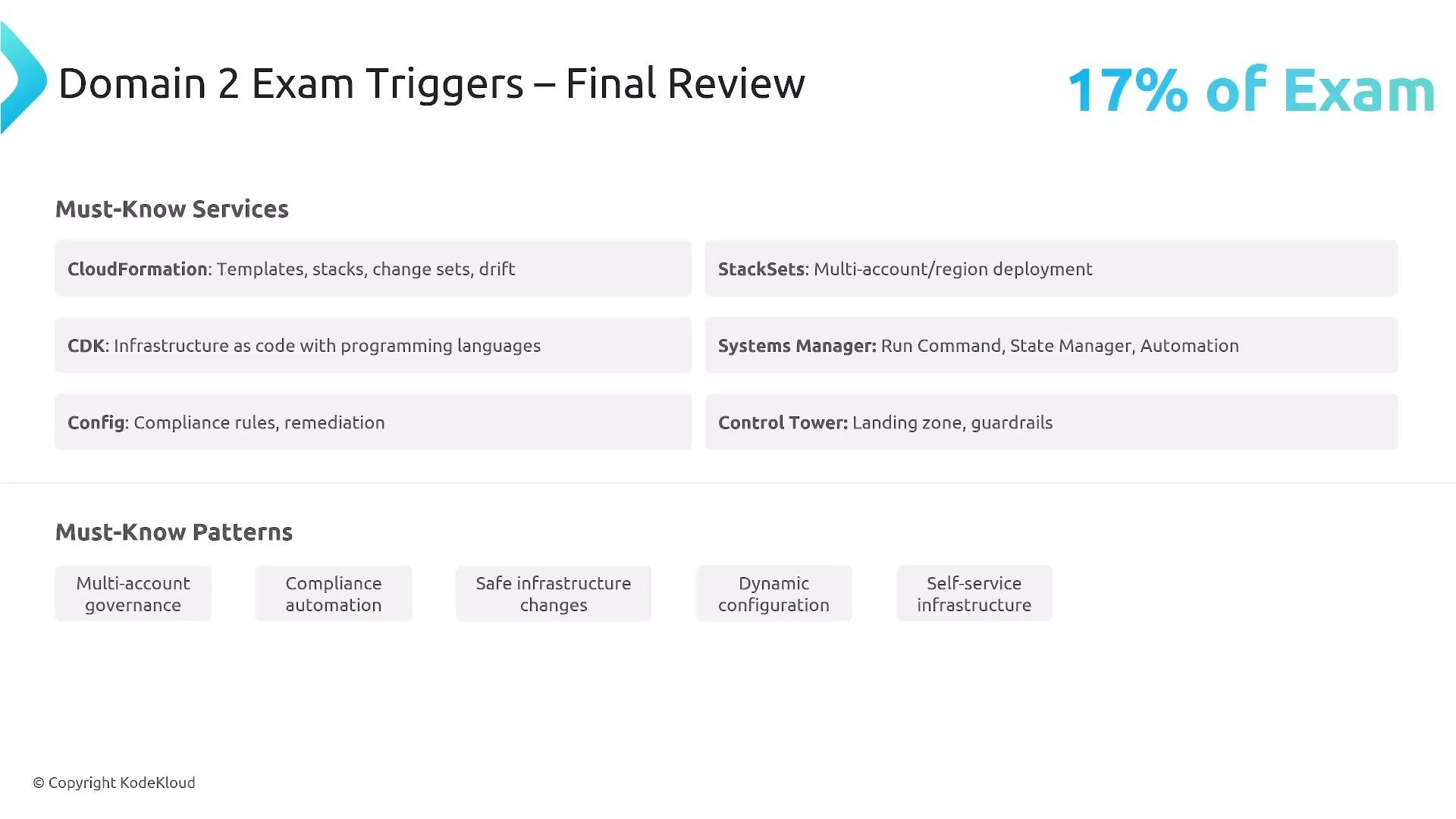
Recurring design patterns across Domain 2:- Multi-account governance and centralized deployment: StackSets, Control Tower, AWS Organizations
- Compliance automation and remediation: AWS Config + Systems Manager Automation
- Safe infrastructure changes and drift detection: CloudFormation drift detection, stack policies, CDK synth/diff
- Self-service, governed provisioning: Service Catalog and AppConfig for runtime configuration
That completes the Domain 2 review. Make a concise list of unfamiliar terms from this lesson and study them more deeply using the links below and official AWS documentation. Good luck with your preparation.
Links and references
- AWS CloudFormation: https://docs.aws.amazon.com/cloudformation/
- AWS CDK: https://docs.aws.amazon.com/cdk/
- AWS Systems Manager: https://docs.aws.amazon.com/systems-manager/
- AWS Config: https://docs.aws.amazon.com/config/
- AWS Control Tower: https://docs.aws.amazon.com/controltower/
- AWS Service Catalog: https://docs.aws.amazon.com/servicecatalog/
- AWS AppConfig: https://docs.aws.amazon.com/appconfig/