

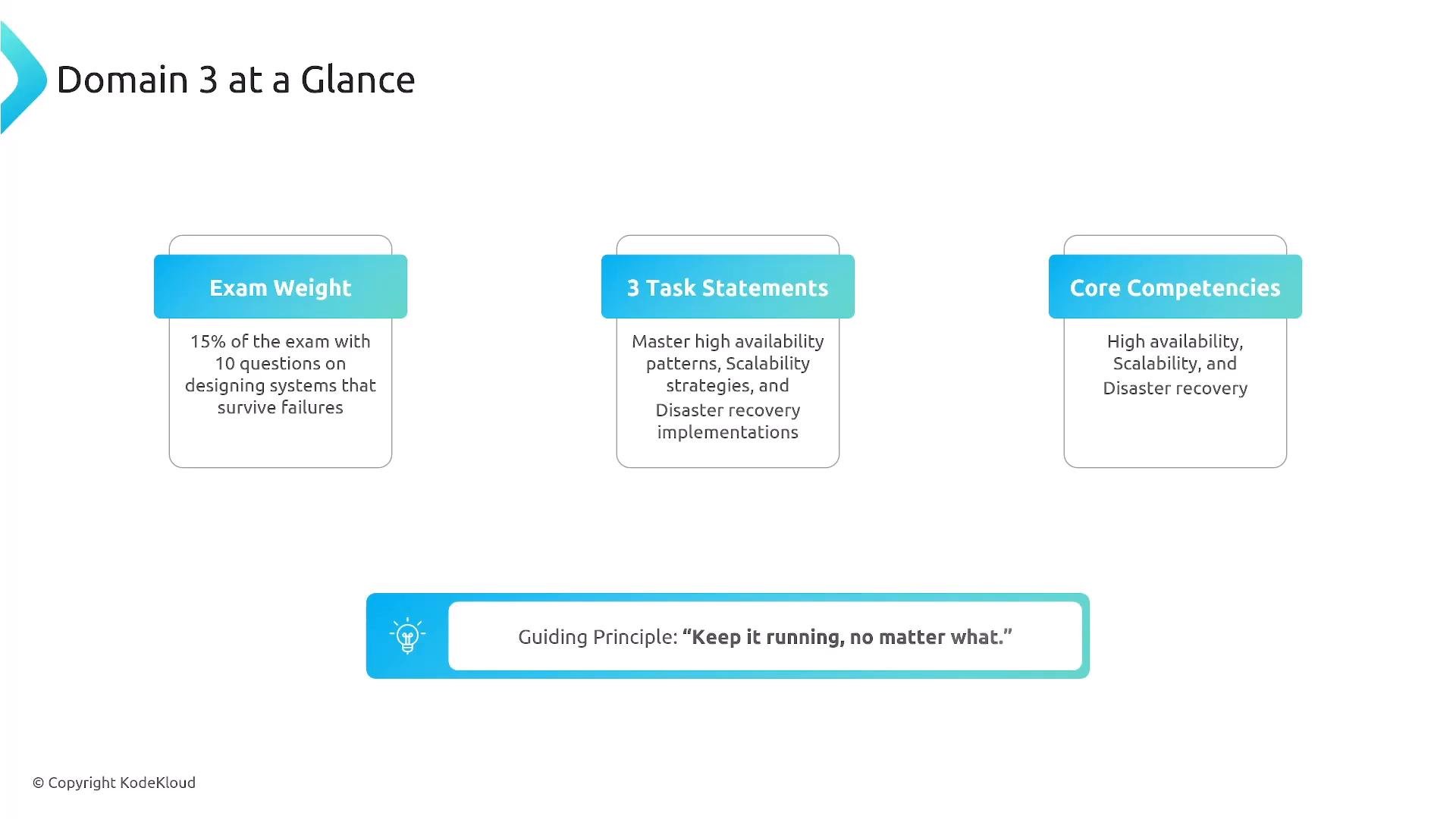
- Exam weight: 15% (≈10 questions)
- Core focus areas: high availability, scalability, and disaster recovery
- Guiding principle: keep systems running under failure while balancing cost and operations
-
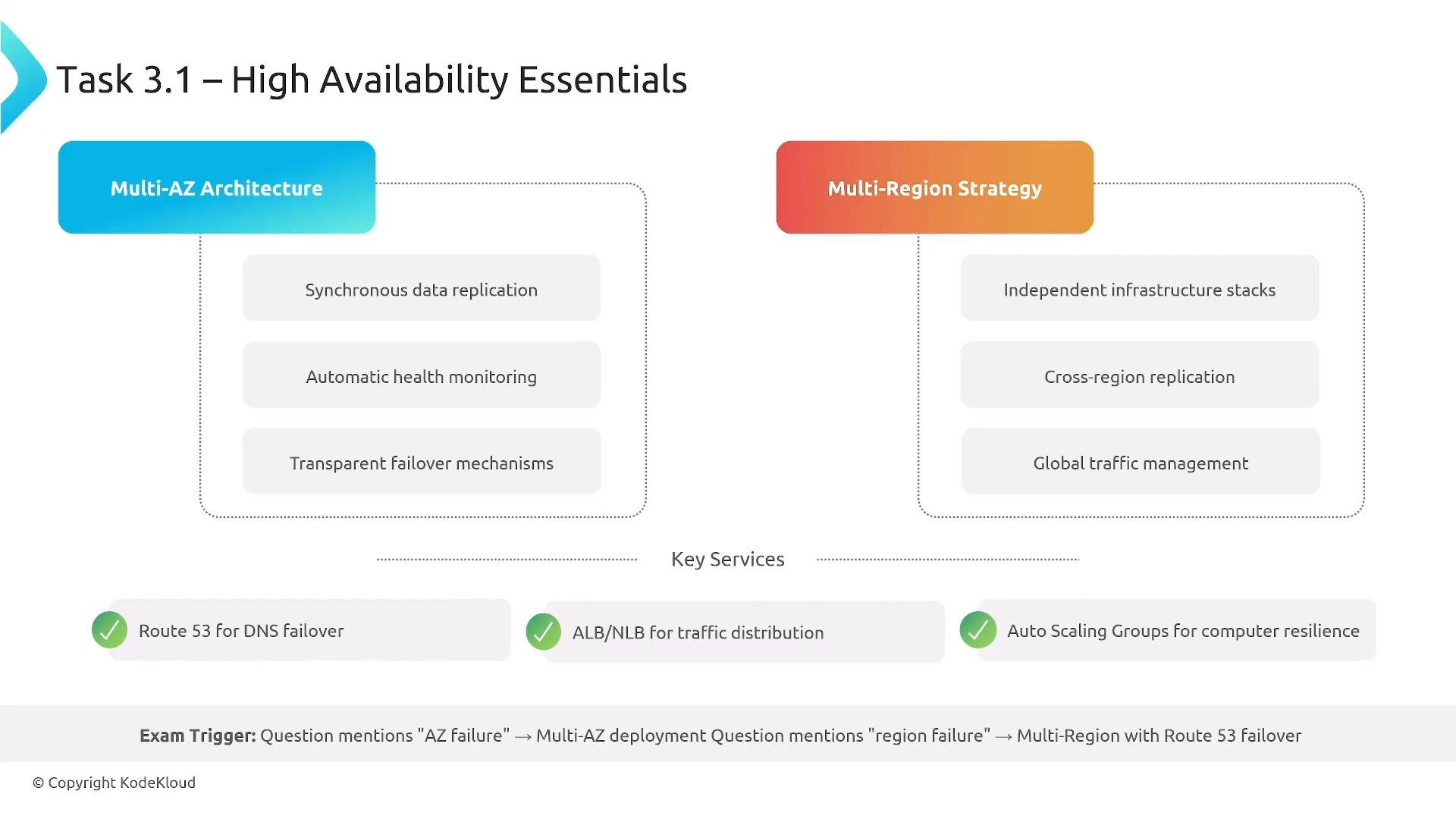
Multi‑AZ (Availability Zone) architectures provide fault tolerance within a region. Typical techniques:
- Synchronous data replication where supported (transparent to the application).
- Automatic health monitoring and transparent failover.
- Distribute compute and state across AZs to avoid single‑AZ dependency.
- Examples: RDS Multi‑AZ, Aurora cluster endpoints, ElastiCache Redis replication groups with automatic failover, EFS (regional service spanning AZs).
-
Multi‑region strategies protect against region‑level outages. Typical approaches:
- Asynchronous replication (for data where synchronous cross‑region is impractical).
- Independent infrastructure stacks in each region (for true isolation).
- Global traffic management using DNS or network-level global services for failover and routing.
Exam tip: If a question mentions an AZ failure, think multi‑AZ. If it mentions a regional outage or disaster, you need a multi‑region / global solution.
- EC2 Auto Scaling policies: scheduled, step, target tracking, and simple scaling — choose based on predictability and metrics.
- ECS / EKS: autoscaling at task/pod level plus cluster autoscalers (for node capacity) such as Karpenter.
- Lambda: scales automatically with requests but watch for per‑region concurrency limits and the 15‑minute maximum execution time.
- DynamoDB: on‑demand scaling and provisioned capacity; Global Tables for cross‑region replication and low‑latency reads.
- Aurora/RDS read replicas: used for read scaling and optional cross‑region replication; read replicas are not automatic failover unless explicitly described as part of a HA feature (e.g., Aurora Global Database has its own behaviors).
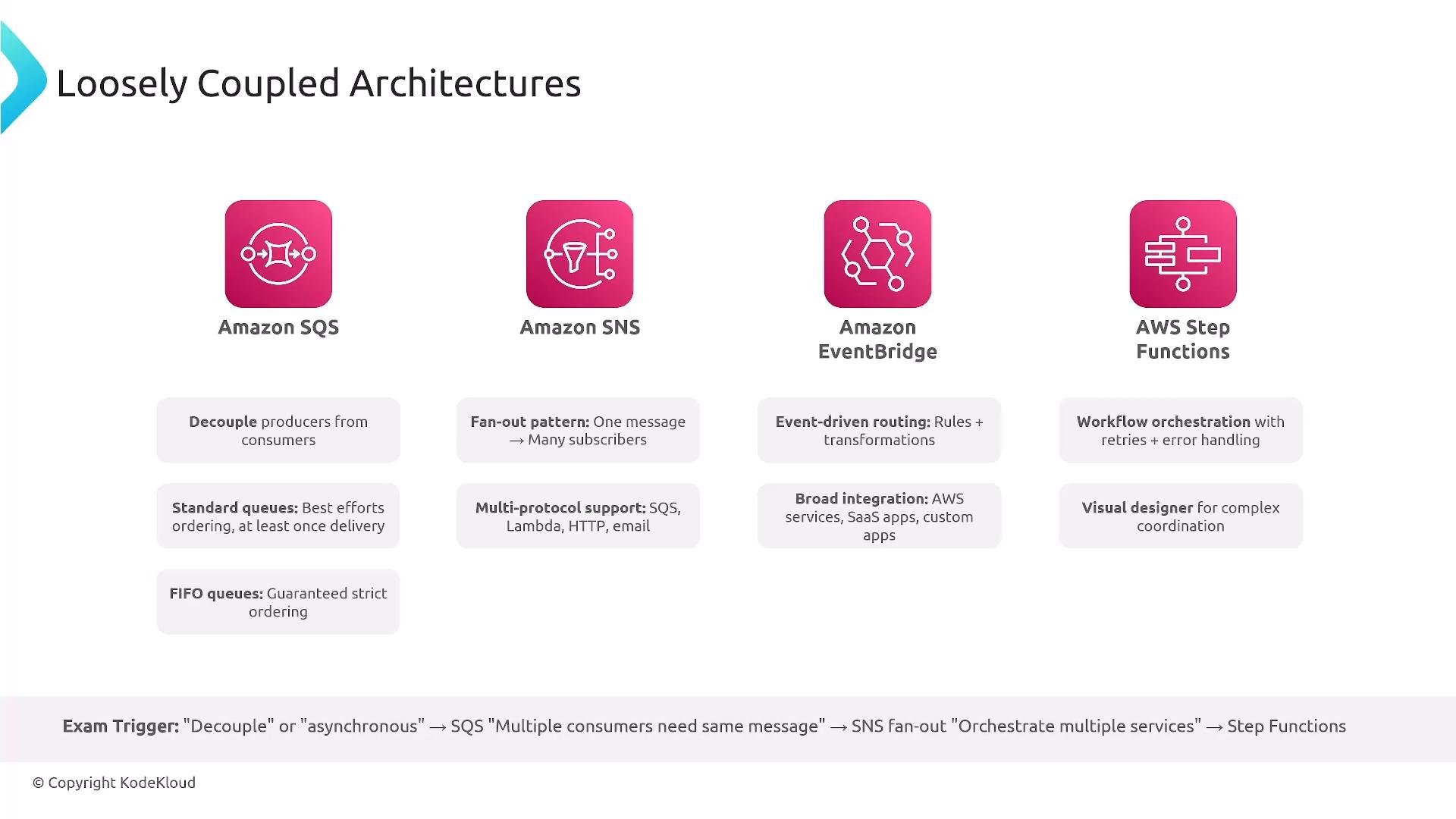
- Loose coupling and asynchronous communication for resilience and scalability: SQS for buffering, SNS for fan‑out, EventBridge for routing, Step Functions for orchestration.
- SQS — decoupling and buffering
- Standard queues: high throughput, at‑least‑once delivery, best‑effort ordering.
- FIFO queues: strictly ordered, exactly‑once processing semantics (limited throughput).
- SNS — pub/sub fan‑out to multiple subscribers and protocols (HTTP/S, Lambda, SQS, email, SMS).
- EventBridge — rule‑based event routing, third‑party SaaS integrations, and schema registry.
- Step Functions — orchestrated workflows and long‑running stateful flows; integrates with Lambda, ECS, and AWS SDK integrations.
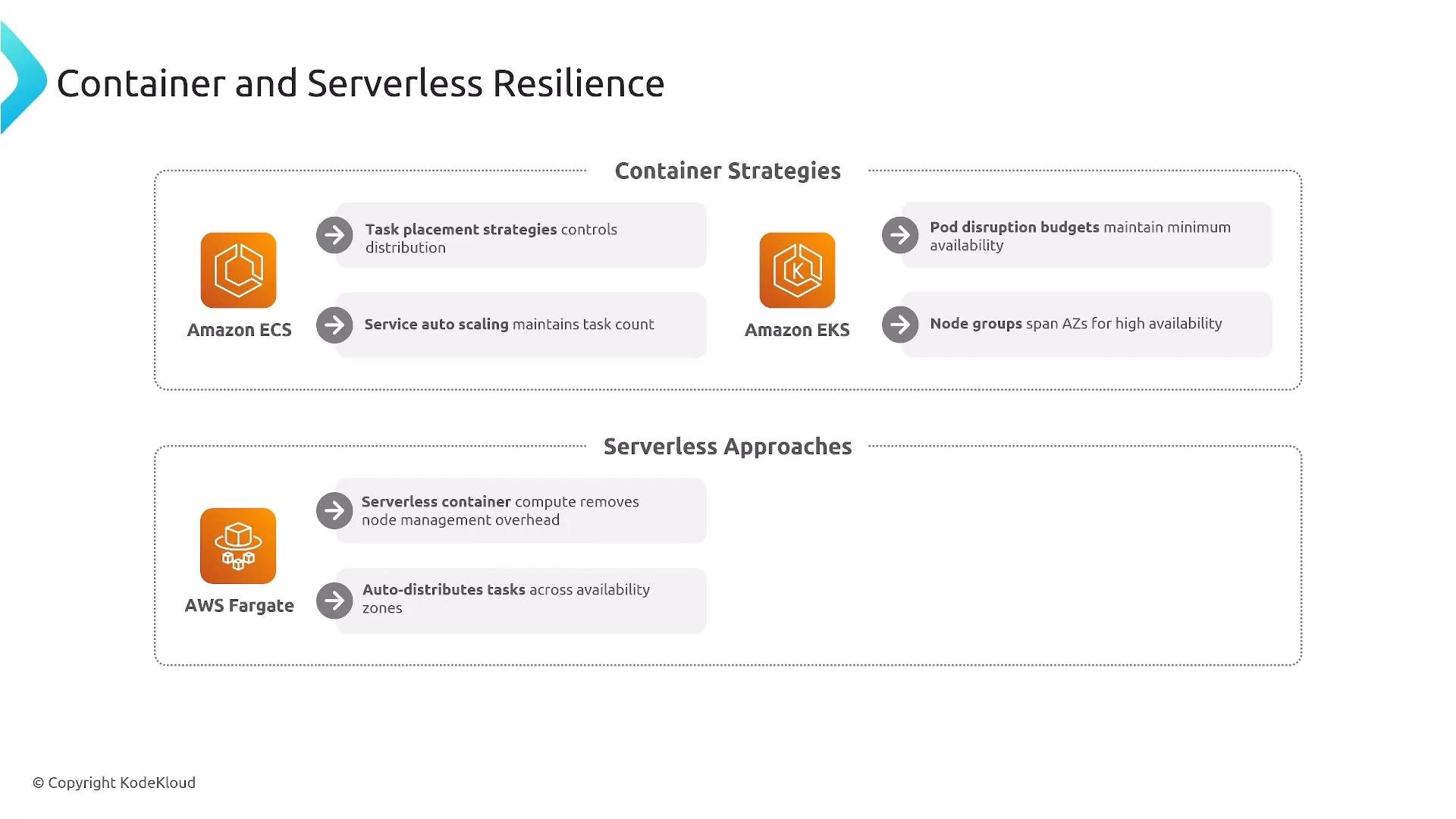
- ECS and EKS: support spreading tasks/pods across AZs; use health checks and lifecycle hooks for safe deployment and termination.
- Fargate: serverless compute option for ECS/EKS — removes node management while enabling AZ distribution via the underlying service.
- Kubernetes (EKS) options: use Pod Disruption Budgets (PDBs) to control voluntary disruptions and cluster autoscalers (Karpenter) to scale node capacity automatically.
- Design for AZ‑aware task placement to avoid single‑AZ failure modes.
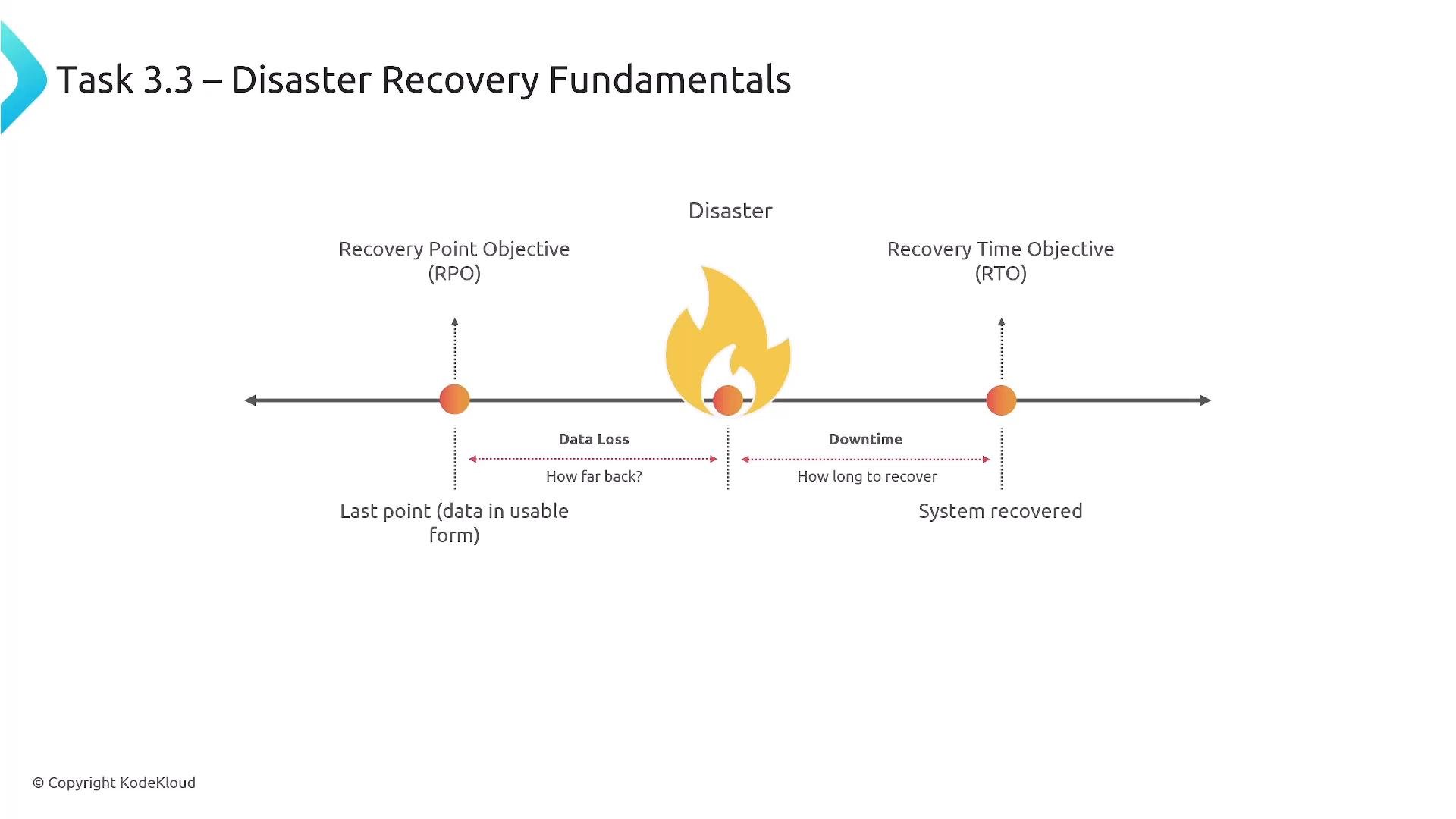
- Recovery Point Objective (RPO): maximum acceptable data loss — how far back your data can be recovered.
- Recovery Time Objective (RTO): maximum acceptable downtime — how long until services are restored.
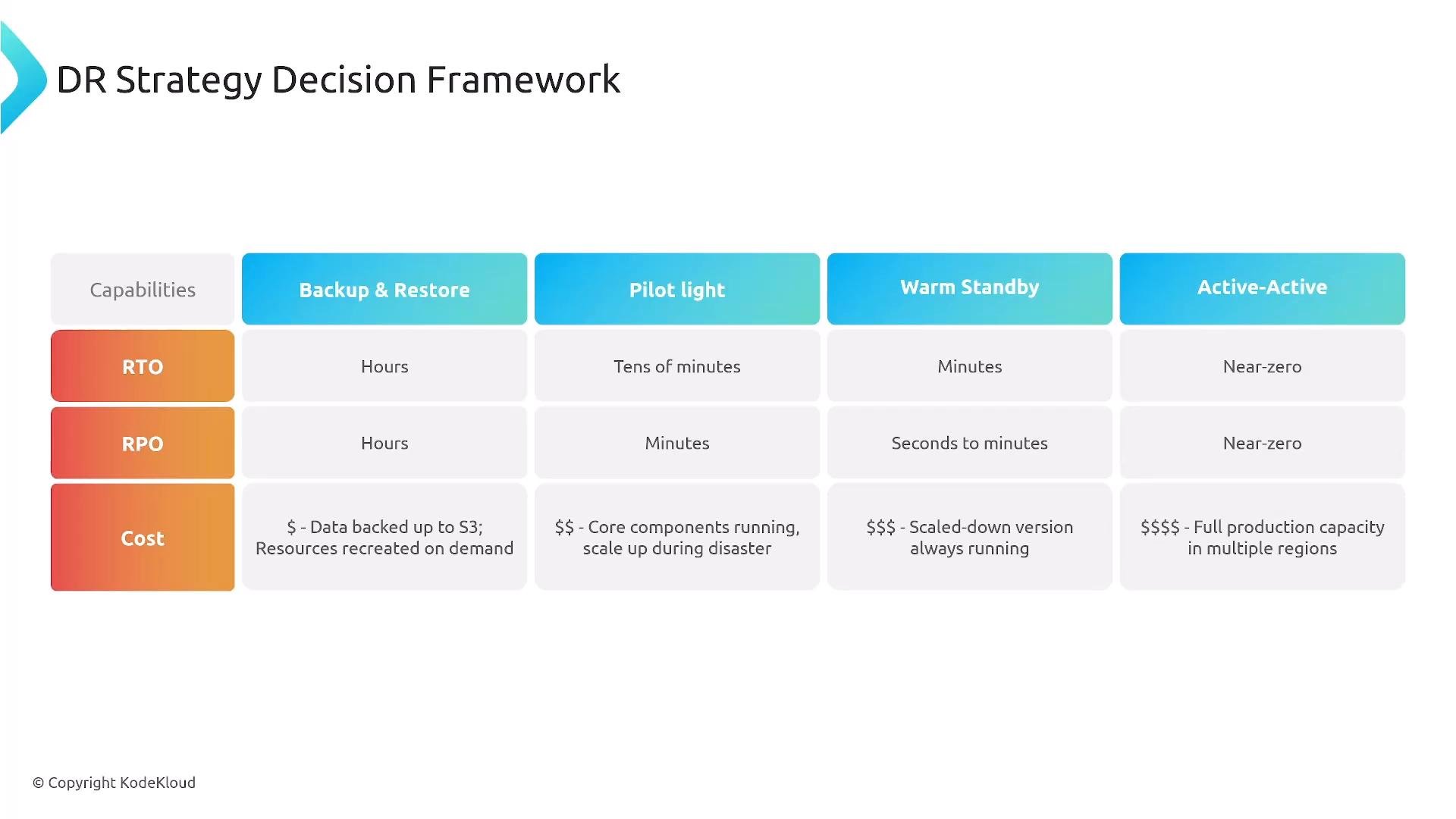
- Tighter RPO/RTO typically increases architecture complexity and cost. Let RPO/RTO drive your DR pattern selection.
Choose the DR pattern that meets your RTO/RPO requirements and budget constraints.
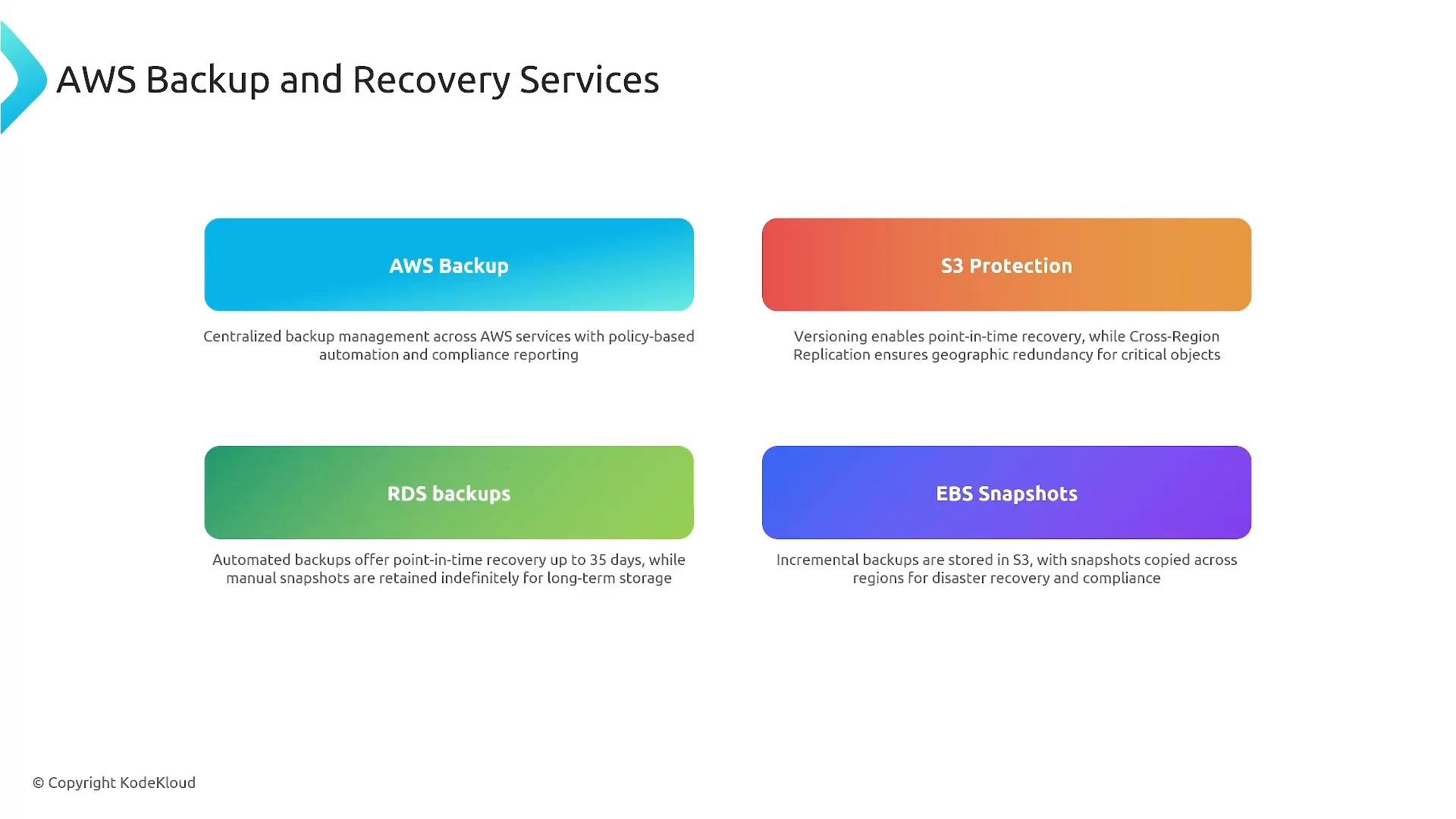
- AWS Backup: centralized backup management, policy‑driven backups, and cross‑region copying for many AWS services.
- Amazon S3: versioning, lifecycle policies, cross‑region replication (CRR), and object lock (WORM) for immutability and retention controls.
- Amazon RDS: automated backups and point‑in‑time recovery — retention configurable (up to 35 days).
- EBS: incremental snapshots for block storage recovery; snapshots can be copied across regions.
- Implement automated, policy‑driven backups and periodically test restores.
- Use cross‑region replication for critical data when RPO requirements demand geographic separation.
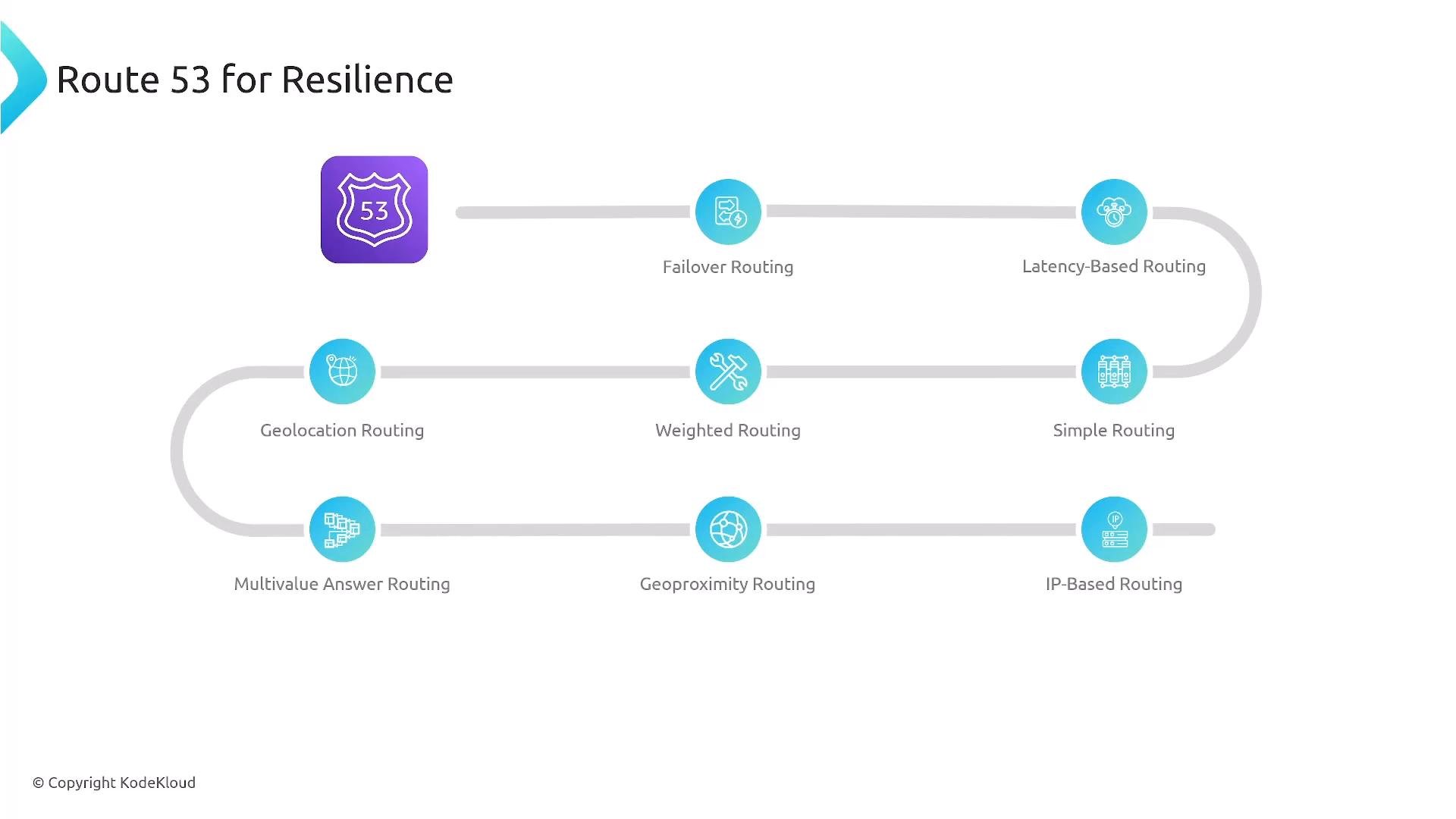
- Route 53 routing policies: Failover, Latency‑Based, Geolocation, Weighted, Simple, Multivalue Answer, Geoproximity. Use health checks and routing policies to implement cross‑region failover and traffic steering.
- Global Accelerator: provides static anycast IPs and optimizes client‑to‑edge‑to‑regional endpoint routing for lower latency and fast failover.
- Use Route 53 for DNS‑level traffic control and Global Accelerator when you need static IPs, improved TCP/UDP performance, or global network optimization.
- Route 53 documentation: https://docs.aws.amazon.com/route53/
- Global Accelerator: https://docs.aws.amazon.com/global-accelerator/
- ALB, NLB, and GWLB distribute traffic across AZs; ensure cross‑zone load balancing and connection‑draining settings (deregistration delay) match your availability and deployment needs.
- Session affinity (sticky sessions) can be required for stateful applications — design to avoid single‑AZ dependencies to preserve fault tolerance.
- Always confirm default load‑balancer behaviors in the console or API and override defaults when exam or real‑world scenarios require specific settings.
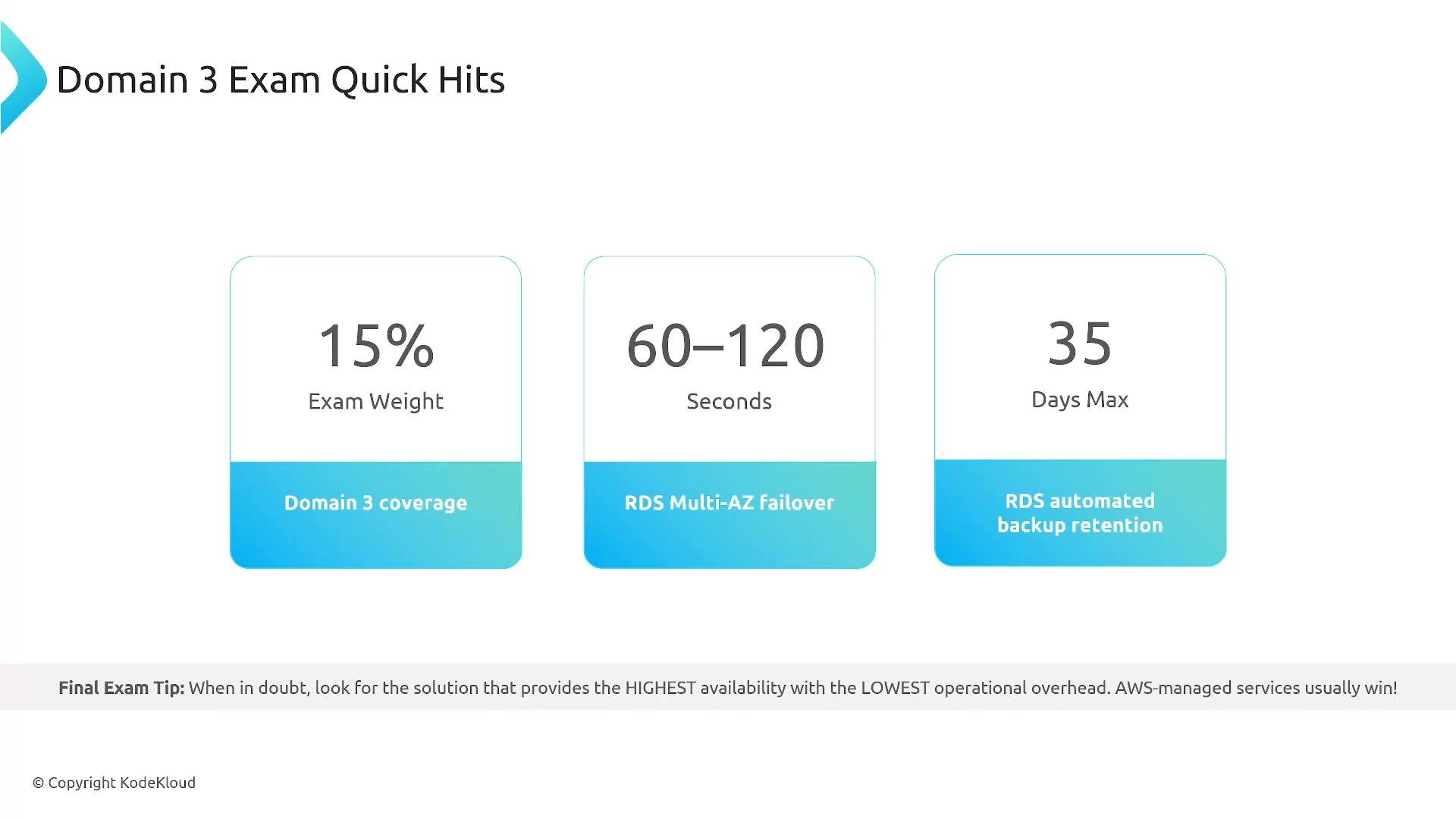
- Domain 3: ~15% of the exam questions.
- Typical RDS Multi‑AZ failover time: ~60–120 seconds (varies by workload and configuration).
- RDS automated backup retention: configurable up to 35 days.
- AWS favors managed services and automated, operationally efficient solutions when available.
- When unsure on the exam, prefer solutions that meet RTO/RPO while minimizing operational overhead.
- Multi‑AZ protects against AZ failures within a region; multi‑region protects against region‑level failures.
- RTO measures acceptable downtime; RPO measures acceptable data loss — both should drive your architecture and DR choices.
- Favor loose coupling (SQS, SNS, EventBridge) and managed services to improve resilience and reduce operational burden.
Remember to test failover and restore procedures regularly — backups and replicas are only valuable if restores succeed within your RTO/RPO targets.