

Provisioning
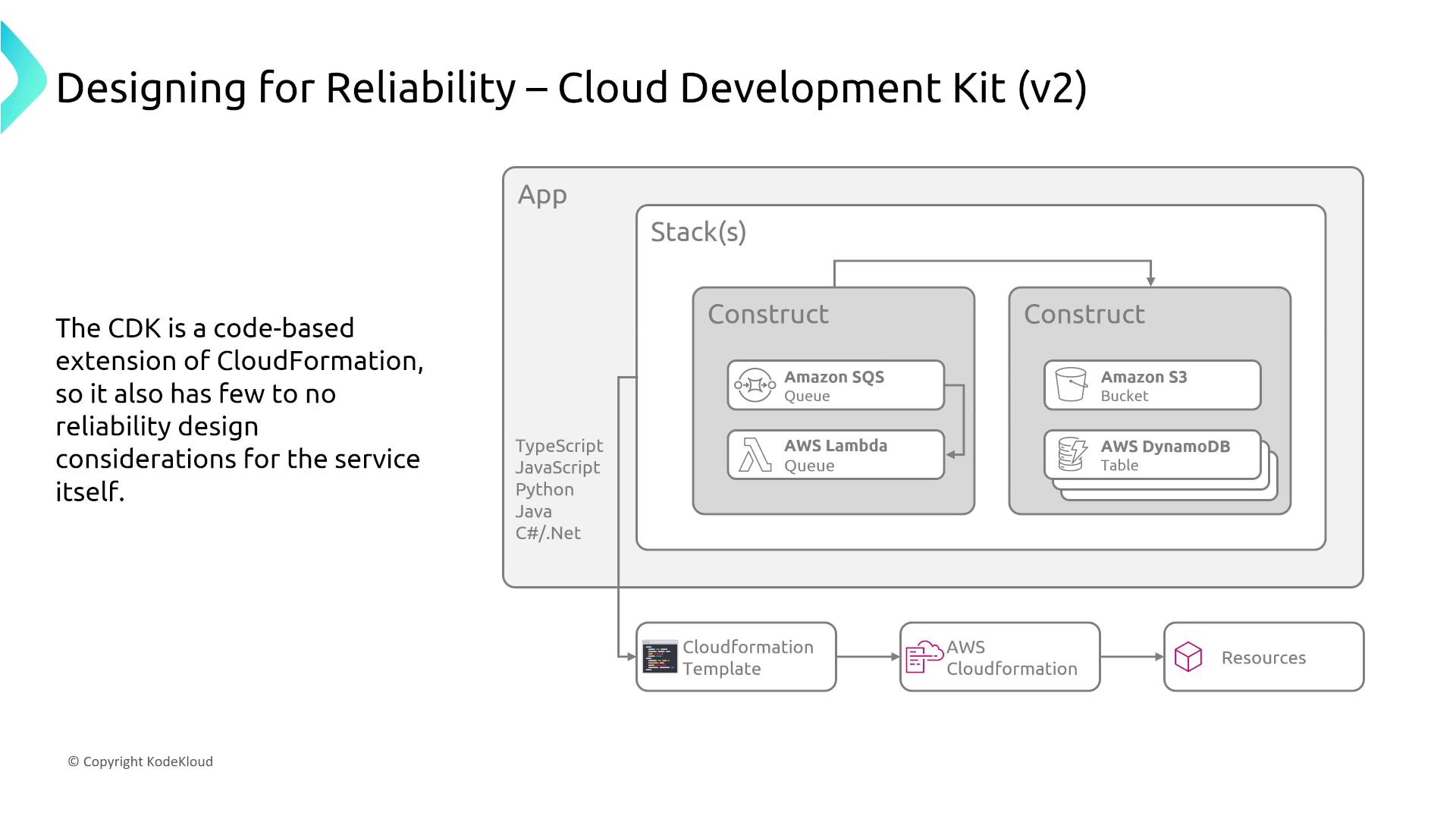
AWS CloudFormation is the native provisioning tool of AWS, forming the backbone of resource creation and management. Even if you leverage third-party tools like Terraform or code-based solutions such as the AWS Cloud Development Kit (CDK) version 2, it ultimately generates CloudFormation templates. This means that understanding CloudFormation is essential, regardless of the provisioning method you select.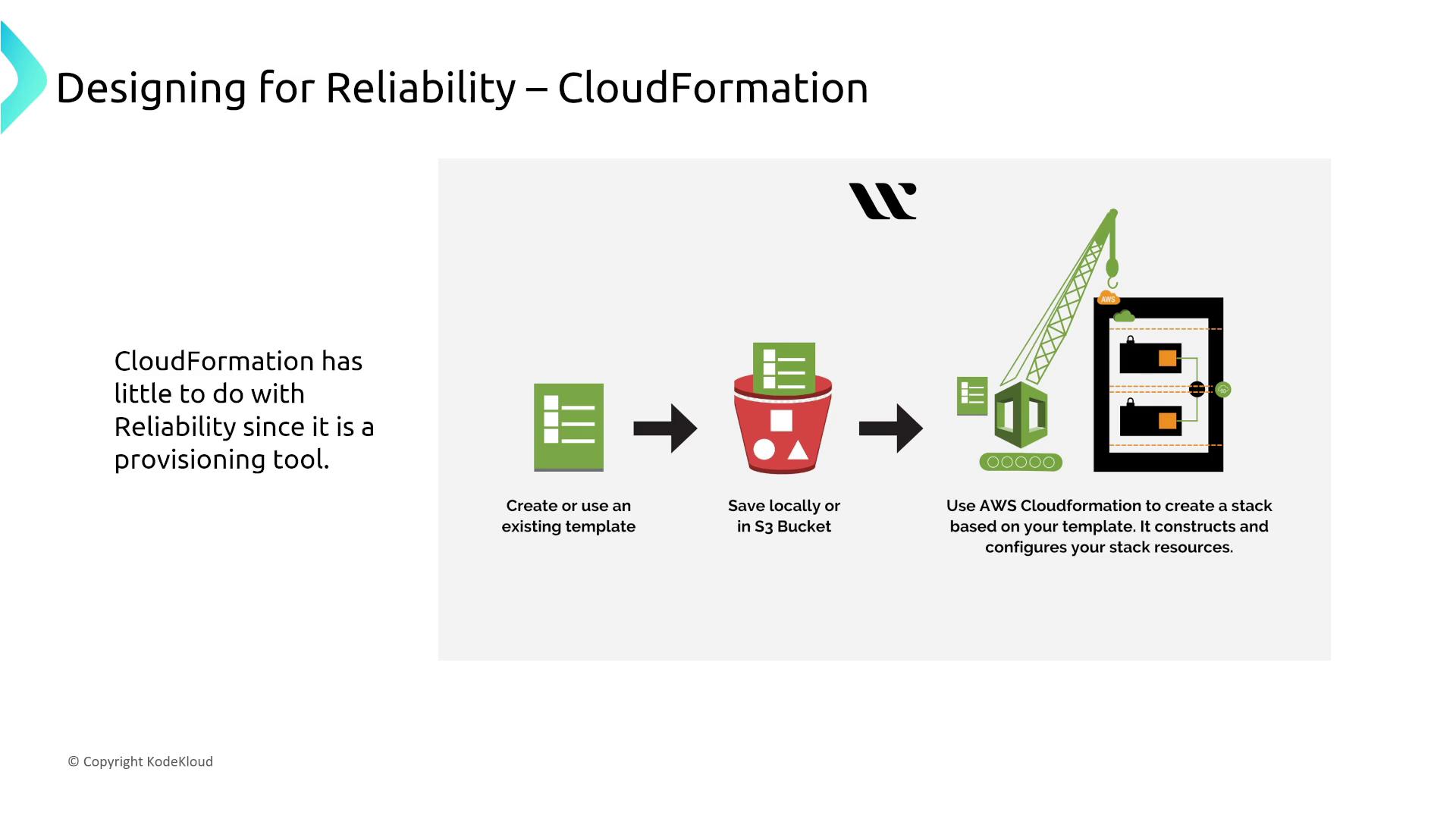
Observability
Observability is key to managing application performance and ensuring operational reliability. AWS CloudWatch provides a robust suite of monitoring features including logs, alarms, events, and insights. Designed for high availability, CloudWatch serves as a central hub for tracking metrics, troubleshooting issues, and guiding performance optimizations.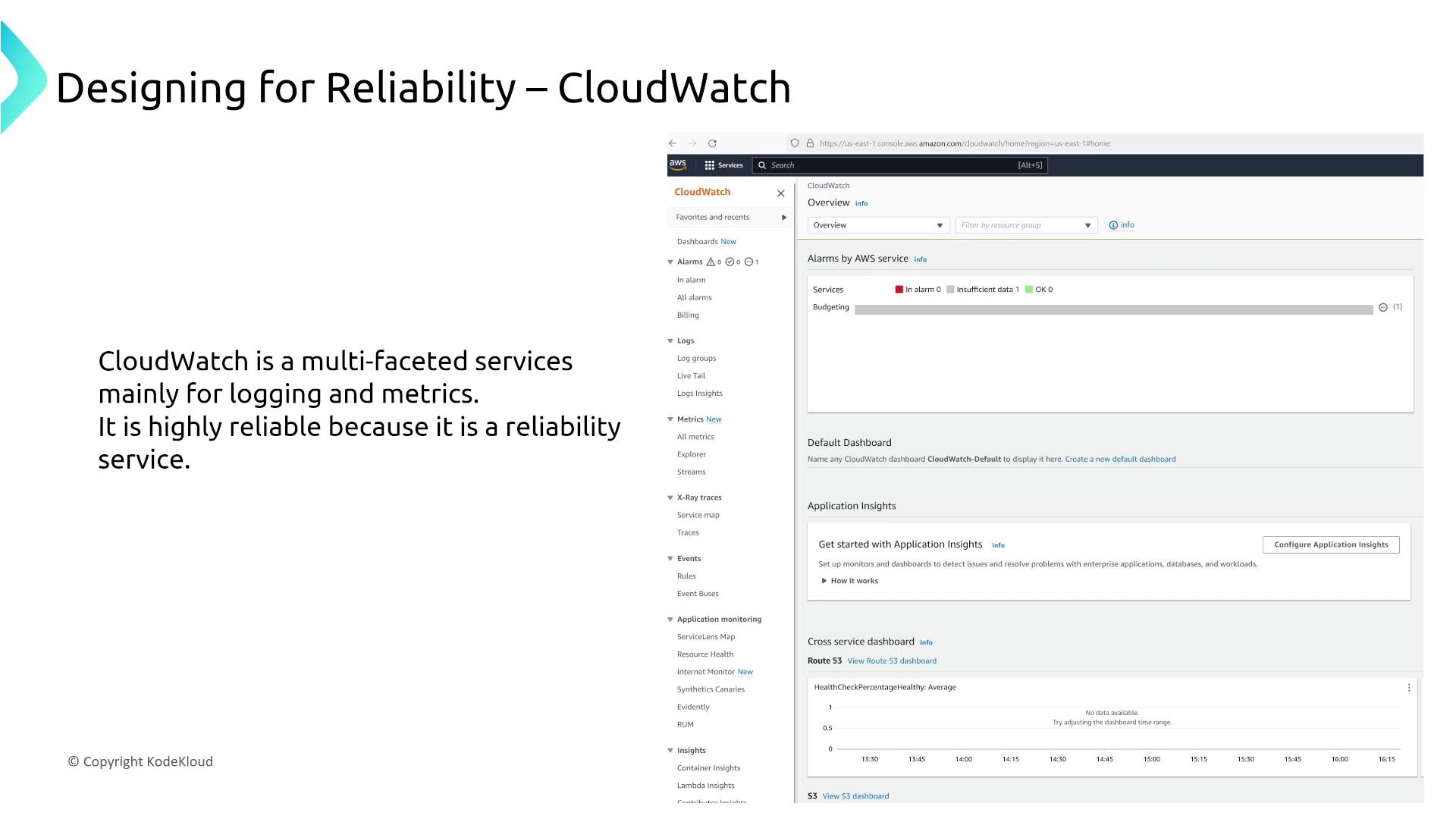
Other Management Services
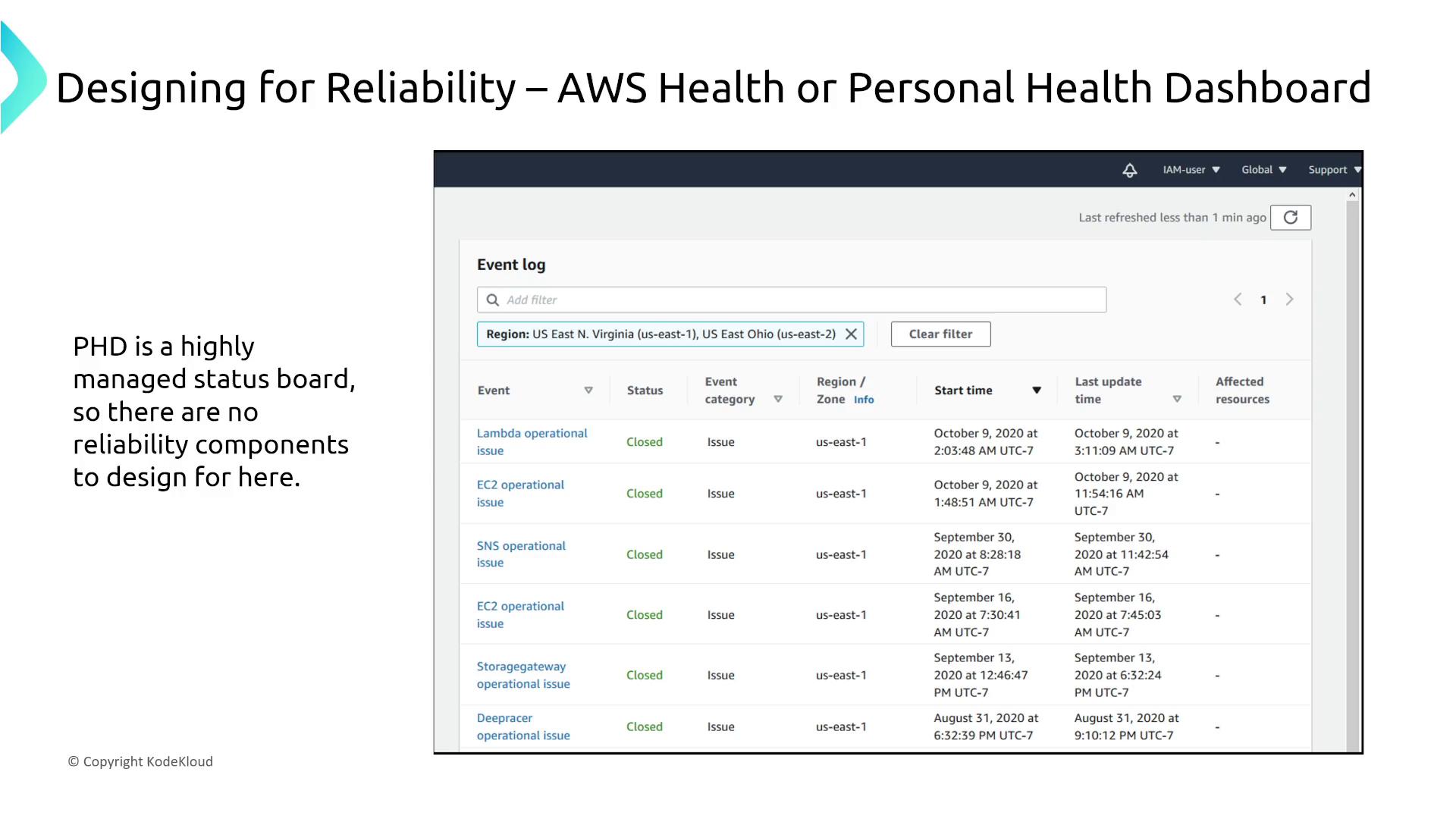
AWS offers a broad range of management services that are inherently resilient and designed to function without manual reliability tweaks.Managed Prometheus and Grafana
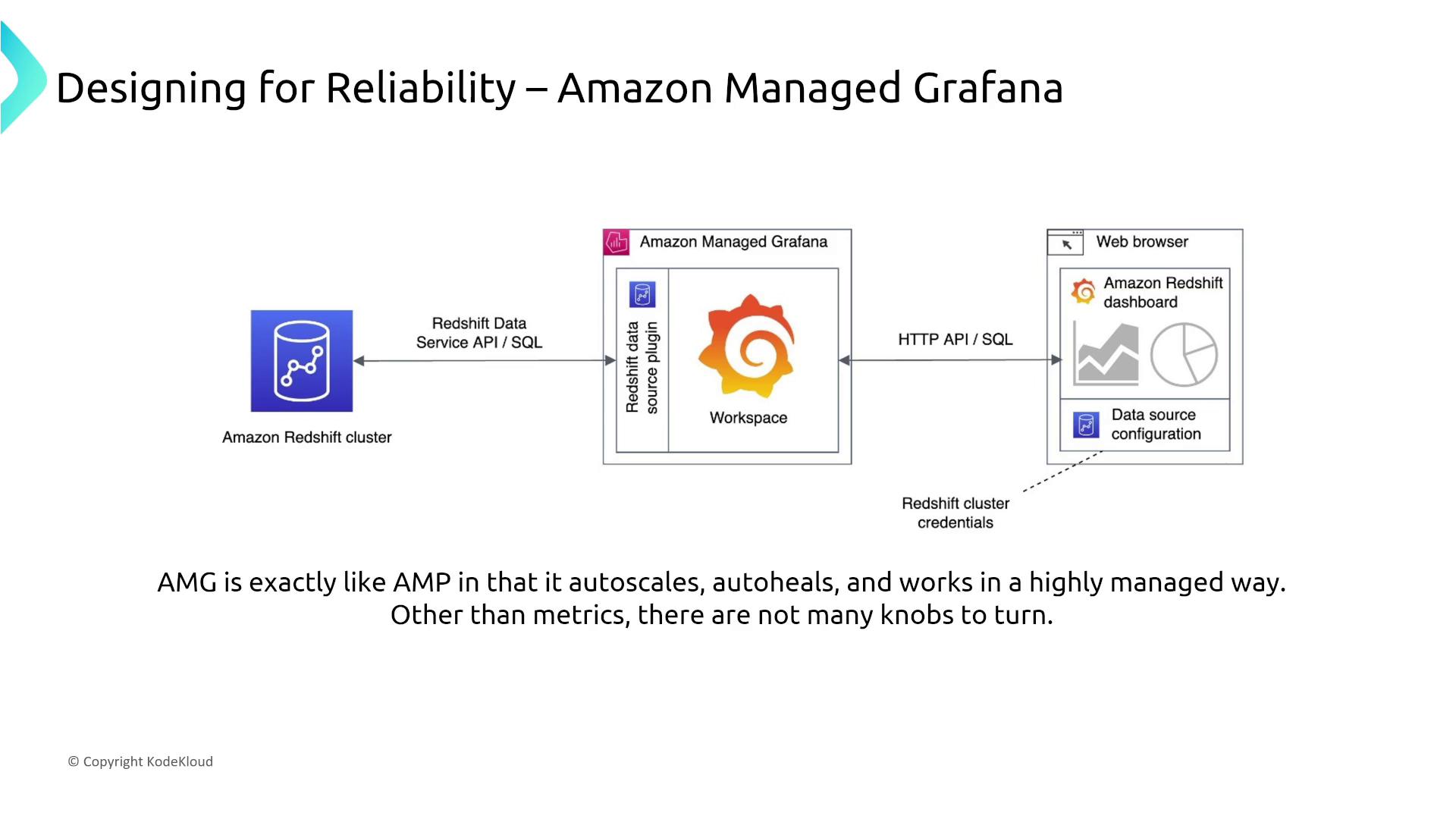
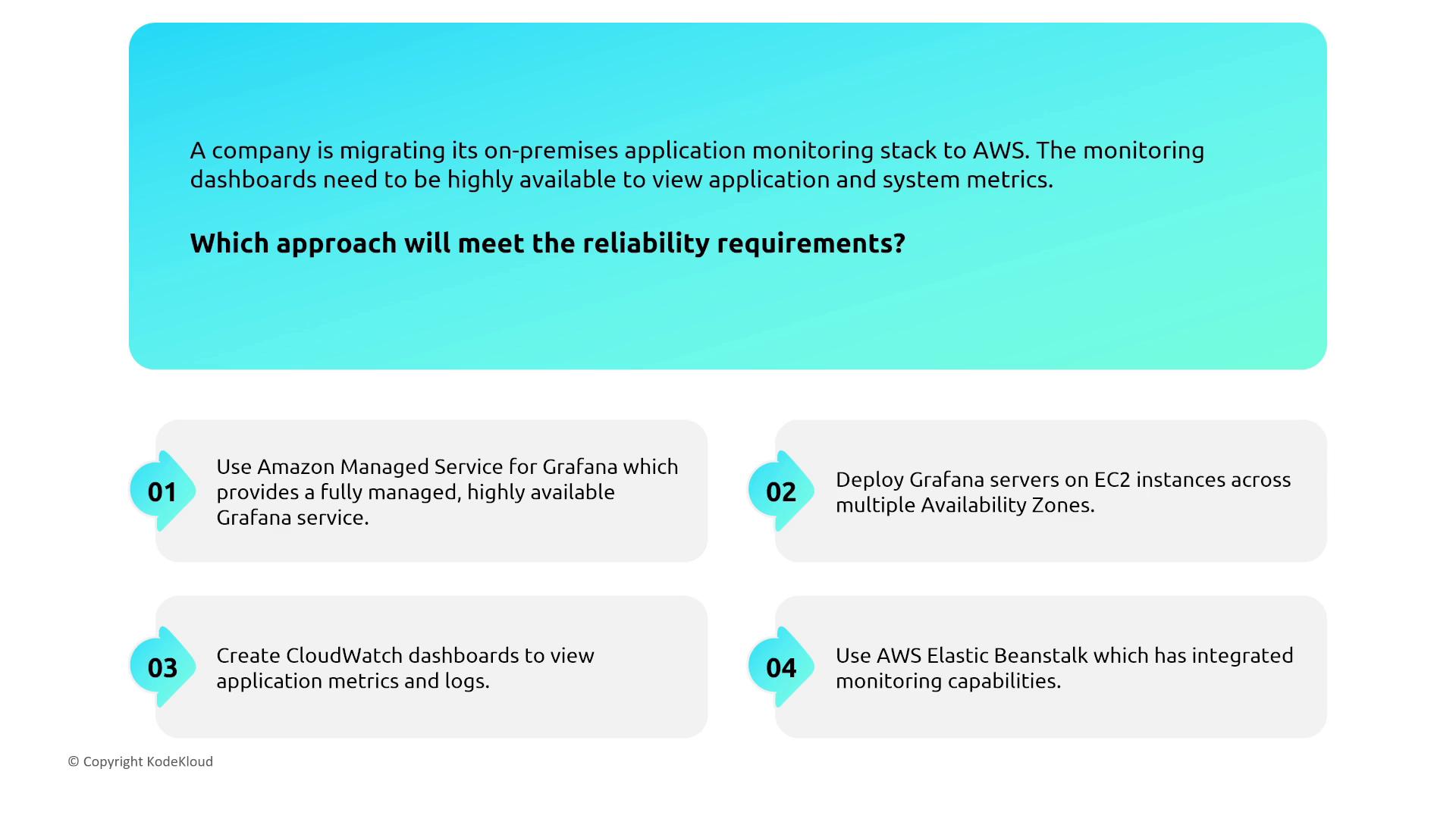
Managed Prometheus automatically scales and recovers, offering a plug-and-play experience without server-level configuration changes. When integrated with Amazon Managed Grafana, a unified dashboard view is achieved with the same managed-reliability design.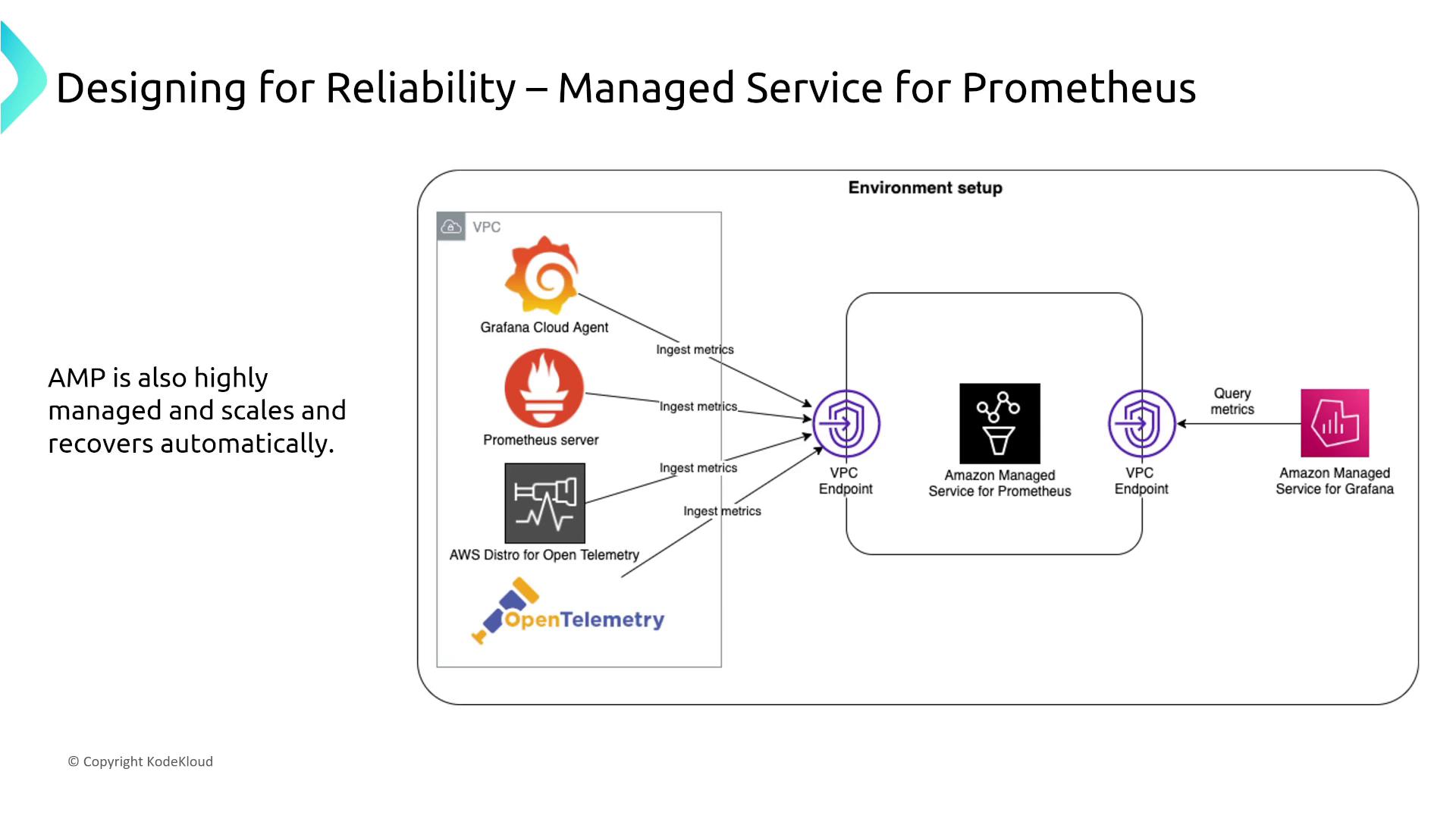
Trusted Advisor and Compute Optimizer
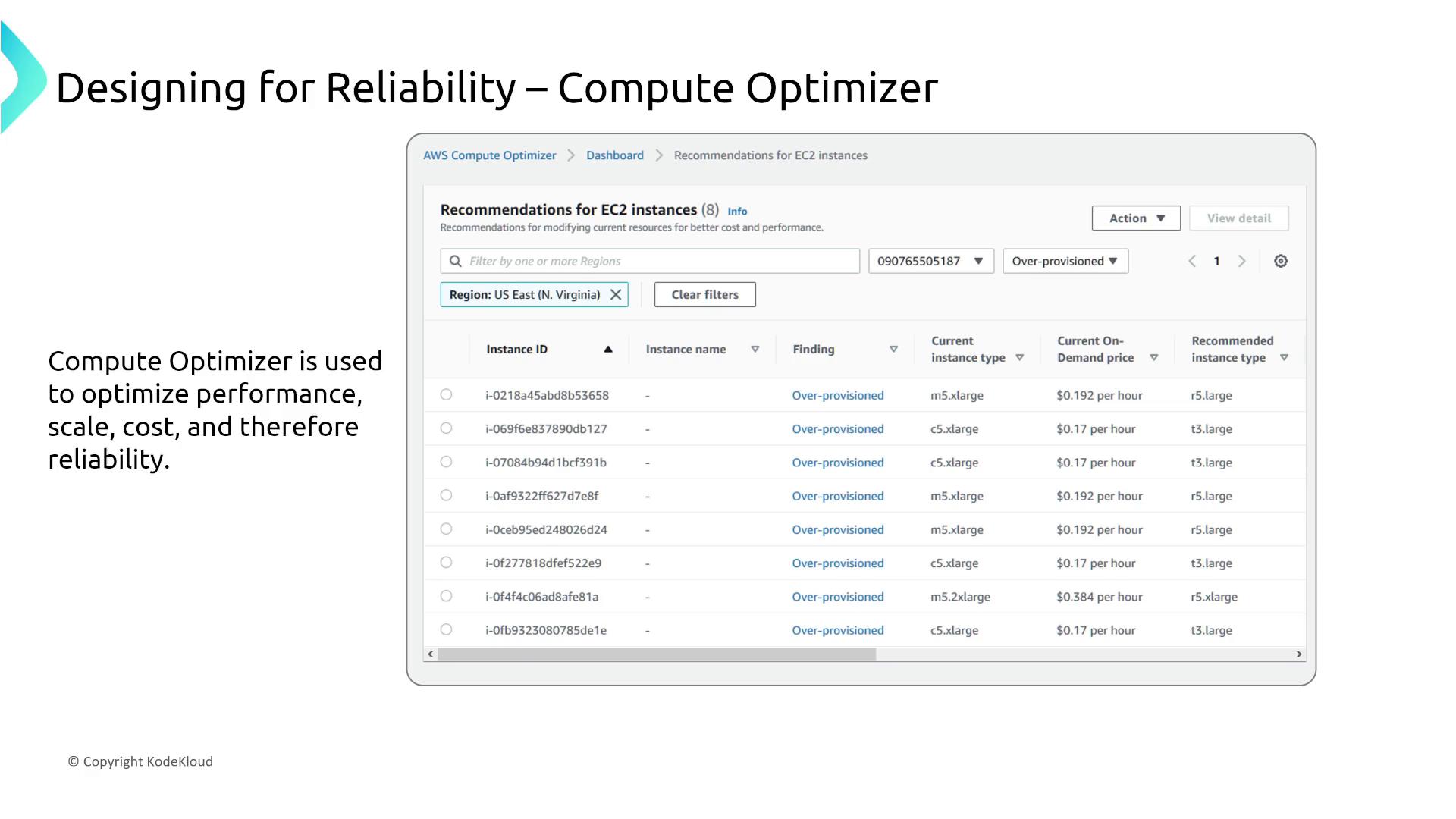
AWS Trusted Advisor and Compute Optimizer help optimize fault tolerance and cost efficiency. Trusted Advisor, with fault tolerance checks available under specific support plans, and Compute Optimizer, offering resource optimization recommendations, both operate with inherent reliability without requiring any configuration adjustments.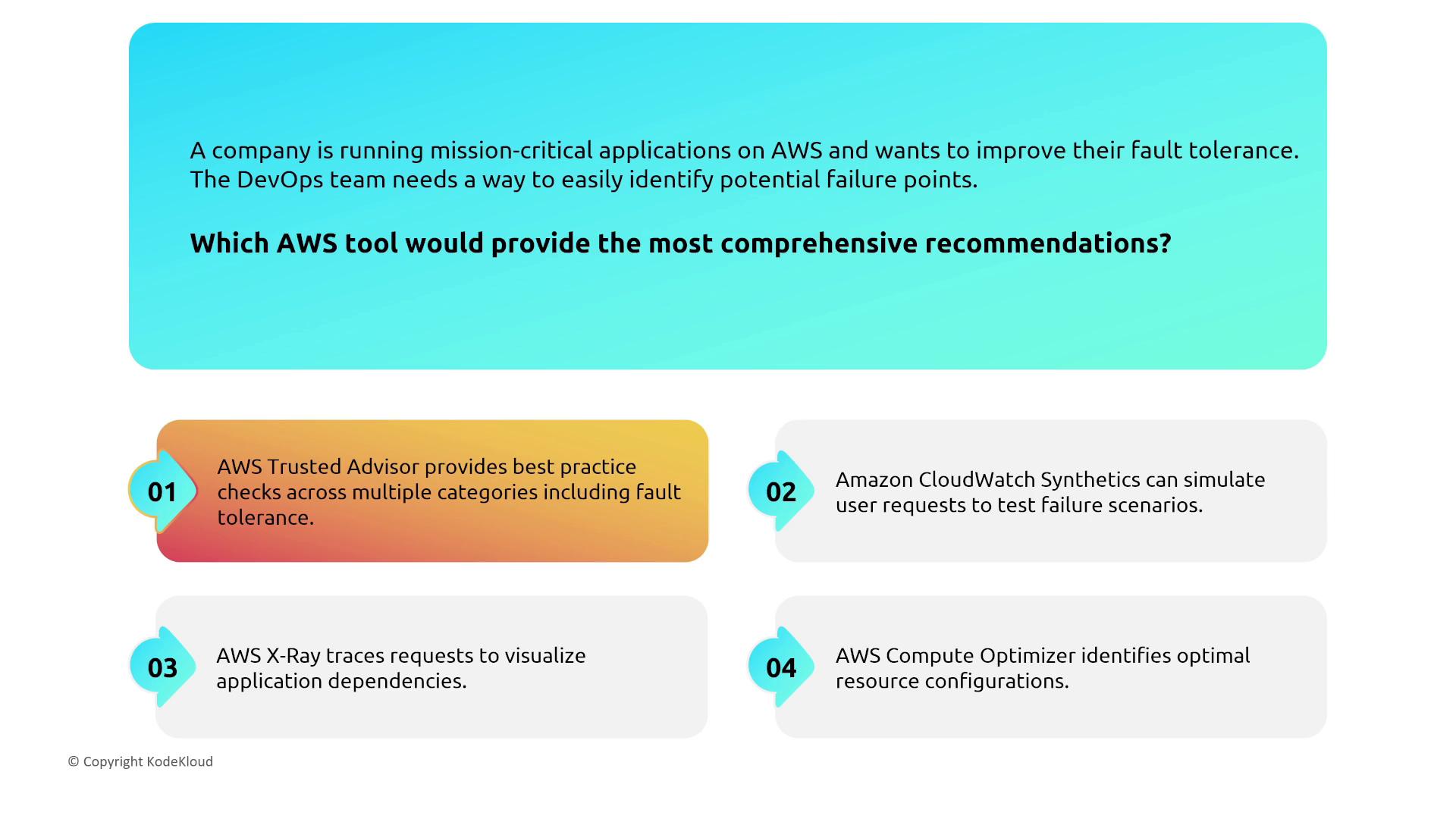

Organizations and Control Tower
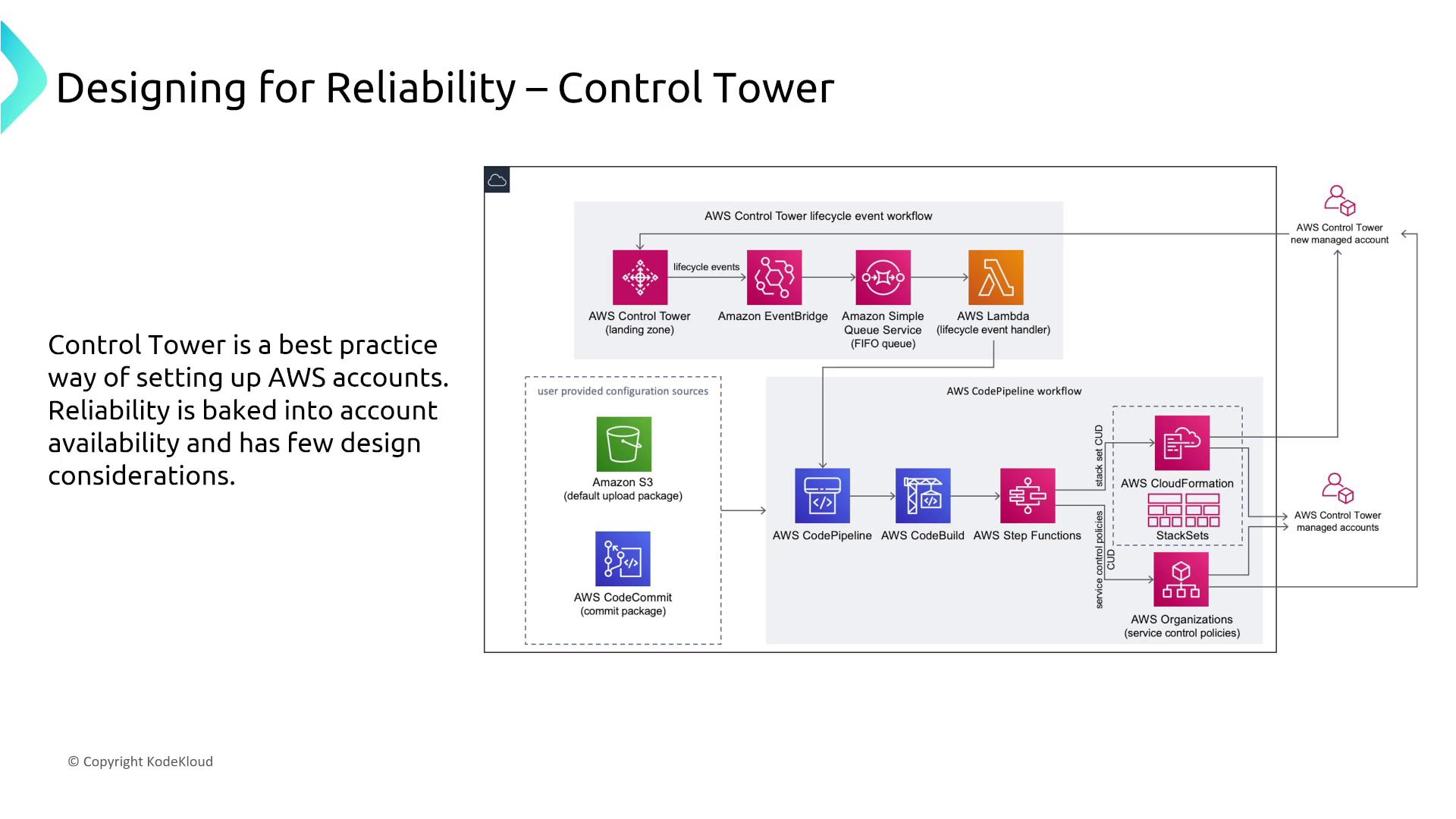
While AWS Organizations is focused on account management rather than service reliability, AWS Control Tower automates account setup with best practices, such as service control policies and auditing. This automation inherently promotes resiliency across multiple accounts.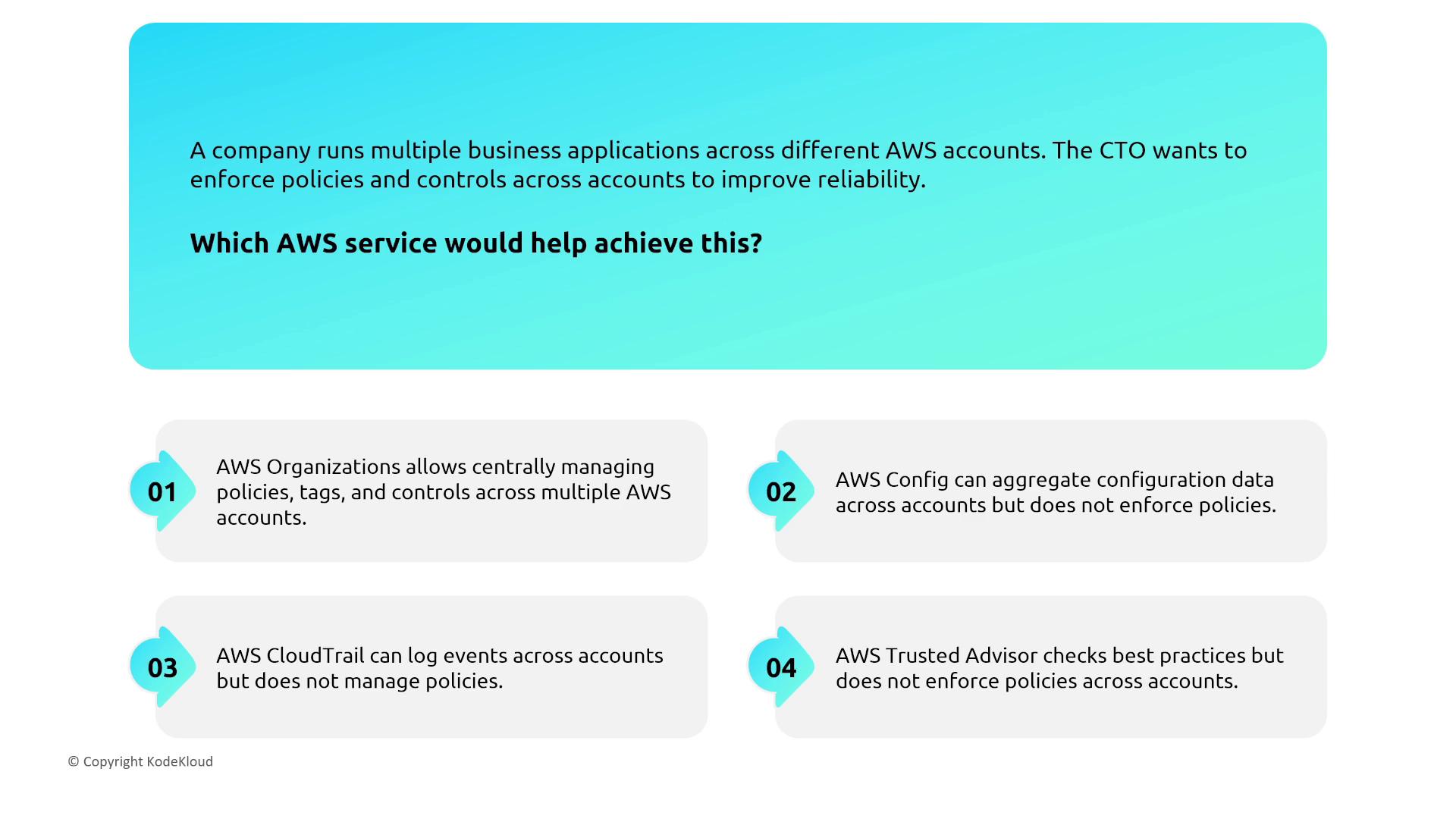
Systems Manager
AWS Systems Manager provides extensive operational capabilities to manage both cloud and on-premises resources efficiently. It is engineered to support critical tasks such as OS patching and compliance checks reliably without additional configuration.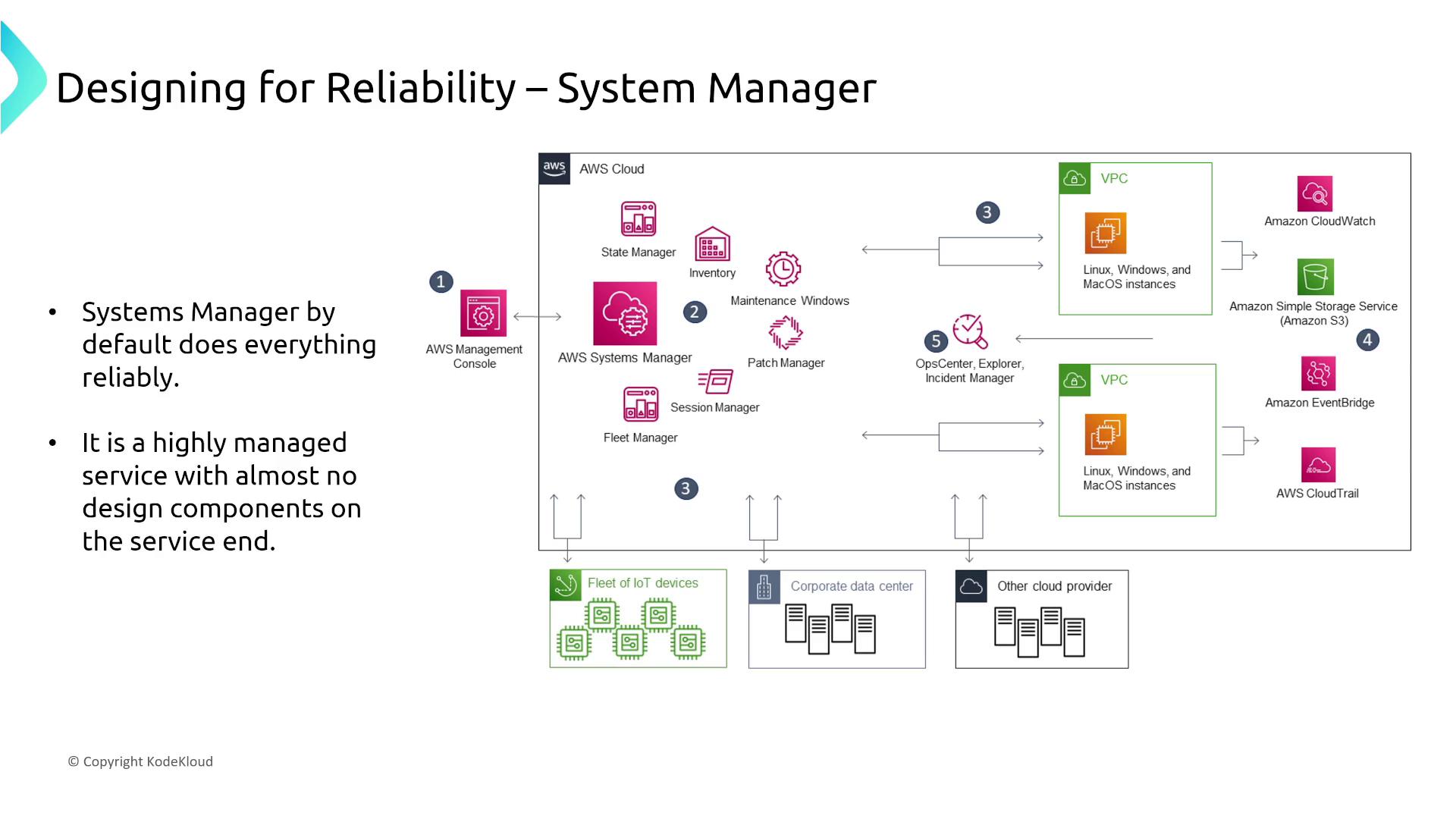
Service Catalog and License Manager
Service Catalog allows you to create and manage portfolios of AWS services while enforcing company policies. This standardization streamlines deployments, though it does not independently adjust reliability beyond that provided by the underlying services.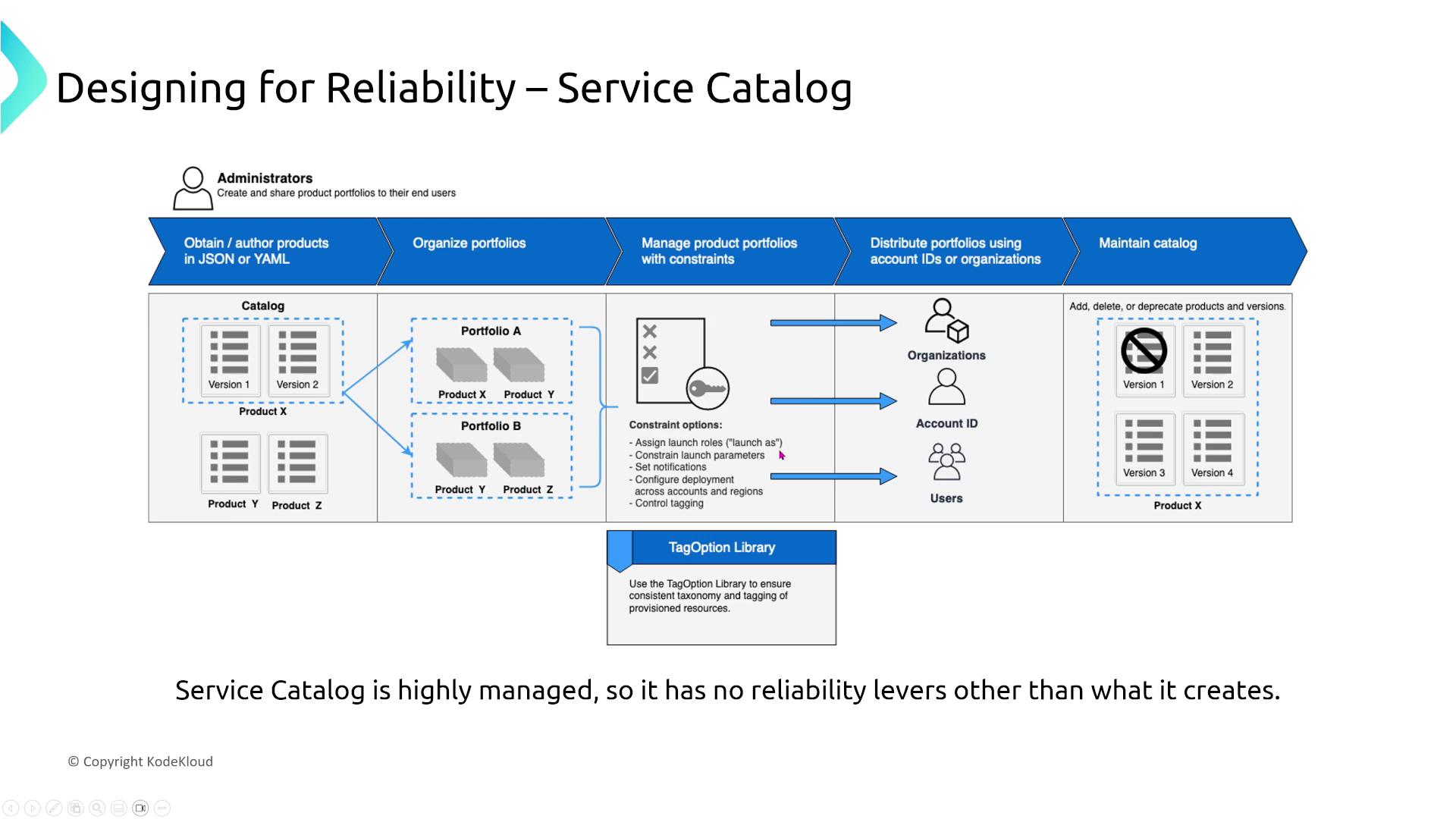
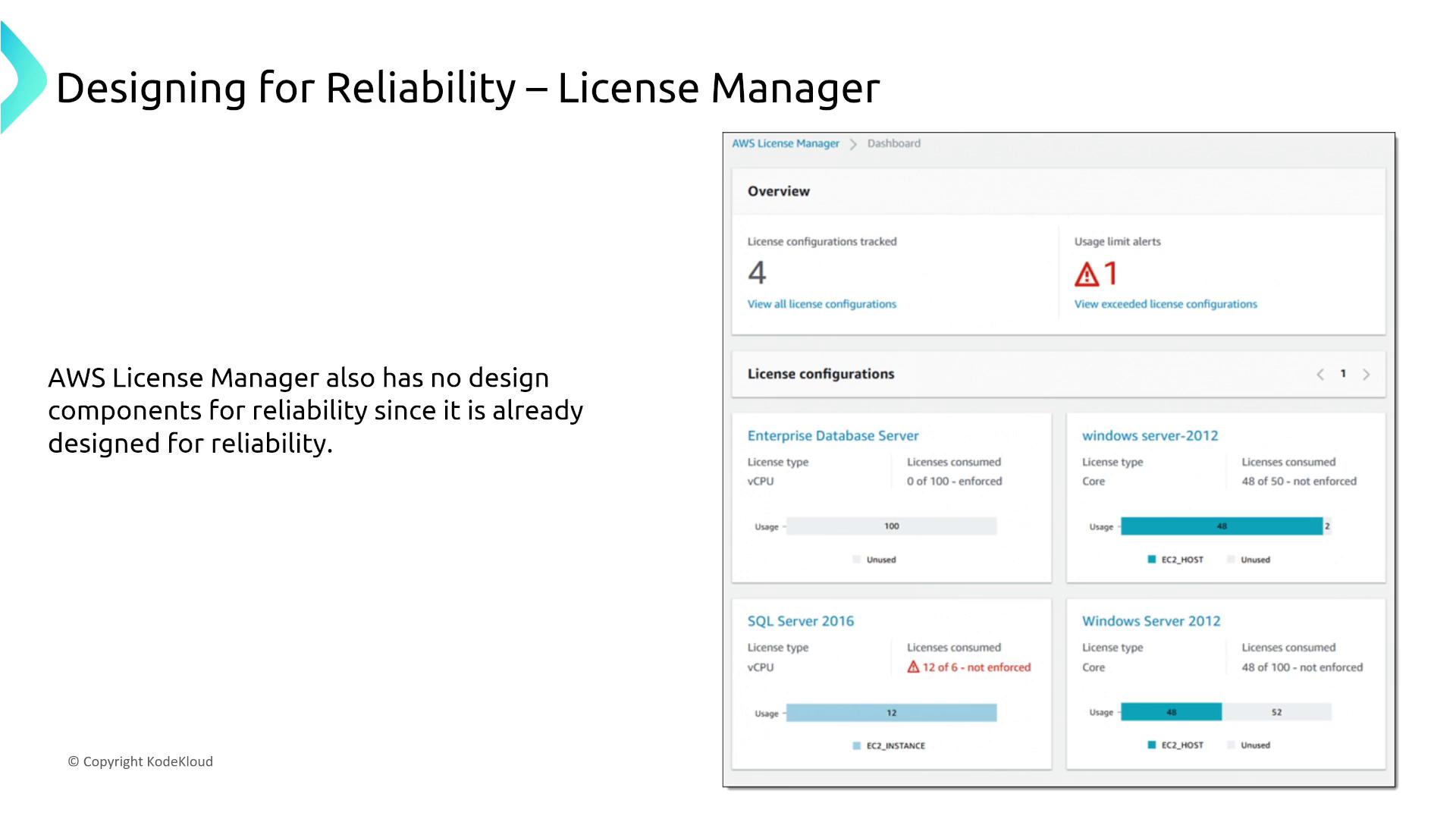
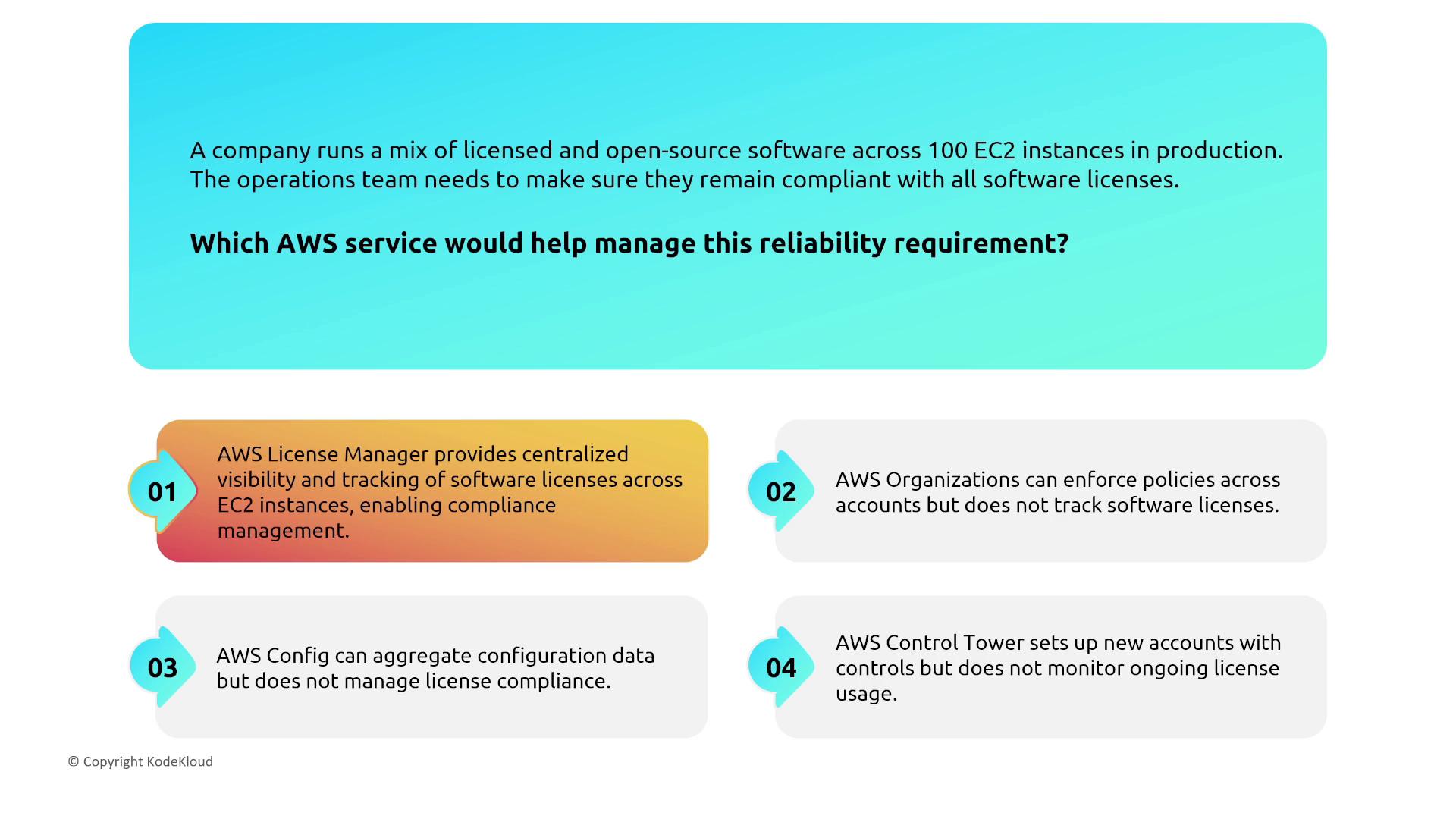
Proton
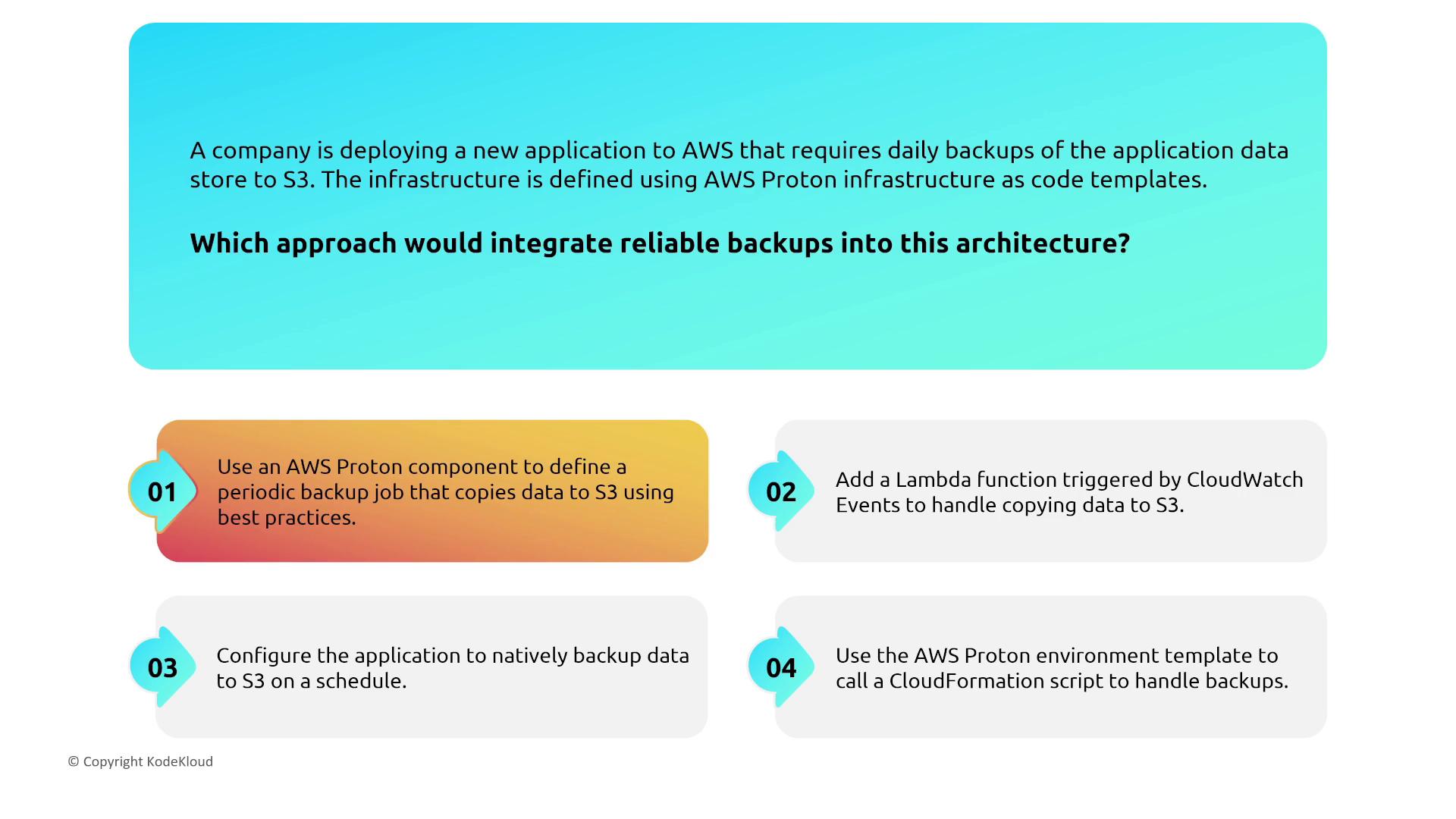
AWS Proton is designed for container and microservices deployments, incorporating built-in reliability measures like automatic multi-AZ deployments and data backup/restore functionalities. Although Proton offers a few extra reliability “knobs” for specific configurations (such as scheduled backups), its overall design prioritizes high resiliency out-of-the-box.
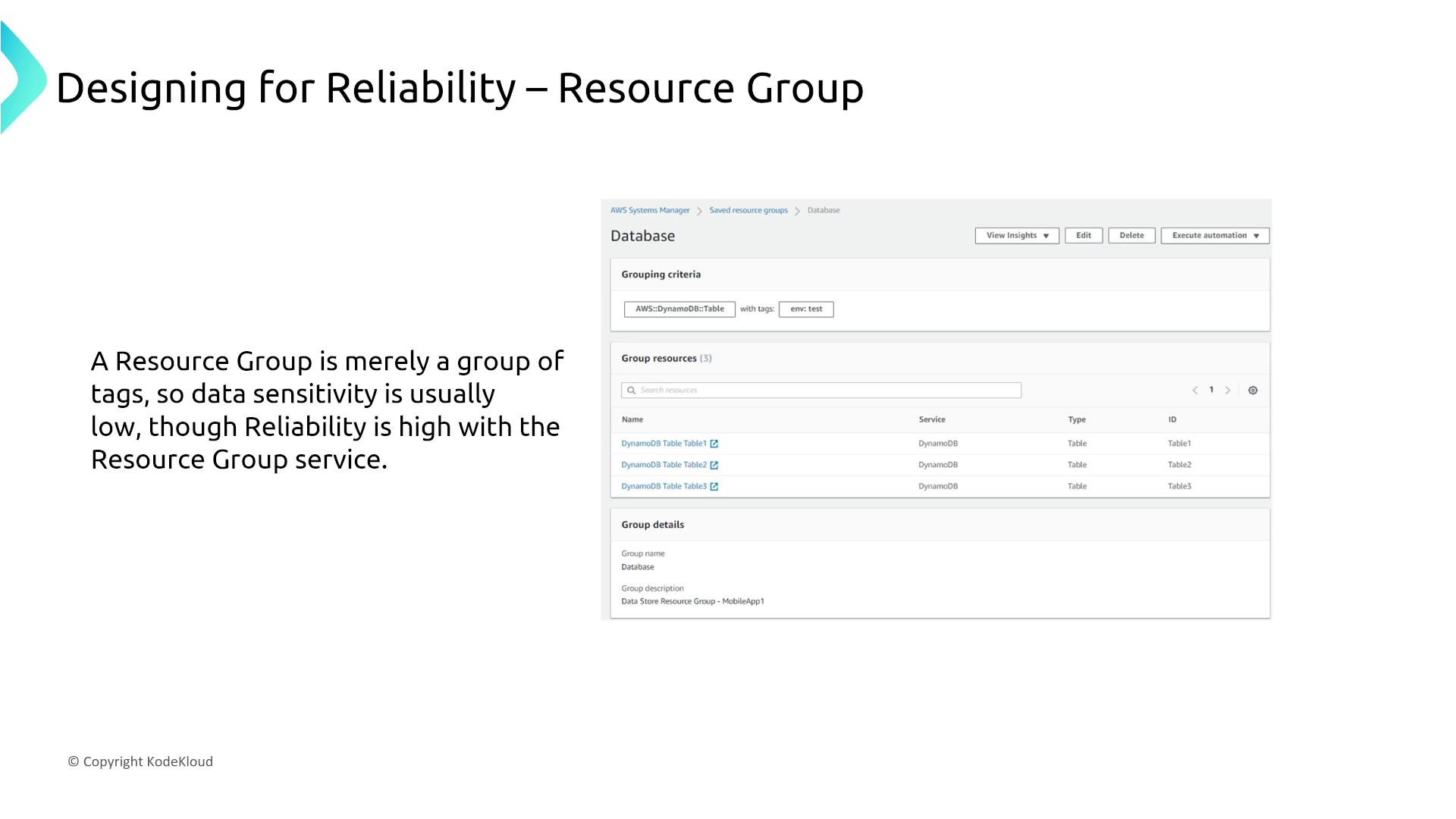
Tag Editor, Resource Explorer, Resource Groups, and Resource Access Manager
AWS provides several tools to organize and manage your resources effectively:- Tag Editor: Enables efficient tagging across services.
- Resource Explorer and Resource Groups: Help in grouping and identifying related resources.
- Resource Access Manager: Facilitates secure resource sharing.

Resilience Hub
AWS Resilience Hub assists in assessing and improving the resiliency of your applications by analyzing configurations and suggesting best practices. Although the process involves manual inputs for analysis, the tool does not offer direct modifications to enhance service reliability.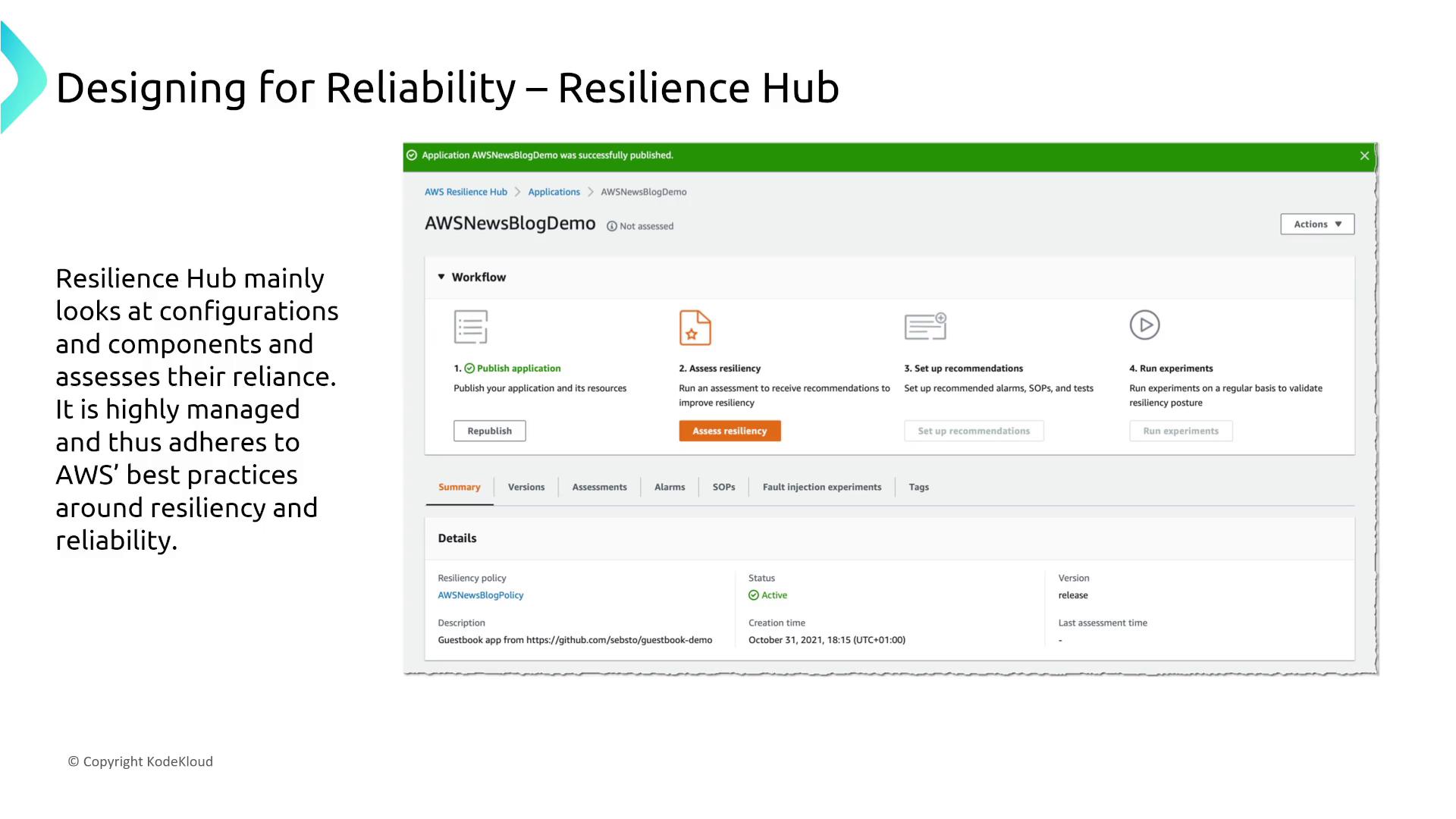
Most AWS management and governance services are engineered to be inherently reliable. They come with built-in resilience, auto-healing, and seamless integration with observability tools—thus eliminating the need for manual adjustments.