

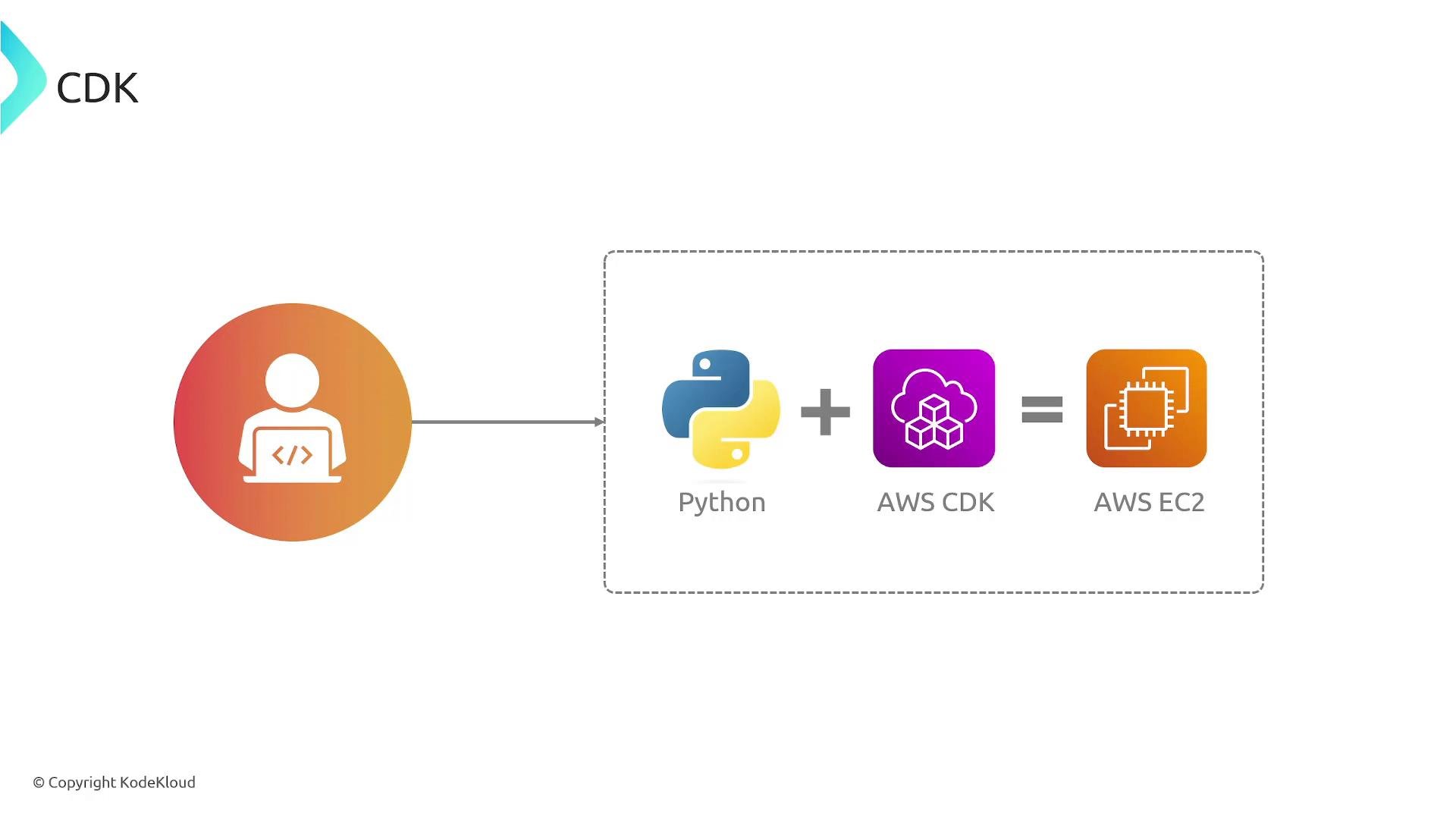
Why use AWS CDK?
CDK provides the benefits of a general-purpose programming language combined with the reliability of CloudFormation deployments:- Use familiar programming constructs: loops, conditionals, functions, modules, packages, and test frameworks.
- Build higher-level abstractions (constructs) that encapsulate best practices and are reusable across teams and projects.
- Rely on a rich AWS Construct Library for common services and patterns.
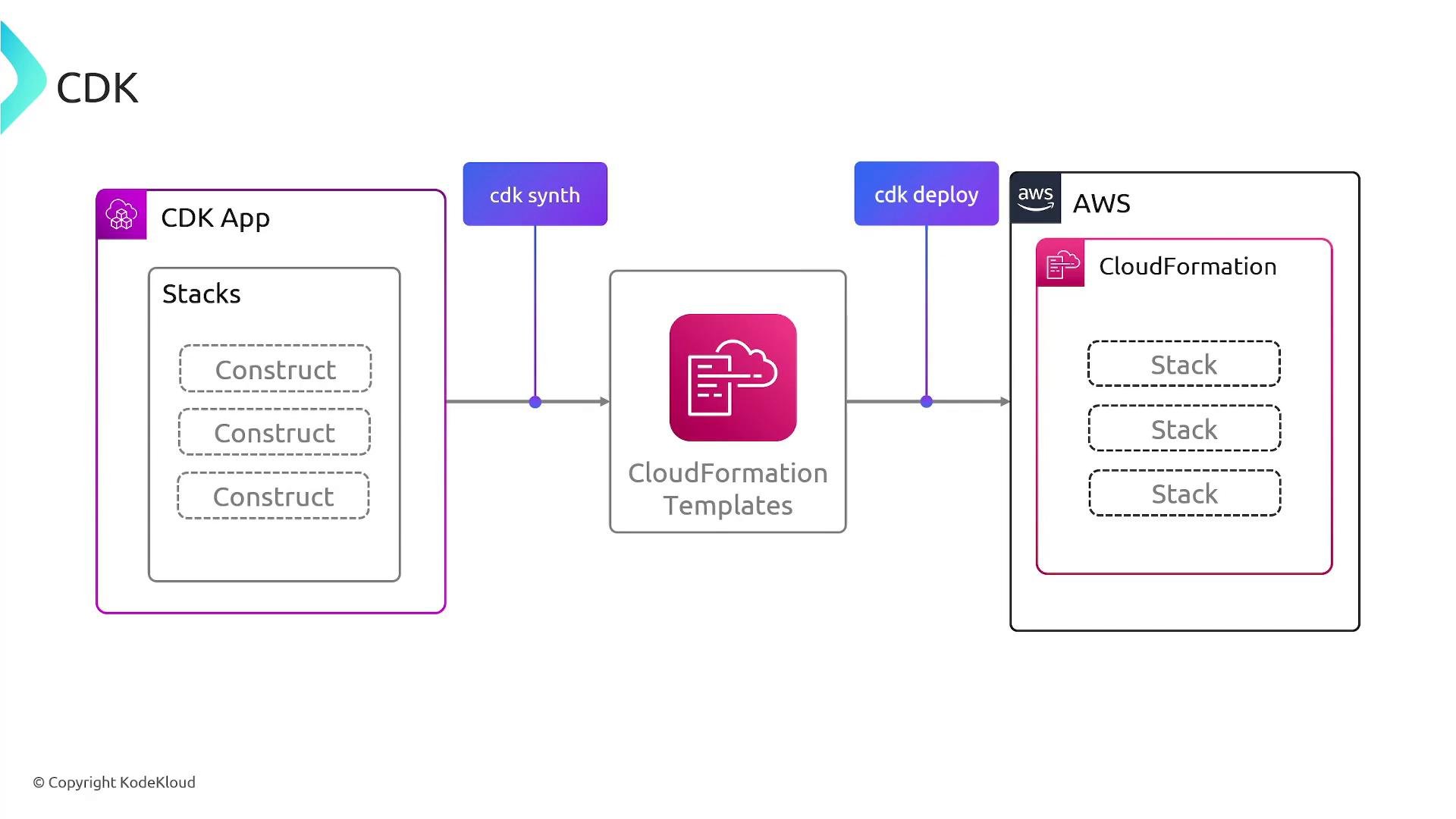
- CDK synthesizes your code into CloudFormation templates, so deployments still go through AWS CloudFormation.
Typical CDK workflow
- Write code that composes constructs into stacks inside a CDK app.
- Run
cdk synthto synthesize AWS CloudFormation templates from your CDK app. - Run
cdk deployto hand the templates to AWS CloudFormation, which creates or updates the stacks.
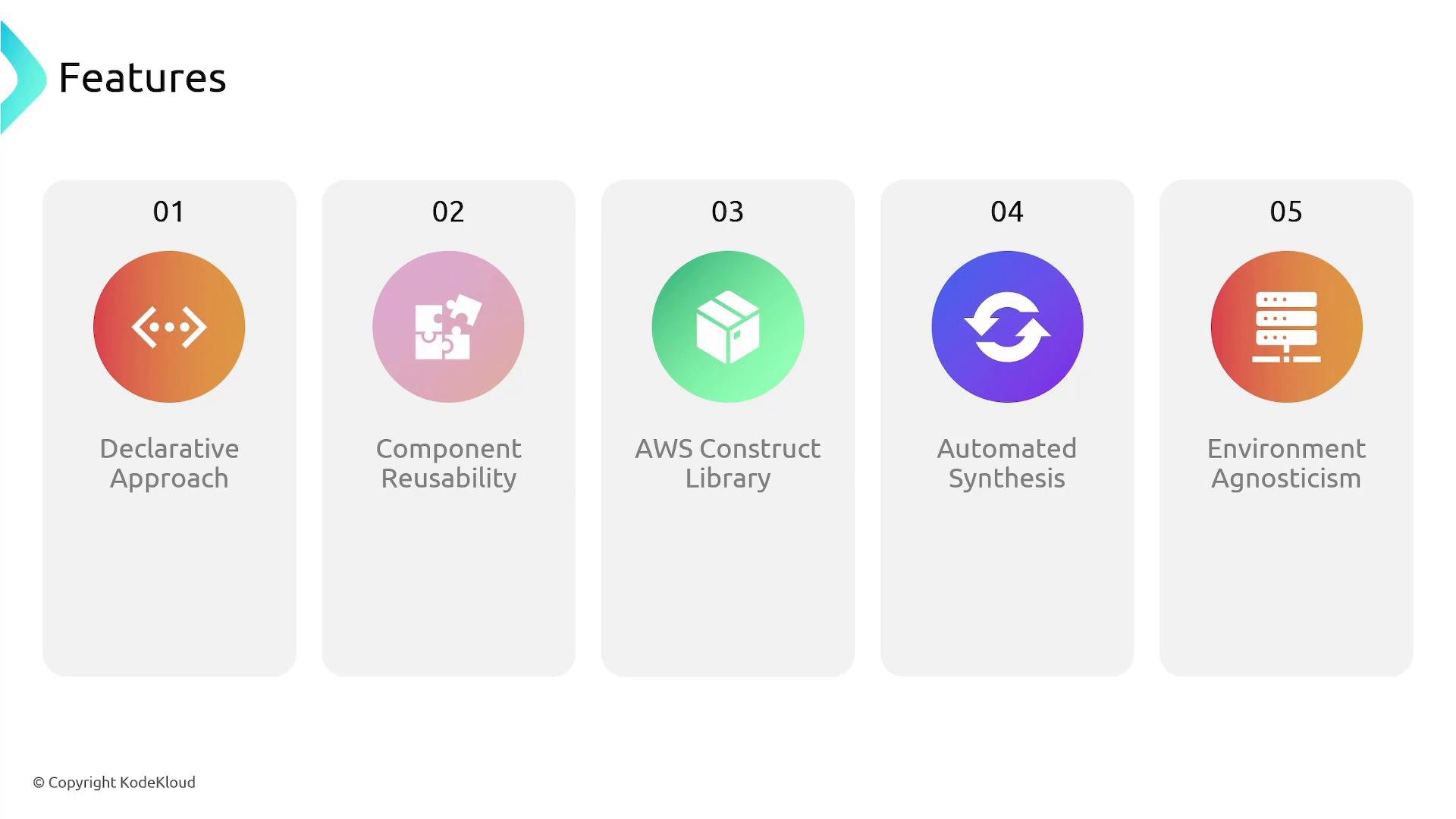
Core CDK concepts
- Constructs: opinionated building blocks that represent one or more AWS resources.
- AWS Construct Library: pre-built constructs that map to AWS services and common patterns.
- Automated synthesis: transforms your code into CloudFormation templates.
- Reusability: parameterize constructs and stacks for environment-specific configuration.
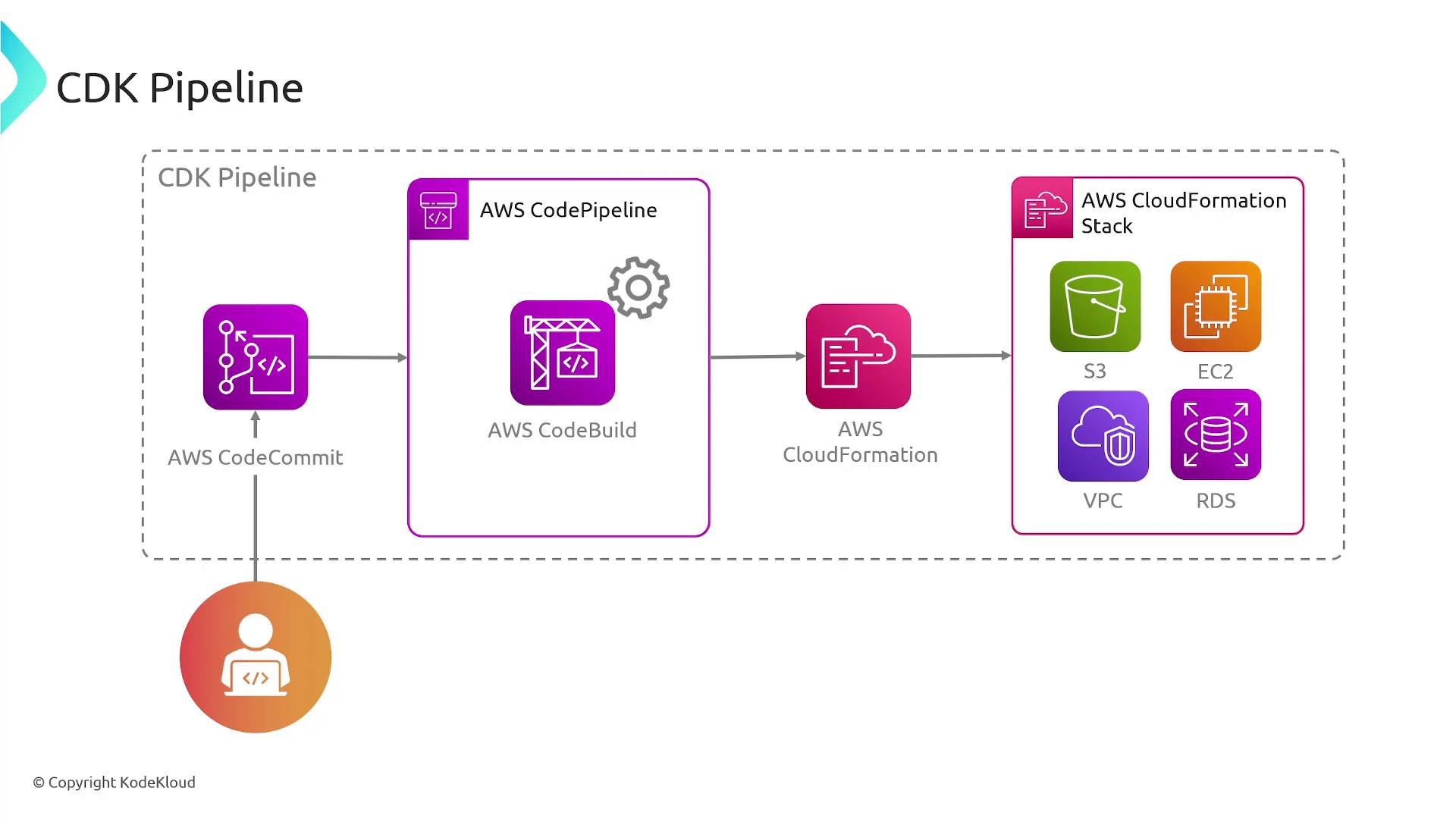
CDK in CI/CD pipelines
Because CDK outputs CloudFormation templates, it integrates cleanly with AWS-native CI/CD services. A typical pipeline:- Source: CodeCommit, GitHub, or another repository.
- CI: CodeBuild (or another runner) runs tests, builds artifacts, and runs
cdk synth. - CD: Deploys the synthesized CloudFormation templates via AWS CloudFormation to create/update resources.
Quick reference: commands and minimal Python example
Common CLI commands (CDK v2):
Minimal Python CDK stack (CDK v2 style):
cdk synth generates a CloudFormation template representing the bucket; cdk deploy hands that template to CloudFormation to create the bucket in your AWS account.
Considerations and best practices
CDK is ideal for teams that want to express infrastructure using a programming language, reuse constructs across projects, and integrate infrastructure code into unit tests and CI/CD pipelines.
Because CDK synthesizes to CloudFormation, be aware of CloudFormation limits (template size, resource counts). Very large apps may require splitting into multiple stacks or using nested stacks and adjustments for limits.
Summary
AWS CDK combines the expressiveness of general-purpose programming languages with CloudFormation’s deployment model. Use constructs to package best practices, synthesize to CloudFormation for reliable deployment, and integrate CDK into CI/CD pipelines for repeatable, automated infrastructure delivery.Links and references
- AWS CDK documentation: https://docs.aws.amazon.com/cdk/
- AWS CloudFormation docs: https://docs.aws.amazon.com/cloudformation/
- CDK Construct Library: https://docs.aws.amazon.com/cdk/api/v2/
- Kubernetes Documentation