

- Reliable backup mechanisms
- Multi-regional deployments for critical components
- Robust security measures
- An effective disaster recovery plan
Overview of AWS Resilience Hub
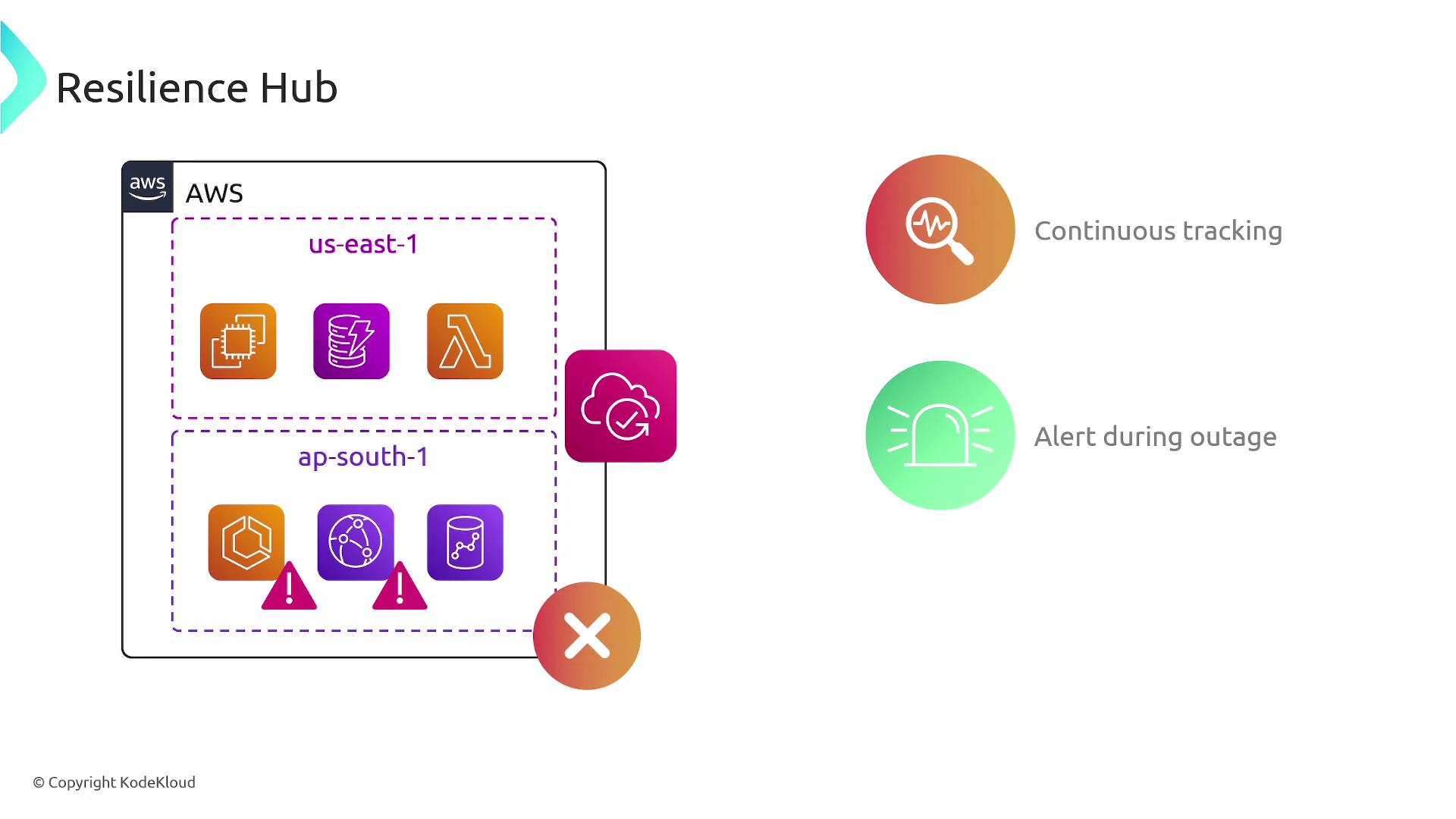
AWS Resilience Hub simplifies and automates your disaster recovery process in the AWS cloud. It offers a centralized console from which you can manage resilient activities such as backup scheduling and setting recovery objectives—including Recovery Point Objective (RPO) and Recovery Time Objective (RTO).
- RPO (Recovery Point Objective): The maximum tolerable timeframe in which data might be lost due to an incident.
- RTO (Recovery Time Objective): The targeted period within which systems and business processes must be restored to prevent unacceptable consequences.
Configuring and Assessing Resilience
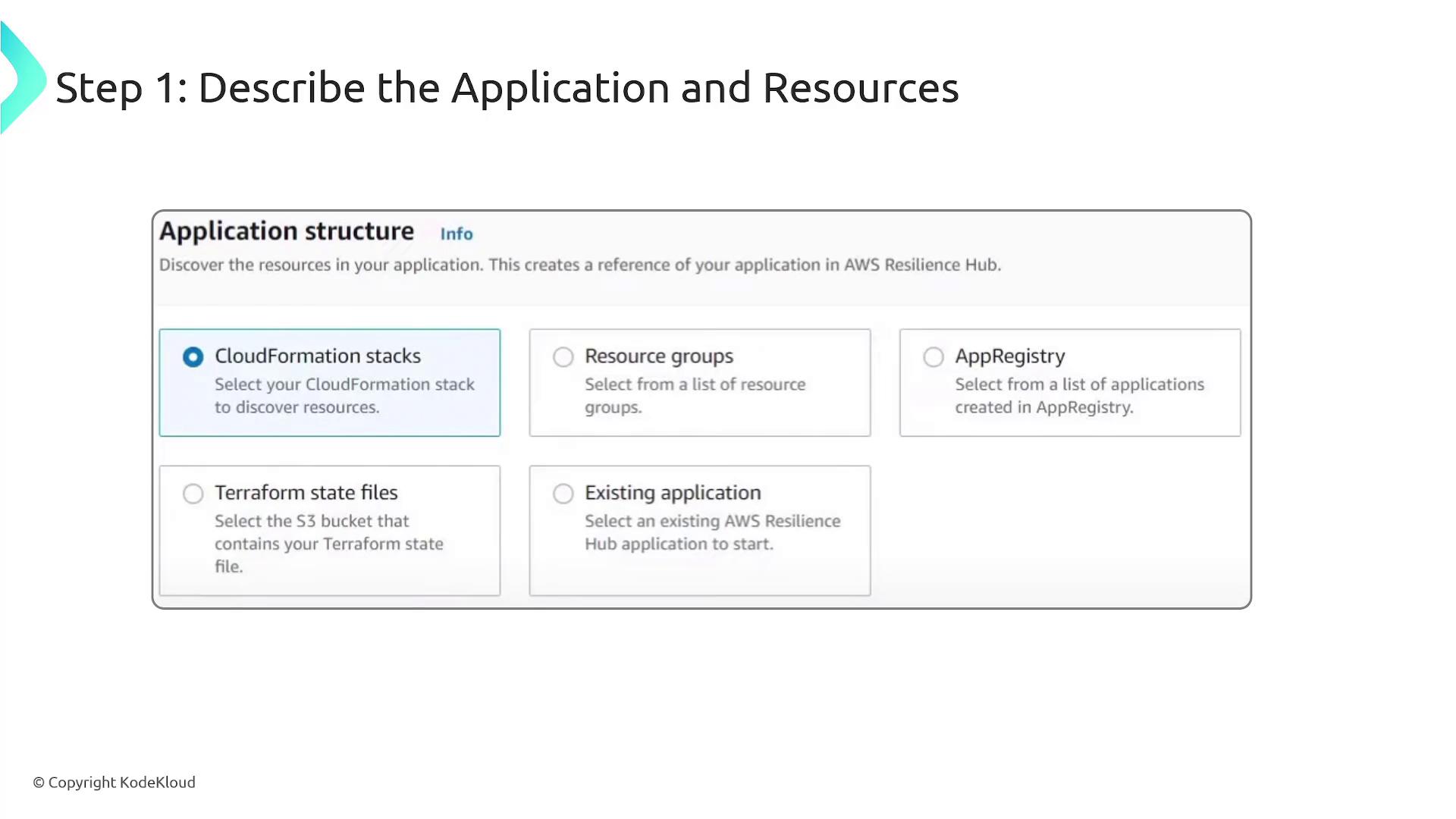
Configuring Resilience Hub begins by specifying which resources to protect. There are several methods to define these resources:- Use the CloudFormation stack that created your resources
- Utilize a resource group
- If managing with Terraform, reference the Terraform state file
Testing and Evaluating Resilience
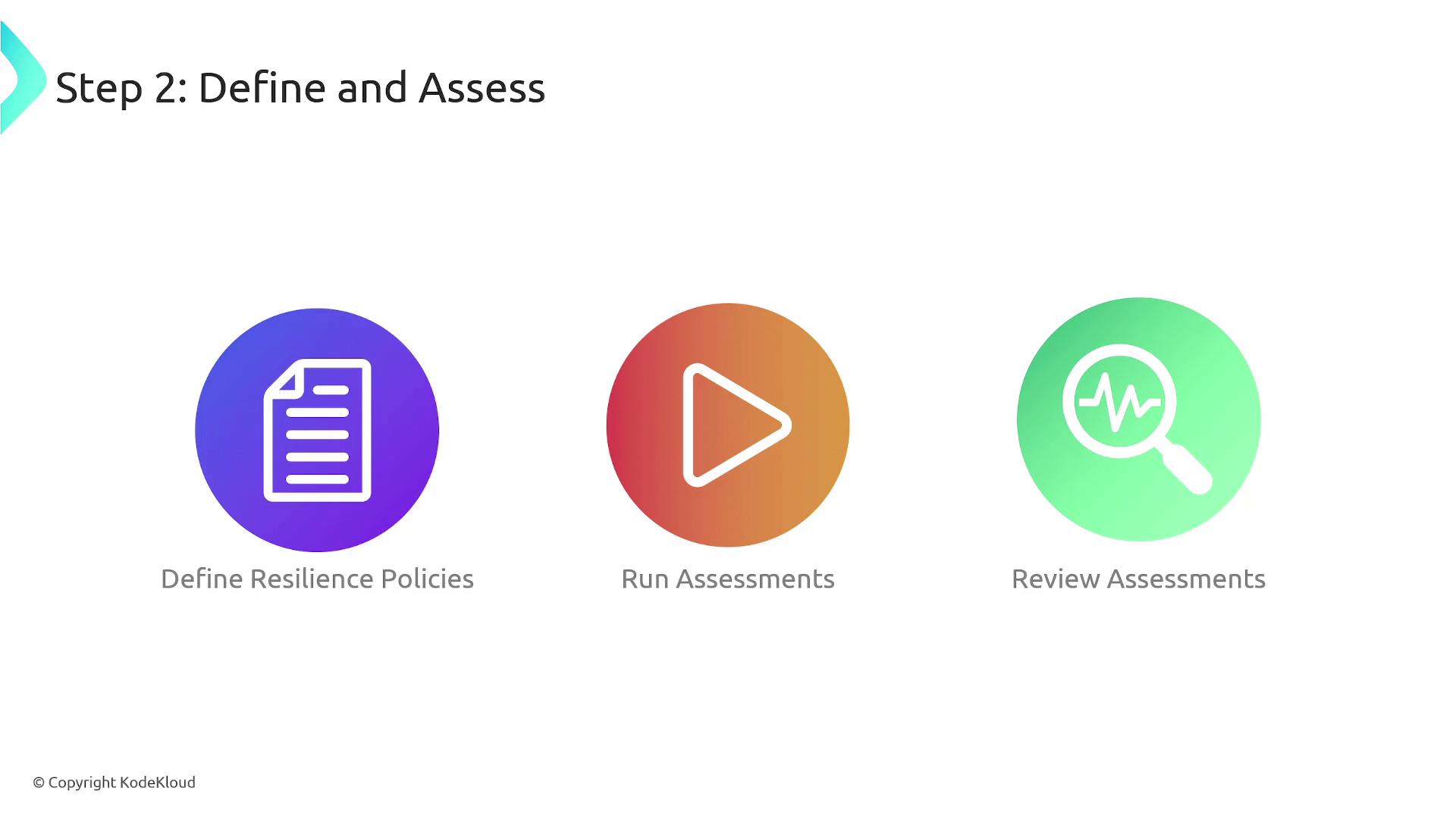
Once your resilience configuration is up-to-date, it’s important to conduct tests that mimic real-world outages. This testing evaluates whether your AWS resources and applications restore within your target RTO and meet your RPO expectations. These simulated tests are critical for understanding and enhancing the overall resiliency and recovery speed of your systems.Regular testing of your disaster recovery plan ensures that your infrastructure remains resilient and compliant with business continuity requirements.
Key Features and Benefits of AWS Resilience Hub
The benefits of integrating AWS Resilience Hub into your disaster recovery strategy include:-
Centralized Resiliency Planning:
Manage and monitor your recovery plans across multiple AWS services and accounts from a single interface. -
Automated Backup and Recovery:
Streamline critical data backup and facilitate rapid restoration in the event of a disaster, thereby minimizing downtime and data loss. -
Compliance Adherence:
Implement disaster recovery processes that meet legal and regulatory standards. -
Continuous Monitoring:
Obtain real-time insights and alerts on potential issues, enabling proactive measures to prevent disruptions.
AWS Resilience Hub provides a comprehensive ecosystem to ensure your AWS infrastructure is well-prepared to withstand, recover from, and ultimately prevent the adverse effects of disasters.
For further reading on AWS disaster recovery strategies, consider reviewing the AWS Well-Architected Framework and related resources in the AWS Documentation.