

- Keywords: EKS Anywhere, ECS Anywhere, EKS Distro, ECS agent, on‑premises Kubernetes, hybrid cloud container management
What is EKS Anywhere?
EKS Anywhere lets you deploy and operate Kubernetes clusters on your own infrastructure using the same Kubernetes distribution Amazon EKS uses in the cloud. This provides a consistent Kubernetes experience for hybrid deployments, simplifies operations, and helps meet data‑sovereignty or compliance requirements.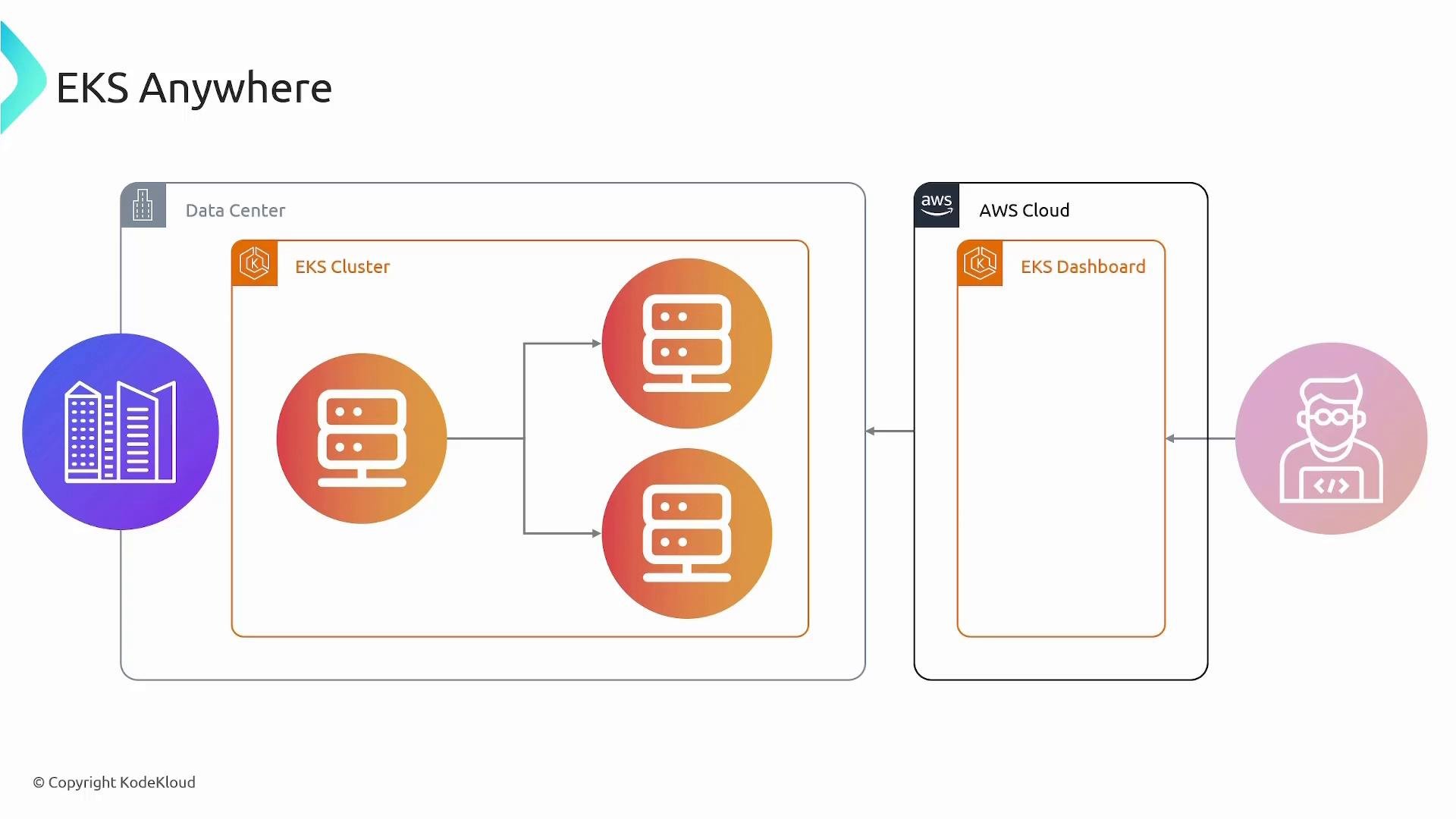
- EKS Anywhere runs Kubernetes using the EKS Distro — the same upstream build used by Amazon EKS.
- You manage clusters using EKS Anywhere tooling on‑premises.
- Optional registration with the Amazon EKS console is possible through Amazon EKS Connector, giving centralized visibility without moving workloads to AWS.
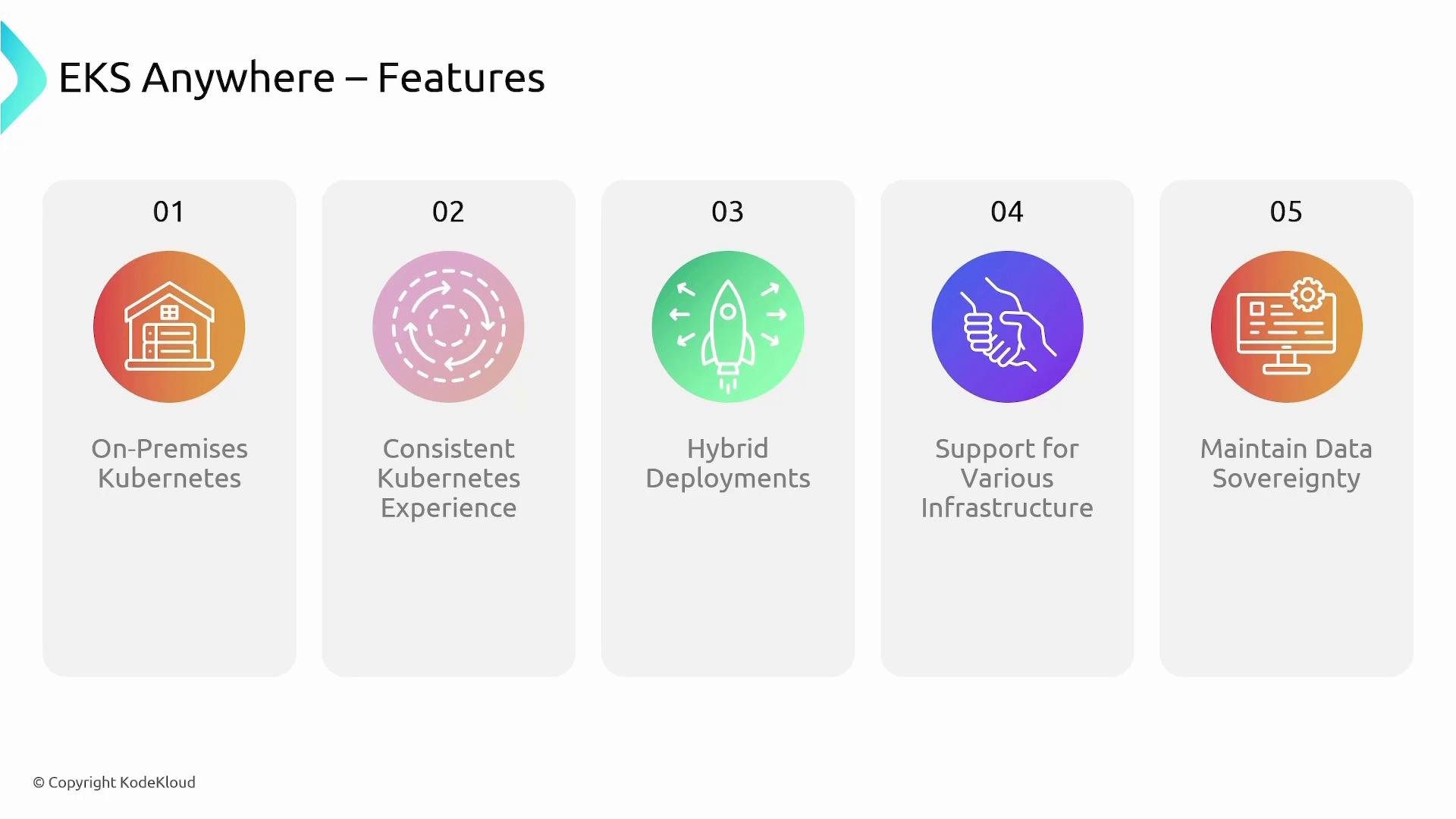
- Runs a consistent Kubernetes distribution via EKS Distro.
- Supports deployment onto VMs and bare‑metal servers.
- Enables hybrid architectures and workloads that must remain on‑premises for regulatory or latency reasons.
- Can integrate with AWS management tools (for example, via EKS Connector) for centralized metadata, metrics, and limited remote actions.
EKS Anywhere focuses on delivering a consistent Kubernetes distribution and lifecycle tooling for on‑premises clusters. If you want visibility and some management from the AWS Console, use Amazon EKS Connector to register your EKS Anywhere clusters.
What is ECS Anywhere?
ECS Anywhere brings Amazon Elastic Container Service (ECS) scheduling and management to resources outside AWS. With ECS Anywhere, you can run ECS tasks on VMs or bare metal in your data center (or other clouds) while keeping the ECS operational model and control plane.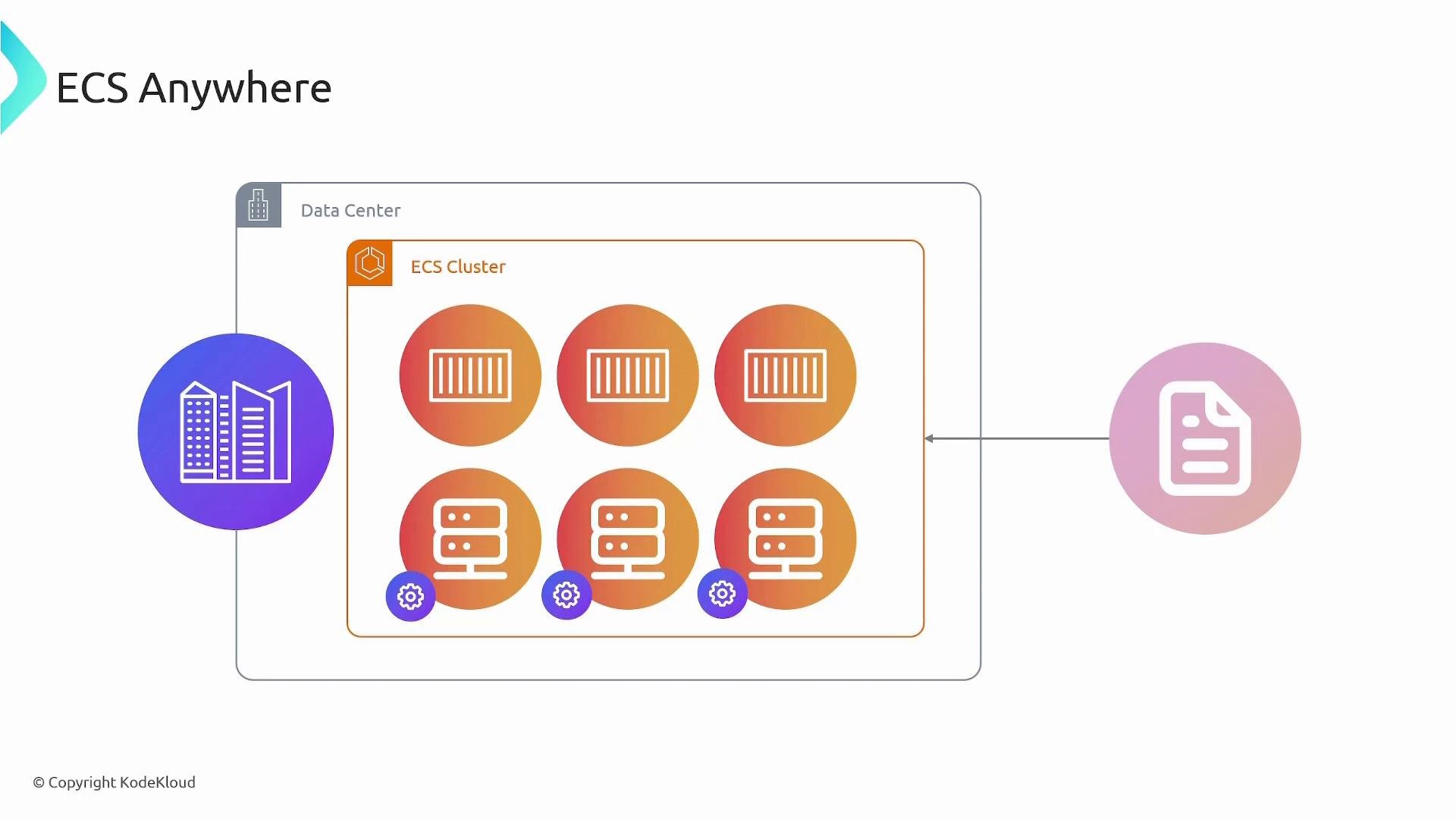
- Install the ECS agent on external instances to register them as capacity with your ECS cluster. See the ECS agent docs: https://docs.aws.amazon.com/AmazonECS/latest/developerguide/ecs-agent.html
- Typically install the AWS Systems Manager (SSM) agent to allow AWS Systems Manager to manage and provide secure access to those instances (https://docs.aws.amazon.com/systems-manager/latest/userguide/ssm-agent.html).
- The ECS control plane continues to perform task placement and cluster management; tasks run where you choose (on‑prem or cloud).
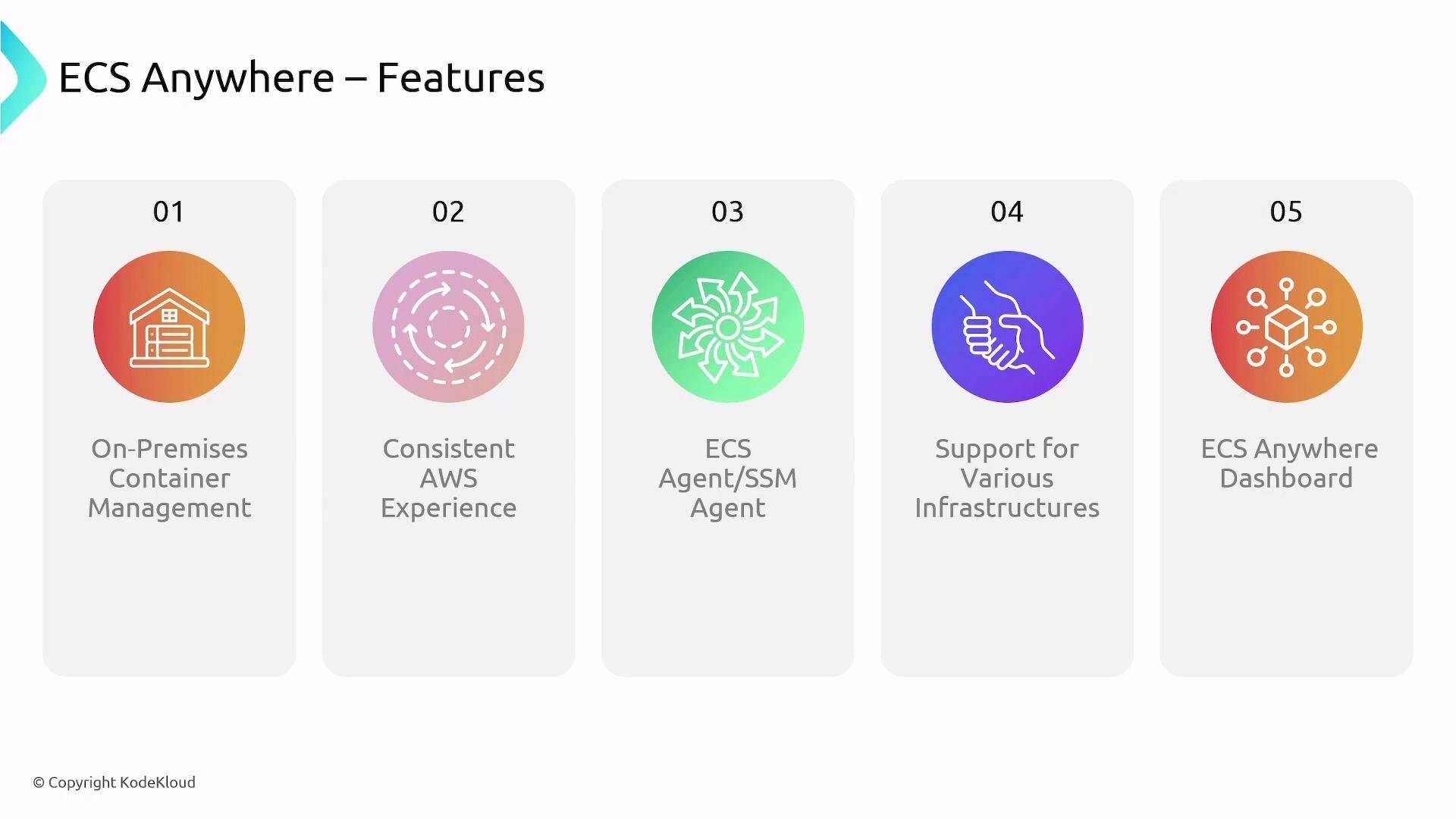
- Extends ECS task scheduling to on‑premises infrastructure via the ECS agent.
- Works with virtual machines, bare metal, and other cloud providers as external capacity.
- Uses familiar ECS monitoring and management interfaces (ECS console, CloudWatch, etc.) for consistent operations.
- Requires agent installation and secure connectivity between your infrastructure and the ECS control plane.
EKS Anywhere vs. ECS Anywhere (Quick comparison)
Common use cases
- Regulatory or compliance requirements that mandate keeping data and workloads on‑premises.
- Low-latency workloads that must be physically near users or systems.
- Hybrid architectures where some services stay on‑prem while others run in AWS.
- Organizations that want to standardize on Kubernetes (EKS Anywhere) or on ECS operational patterns (ECS Anywhere).
Links and references
- Amazon EKS product page
- EKS Anywhere product page
- EKS Distro
- Amazon EKS Connector documentation
- Amazon ECS product page
- ECS agent documentation
- AWS Systems Manager (SSM) agent docs
- EKS Anywhere brings the Amazon EKS Kubernetes distribution to your data center for consistent Kubernetes operations across cloud and on‑premises.
- ECS Anywhere extends ECS scheduling and task management to external instances via agents, enabling a familiar ECS operational model outside AWS. Both choices enable you to choose where workloads run while preserving much of the AWS tooling and workflows you’re already using.