

Core Networking and VPC Architecture
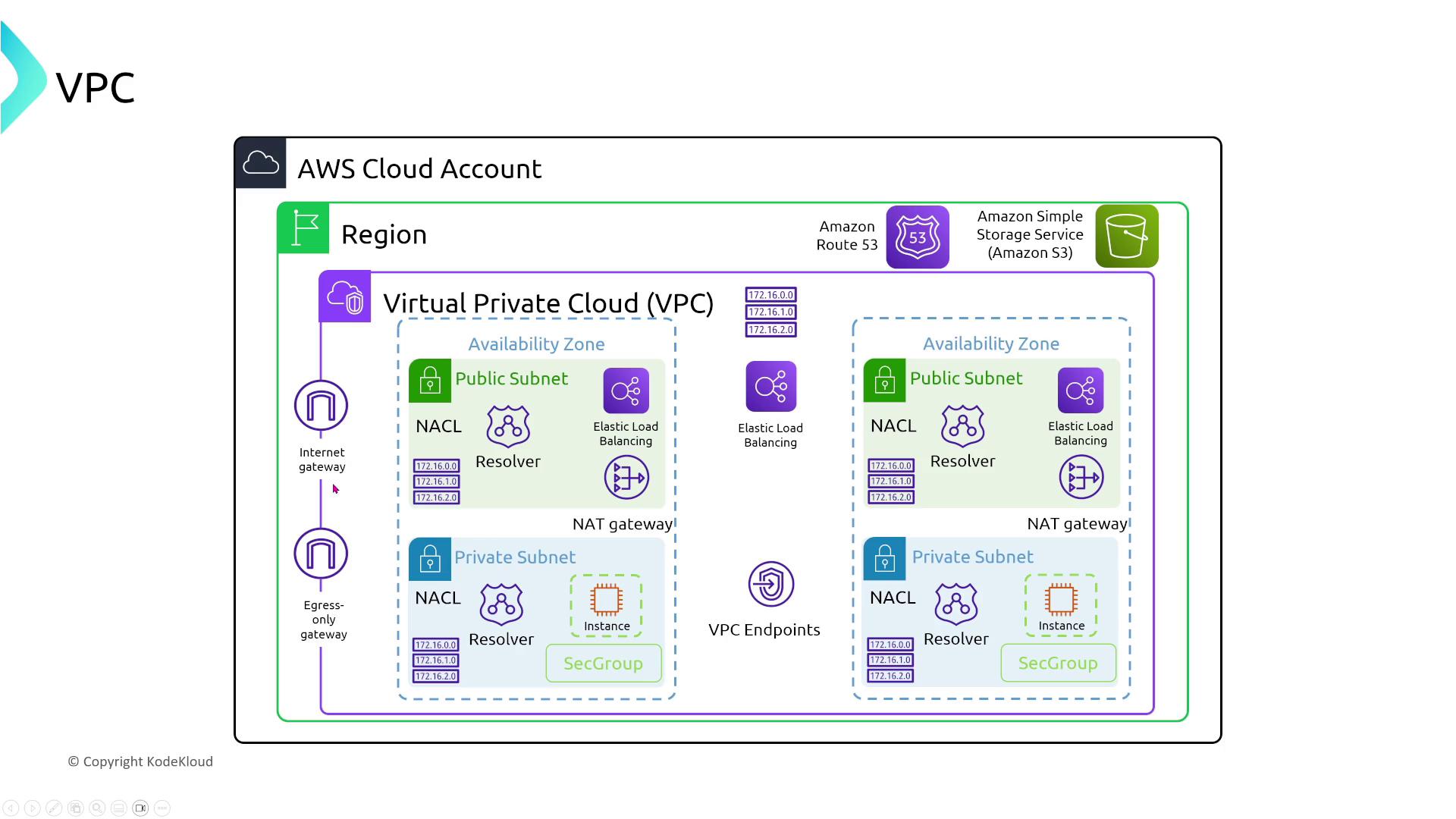
When discussing core networking, we primarily refer to Virtual Private Clouds (VPCs). In a traditional VPC setup, you typically see the following components:- The AWS account, region, and the VPC itself.
- Internet Gateway and IPv6 egress-only gateway.
- Public and private subnets within a specific Availability Zone.
- A load balancer spanning public subnets.
- A NAT gateway performing outbound internet traffic translation.
- DNS resolvers and route tables assigned to each subnet.
- Security groups safeguarding EC2 instances in private subnets.
- VPC endpoints for services (gateway endpoints for S3/DynamoDB and interface endpoints for other services).
Connecting Departmental VPCs
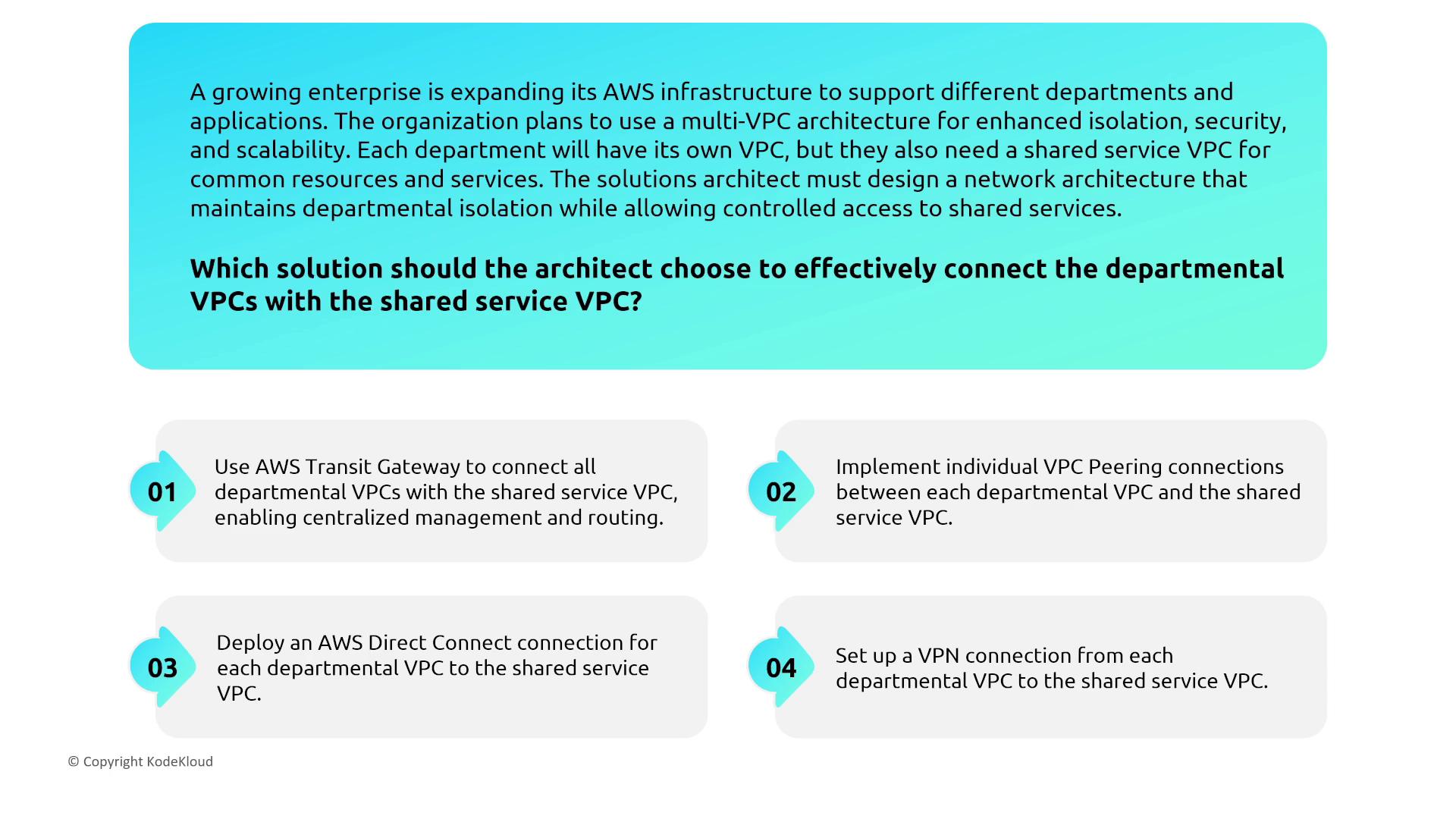
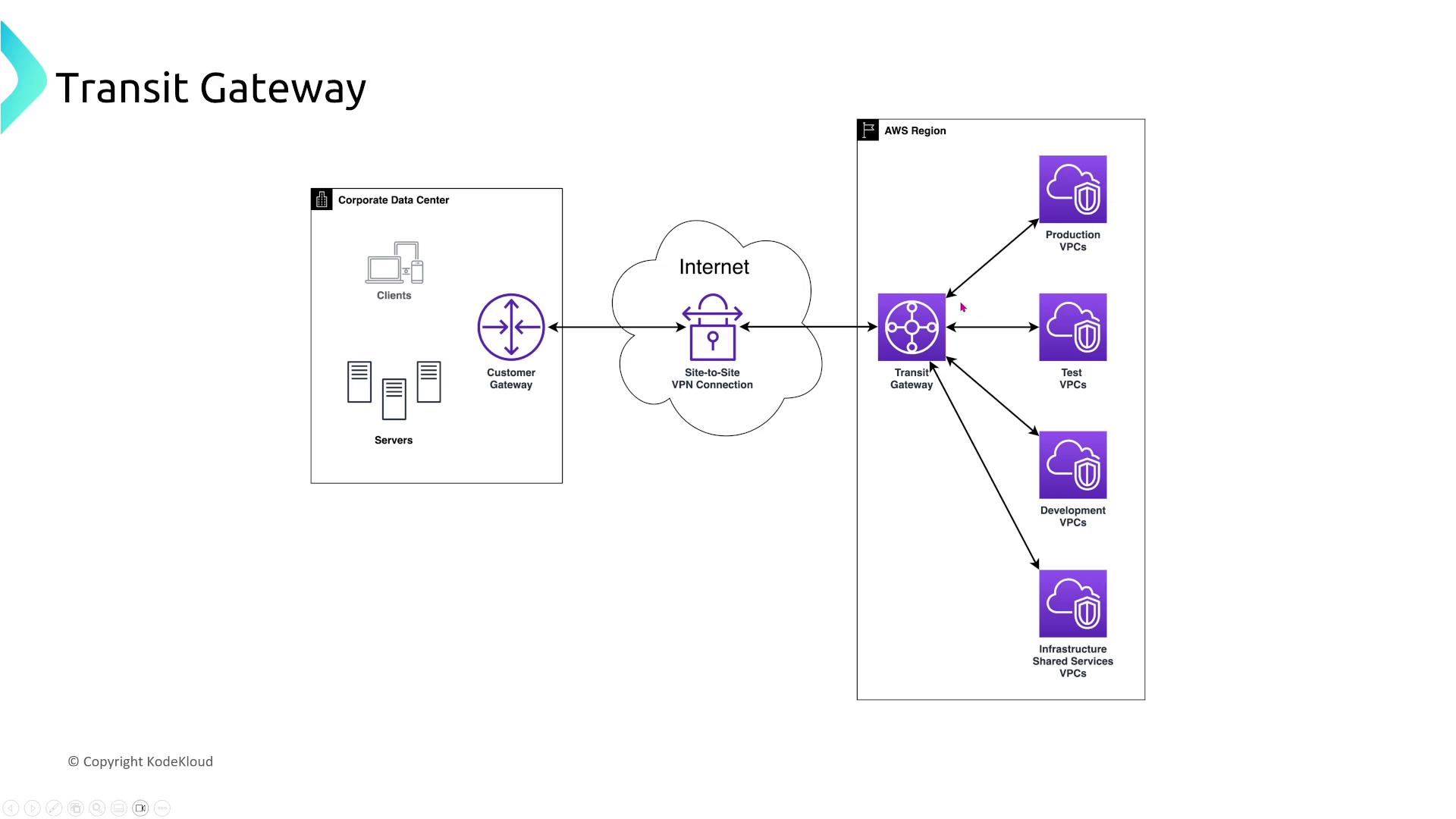
Consider a scenario where departmental VPCs need to be interconnected with a shared VPC while maintaining isolation between departments. The following options are commonly considered:- AWS Transit Gateway: Offers a highly scalable solution for connecting multiple VPCs.
- VPC Peering: Suitable for simpler setups with four or five VPCs, but less scalable.
- Direct Connect and VPN connections: Generally used to connect back to your corporate network rather than interconnecting VPCs directly.
Enhancing VPC Reliability and High Availability
To build a highly reliable network, deploy applications across multiple Availability Zones within your VPC. Key considerations include:- Hosting workloads in private subnets.
- Positioning load balancers in public subnets for secure, internet-facing access.
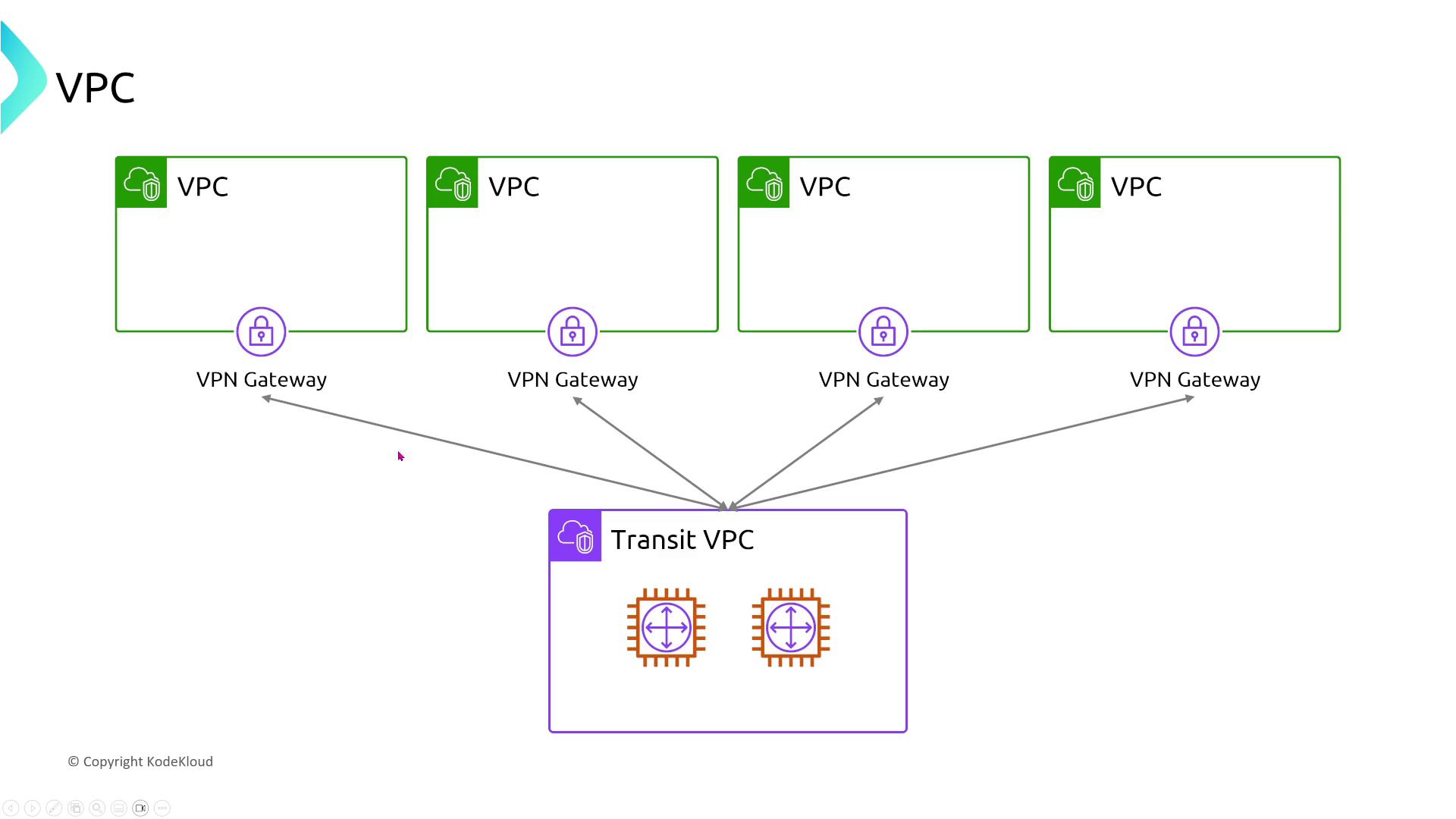
- Implementing a transit VPC connected with VPN gateways across several VPCs for inherent resiliency.
Routing and Traffic Segmentation
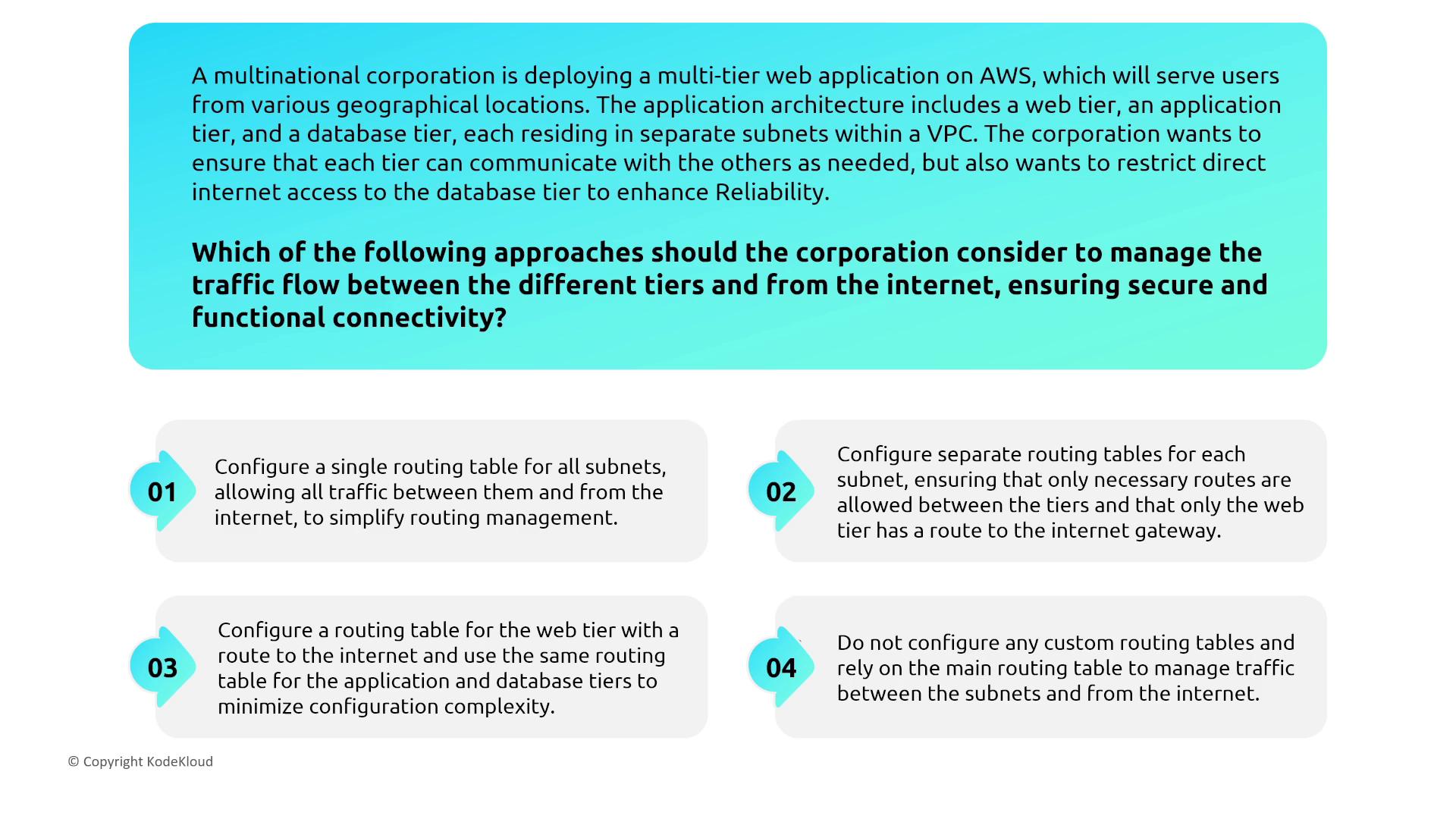
Routing is critical for maintaining network reliability. By using separate routing tables at both the subnet and VPC levels, you can control traffic flow effectively. Consider a multi-tier application where:- The web tier requires access only to the Internet Gateway.
- The application tier communicates with both the web tier and the database tier.
- The database tier remains isolated from direct internet access to enhance security.
Internet Gateways, NAT Gateways, and Egress-Only Gateways
AWS handles critical network components with built-in redundancy:- Internet Gateway: Although it appears as a single device, it consists of multiple devices managed transparently by AWS.
- NAT Gateway: Recommended for instances in private subnets to handle outbound traffic. A NAT gateway should be deployed in each Availability Zone.
- Egress-Only Gateway: Specifically used for enabling outbound IPv6 connectivity without allowing inbound traffic.
Managing IP Addresses and Elastic IPs
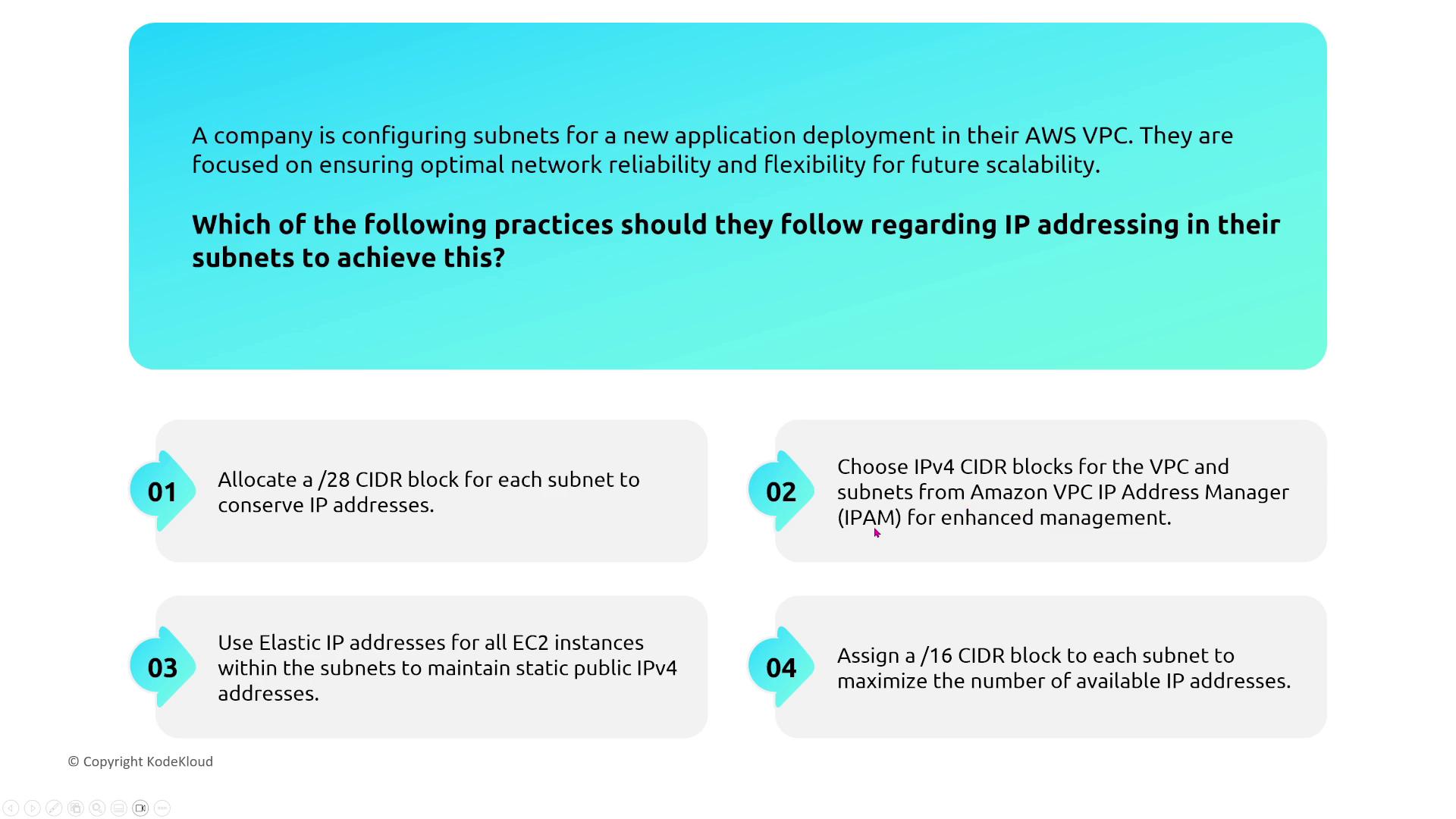
Effective IP address management is essential for network reliability. Best practices include:- Allocating a large CIDR block for your VPC.
- Assigning smaller CIDR blocks to public subnets and larger ones to private subnets to avoid IP range overlap.
- Supporting both IPv4 and IPv6 structures.
Security Devices and Load Balancers
AWS leverages virtual network security devices with built-in redundancy:- Network ACLs and Security Groups: These devices prevent single points of failure while enforcing security across multiple Availability Zones.
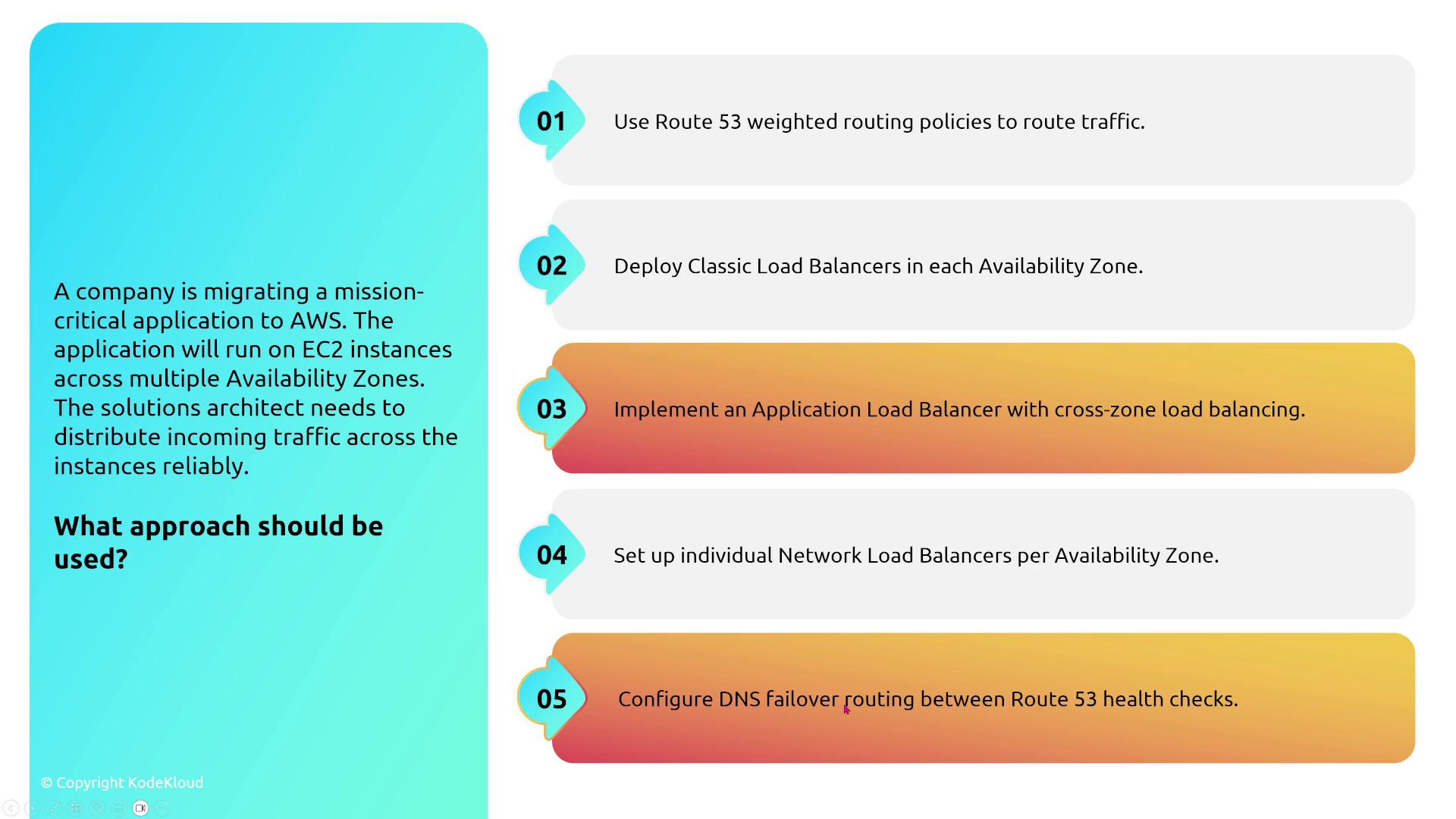
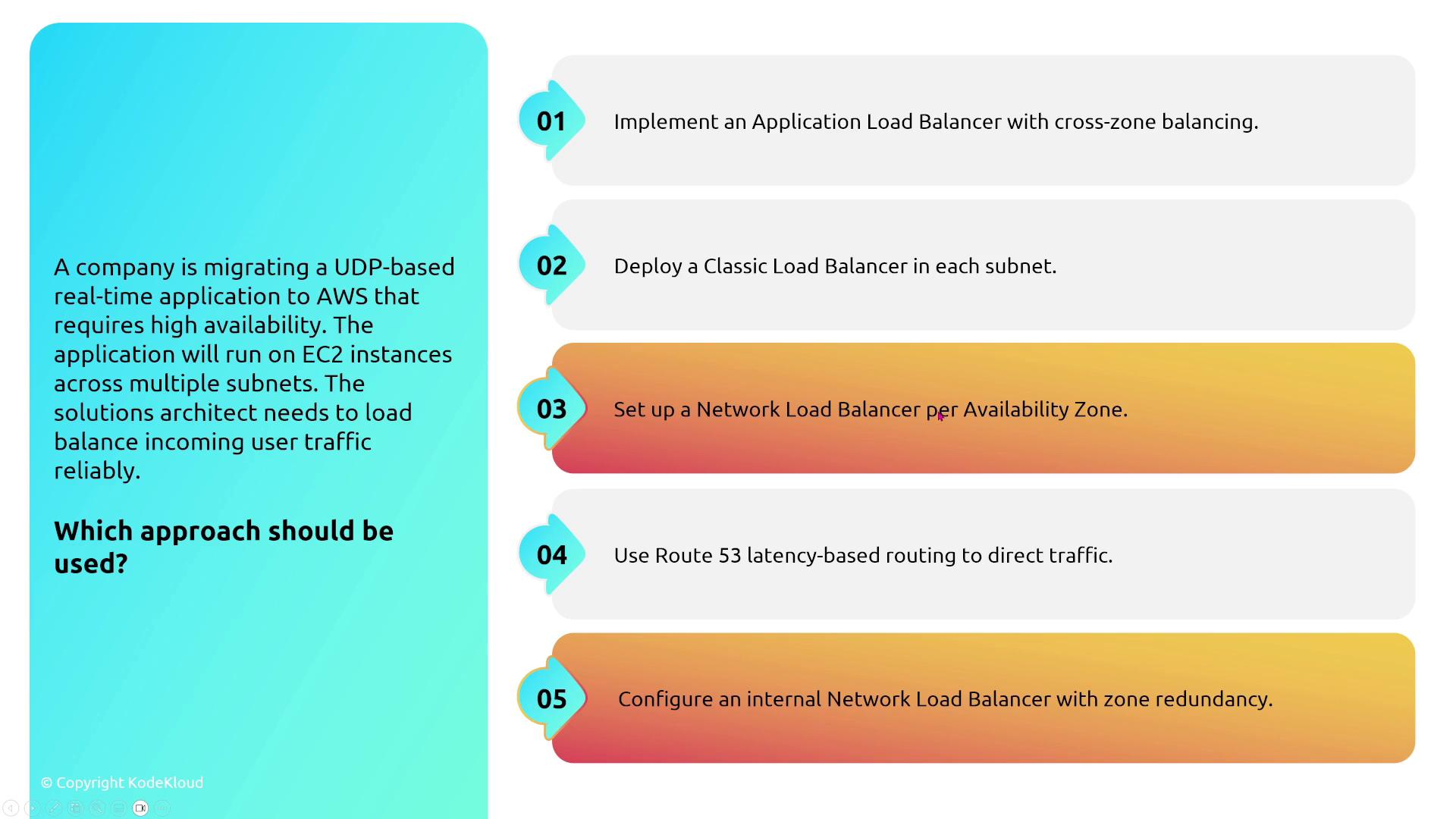
- Application and Network Load Balancers: These load balancers distribute traffic across Availability Zones. Enabling cross-zone load balancing enhances the resiliency of your applications.
Transit Networking: VPN, Direct Connect, and Transit Gateway
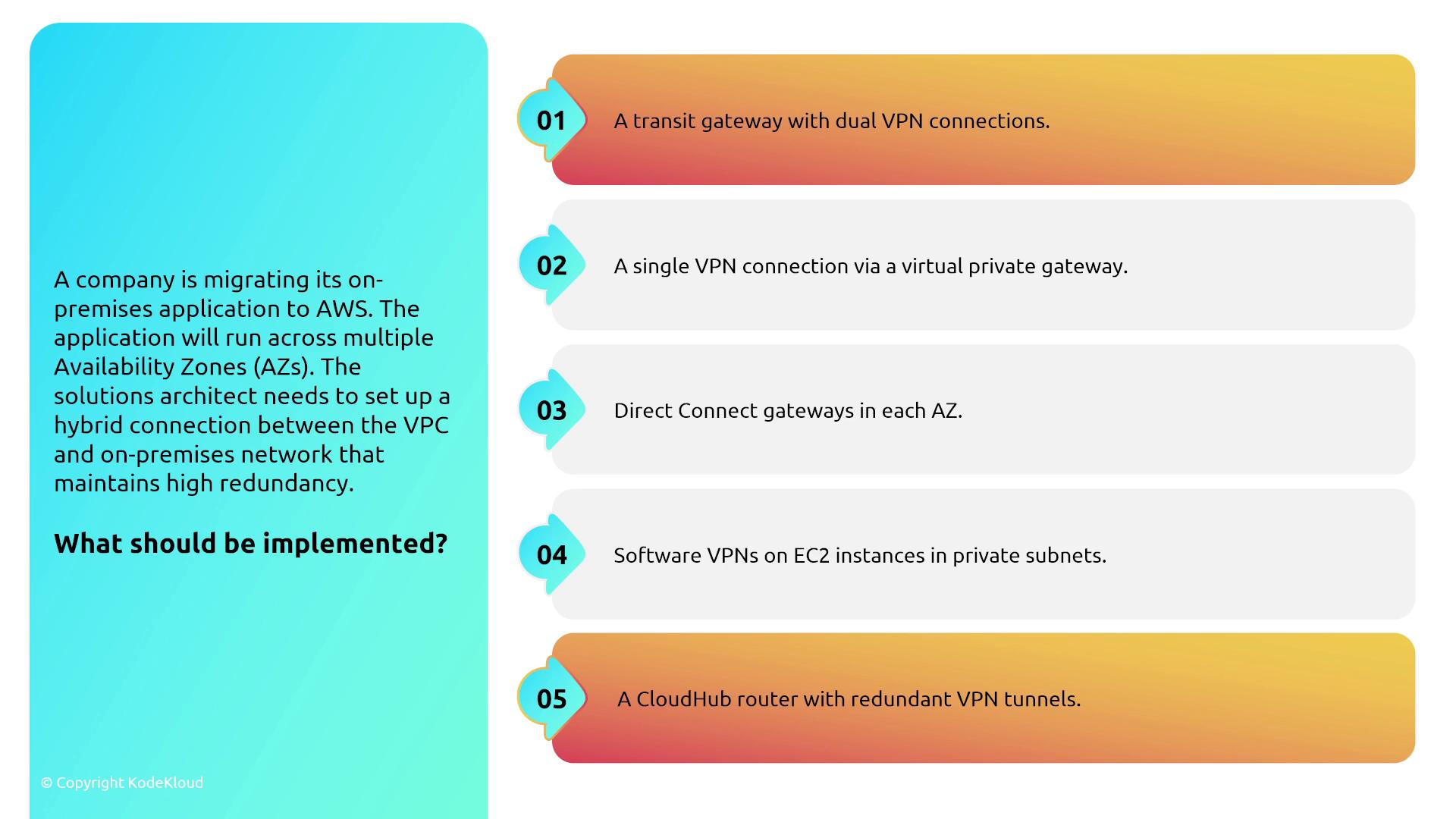
Hybrid networking scenarios require redundant connections for high availability. When migrating an application to AWS that must connect to on-premises networks, consider the following:- Transit Gateway with Dual VPN Connections: Enhances resiliency through multiple connectivity paths.
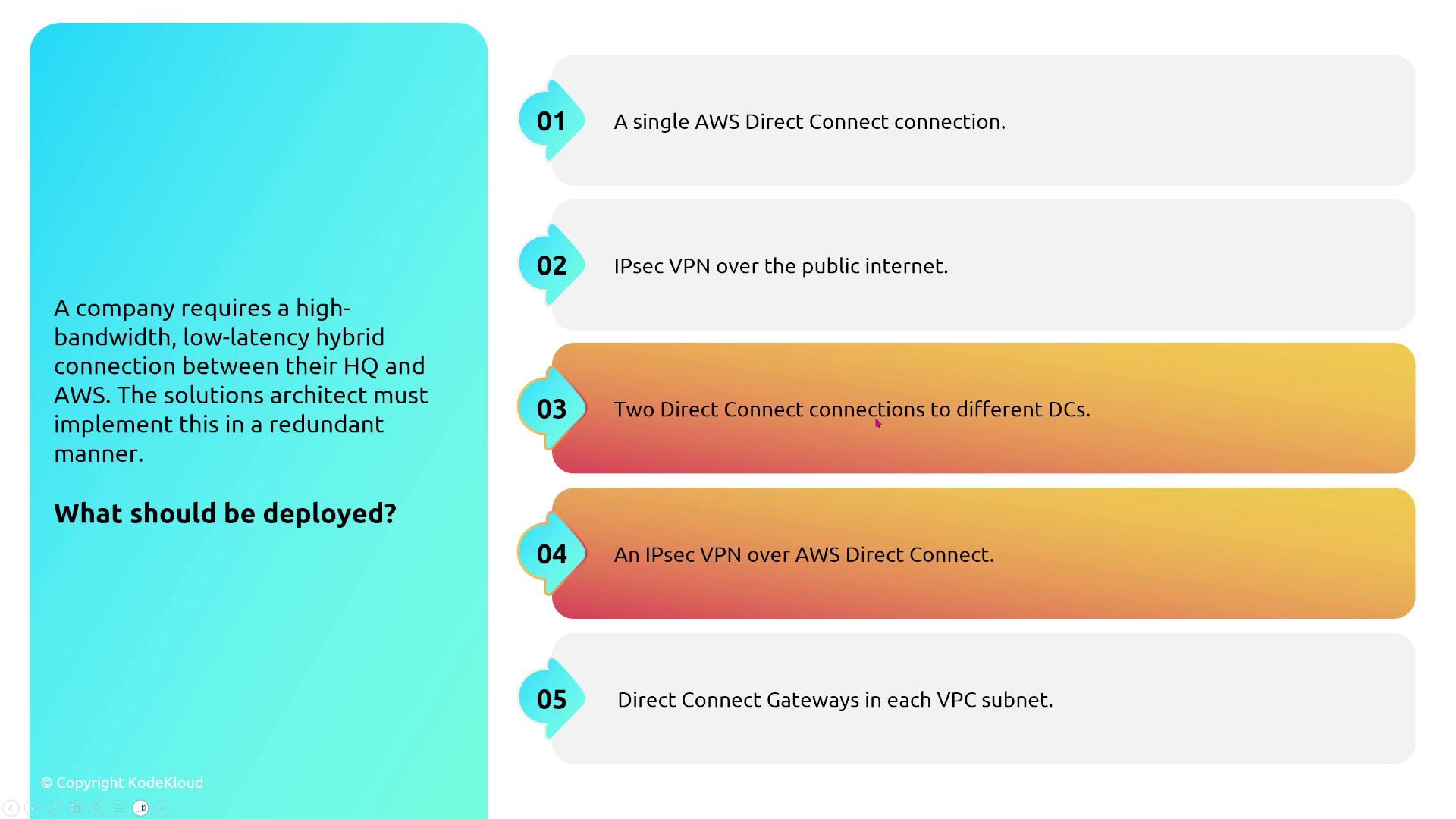
- Redundant Direct Connect Circuits: Important for ensuring continuous high-bandwidth connections.
Endpoints and PrivateLink
VPC endpoints provide secure and low-latency connectivity without traversing the public Internet. This is achieved by using:- Gateway Endpoints: For services like S3 and DynamoDB.
- Interface Endpoints via PrivateLink: These endpoints, while not placed in subnets, offer high scalability and redundancy through AWS’s internal infrastructure.
Edge Networking with CloudFront
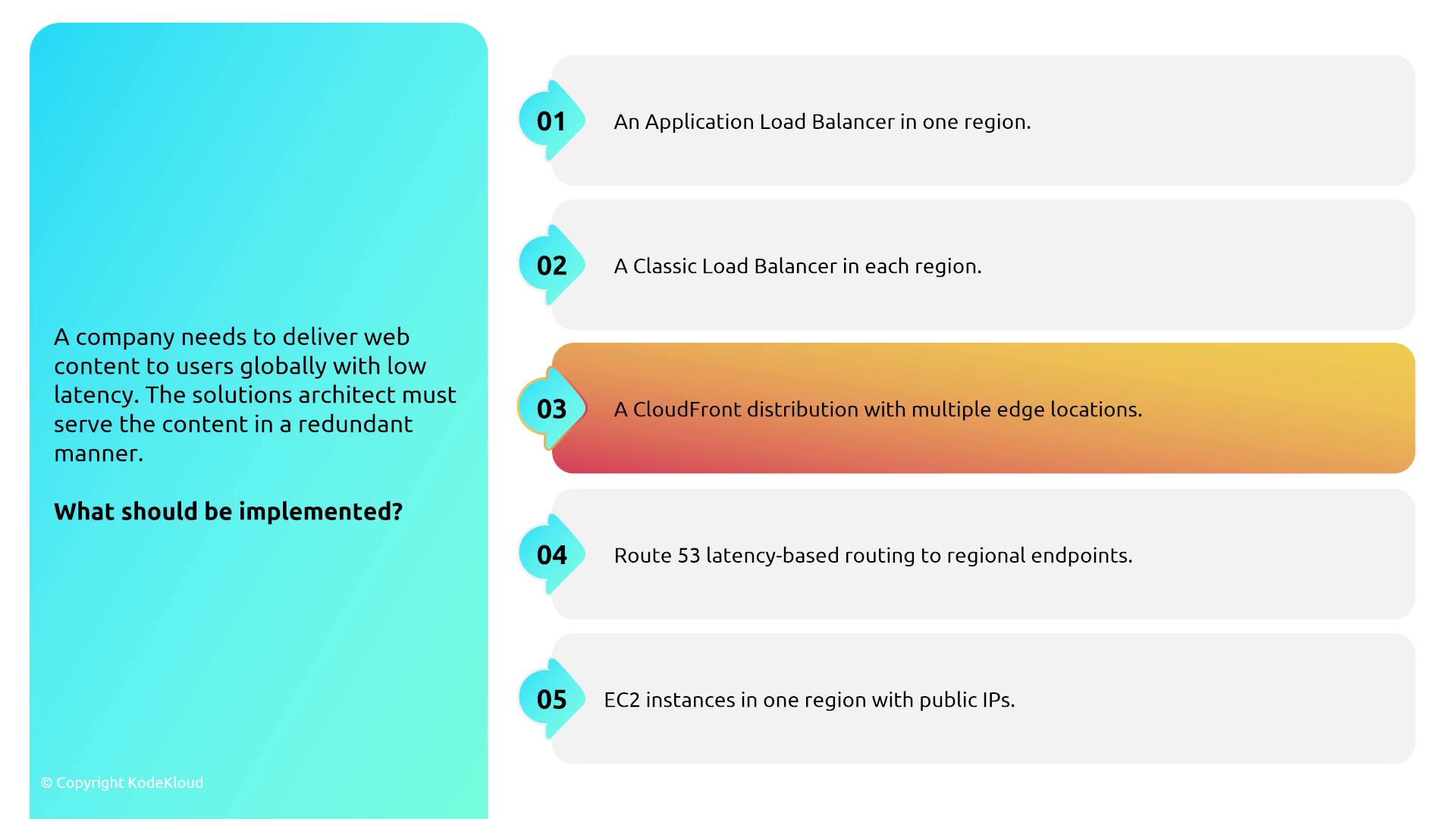
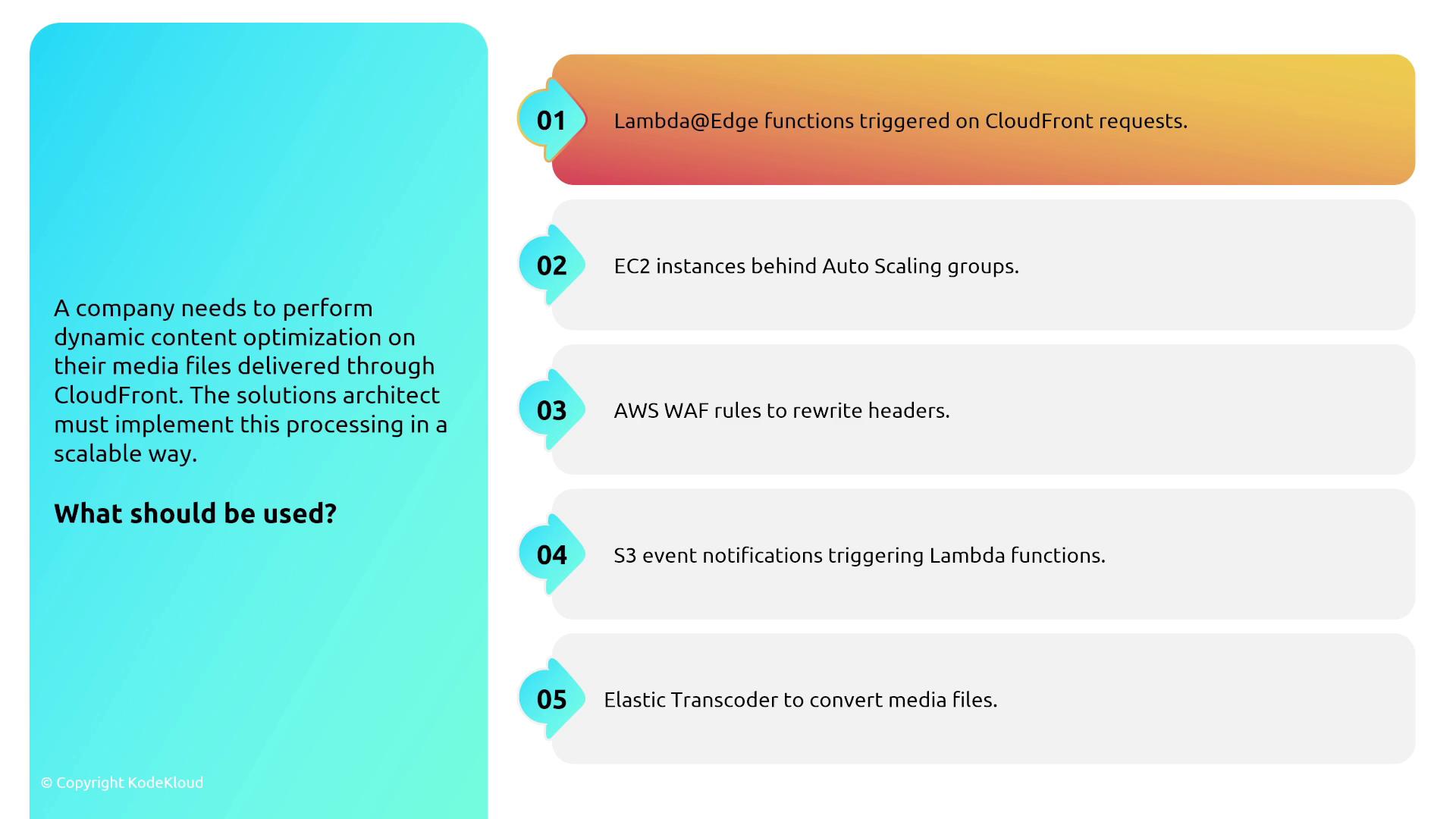
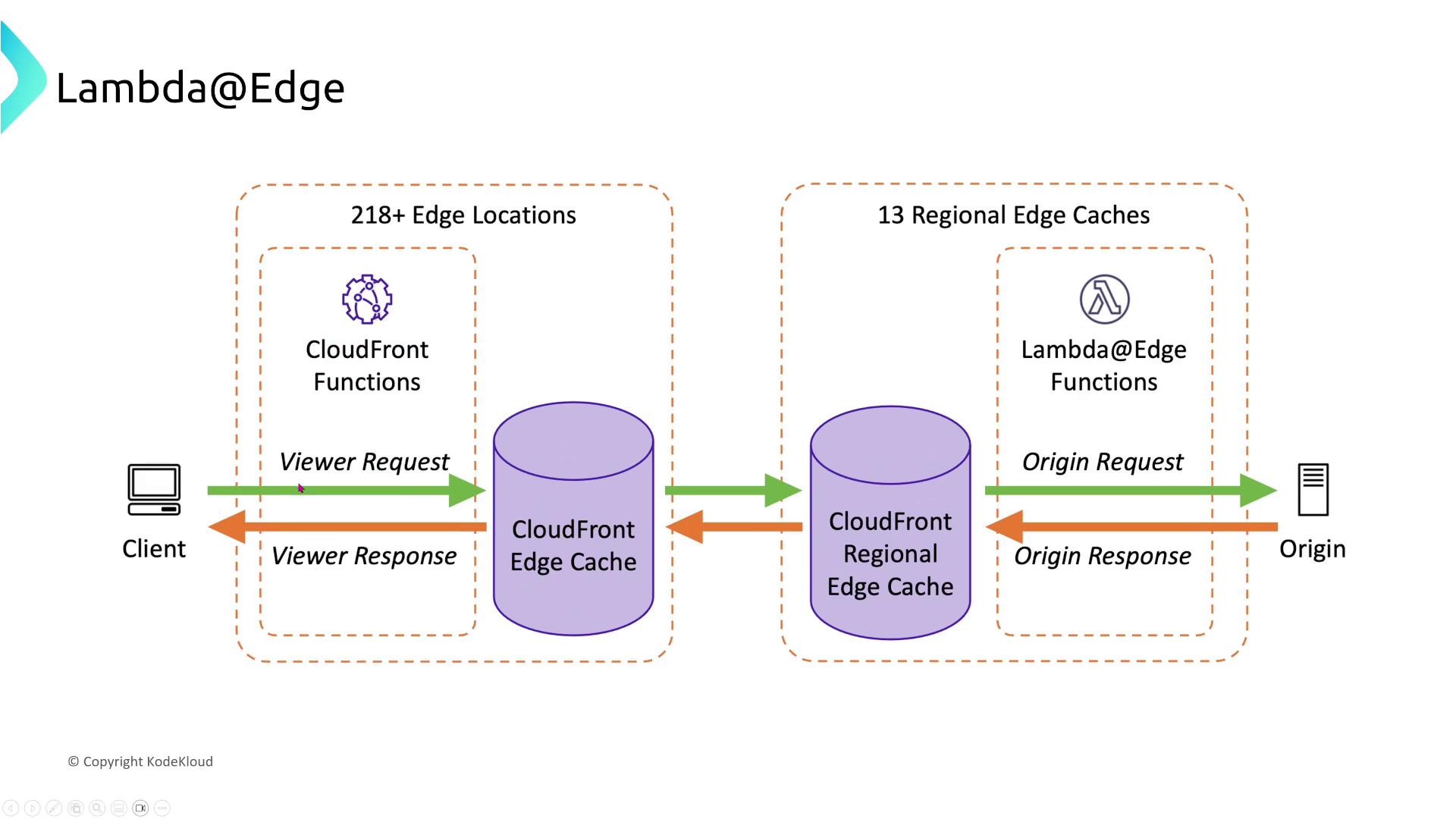
Amazon CloudFront is AWS’s global content delivery network (CDN), featuring numerous edge locations that provide low latency and high availability worldwide. Key points include:- A single CloudFront distribution leverages multiple edge locations to ensure resilience.
- Combining CloudFront with DNS failover and regional origins offers robust global content delivery.
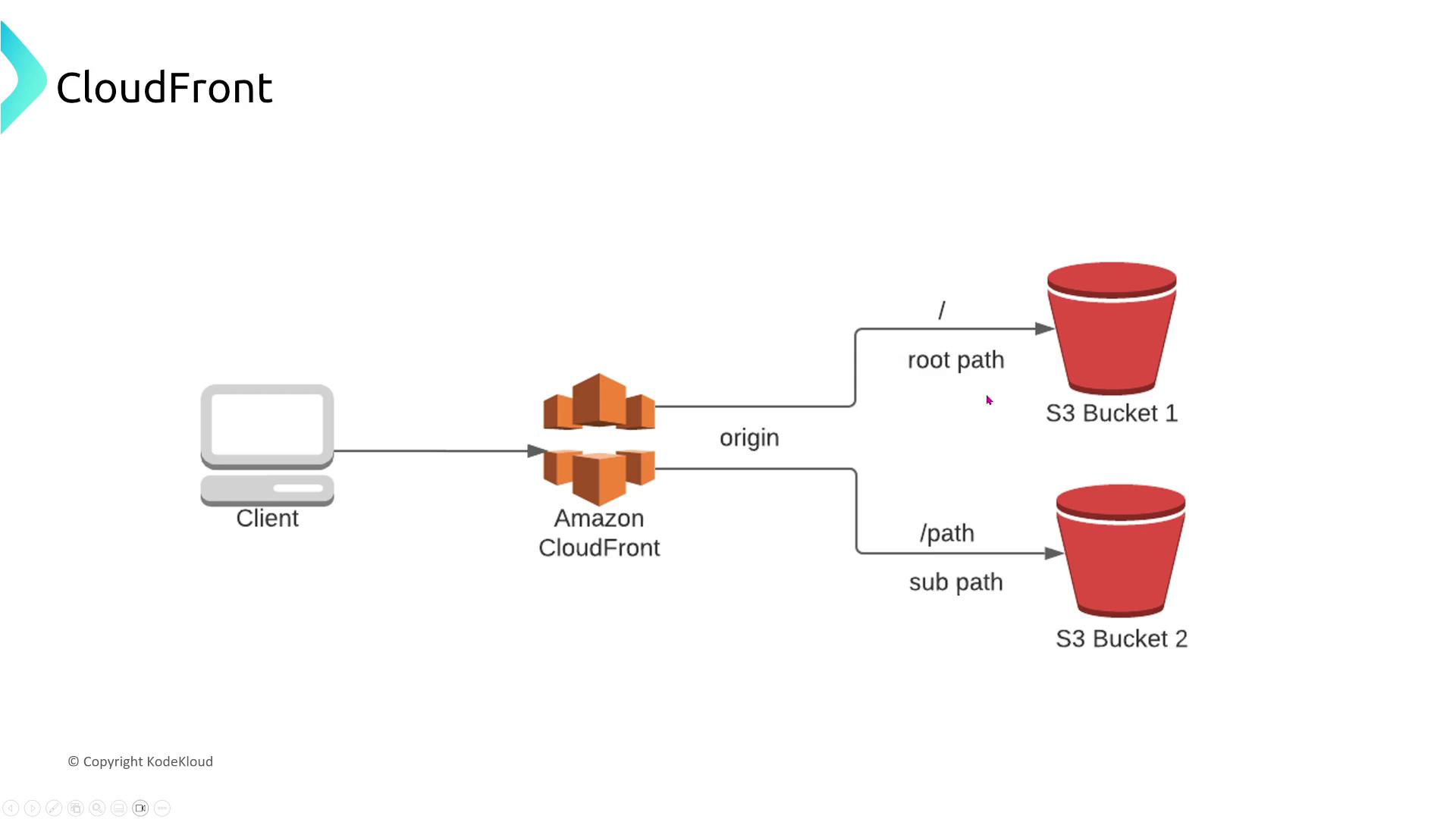
- CloudFront routes requests to regional servers that retrieve the content from the origin (e.g., an S3 bucket) and then cache it at the edge.
DNS and Route 53 for Network Discovery
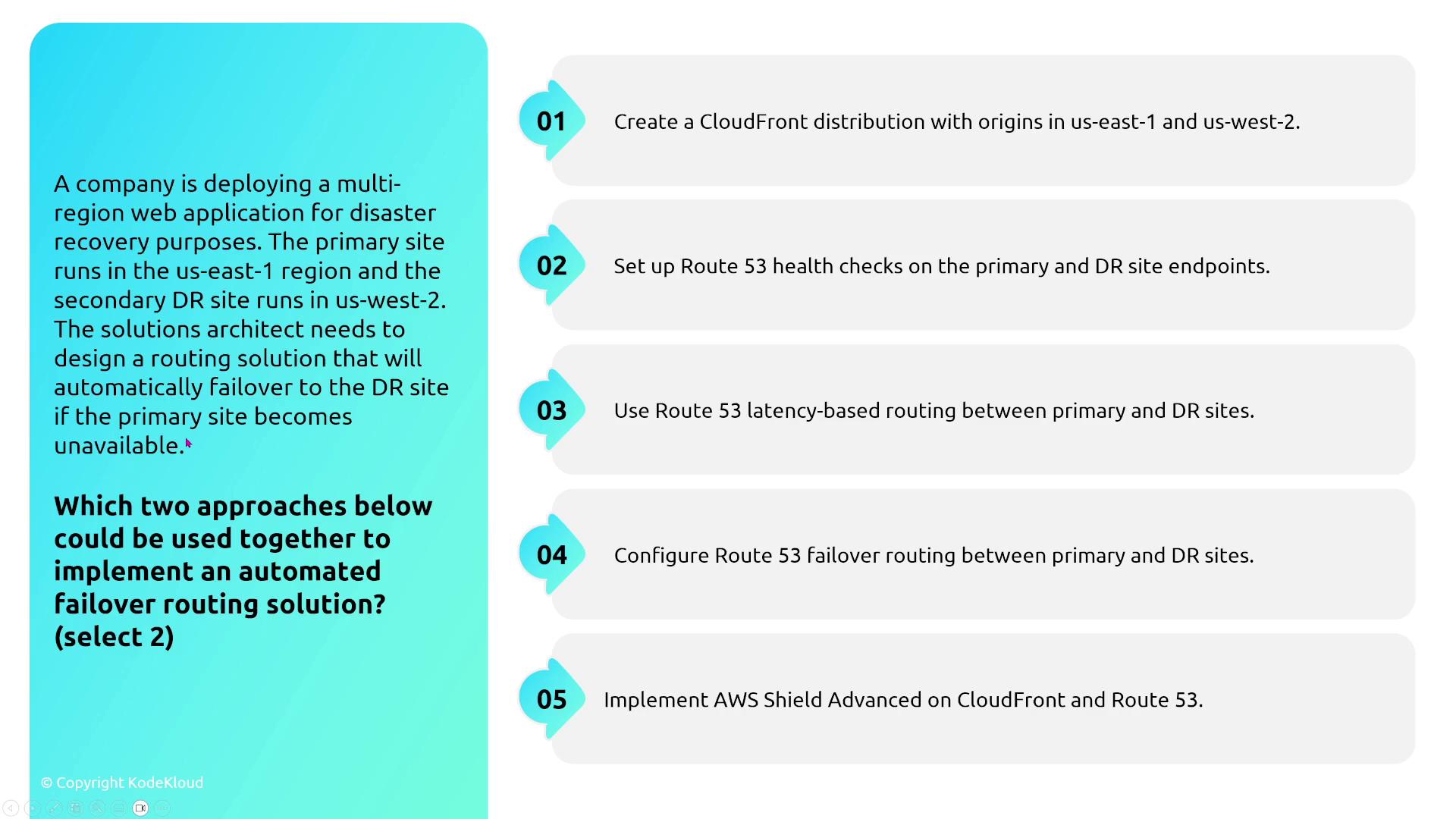
AWS Route 53 provides Domain Name System (DNS) services with a 100% SLA, utilizing multiple DNS resolvers per subnet to avoid single points of failure. Key features include:- Use of various routing policies (latency-based, weighted, failover, geolocation) to direct traffic across regions.
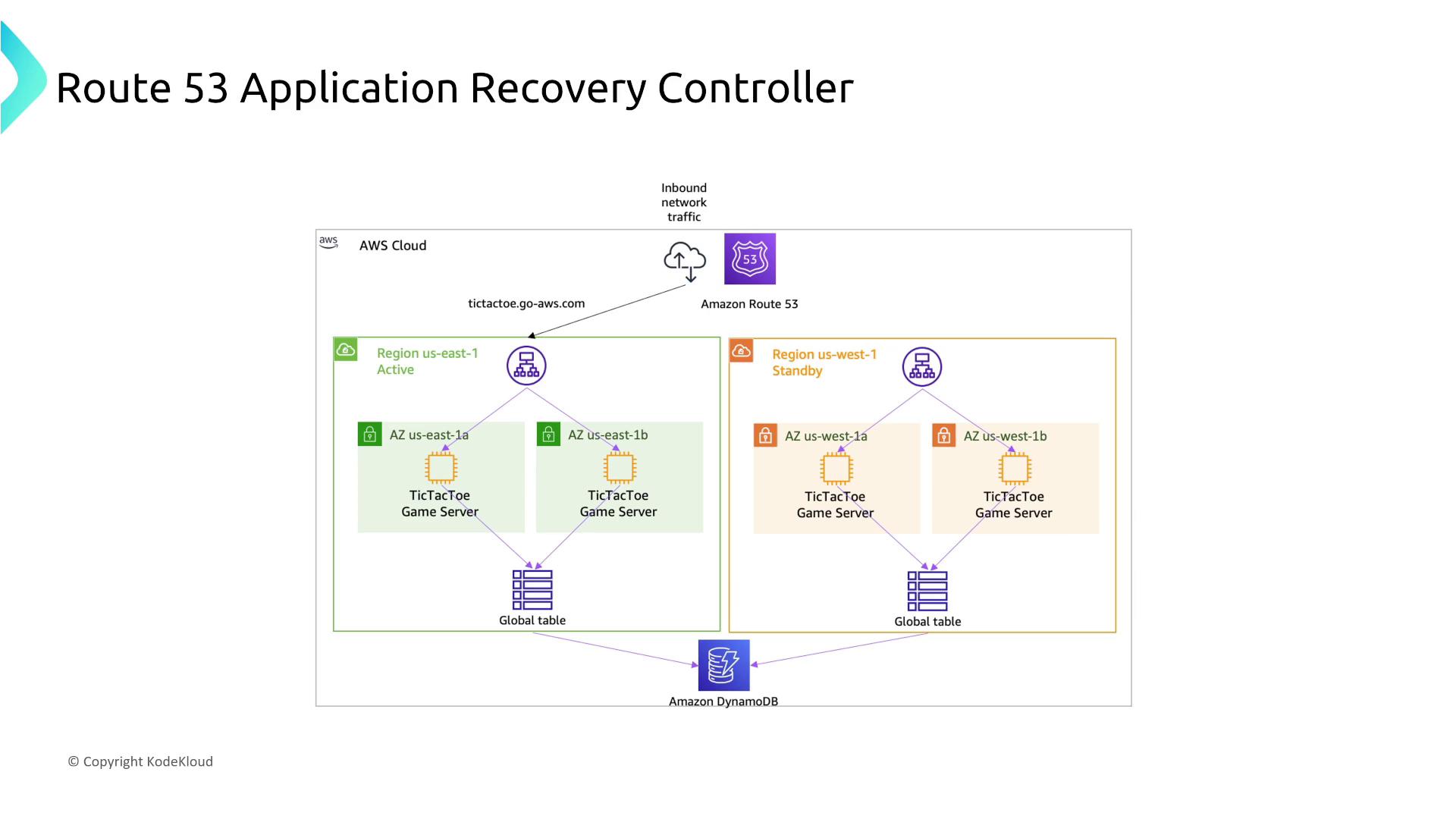
- In a multi-region setup, Route 53 health checks trigger failover routing to a standby site when the primary site is unavailable.
- The Route 53 Application Recovery Controller conducts deep analytics to facilitate automated failover decisions.
Summary
This guide reviewed several critical aspects of ensuring network service reliability on AWS:- Designing VPCs with multiple subnets across different Availability Zones.
- Connecting departmental VPCs using AWS Transit Gateway and VPC Peering.
- Configuring routing tables to segregate traffic among different application tiers.
- Securing outbound connectivity using NAT and egress-only gateways.
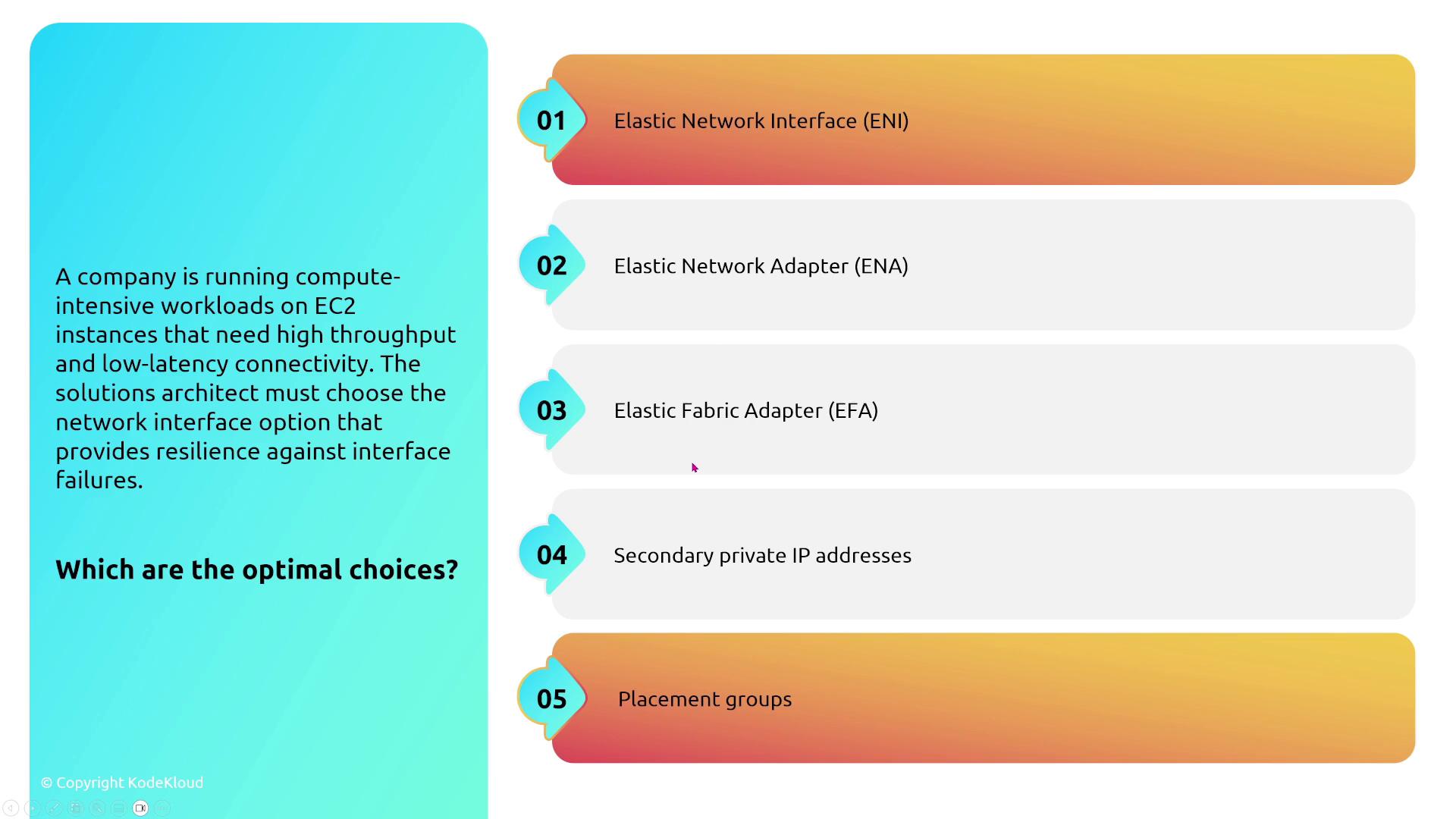
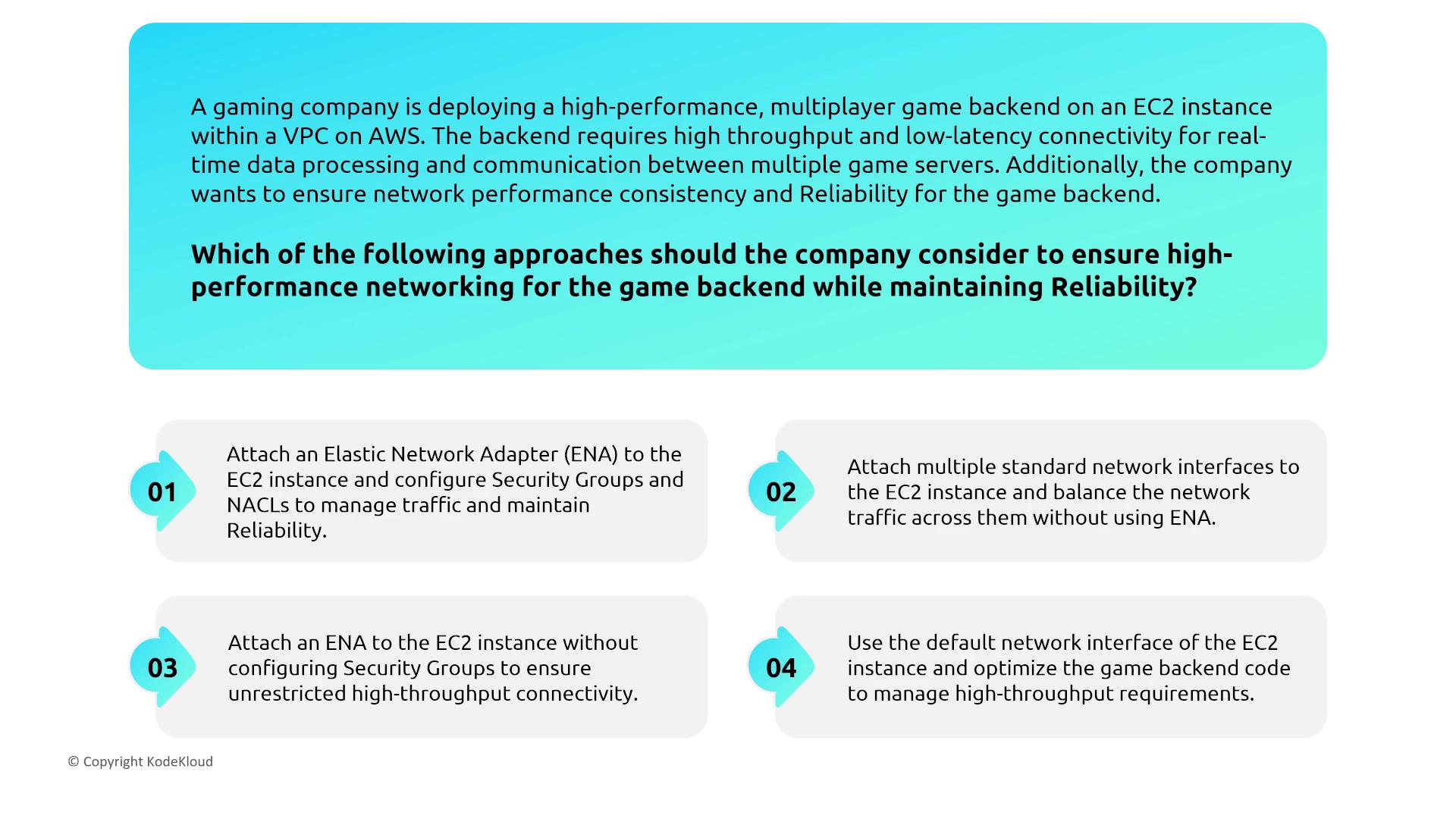
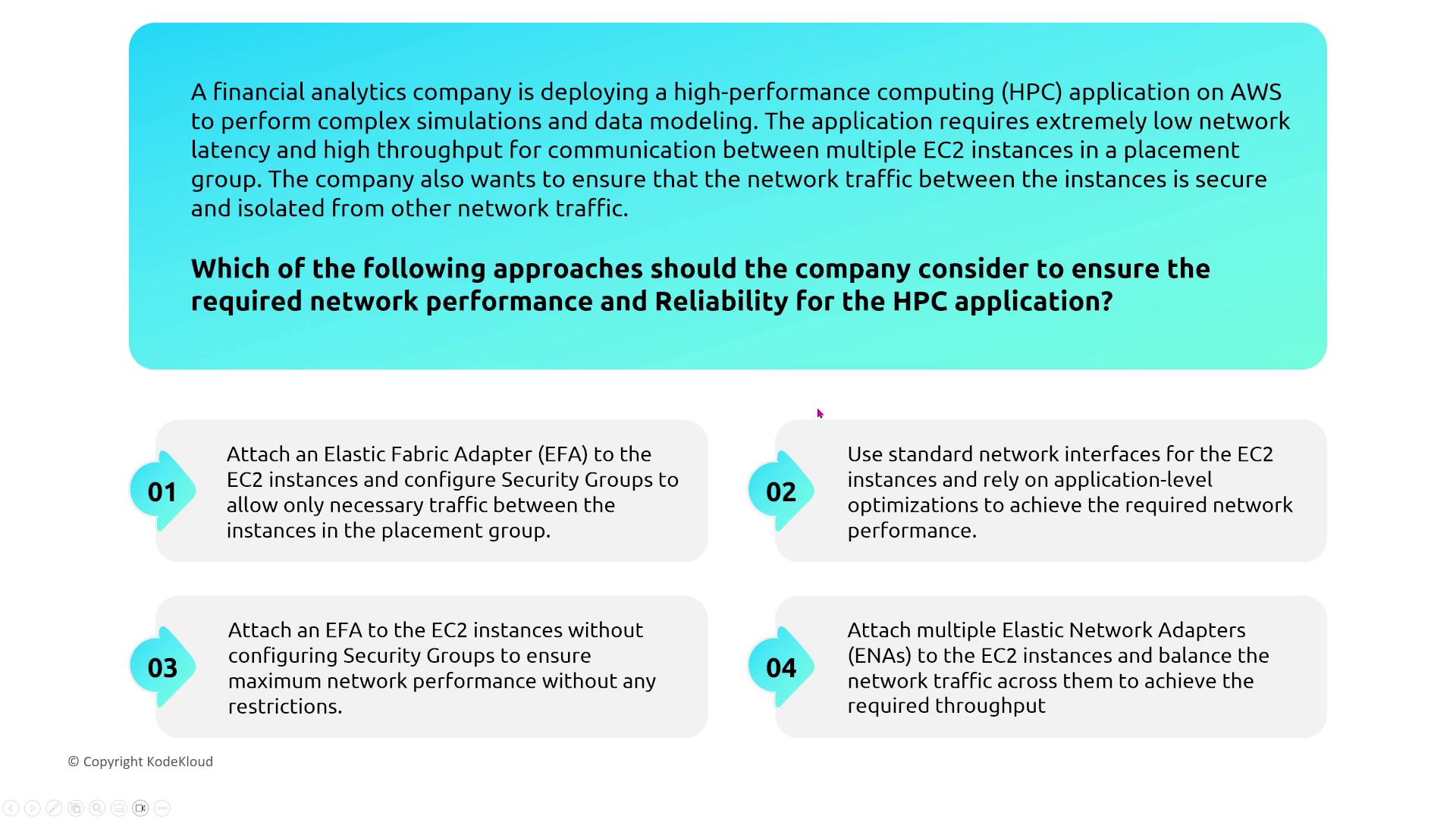
- Improving network resiliency with Elastic IPs and advanced network interfaces.
- Leveraging global AWS services such as CloudFront and Route 53 designed with high availability in mind.
AWS’s robust and inherently redundant infrastructure allows you to focus on deploying resilient applications without worrying about the underlying network reliability.