

- Bar charts, line/trend charts, pie charts
- Tables and pivot tables
- Geographic (map) visualizations
- Anomaly detection and forecasting visuals
- Narrative insights (automated descriptions of visuals)
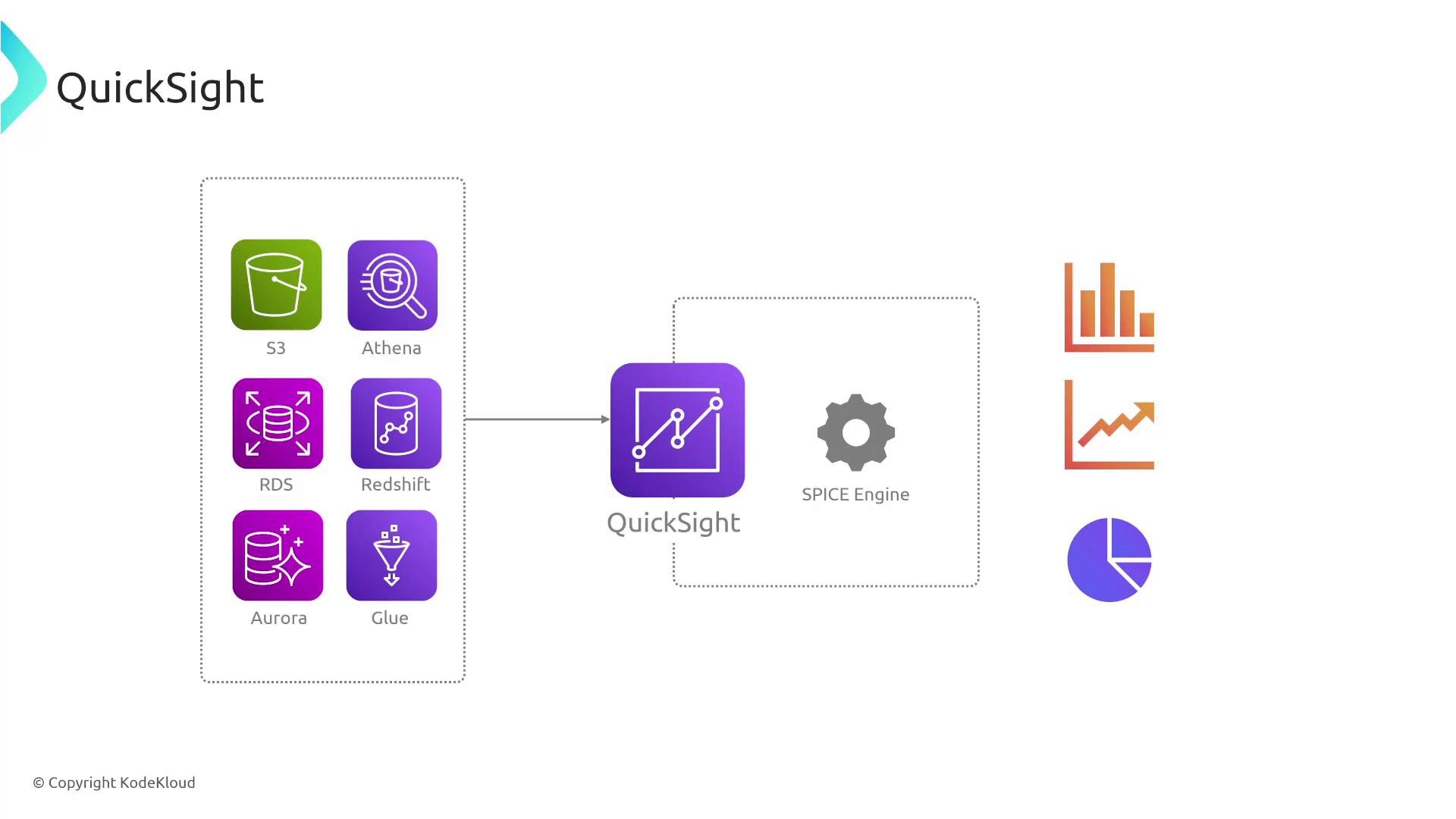
Common integration patterns
You can connect QuickSight to many AWS and external sources. Typical patterns include:
These patterns make it straightforward to pull data from multiple places and create cohesive dashboards and reports.
SPICE — Fast, in-memory analytics
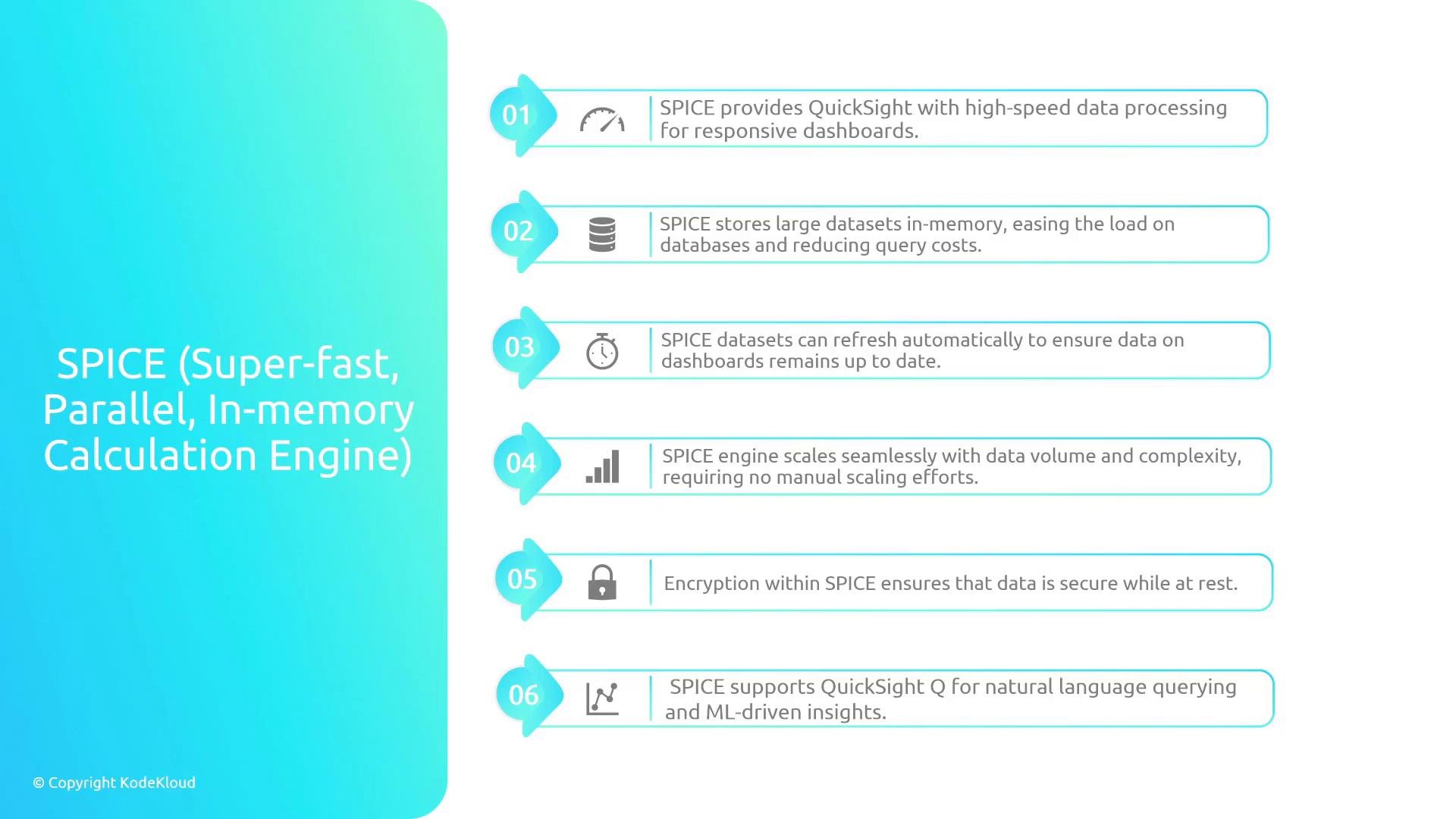
QuickSight visualizations are powered by SPICE (Super-fast, Parallel, In-memory Calculation Engine), QuickSight’s in-memory analytics layer. SPICE is designed to accelerate interactive dashboards and reduce load on source systems. Key SPICE benefits:- Columnar, in-memory storage for fast aggregations and visual render times.
- Offloads repeated queries from origin systems, lowering database load and query costs.
- Supports scheduled and on-demand dataset refreshes to keep visuals reasonably up to date.
- Fully managed and automatically scales so you don’t manage servers.
- Encryption in transit (TLS) and support for data-at-rest encryption with AWS KMS.
- Enables QuickSight’s ML features, including Q (natural-language queries), anomaly detection, forecasting, and automated narratives.
- Use KMS keys to control encryption of SPICE datasets at rest.
- Choose when to rely on SPICE versus direct queries: SPICE gives faster interactivity, while direct queries are better when you need truly real-time data.
- Monitor refresh schedules and concurrency limits when designing dashboards for many users.
Key capabilities and features
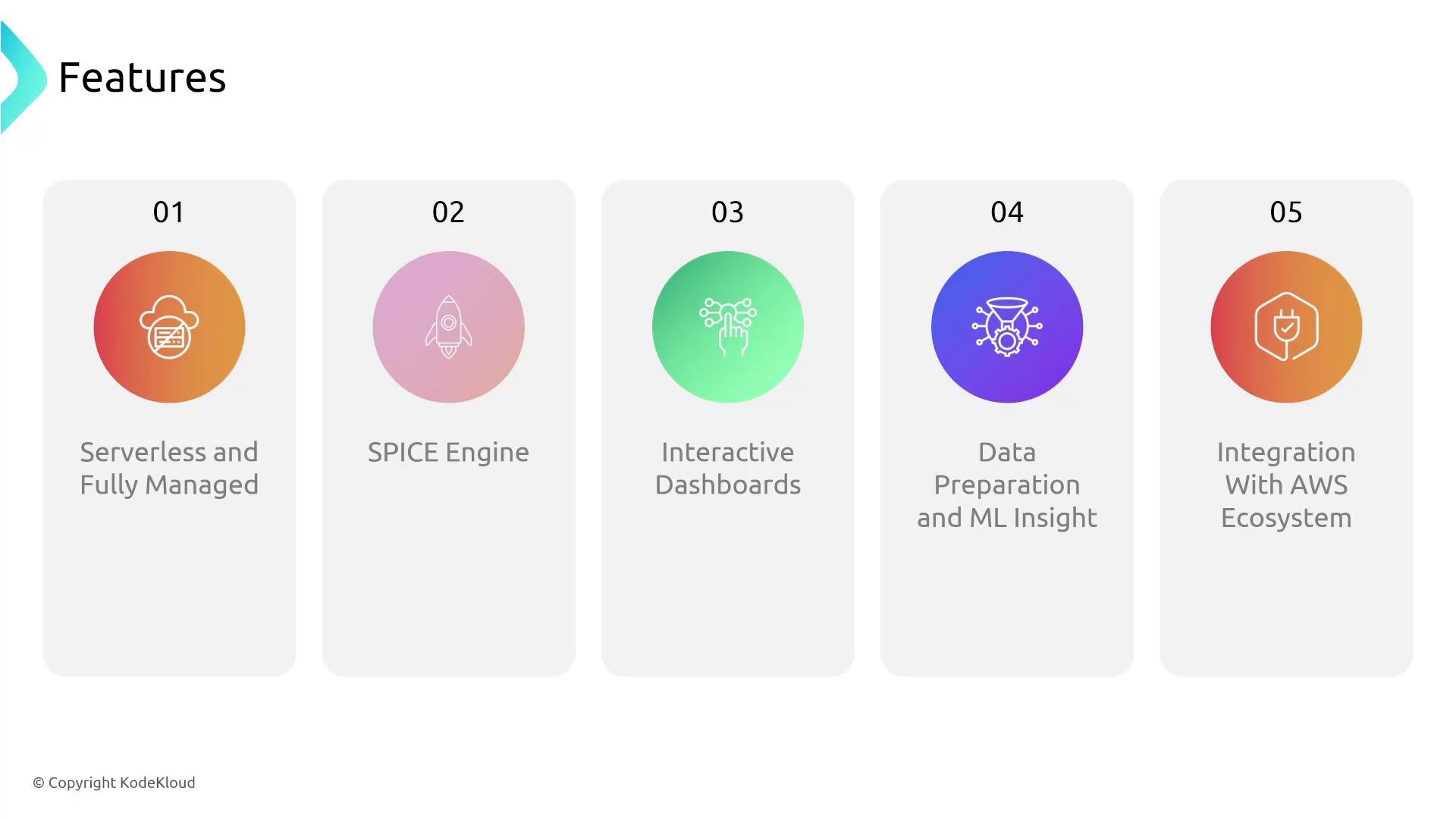
QuickSight is serverless and fully managed, so you can focus on the analytics and UX instead of infrastructure. Core capabilities include:- Interactive, clickable dashboards: filters, drill-downs, parameterized controls, and responsive visuals.
- Data preparation: built-in transforms and integration with Glue/DataBrew for ETL and cleansing.
- Machine learning–driven insights: QuickSight Q for natural-language querying, anomaly detection, forecasting, and automated narratives.
- Flexible deployment and licensing: per-user and per-session pricing options for different consumption patterns.
- Deep AWS integration: seamless connectivity to Amazon Athena, Redshift, RDS/Aurora, Glue, and S3, plus connectors for common external databases.
QuickSight offers flexible deployment and licensing (per-user and per-session). For near-real-time analytics, weigh SPICE’s refresh cadence against live queries — use SPICE for fast interactivity and lower source load, or direct queries when you need up-to-the-second data.
- Amazon QuickSight documentation: https://docs.aws.amazon.com/quicksight/
- AWS Glue: https://aws.amazon.com/glue/
- Amazon Athena: https://aws.amazon.com/athena/
- Amazon Redshift: https://aws.amazon.com/redshift/
- Amazon S3: https://aws.amazon.com/s3/